Wedding Invitation Mistakes to Avoid
An invitation with the wrong date, a missing venue or an unclear RSVP causes days of confusion, so here are the mistakes to catch before you send.
The invitation is the first promise of the wedding
The invitation is the first thing guests hold of your wedding, and it carries a promise: the right people, at the right place, at the right time. When it gets a detail wrong, the confusion spreads fast. Guests arrive on the wrong day, reach the wrong venue, or miss a function entirely. Most invitation mistakes are small, a spelling, a missing time, a vague address, but their cost is large, because every guest reads the same mistake.
The most common mistake is sending the invitation before the details are final. The venue changes, the muhurat shifts by an hour, or a function moves to a different day, and the invitation already sent now says the old thing. A corrected message rarely reaches everyone, and the guests who missed the correction arrive at the wrong time. Freeze the date, the timings, the venue, and the order of events before designing the invitation. Then design it once, check it twice, and send it.
The second mistake is hiding the important details. The names are large, the design is beautiful, and the venue address is in small print at the bottom, without the area or a map link. Guests need the area, the landmark, and the map more than they need another blessing. Put the venue with its area, the date with the day of the week, and the time in full. If the muhurat is at 7 in the morning, say 7 in the morning, not just morning.
Names, dates, and spellings deserve a second pair of eyes
Names are the most personal part of the invitation, and the most often misspelt. A bride's name with the wrong spelling, a parent's name missing, or a family name written the way one side uses it and the other side does not, all cause hurt that no design can undo. Check every name with both families, exactly as they write it. Check the order of names too. Elders first, parents named, and both families given equal place. A small imbalance in names becomes a large argument in some families.
Dates need the day of the week written out. Saturday 12 December is clearer than 12 December, because a guest who misreads the date will still catch the wrong day. Write the year as well, since invitations are sometimes kept for months. For each function, give its own date and time. A single line that says functions from 10 to 14 December leaves guests guessing which function is on which day, and guessing guests arrive late.
Spellings deserve a slow read. Read the invitation aloud, from the last line to the first, so your eyes do not skip over familiar words. Then ask one person who was not involved in writing it to read it fresh. A fresh reader catches the venue spelt two ways, the missing comma that changes a time, and the RSVP number with a wrong digit. That one read saves dozens of confused calls later.
The RSVP, the map, and the sharing order
An invitation without a clear RSVP is an invitation that nobody answers. Guests need to know who to call, and by when. Put one name and one number for RSVP, large enough to find at a glance. Put the RSVP date three weeks before the wedding. A date that is too early gets ignored, and a date that is too late leaves the caterer guessing. One reminder a week before the RSVP date doubles the replies.
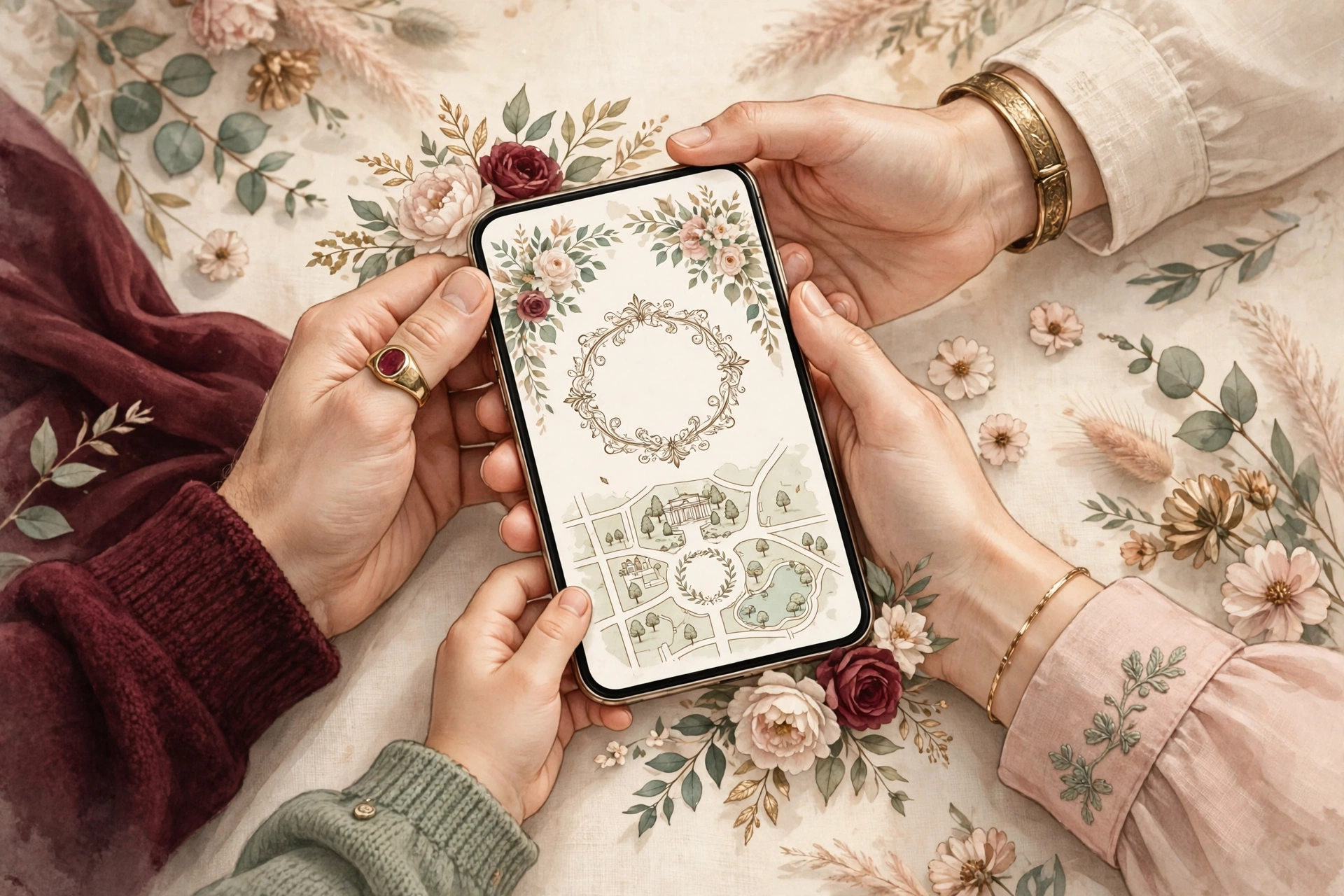
The map matters as much as the words. A venue address without a map link asks every guest to search for it separately, and some will find a different venue with a similar name. Add the map link to the invitation itself, and test it on a phone before sending. If the pin points to the wrong gate, fix it now. Elders especially need the landmark: the temple opposite, the petrol pump nearby, the metro station. A landmark in words beats a pin for many guests.
Share in the right order: family first, then close friends, then the rest. A digital invitation makes this easy, but the order still matters. When a distant relative receives the invitation before the grandparents, the family notices, and the couple spends the first week apologising instead of celebrating. Send to the elders first, with a personal message, then to the rest. And never send the invitation to a large group chat and hope the right people see it. Send it to each guest, with their name on it.
What it costs
On MyIndiAura, a Cinematic Invite is ₹499, an Invite App is ₹399, and an Invitation Suite is ₹99. Choose by what your invitation needs to do, not by price alone. A cinematic invite suits a wedding with a film led opening, while an invite app suits a full week of functions with RSVP and maps.
How to create your wedding invitation
- Pick a design from the designs page at myindiaura.com/designs.
- Add the names, the final dates and timings, the venue with its area, and the order of events.
- Add photos of the couple, the venue map, and the RSVP button.
- Preview the invitation on your own phone, then share the link on WhatsApp. See myindiaura.com/create to start, and myindiaura.com/pricing for the full price list.
Details to check before you send
- Every name spelt exactly as both families write it, elders first
- Every date with the day of the week and the year, each function with its own time
- The venue with its area, a landmark, and a tested map link
- One RSVP name and number, with the RSVP date three weeks before the wedding
- The invitation read aloud by a fresh reader who was not involved in writing it
- The sharing order set: family first, then close friends, then the rest
Frequently asked questions
When should we send a wedding invitation?
Send digital invitations four to six weeks before the wedding, and earlier for outstation guests. A short WhatsApp reminder two or three days before, and again the evening before, is enough for most families. Never send before the dates, timings and venue are final.
What details must an invitation never miss?
The names of the couple and both sets of parents, the date with the day of the week, the time of each function, the venue with its area and a map link, and one RSVP contact with a date. If any one of these is missing, guests will call to ask, and the family will answer the same question a hundred times.
Should we send a printed card as well as a digital invitation?
For elders and for close family, a printed card is still a lovely gesture. For most guests, a digital invitation is enough, and it is easier to update if a detail changes. If you send both, keep the wording identical, so nobody follows the wrong version.
How do we correct an invitation after it is sent?
Send a short correction message to exactly the same people, naming what changed and what stays the same. Do not rely on a group message, and do not assume the correction reached everyone. If the venue or the date changed, call the elders and the outstation guests directly.
MyIndiAura theme showcase
These Cinematic Invites from MyIndiAura fit this wedding. Each one is ₹499.
- The Wedding Post: a posted letter opening that carries the details beautifully.
- Atelier Seal: an elegant sealed invitation for a formal celebration.
- Cream Crest: a classic cream and gold design for a traditional wedding.
Related reading
- Wedding Invitation Wording: Examples for Every Function
- When Should You Send Wedding Invitations to Guests?
- Wedding Invitation Wording in English
Check the names twice, and the invitation will do its job.
Explore invitation designs
Choose a design and preview it free with your own names.



Found this useful? Share it with someone planning a celebration.
Share