Jain Wedding Invitation Card Designs
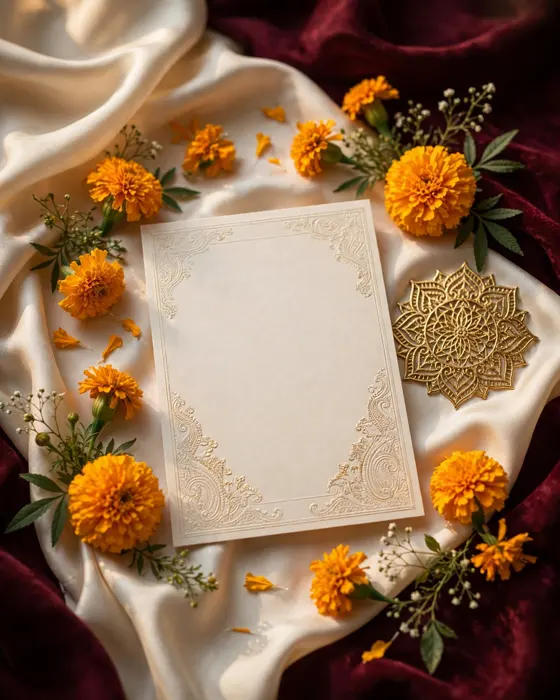
Jain wedding cards carry quiet elegance: cream, gold and soft reds, with lotus and temple motifs. Here are the designs that fit, and how to pick one for a Jain ceremony.
Jain wedding invitation card designs
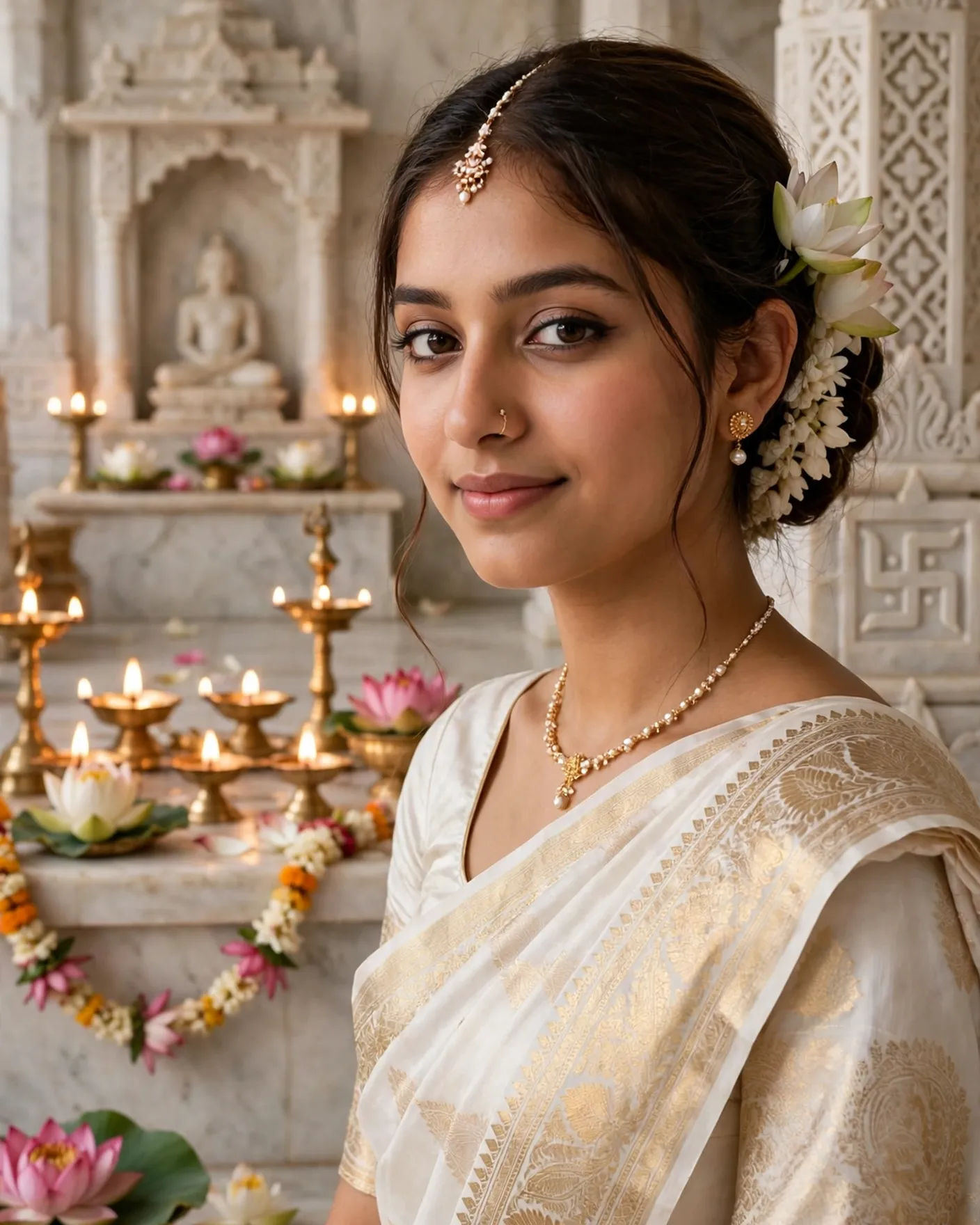
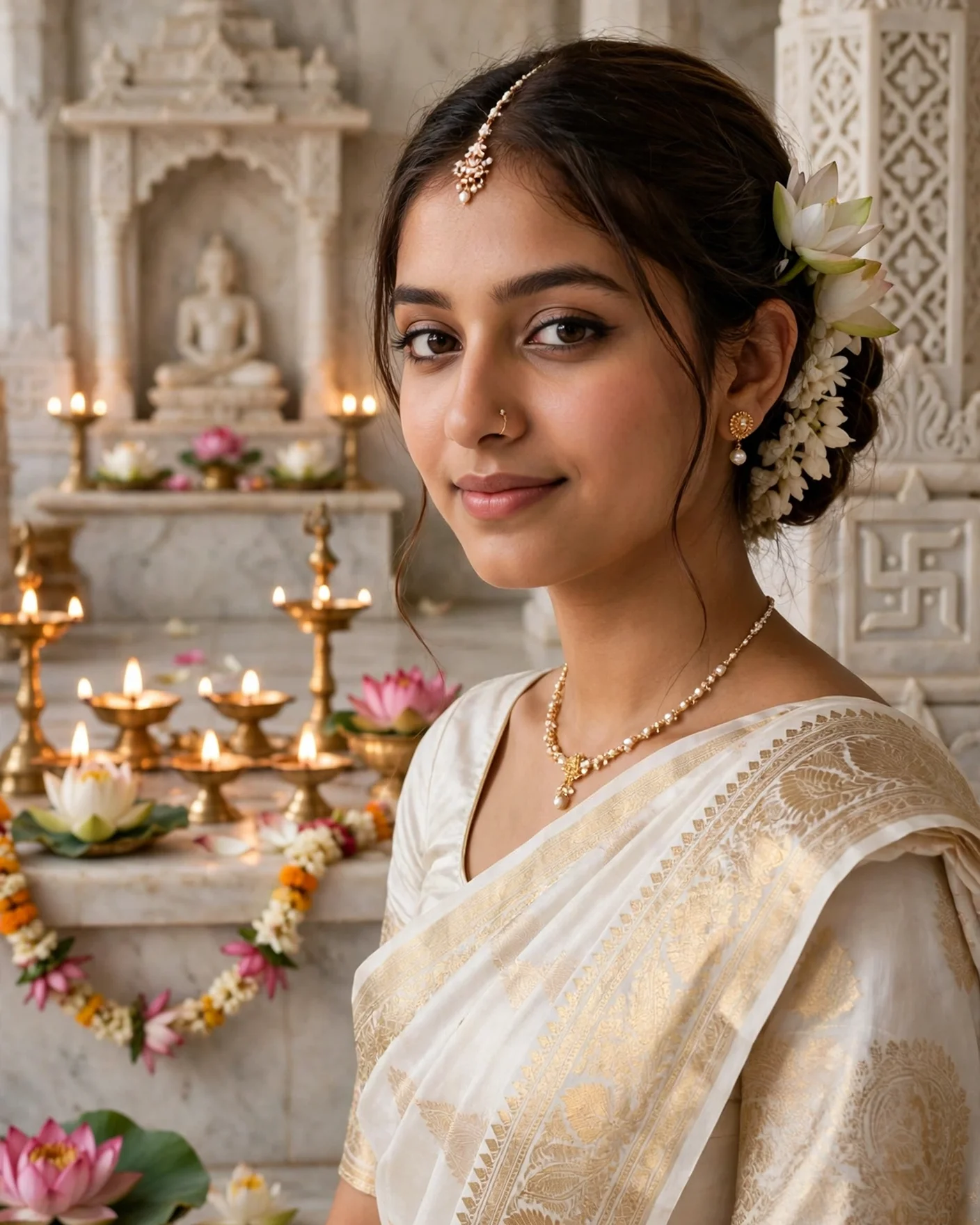
A Jain wedding is serene, graceful and deeply spiritual. Its invitation should feel like the ceremony itself: cream and gold, soft reds, lotus flowers, and the quiet beauty of a Jain temple. Below are the designs that fit, grouped by style, with who each suits and a tip to get it right.
Lotus and temple designs
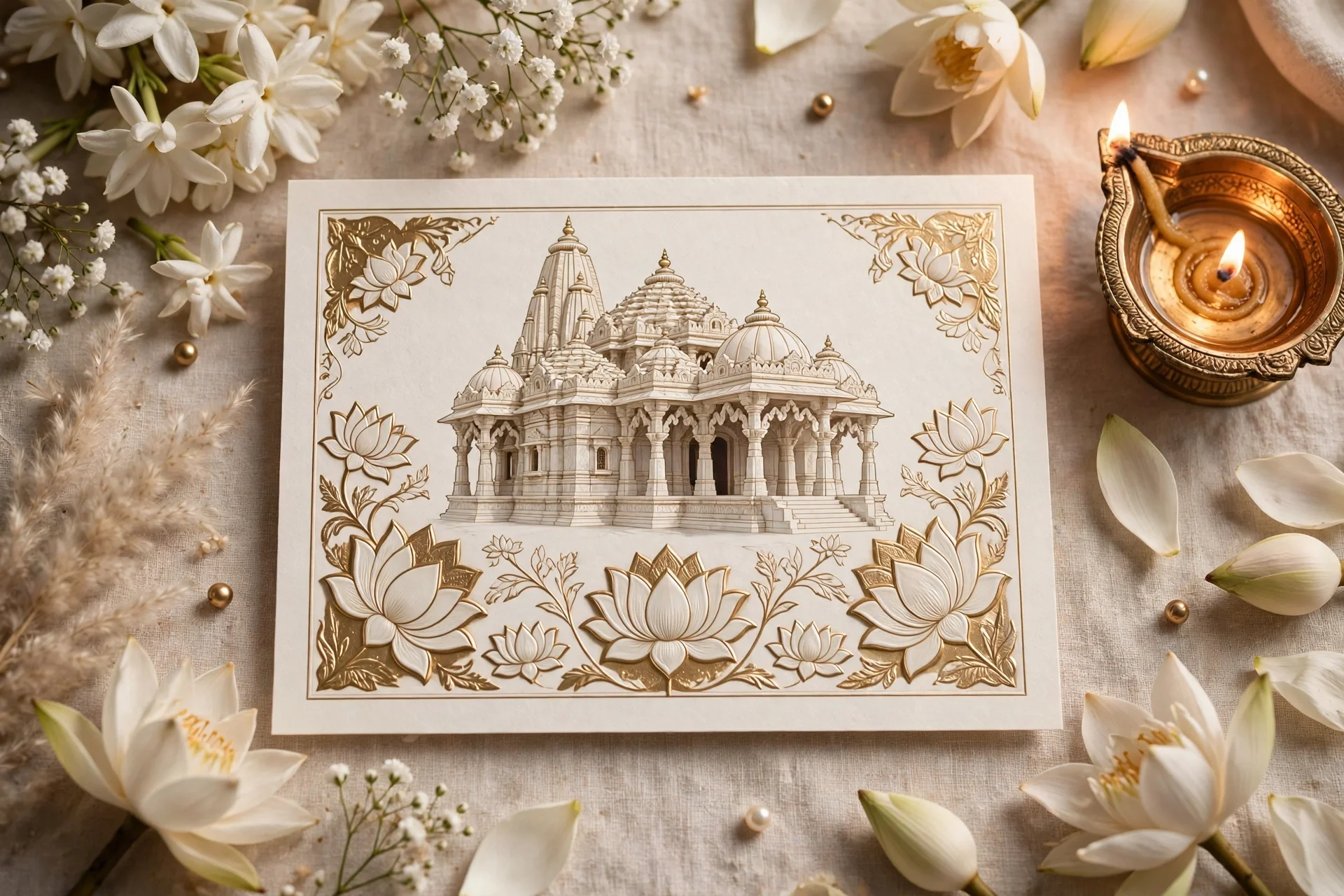
Lotus centre motif
A gold lotus with the names in the middle, on a cream card. The most classic Jain card, and the one elders love most. Keep the lotus at the top or the centre so the names stay clear.
Jain temple border
A border of small Jain temple spires in gold on cream. Elegant and formal, and it suits both Hindi and English text.
Tirthankara blessing
A small, respectful motif of a seated Tirthankara in gold line work at the top of a cream card. Serene and meaningful, and it suits a family that wants the blessing visible.
Gold and silk designs
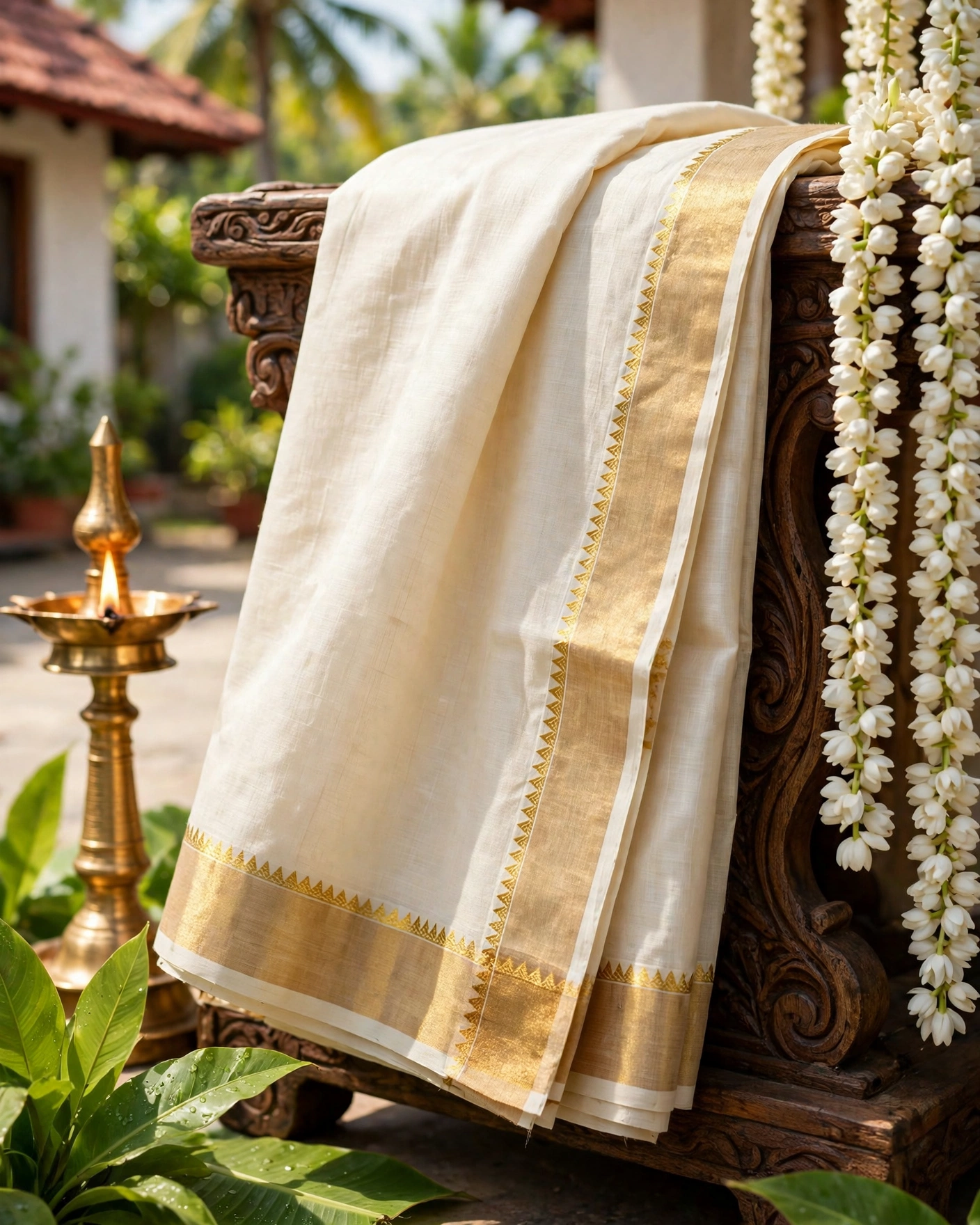
Gold zari frame
A frame of gold zari work on a cream card, inspired by silk borders. Elegant and formal, and it suits a traditional family wedding.
Maroon and gold silk
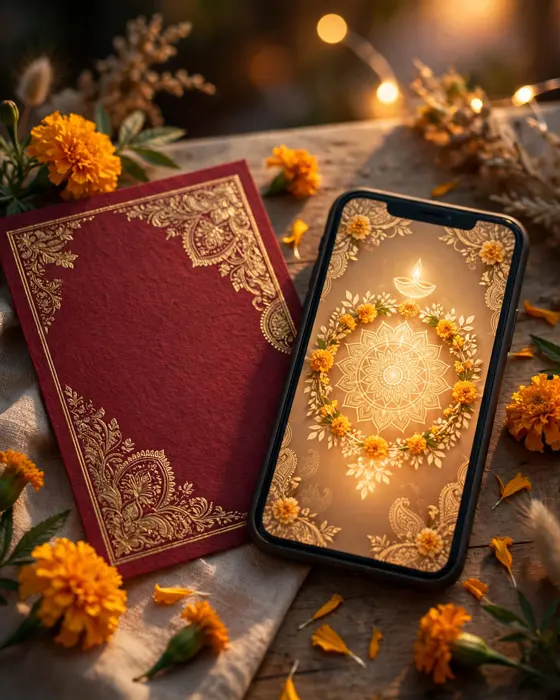
Bands of maroon and gold silk patterns across a cream card. Rich and traditional, and it pairs well with a red and gold theme.
Ivory and gold
An ivory card with gold names and a single small lotus motif. Clean, calm and easy to read, and it suits a digital invite perfectly.
Modern and minimal designs
Cream and gold minimal
A plain cream card with gold names and a single small lotus. Clean, modern and easy to read, and it suits a digital invite perfectly.
Soft red and gold
A soft red card with gold names and a thin gold border. Warm and festive without losing the calm of a Jain ceremony.
Pastel Jain
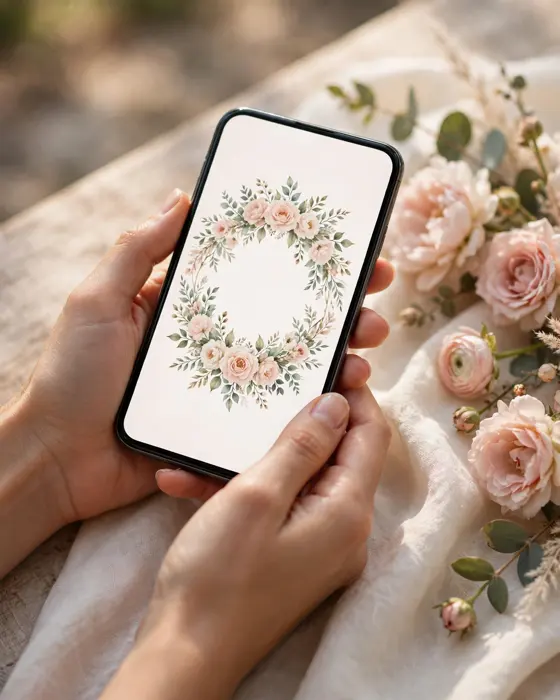
Soft peach and cream with a thin gold border and a small lotus motif. Modern without losing the Jain feel, and good for a young couple.
The Jain ceremony behind the design
Jain weddings follow a clear order, and the invitation reads better when it reflects it. The ceremony opens with prayers and aarti, followed by the pheras around the sacred fire, the kanyadaan, and the exchange of garlands. Many Jain weddings also include a sangeet and a mehndi, and the reception follows in the evening.
Ahimsa, non violence, is central to Jain life, so the feast is vegetarian and often strictly sattvik. Mention the vegetarian feast on the invite if guests might wonder, and give the time of the main ceremony plainly, because Jain muhurthams are often early in the morning. A short line about the temple blessing helps guests understand the tone of the day.
What to include on the card
Every Jain wedding card needs five things: whose wedding it is, the date, the time, the venue, and what to wear. Add the names of both families, because Jain invitations traditionally honour the parents. Include the order of events, and add a map link and an RSVP contact, so outstation guests can plan their travel.
Keep the Hindi script large enough to read, and check every spelling with an elder before you send. A misspelt name on a printed card is hard to fix, and on a digital invite it is embarrassing. If your guest list mixes generations, use Hindi for the blessing and English for the details.
Choosing the right design for your wedding
- A lotus centre motif card suits a traditional family wedding with elders.
- A Jain temple border suits a family that wants the blessing visible.
- A cream and gold minimal card suits a modern couple and a digital invite.
- A soft red and gold card suits an evening ceremony and a reception.
- A pastel card suits a young couple who want something light and fresh.
The safest choice when the guest list spans generations is the lotus motif in gold on cream. Elders recognise it at once, younger guests find it beautiful, and it photographs well on a phone screen.
What it costs
On MyIndiAura, a Cinematic Invite is ₹499, an Invite App is ₹399, and an Invitation Suite is ₹99. Choose by what your invitation needs to do, not by price alone. A cinematic invite suits a wedding with a film led opening, while an invite app suits a full week of functions with RSVP and maps.
How to create your Jain wedding invitation
- Pick a design from the designs page at myindiaura.com/designs.
- Add the wording, the date, the time, the venue, and the order of events.
- Add photos of the couple, the venue map, and the RSVP button.
- Preview the invitation on your own phone, then share the link on WhatsApp. See myindiaura.com/create to start, and myindiaura.com/pricing for the full price list.
Details to check before you send
- The names of the bride and groom, with parents, spelt exactly as the families use them
- The wedding date and time, checked with the priest
- The full venue address, with the area and a map link
- The order of events, with times for the main ceremony and the reception
- The Hindi spellings, checked by an elder
- An RSVP contact for guests who need directions
Frequently asked questions
What colours suit a Jain wedding invitation?
Cream, ivory, gold and soft reds. These are the colours of Jain temples, lotus flowers and silk, and they read as Jain at a glance. Avoid dark backgrounds for the details page, because older guests read better on a light card.
Should the card carry a Tirthankara motif?
Yes, if the family is comfortable with it. A small, respectful gold line drawing of a seated Tirthankara at the top of the card is a common and beloved choice. Keep it simple and dignified, and avoid bright or playful treatments.
Is the Jain wedding feast vegetarian?
Yes. Jain weddings serve a vegetarian feast, often strictly sattvik, with no root vegetables. Mention it on the invite if guests might wonder, and it reassures Jain guests at once.
When should we send a Jain wedding invitation?
Send digital invitations four to six weeks before the wedding, and earlier for outstation guests. A short WhatsApp reminder two or three days before, and again the evening before, is enough for most families.
What do guests wear to a Jain wedding?
Silk sarees and bright colours for women, and a kurta or sherwani for men. Mention the dress code on the invite if you want guests to match the morning.
MyIndiAura theme showcase
These Cinematic Invites from MyIndiAura fit this wedding. Each one is ₹499.
- Porcelain Doves: calm white and blue, with doves and a wax seal, suited to a quiet Jain ceremony.
- Cream Crest: a plain cream envelope with a crest seal, simple and elegant for a Jain wedding.
- Mandap Yatra: a walk through the venue, room by room, to the mandap.
Related reading
- Hindu Wedding Invitation Wording and Traditions
- Wedding Invitation Wording: Examples for Every Function
- Mehndi Ceremony Invitation Card Designs
Create your Jain wedding invitation on MyIndiAura, and let the design carry the calm and grace of the ceremony.
Explore invitation designs
Choose a design and preview it free with your own names.

Found this useful? Share it with someone planning a celebration.
Share