Assamese Wedding Invitation Card Designs
Assamese wedding cards carry the colours of Assam: white and red mekhela chadors, gold zari, and temple motifs. Here are the designs that fit, and how to pick one.
Assamese wedding invitation card designs
An Assamese wedding is elegant, musical and deeply rooted in the culture of Assam. Its invitation should feel like the wedding itself: white and red mekhela chadors, gold zari work, jasmine, and the warmth of a Bihu song. Below are the designs that fit, grouped by style, with who each suits and a tip to get it right.
Mekhela chador inspired designs
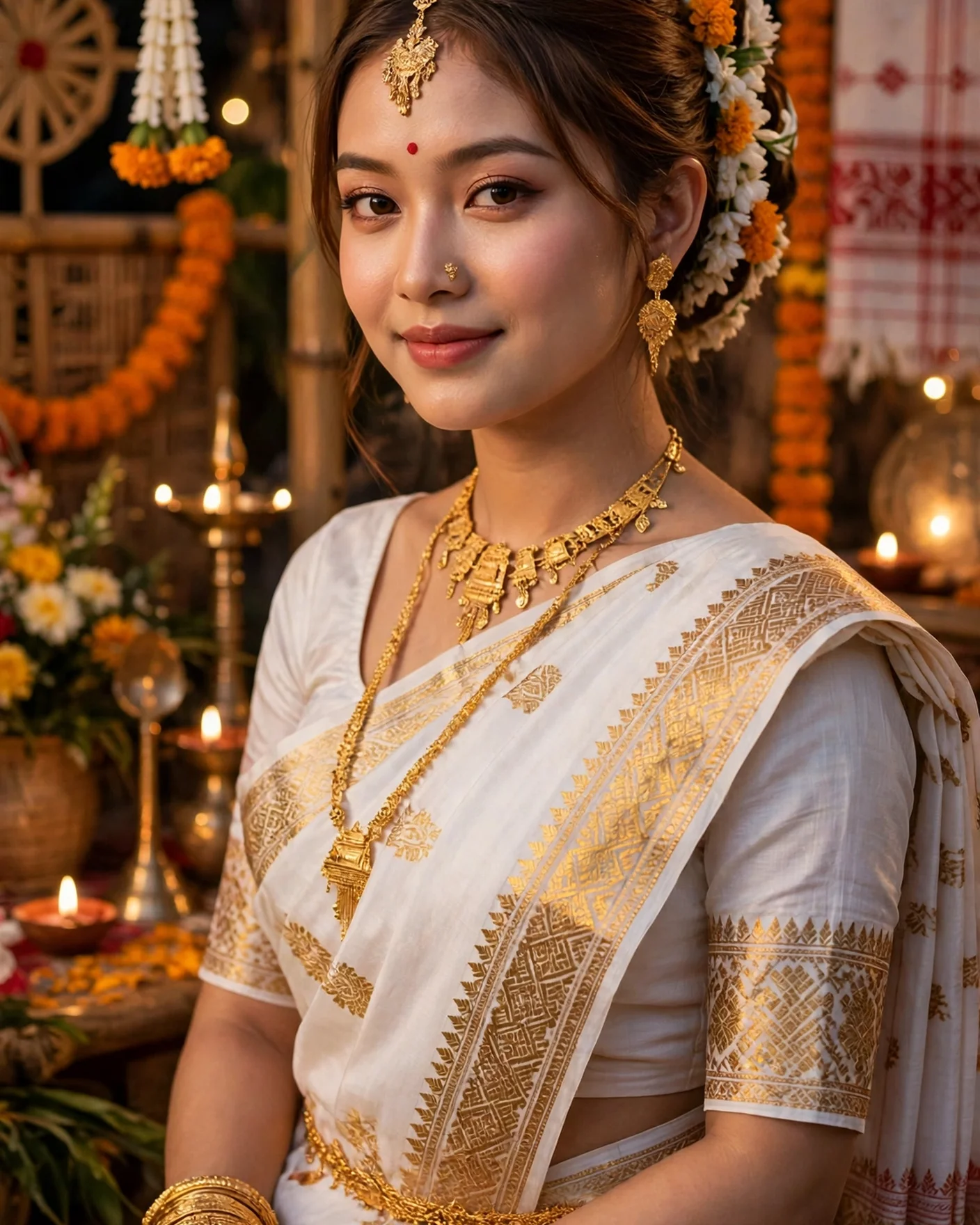
White and red classic
A white card with a red and gold mekhela chador border, with the names in deep red below. The most classic Assamese card, and the one elders love most. Keep the border at the edges so the names stay clear.
Gold zari frame
A frame of gold zari work on a cream card, inspired by the borders of a mekhela chador. Elegant and formal, and it suits both Assamese and English text.
Muga silk gold
A warm golden card inspired by muga silk, with the names in deep red. Rich and unmistakably Assamese, and it suits an evening reception beautifully.
Temple and nature designs
Kamakhya temple motif
A gold line drawing of the Kamakhya temple on a cream card, with the names below. A lovely blessing for the couple, and a design elders recognise at once.
Jasmine and marigold
Jasmine and marigold garlands along the edges of a cream card, with gold names. Light and fresh for a daytime wedding, and kind to older eyes.
Tea garden green
A soft green card with a thin gold border and a small tea leaf motif. A nod to Assam's tea gardens, and a modern choice for a young couple.
Modern and minimal designs
Red and gold minimal
A plain deep red card with gold names and a single small temple motif. Clean, modern and easy to read, and it suits a digital invite perfectly.
Cream with gold border
A cream card with a thin gold border and a small jasmine motif. Simple and graceful, and it suits both Assamese and English text.
Pastel Assamese
Soft peach and cream with a thin gold border and a small mekhela chador motif. Modern without losing the Assamese feel, and good for a young couple.
Regional touches that make it Assamese
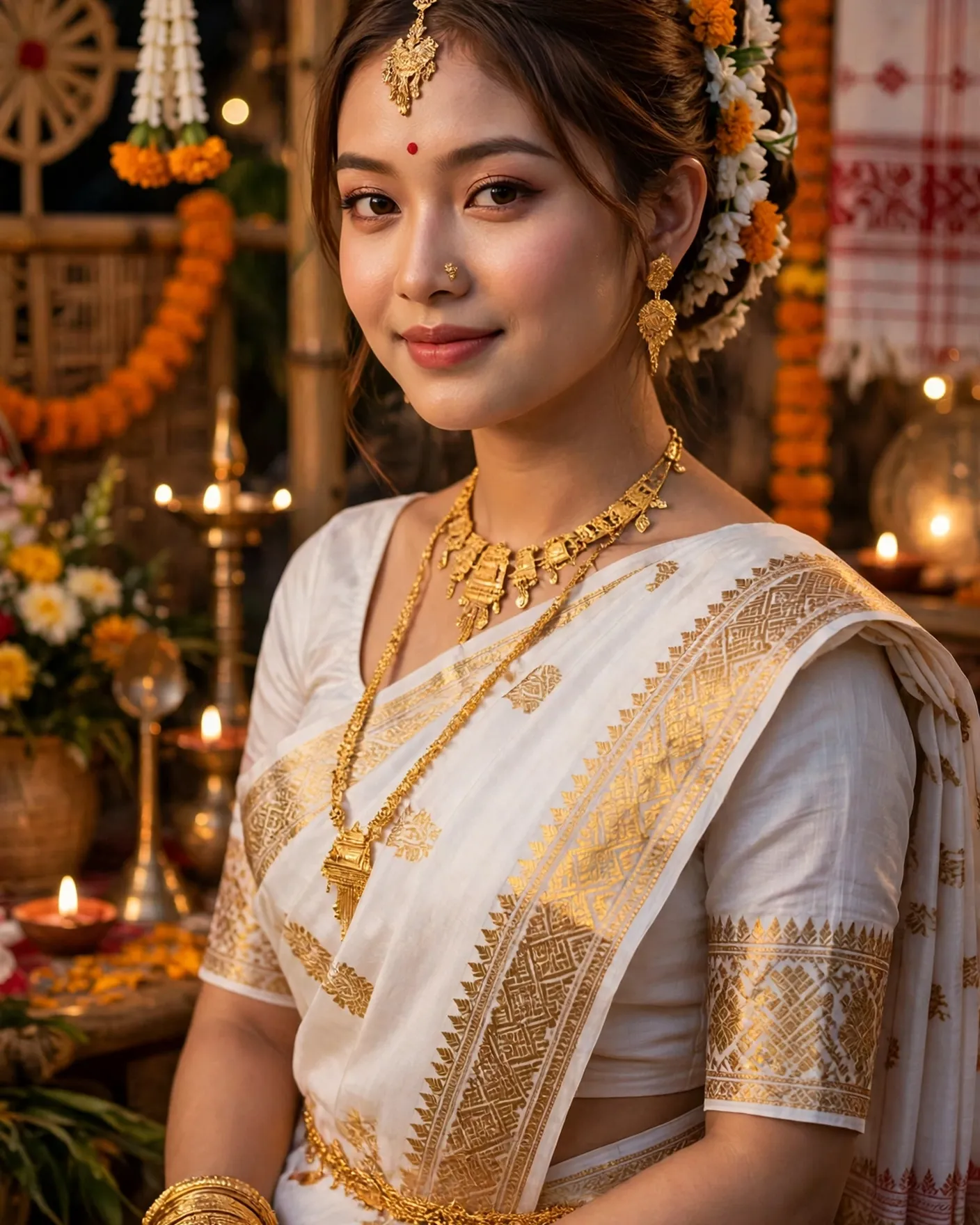
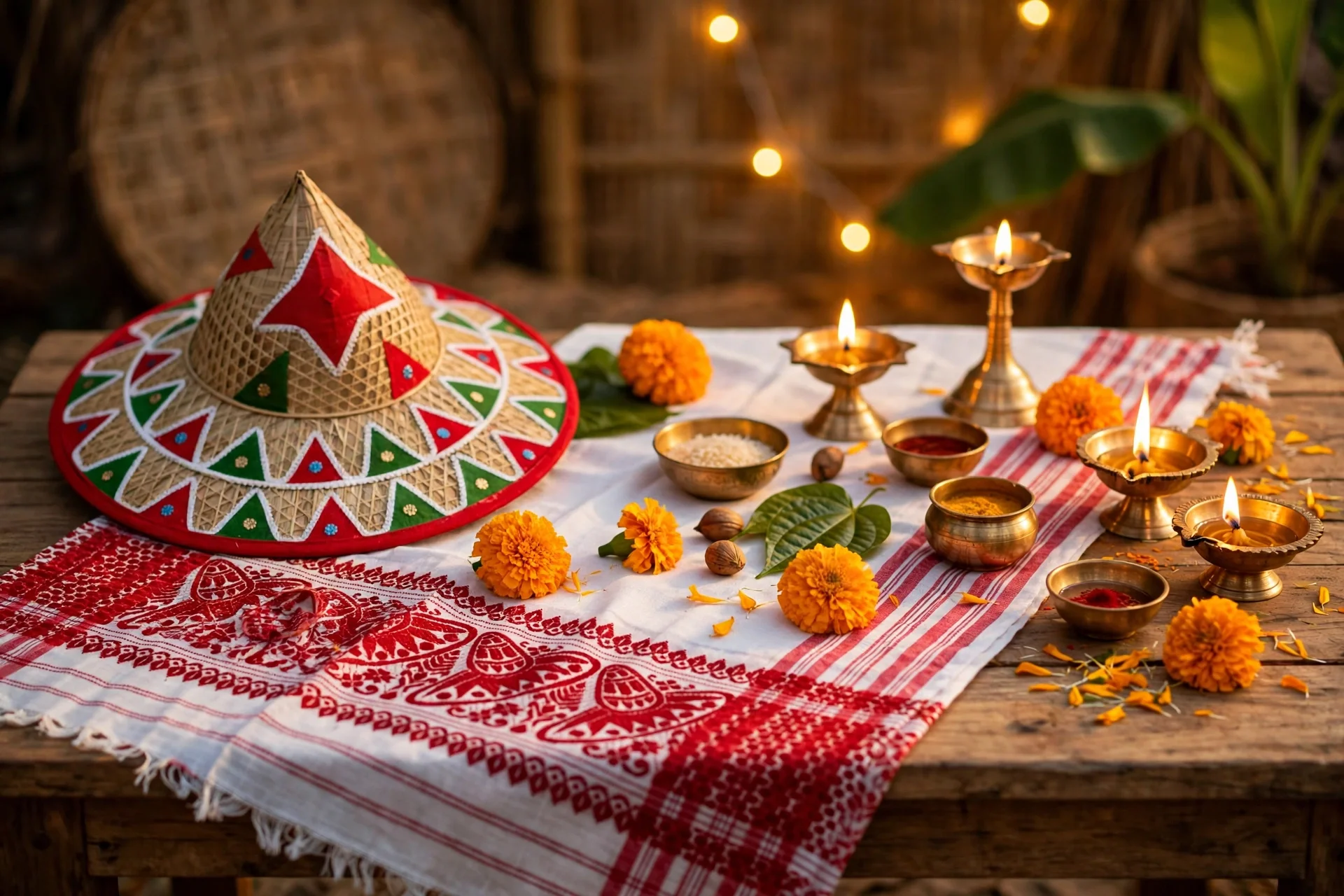
A few details tell guests at a glance that this is an Assamese wedding. A mekhela chador border, a Kamakhya temple motif, or a line of Assamese script beside the English names. The bride's outfit is often a white and red mekhela chador with gold zari, and the card can echo its border exactly.
Assamese weddings also have their own order of events: the juran ceremony, where the groom's family brings gifts to the bride, the haldi, the main ceremony with the sacred fire, and the reception. List the events guests attend, with times, and let the families carry the rest. A short line about the feast helps guests know what to expect.
What to include on the card
Every Assamese wedding card needs five things: whose wedding it is, the date, the time, the venue, and what to wear. Add the names of both families, because Assamese invitations traditionally honour the parents. Include the order of events, and add a map link and an RSVP contact, so outstation guests can plan their travel.
Keep the Assamese script large enough to read, and check every spelling with an elder before you send. A misspelt name on a printed card is hard to fix, and on a digital invite it is embarrassing. If your guest list mixes generations, use Assamese for the blessing and English for the details.
Choosing the right design for your wedding
- A white and red mekhela chador card suits a traditional family wedding with elders.
- A muga silk gold card suits a couple who want the card to match the bride's outfit.
- A minimal red and gold card suits a modern couple and a digital invite.
- A jasmine and marigold card suits a daytime wedding and an outdoor venue.
- A pastel card suits a young couple who want something light and fresh.
The safest choice when the guest list spans generations is the white and red mekhela chador border in gold. Elders recognise it at once, younger guests find it beautiful, and it photographs well on a phone screen.
What it costs
On MyIndiAura, a Cinematic Invite is ₹499, an Invite App is ₹399, and an Invitation Suite is ₹99. Choose by what your invitation needs to do, not by price alone. A cinematic invite suits a wedding with a film led opening, while an invite app suits a full week of functions with RSVP and maps.
How to create your Assamese wedding invitation
- Pick a design from the designs page at myindiaura.com/designs.
- Add the Assamese and English wording, the date, the time, the venue, and the order of events.
- Add photos of the couple, the venue map, and the RSVP button.
- Preview the invitation on your own phone, then share the link on WhatsApp. See myindiaura.com/create to start, and myindiaura.com/pricing for the full price list.
Details to check before you send
- The names of the bride and groom, with parents, spelt exactly as the families use them
- The wedding date and time, checked with the priest
- The full venue address, with the area and a map link
- The order of events, with times for the juran, the main ceremony and the reception
- The Assamese spellings, checked by an elder
- An RSVP contact for guests who need directions
Frequently asked questions
What colours suit an Assamese wedding invitation?
White, red and gold. These are the colours of the mekhela chador and muga silk, and they read as Assamese at a glance. Avoid dark backgrounds for the details page, because older guests read better on a light card.
Should the card carry Assamese script?
Yes, when the guest list includes elders who read Assamese. Use Assamese for the blessing and the welcome, and English for the date, time and venue. Check every spelling with an elder before you send.
What is the juran ceremony?
The juran is the Assamese ceremony where the groom's family brings gifts to the bride's home, including the wedding outfit, jewellery and sweets. Many couples list it on the invitation as the first event of the wedding week.
When should we send an Assamese wedding invitation?
Send digital invitations four to six weeks before the wedding, and earlier for outstation guests. A short WhatsApp reminder two or three days before, and again the evening before, is enough for most families.
Can we match the card to the bride's mekhela chador?
Yes, and it is a lovely touch. Pick the border from the mekhela chador and use the same colours and pattern on the card. Guests notice the match, and it ties the whole wedding together.
MyIndiAura theme showcase
These Cinematic Invites from MyIndiAura fit this wedding. Each one is ₹499.
- Peony Bloom: peony painted doors tied with an ivory satin bow.
- Gulab Dil: a burgundy envelope, a blush wax seal, and a heart of rose petals.
- Mandap Yatra: a walk through the venue, room by room, to the mandap.
Related reading
- Hindu Wedding Invitation Wording and Traditions
- Wedding Invitation Wording: Examples for Every Function
- South Indian Wedding Invitation Designs
Create your Assamese wedding invitation on MyIndiAura, and let the design carry the colours of Assam.
Explore invitation designs
Choose a design and preview it free with your own names.
Found this useful? Share it with someone planning a celebration.
Share