Wedding Invitation Etiquette for Indian Families
Etiquette is not old fashioned fuss. It is the set of courtesies that keeps two families, and hundreds of guests, feeling respected through a wedding.
In short
Tell elders and close family personally before any mass message goes out.
Agree names order, event order, and plus one rules with both families first.
Apply invitation rules evenly. Exceptions are noticed, and remembered.
What it means
Wedding invitation etiquette is the shared set of courtesies around inviting guests to an Indian wedding. It covers the order of names, the order of events, who receives which invite, how plus ones and children are handled, and how news is shared across two families.
Etiquette matters because weddings are emotional. A guest who learns about a wedding from someone else, or finds their name misspelled, or discovers a plus one was not included, remembers it. Most etiquette mistakes are not about rudeness. They are about rushing, and they are preventable with a little planning.
What your invitation can do
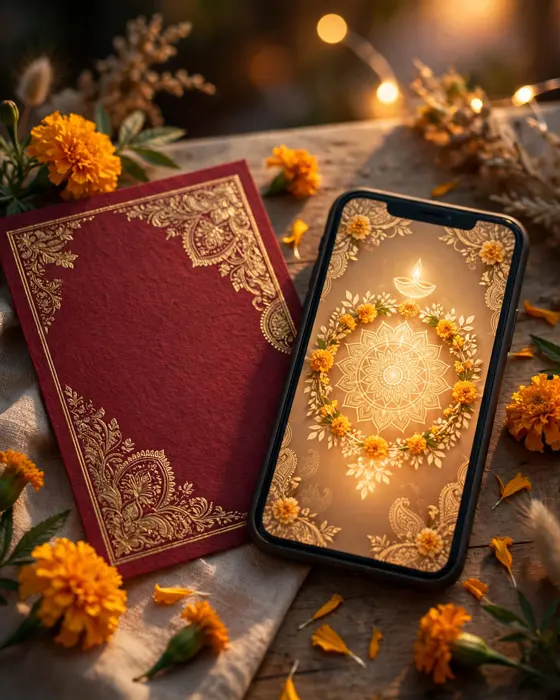
A MyIndiAura invite can carry your story in more than words. It can open with a short entrance film, then move through your events, your venue details, and your photos in one smooth scroll. It can include an RSVP button so guests confirm in a tap, a map link so nobody gets lost, and a photo gallery from your pre wedding shoots. You can share it on WhatsApp, and you can update a detail later without reprinting anything.
Options to consider
- A family etiquette checklist, agreed by both families before invites go out.
- A tiered invite plan: all events for close family, reception for wider circles.
- A plus one policy, written plainly and applied evenly.
- A personal first round, calls to elders and VIP guests before digital invites.
Style tips
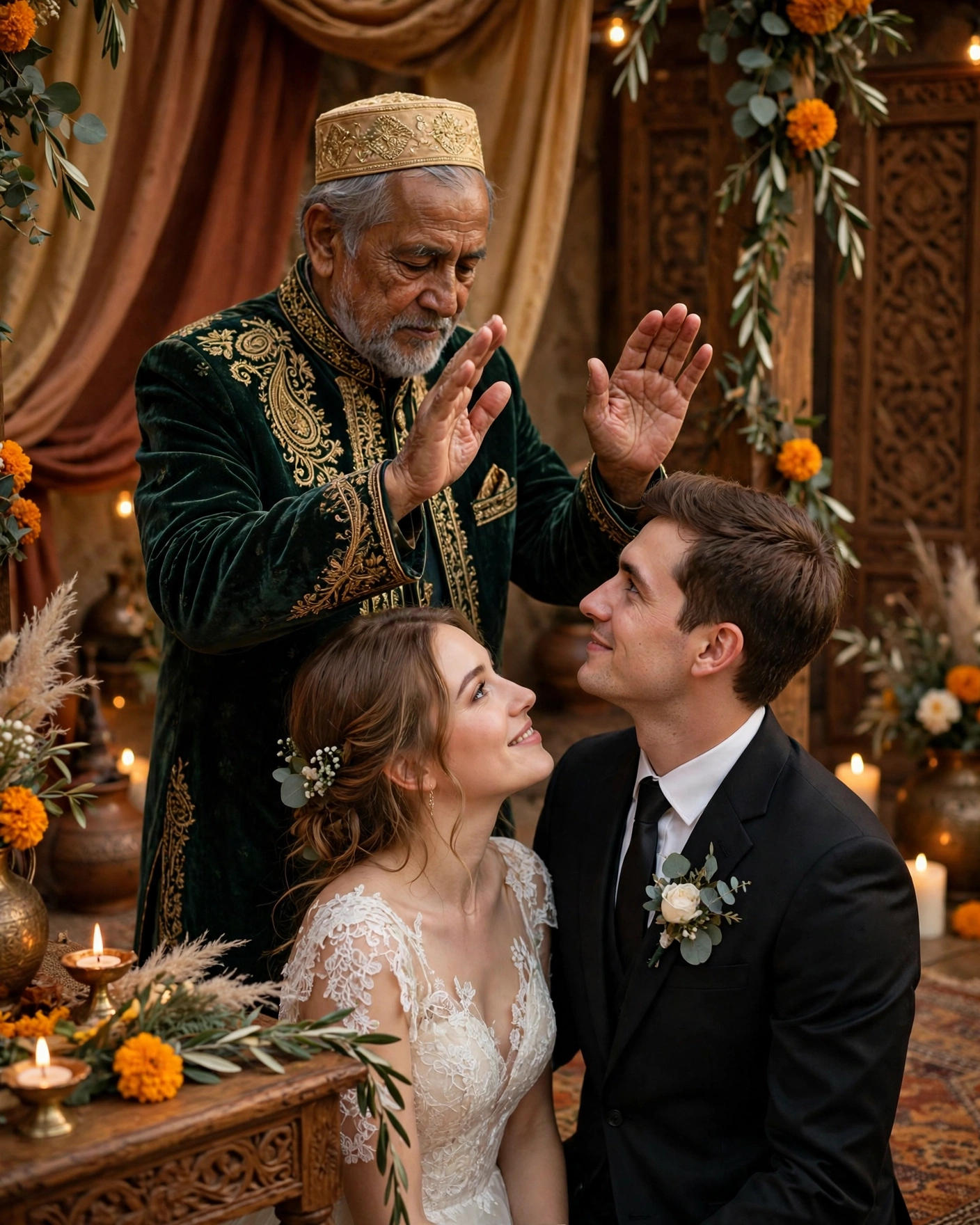
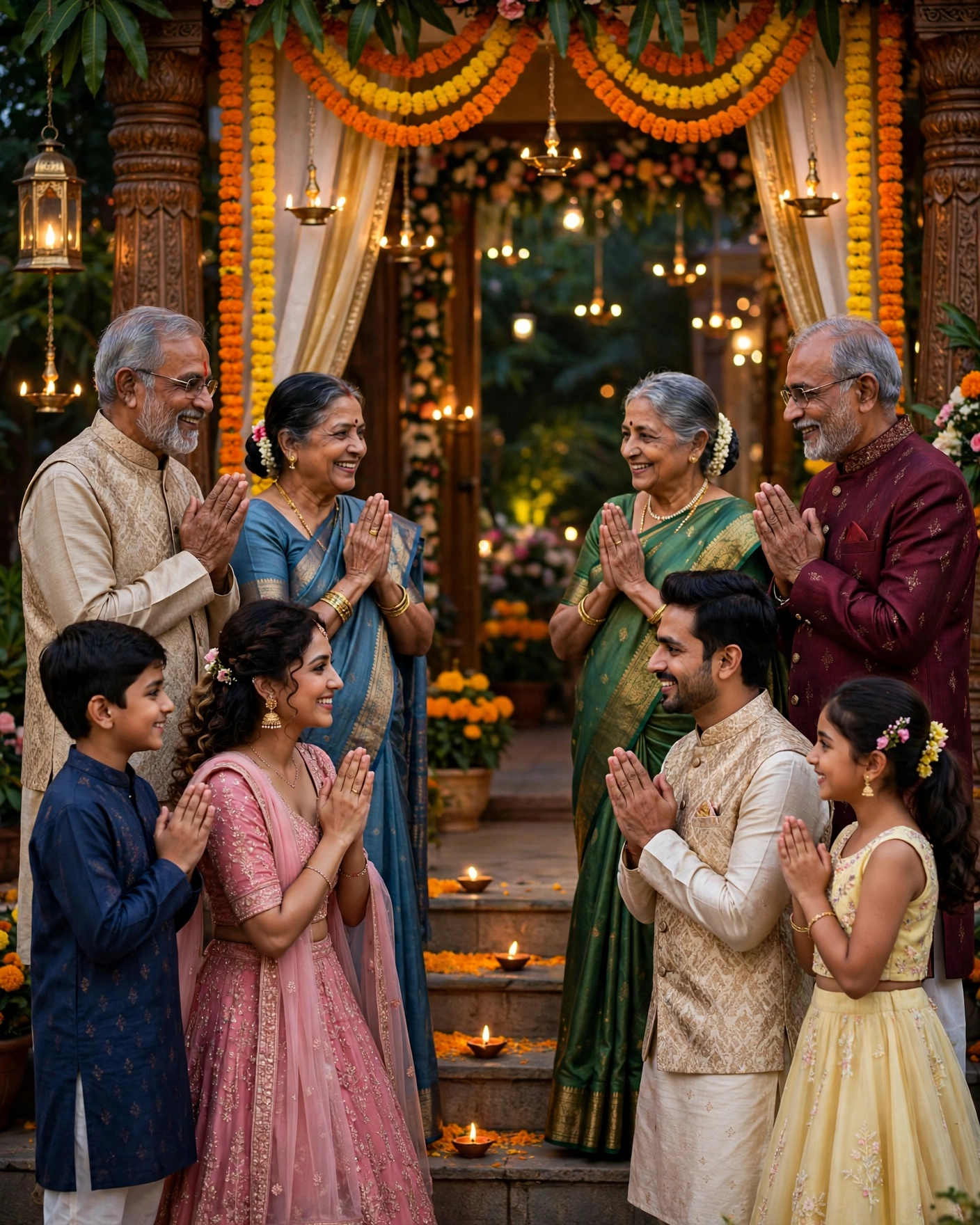
Put elders first in every sense: told first, named with respect, and given printed cards where they value them. An elder who receives a digital link with no call feels like an afterthought, however beautiful the invite. A five minute call before the link changes the whole experience.
When the two families disagree on etiquette, the couple should mediate early and privately, not by letting two different invites go out. One wedding, one names order, one event order, one plus one rule. Guests compare invites, and inconsistencies become family stories that outlive the wedding.
Etiquette is simply this: make every guest feel that their presence was considered, not assumed.
What you need
- A names order agreed by both families, in writing.
- An event order agreed by both families, in writing.
- A plus one and children policy, agreed and applied evenly.
- A VIP list for personal calls before mass invites.
- A guest list split by which events each person is invited to.
- A proofread by one person from each family.
How to share it
- Share with parents and close family first, so they hear it from you.
- Send to outstation guests next, since they need the most time to plan travel.
- Send to friends and colleagues after that, in small batches you can track.
- Follow up once, politely, with guests who have not replied.
- Keep one final list of who confirmed, so the venue count stays accurate.
What it costs
A MyIndiAura invitation comes in three options. A Cinematic Invite costs ₹499, an Invite App costs ₹399, and an Invitation Suite costs ₹99. Pick the one that fits how you want guests to open the invite, and pay only for that option. There are no struck through prices and no hidden extras in the price you see.
How to create yours
- Pick a design from the designs page that matches your wedding style.
- Add your names, your events, your dates, and your venue details.
- Add your photos and check every spelling, especially names and dates.
- Preview the invite on your phone, exactly as a guest will see it.
- Fix anything that looks off, then confirm your order.
- Share the finished invite with your guests, starting with family.
Create your wedding invitation
Related reading
Found this useful? Share it with someone planning a celebration.
Share