Wedding Anchor and MC Guide: How to Choose
How to choose a wedding anchor or MC who keeps the evening flowing, what to ask before booking, and how to brief them so nothing feels awkward.

In short
A good anchor is invisible and essential. They hold the evening together, introduce each moment, and keep the energy warm.
Choose someone warm, quick, and bilingual if your families speak two languages.
Brief with the order of the night, the names, and the jokes to avoid. Then let them run it.
What an anchor actually does
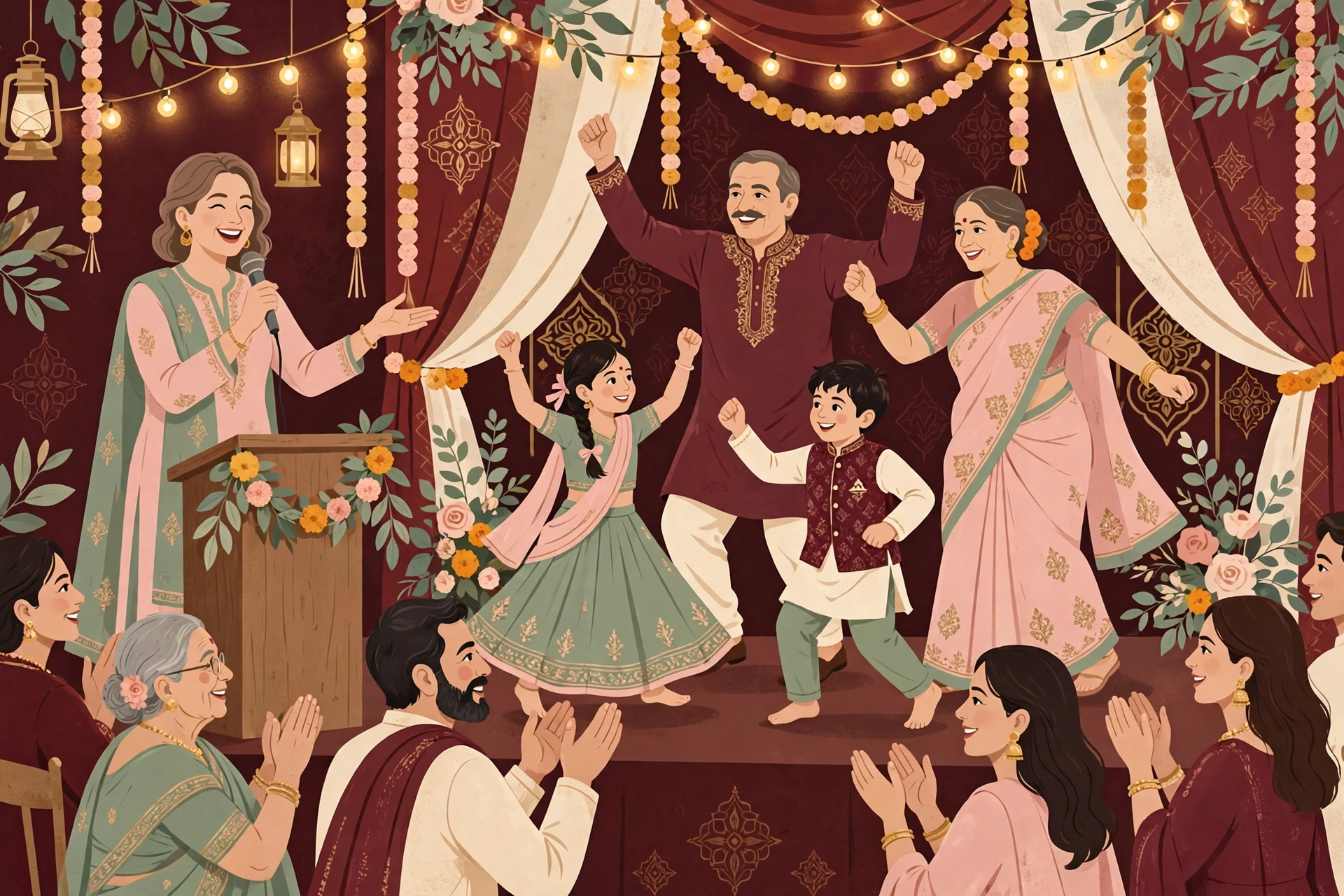
An anchor, or MC, is the voice of the evening. They welcome the guests, introduce the couple, call each performance to the stage, fill the gaps between acts, and close the night with warmth. A good anchor makes a long evening feel short. A poor anchor makes a short evening feel endless.
The job is harder than it looks. The anchor must know the order of the night, the correct pronunciation of every name, the family dynamics, and the mood of the room. They must be funny without being rude, warm without being sentimental, and quick without rushing. They must also know when to stop talking and let the music play.
Many families ask a cousin or a friend to anchor. That can work beautifully if the person is confident and prepared. It can also fail badly if the person freezes on stage or tells jokes that fall flat. A professional anchor costs money, but they bring the one thing a family member cannot guarantee: the ability to recover when something goes wrong.
Professional anchor or family member
A professional anchor brings experience. They have anchored a hundred weddings, they know the standard order of a sangeet and a reception, and they carry a set of lines that work with any crowd. They also bring their own sound check routine, their own timing, and their own way of handling a delay. If the performances run late, a professional fills the gap without panic.
A family member brings warmth. They know the couple, the family stories, and the inside jokes that make the room laugh. A cousin who has known the bride since childhood can introduce her in a way no professional can. The risk is the nerves. Standing on a stage in front of three hundred relatives is very different from being funny at a family dinner.
How to choose
Watch the anchor work before you book. A video of a full wedding set is the minimum, and a visit to a live event is better. Listen to the voice: is it warm, clear, and easy to listen to for three hours. Watch the timing: does the anchor pause and let the room laugh, or do they rush to the next line. Notice the language: can they switch between Hindi and English smoothly, or do they stumble.
Ask about the languages your families need. Many Indian weddings have two families who speak different languages, and the anchor must welcome both. An anchor who can move between Hindi, English, and a regional language without effort will make every guest feel included. Test this in the meeting: ask them to introduce the couple in both languages.
Ask for two references from recent weddings and call them. Ask whether the anchor arrived on time, whether they knew the names, whether they handled the delays gracefully, and whether the guests enjoyed them. Also ask what went wrong. Every wedding has a delay or a mix up. The answer tells you how the anchor behaves under pressure.
The brief: order, names, and boundaries
Write the brief on one page. The order of the night with timings, the names of the couple, the parents, and the performers, with the correct pronunciation written out. The key moments: the entry, the performances, the first dance, the cake cutting, the farewell. And the boundaries: the jokes to avoid, the topics that are off limits, and the family sensitivities.
Share the brief with the anchor at least a week before the wedding, and have one short call to walk through it. A fifteen minute call saves an hour of confusion on the day. Give the anchor the performance list with the exact order, so they never call the wrong act to the stage.

Working with the DJ, the band, and the photographer
The anchor is the link between the acts. They hand over to the DJ, introduce the band, and cue the photographer for the key moments. Give the anchor, the DJ, and the photographer one shared document with the order of the night, so all three work from the same plan. A short meeting or a group call a few days before the wedding prevents most mix ups.
Agree the cues. The anchor introduces the act, the music starts, and the act takes the stage without a long wait. A five minute gap between the introduction and the performance kills the energy, so rehearse the handover at the sound check. The anchor should also know the signal for the couple entry: the music, the lights, and the exact moment to call them in.
Style guidance: matching the anchor to your wedding
Match the anchor to the crowd. A young, high energy crowd wants a fun, fast anchor who can keep the party going. A formal, older crowd wants a warm, elegant anchor who speaks clearly and keeps the jokes gentle. A mixed crowd wants an anchor who can move between the two, and who knows when to be funny and when to be quiet.
Listen to how the anchor talks about weddings. If they talk only about themselves and their jokes, they may not suit a family celebration. If they ask about the couple, the families, and the order of the night, they understand the job. The anchor serves the wedding, not the other way round.
What you need before you book
Have these ready and the booking moves fast:
- The date, venue, and timings of each function with an anchor.
- The order of the night, with the performances and the key moments.
- The names, with pronunciations written out, and the family details.
- The languages the anchor must speak, and the tone you want.
- The jokes to avoid and the topics that are off limits, in writing.
- Two references from recent weddings, actually called.
Cost
A wedding anchor in India usually costs between ₹15,000 and ₹1,00,000 for an evening, depending on the city, the fame, and the function. A local anchor for a small sangeet can cost less, while a well known anchor or a celebrity host can cost far more. Travel and extra hours are often charged separately, so ask for an itemised quote.
The invitation that brings guests to the celebration is the Cinematic Invite at ₹499, the Invite App at ₹399, and Invitation Suites at ₹99. Add the sangeet and reception times clearly, so guests arrive in time for the welcome.
How to create
- Pick your invite design from the Cinematic Invites on MyIndiAura and note the theme name.
- Add the sangeet and reception details, with the venue and time.
- Add a line about the evening celebration, so guests arrive on time.
- Preview the invite on your phone, then share it on WhatsApp, family first.
Start with the invitation
The anchor will hold your evening together, but only the guests who arrive will hear the welcome. Send an invitation with the function times written clearly, and the room will be full when the anchor takes the stage.
MyIndiAura theme showcase
These Cinematic Invites from MyIndiAura fit this wedding. Each one is ₹499.
- Velvet Curtain: A stage and spotlight feel, made for an evening of performances.
- Midnight Manor: A late night party mood, perfect for a reception with a great anchor.
- Atelier Seal: Elegant and refined, it suits a formal celebration.
Related reading
Explore invitation designs
Choose a design and preview it free with your own names.


Found this useful? Share it with someone planning a celebration.
Share