Sherwani Fabrics Guide: Silk, Velvet and Brocade
Silk, velvet and brocade each give a sherwani a different weight, shine and mood. Here is how to tell them apart and pick the right one for your wedding.
What makes a sherwani fabric right for you
A sherwani is the most photographed outfit a groom wears, and the fabric decides how it looks in those photographs. The cut can be perfect and the embroidery can be beautiful, but the wrong fabric for the season will still show.
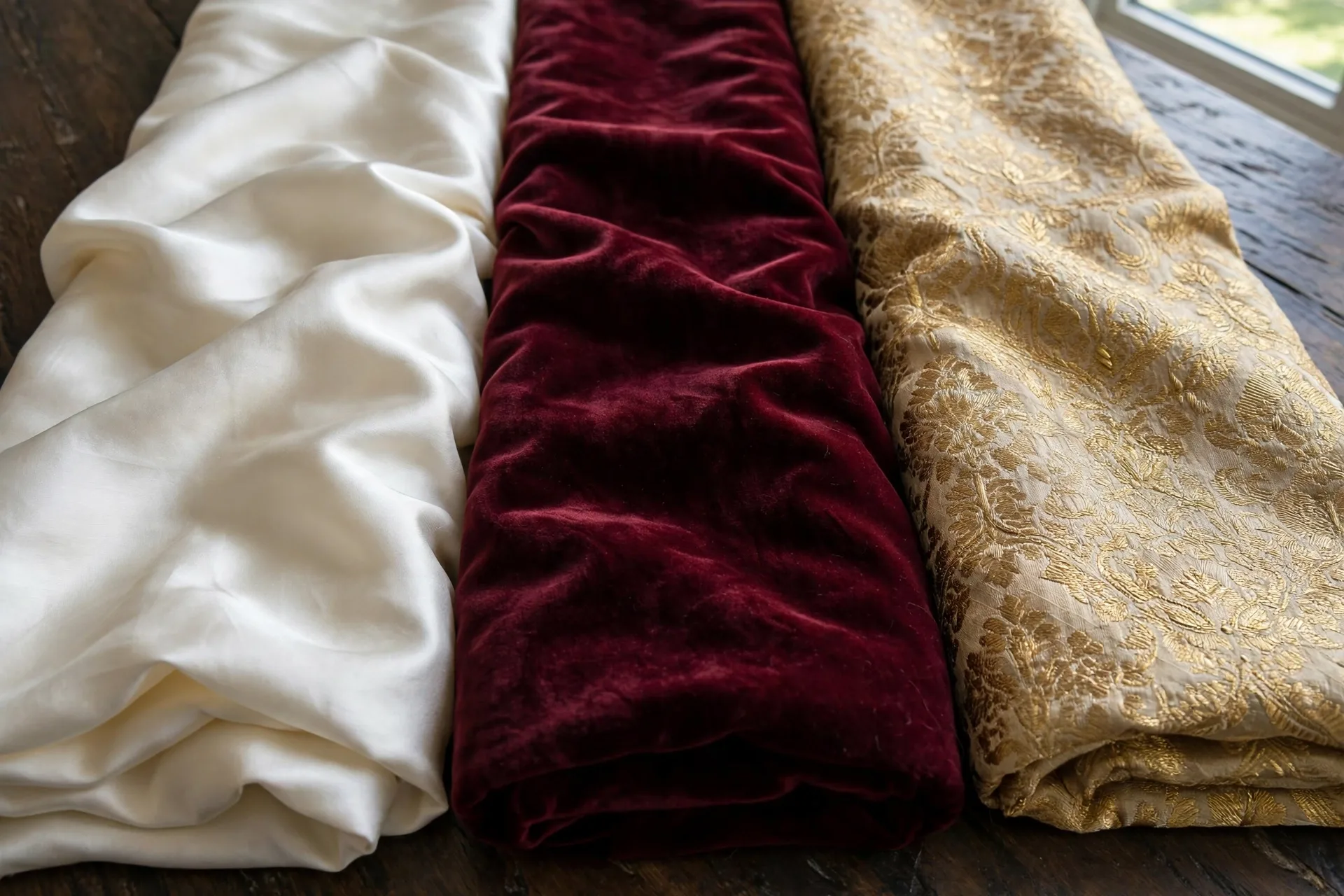
Three fabrics cover most grooms: silk, velvet and brocade. Silk is light with a soft shine. Velvet is deep, rich and warm. Brocade carries its pattern woven into the cloth itself, so it needs very little extra embroidery.
Start with the season, then the time of day, then the venue. A daytime summer wedding in Delhi asks for something light. A winter evening wedding in a palace asks for something with weight. The fabric is not a detail to leave for the last fitting. It is the first decision, because it shapes the cut, the lining, the embroidery and the price.
Silk sherwanis: light, shine and ceremony
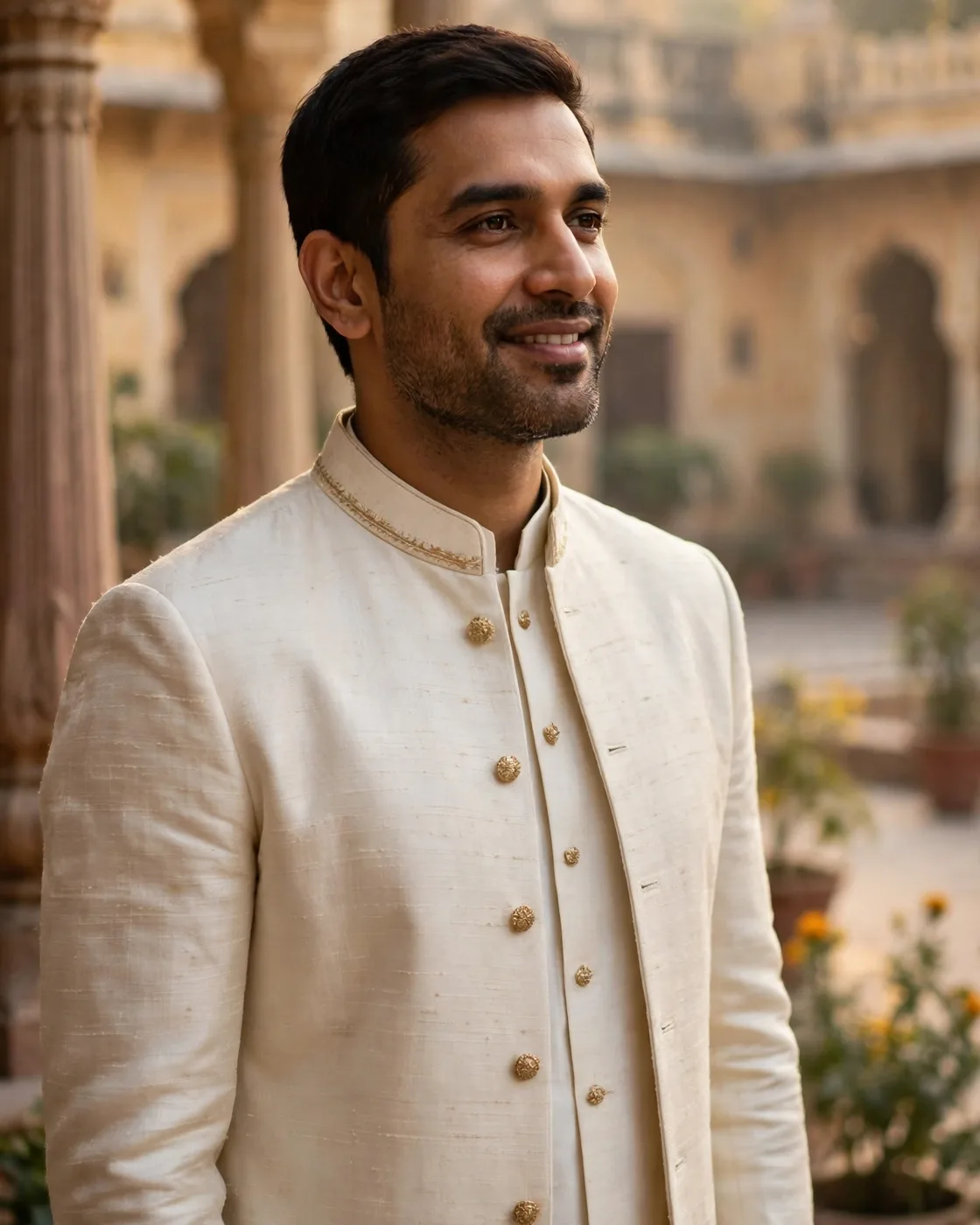
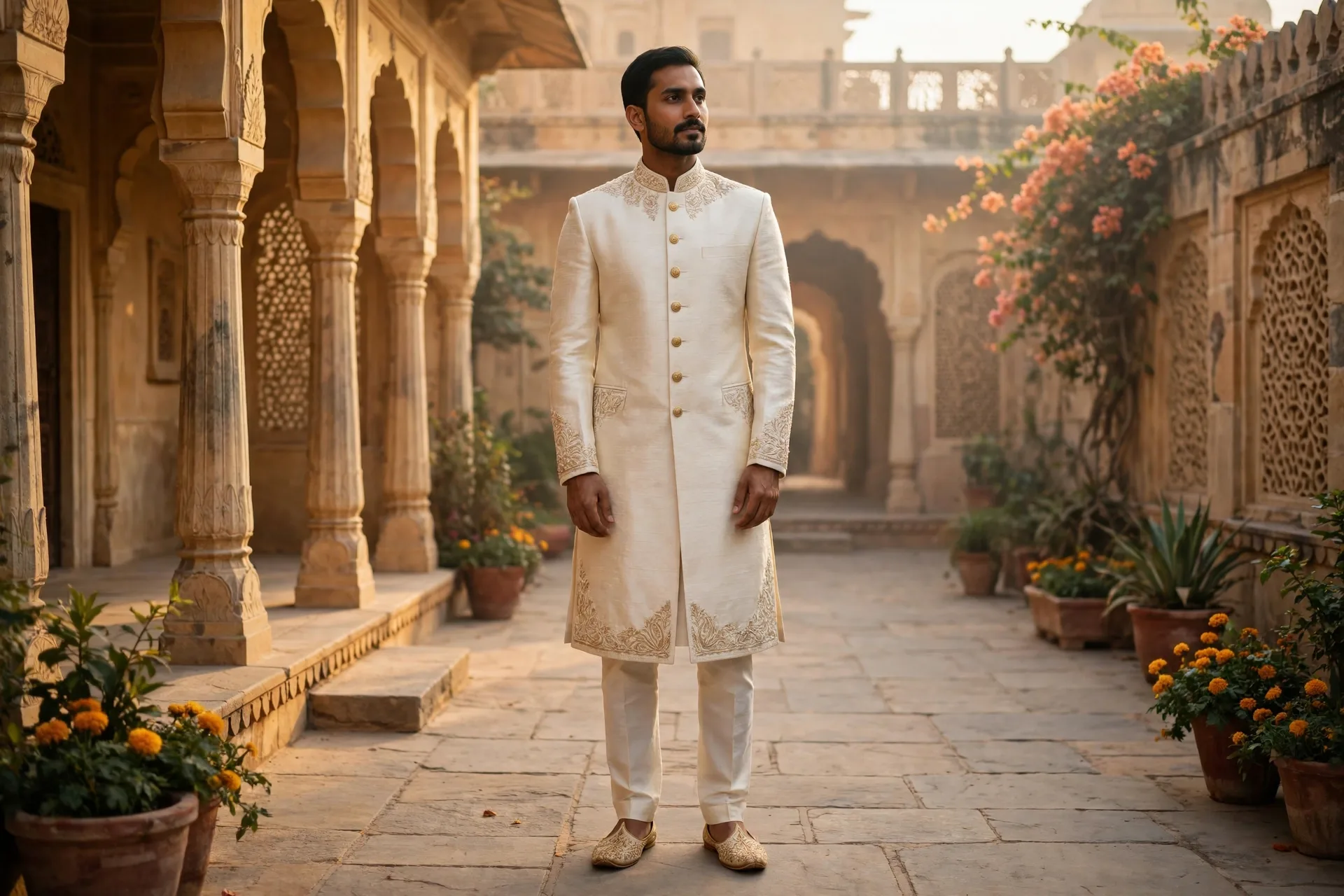
Silk is the classic sherwani fabric, and it suits most Indian weddings. Raw silk has a slightly uneven texture that photographs beautifully and feels rich without shouting. Dupion silk has a crisp hand and a subtle sheen, and it holds the structured shape of a sherwani well. Chanderi silk is lighter and airier, a good choice for a daytime wedding or a warm city.
Silk breathes, which matters when the ceremony runs for hours and the groom is under lights. It also takes dye beautifully, so the deep ivories, golds and jewel tones grooms love look their best on silk. The trade off is care. Silk creases if you sit badly, and it needs dry cleaning, so plan the day around that. A silk sherwani with a cotton or silk lining is comfortable for a full day, and the lining is where a good tailor earns his fee.
Choose silk when the wedding is in a warm month, when the ceremony is long, or when you want a classic look that will still look right in photographs ten years from now. Ivory, gold and deep maroon are the safest silk colours, and they pair well with a contrasting stole or a simple brooch.
Velvet sherwanis: depth for winter evenings
Velvet is the fabric of winter weddings. It has a depth no other fabric matches, because the pile catches light differently as you move. A burgundy velvet sherwani under evening lights looks almost alive, and that is why so many grooms choose it for receptions and late ceremonies.
Velvet is warm and heavy, so it belongs to November to February weddings, or to air conditioned evening venues. In summer it is a mistake. It also shows dust and lint, so keep a lint roller in the groom's kit and brush the shoulders before the photographs.
Velvet needs very little embroidery. A plain velvet sherwani with good buttons and a single brooch looks more expensive than a heavily embroidered one, because the fabric itself is the decoration. If you do add work, keep it to the collar and the placket, and let the velvet do the rest. Pair it with a silk churidar or slim trousers rather than a heavy dhoti, so the outfit does not become too bulky.
Brocade sherwanis: pattern woven in
Brocade is silk or a silk blend with the pattern woven into the cloth, usually in gold or silver thread. The design is part of the fabric, not stitched on top of it, so it never snags and it never looks added on. That makes brocade the most formal of the three fabrics, and the most traditional.
A brocade sherwani suits the main ceremony best, especially a morning or afternoon wedding where the woven pattern catches natural light. Because the fabric is already busy, keep the rest simple. A plain stole, a small brooch, and simple buttons are enough. Too much embroidery on brocade looks crowded and hides the weave you paid for.
Brocade is heavier than plain silk and stiffer, so the fit matters more. Get the shoulders and the chest fitted precisely, and sit down in it during the trial to check that it does not pull across the back. A well fitted brocade sherwani is one of the finest things a groom can wear, and it photographs like a portrait.
How to choose by season and function
Match the fabric to the day you will actually have, not the day you imagine. For a summer wedding, choose silk or a silk cotton blend for the ceremony and keep velvet out of the picture entirely. For a winter wedding, velvet is the natural choice for the evening, and brocade or silk works for the morning ceremony.
Many grooms now wear two sherwanis: a lighter one for the ceremony and a heavier one for the reception. If the budget allows one only, pick the fabric that suits the longest and most photographed function, which is usually the wedding ceremony itself.
Ask the tailor three questions before you commit: what is the fabric weight, what lining will go inside, and how will it behave after two hours of sitting and standing. A good tailor answers all three without hesitation. A shop that cannot answer is selling you a photograph, not a sherwani.
What a good sherwani fabric costs
Fabric sets the floor price of a sherwani. A ready silk sherwani from a good brand typically starts around ₹15,000 and goes up to ₹50,000 with hand embroidery. A velvet sherwani usually starts around ₹20,000, and a brocade sherwani with a gold weave typically starts around ₹25,000. Bespoke tailoring from a known designer adds more, and the final price depends on the embroidery hours as much as on the cloth.
Order early. A bespoke sherwani needs at least six to eight weeks, with two or three fittings. Fabric shops run out of the good brocades and velvets in wedding season, so buying the cloth first and tailoring second is the safer order. Always buy a little extra fabric for repairs, because matching a brocade later is almost impossible.
Caring for your sherwani after the wedding
Dry clean it within a week of the wedding, before sweat and food stains set. Store it on a wide padded hanger in a breathable cotton cover, never in plastic, which traps moisture. Velvet should be brushed gently with a soft clothes brush before storing. Silk and brocade should be kept out of direct sunlight, which fades gold thread first.
Frequently asked questions
Which sherwani fabric is best for a summer wedding?
Silk, or a silk cotton blend. It breathes, it drapes well, and it keeps you comfortable through a long ceremony. Avoid velvet completely in summer, and save brocade for an air conditioned venue.
Is velvet too hot for an Indian wedding?
In winter, no. Velvet is the right choice for a November to February evening wedding. In summer, yes, it will be uncomfortable, and the photographs will show it.
Does brocade need embroidery?
No. Brocade already carries its pattern in the weave, so heavy embroidery fights the fabric. Keep the extras small: a brooch, good buttons, and a plain stole.
How far in advance should I order a sherwani?
Six to eight weeks for bespoke tailoring, with at least two fittings. Ready made sherwanis need two weeks for alterations, so do not leave either to the last fortnight.
MyIndiAura theme showcase
These Cinematic Invites from MyIndiAura fit this wedding. Each one is ₹499.
- Velvet Curtain: deep velvet drapes and warm light, made for a winter evening wedding.
- Resham Satin: smooth silk tones that match a silk sherwani beautifully.
- Atelier Seal: a tailored, classic opening for a groom who chose his sherwani with care.
Related reading
- How to Choose the Perfect Wedding Invitation Theme
- Royal Wedding Invitation Card Designs for Indian Weddings
- Indian Wedding Planning Checklist: 12 Months to the Wedding Day
Pick the fabric for the day you will actually have, and the sherwani will look after itself.
Explore invitation designs
Choose a design and preview it free with your own names.



Found this useful? Share it with someone planning a celebration.
Share