Sherwani Colours for Grooms: Ivory to Jewel Tones
Ivory is safe, jewel tones are bold, and the right sherwani colour depends on your skin tone, the season and the bride. Here is how grooms choose well.
Why the colour matters more than the cut
Guests remember a groom's colour before they remember his cut. In photographs, the sherwani is the largest block of colour on the groom, and it sets the tone of every picture he is in. A colour that suits him makes his face look fresh and rested. A colour that fights him makes him look tired, even on the happiest day of his life.
The old rule was simple: grooms wore ivory or cream, brides wore red. That rule is gone. Today grooms wear burgundy, emerald, navy, gold and even blush, and the best dressed grooms are the ones who chose a colour for their own skin and their own wedding, not for tradition alone.
This guide walks through the range, from ivory to jewel tones, and shows how to pick the colour that will look right in your photographs and feel right on the day.
Ivory and cream: the safe classic
Ivory is the most forgiving sherwani colour there is. It suits almost every Indian skin tone, it photographs beautifully in daylight and under lights, and it pairs with any bride's outfit. A cream sherwani with gold buttons and a maroon stole is the look most families picture when they say groom.
The risk with ivory is looking washed out, especially for very fair grooms in bright daylight. The fix is contrast: a deeper stole, a coloured pocket square, or a brooch with a coloured stone. Keep the ivory warm rather than stark white, because pure white can look harsh in photographs and shows every mark.
Ivory also suits morning ceremonies best, when the light is soft. For an evening wedding, ivory still works, but it needs stronger accessories to hold its own against the decor and the lights.
Gold and beige: warm and regal
Gold is the colour of celebration, and a gold sherwani reads as festive from across the room. It suits grooms with warm or wheatish skin best, and it pairs naturally with a bride in red or maroon. Beige is gold's quieter cousin, elegant and understated, and it suits daytime weddings and outdoor venues.
The danger with gold is shine. A very shiny gold fabric under camera flash can blow out in photographs, so choose a matte or lightly textured gold rather than a high gloss one. Test it with a photograph in the shop, not just in the mirror, because the mirror flatters and the camera tells the truth.
Pastels: blush, mint and powder blue
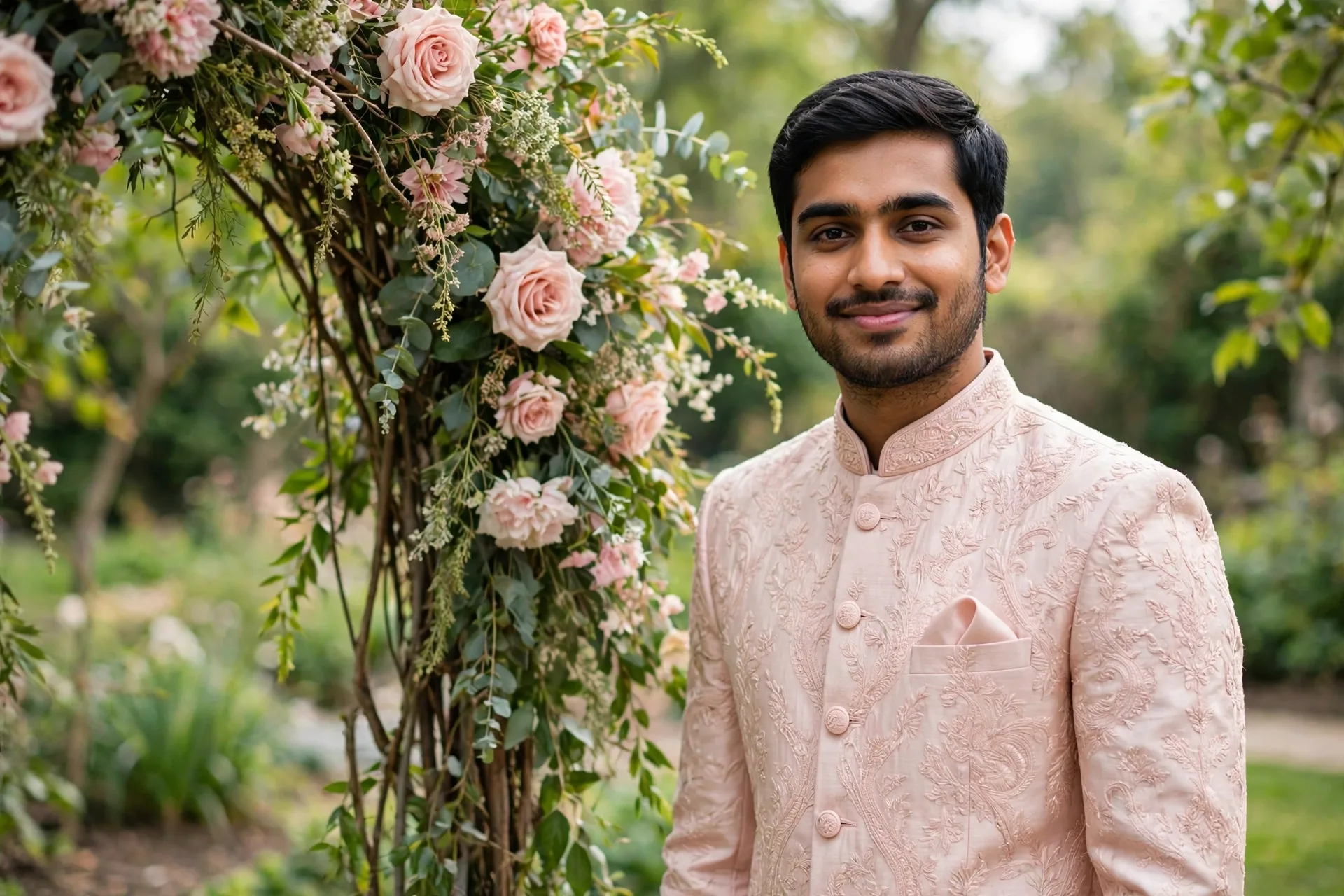
Pastel sherwanis are the modern choice, and they suit daytime and summer weddings beautifully. Blush pink, mint green, powder blue and lavender all photograph softly and look fresh in outdoor settings. They also suit grooms who do not want to wear a dark colour in the heat.
Pastels need a good fabric, because a cheap pastel looks washed out. Silk and brocade carry pastels well. Keep the embroidery tone on tone rather than contrasting, so the colour stays soft. And check the pastel against the bride's outfit: a blush groom next to a blush bride can look matched, while a mint groom next to a red bride can look like two different weddings.
Jewel tones: burgundy, emerald and navy
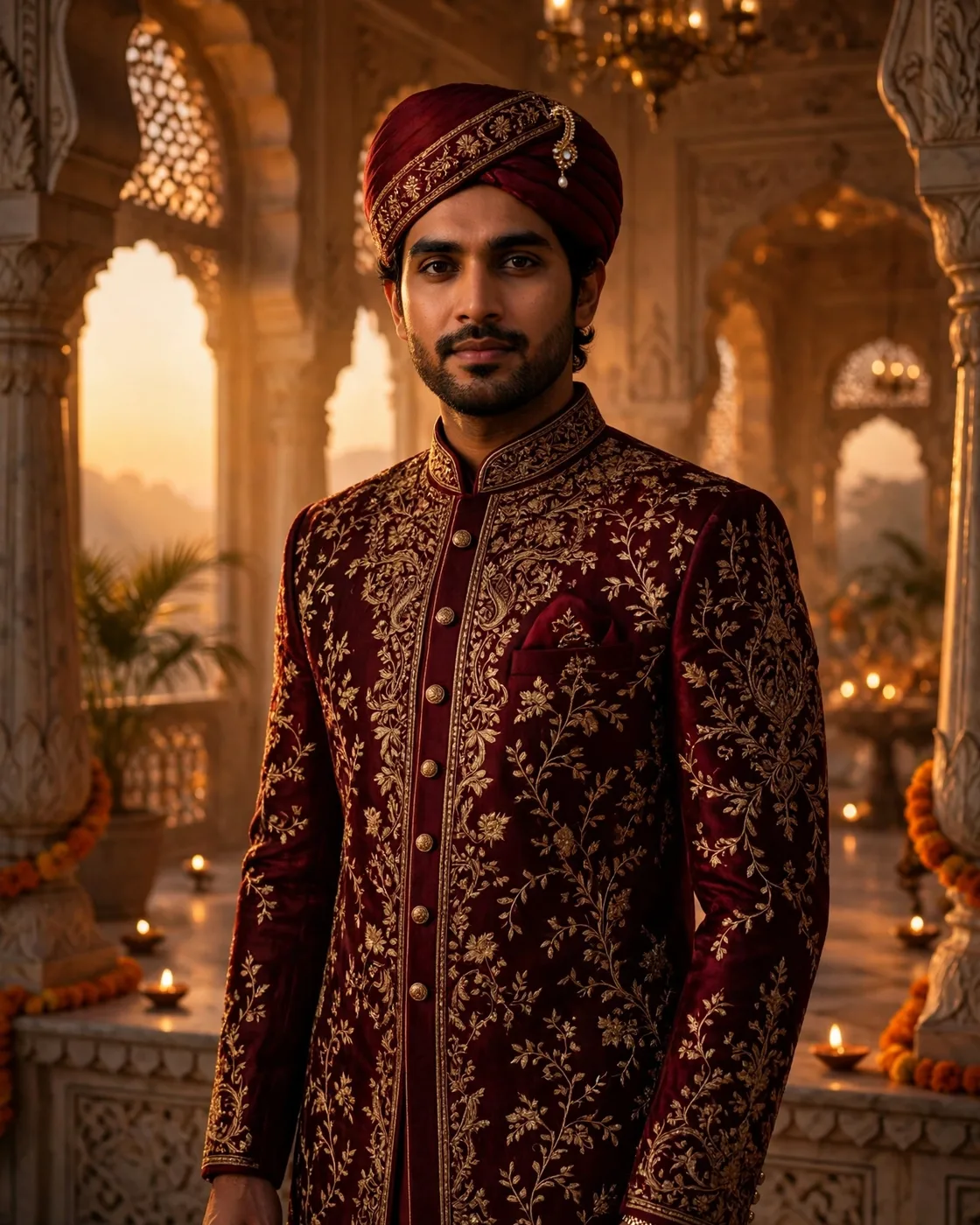
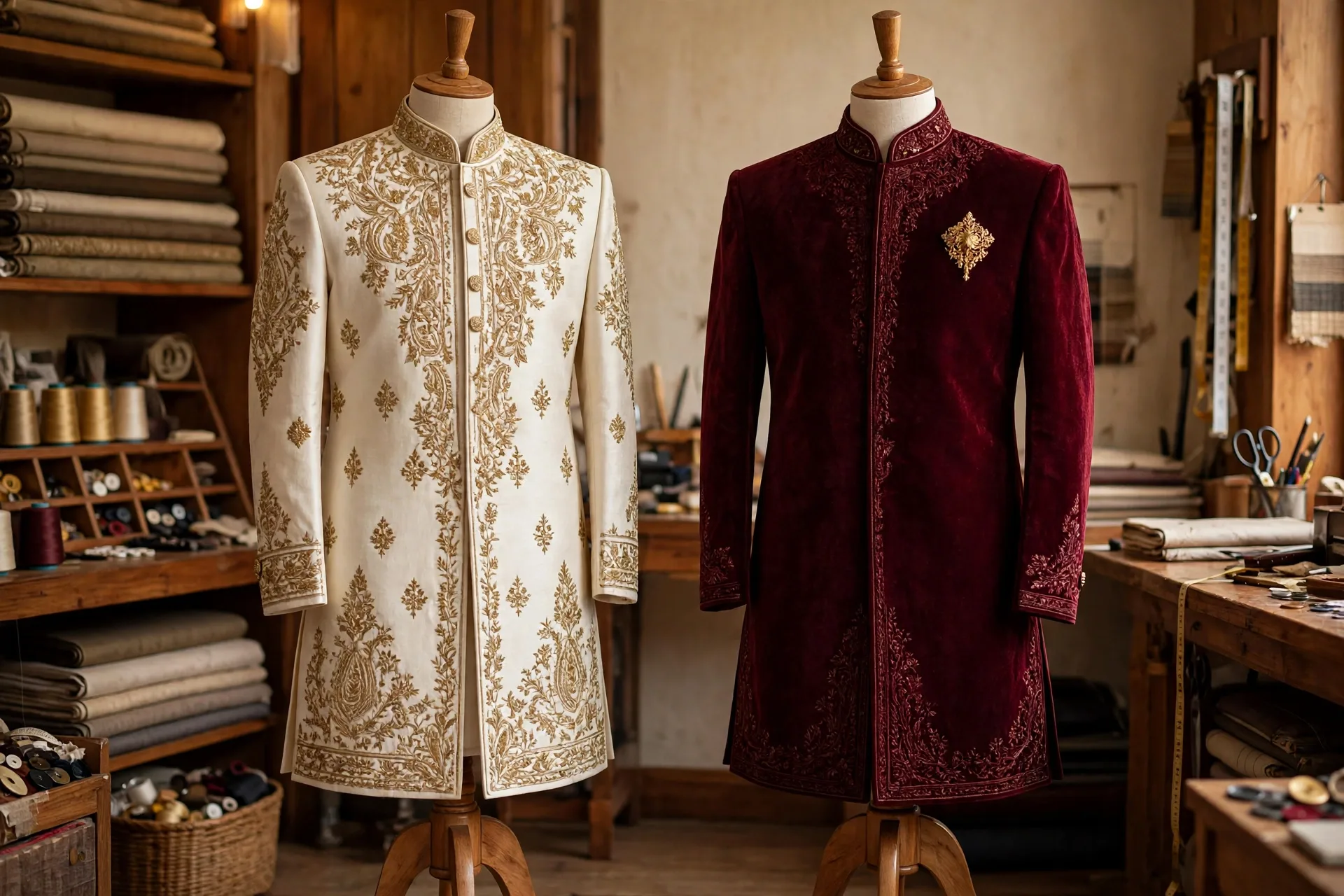
Jewel tones are the boldest choice, and the most rewarding when they work. Burgundy is the most popular, because it reads as both traditional and rich, and it suits almost every skin tone. Emerald is striking against gold jewellery and warm skin. Navy is the most formal, and it suits evening weddings and receptions best.
Jewel tones need confidence and the right season. They are winter and evening colours, and they can look heavy in a summer afternoon. They also need good lighting: a burgundy sherwani in a dim hall can photograph almost black, so check the venue lighting before you commit.
Match the jewel tone to the bride, not to the decor. A burgundy groom with a red bride looks coordinated. A navy groom with a red bride looks balanced. An emerald groom with a pink bride can clash, so try the two outfits side by side before the wedding, not on the morning of it.
How to pick your colour in four steps
First, know your skin tone. Warm skin glows in gold, ivory, burgundy and emerald. Cool skin suits navy, silver grey and blush. If you are unsure, hold the fabric near your face in daylight and look at your eyes, not the cloth. The right colour makes your eyes look brighter.
Second, look at the season and the time. Light colours for day and summer, deep colours for evening and winter. Third, look at the bride. The two outfits should sit in the same family of colours, even if they are not the same colour. Fourth, photograph the shortlist. A phone photograph in the shop, in daylight, tells you more than an hour in the mirror.
Matching without twinning
The groom should coordinate with the bride, not copy her. If she wears red, he can wear ivory with a red stole, or burgundy with gold work. If she wears pastel pink, he can wear cream with a pink pocket square. The link between the two outfits should be one colour, repeated once, not the whole palette repeated twice.
Avoid the exact same shade on both outfits, because in photographs the couple can blend into one block of colour. A shared accent, a stole, a brooch, a pocket square, is enough to say these two belong together.
What it costs
Colour does not change the price much, but the fabric that carries the colour does. A ready ivory silk sherwani typically starts around ₹15,000. Deep jewel tones in velvet or brocade usually start around ₹20,000 to ₹25,000, because those fabrics cost more. Custom dyeing to match the bride's outfit exactly adds time and cost, so order at least eight weeks ahead if you want a precise match.
Frequently asked questions
Can a groom wear black to an Indian wedding?
Black is traditionally avoided for the main ceremony, because it is considered inauspicious by many families. For the reception or a cocktail evening, a black bandhgala or suit is perfectly fine. Check with both families before wearing black to the pheras.
Which sherwani colour photographs best?
Ivory and burgundy photograph most reliably. Ivory stays bright in any light, and burgundy holds its depth. Very dark navy and very pale pastels are the hardest to photograph well, so test them at the venue if you can.
Should the groom match the bride exactly?
No. Coordinate, do not copy. One shared accent colour is enough. Exact matching looks staged in photographs and leaves no contrast between the couple.
What colour suits a summer daytime wedding?
Ivory, cream, beige or a soft pastel. Light colours keep you cool and photograph fresh in daylight. Save the jewel tones for the evening functions.
MyIndiAura theme showcase
These Cinematic Invites from MyIndiAura fit this wedding. Each one is ₹499.
- Cream Crest: soft ivory and gold, made for an ivory sherwani wedding.
- Velvet Curtain Crimson: deep crimson drapes for a burgundy or jewel tone groom.
- Midnight Manor: a dark, formal evening opening for a navy or black reception look.
Related reading
- Best Wedding Invitation Backgrounds and Colour Combinations
- How to Choose the Perfect Wedding Invitation Theme
- Royal Wedding Invitation Card Designs for Indian Weddings
Choose the colour that makes your face look rested, and the photographs will take care of themselves.
Explore invitation designs
Choose a design and preview it free with your own names.
Found this useful? Share it with someone planning a celebration.
Share