Sangeet Performances: How to Plan the Lineup
A sangeet lineup is a story, with a beginning, a middle, and an end. Here is how to order the acts, use surprise performances, and keep the show under ninety minutes.
The shape of a good lineup
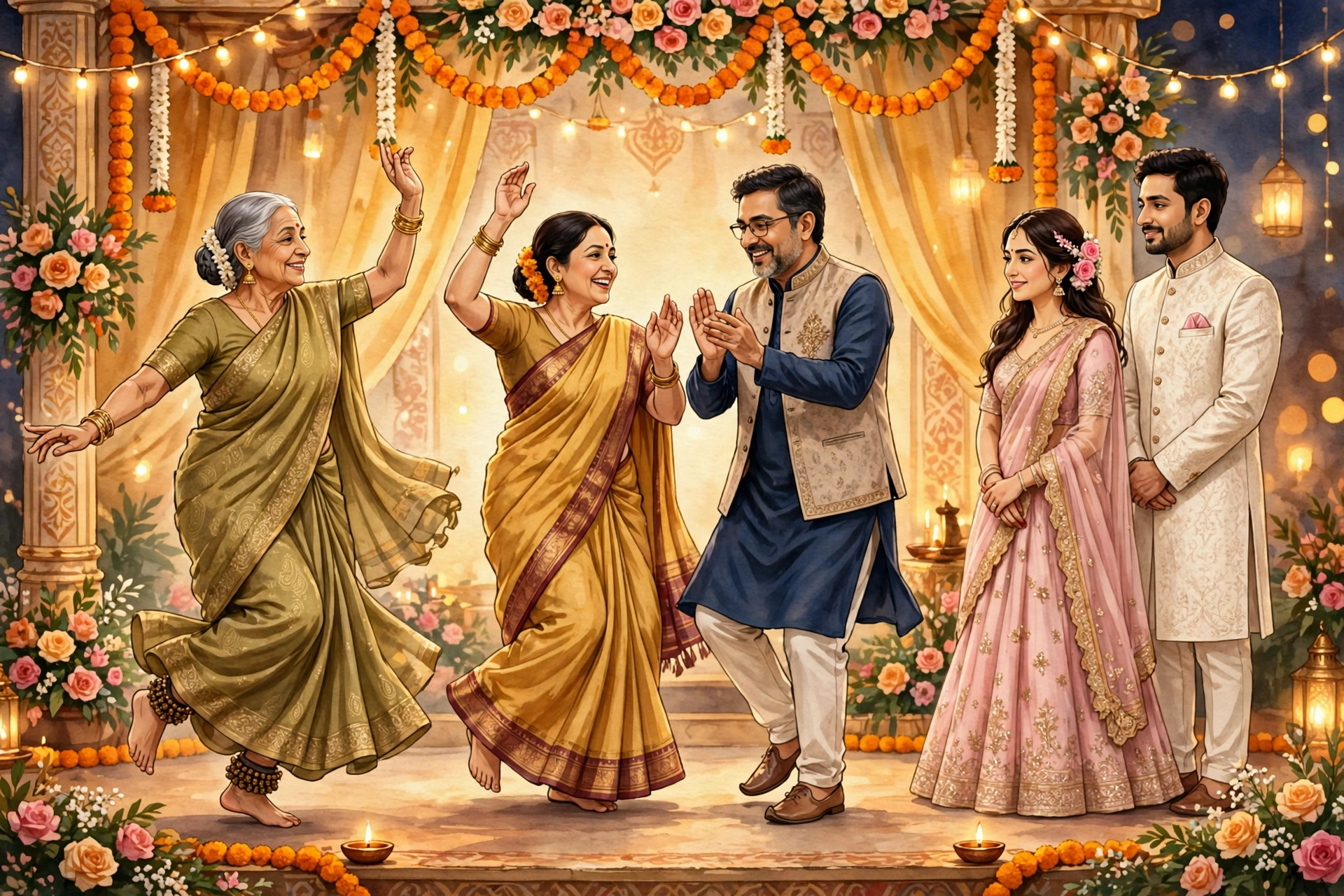
A sangeet lineup is a story, and like any story it needs a beginning, a middle, and an end. The beginning warms the room up. The middle carries the energy. The end brings everyone together. A lineup that ignores that shape, and just lists acts in whatever order people signed up, will feel random, however good the individual performances are.
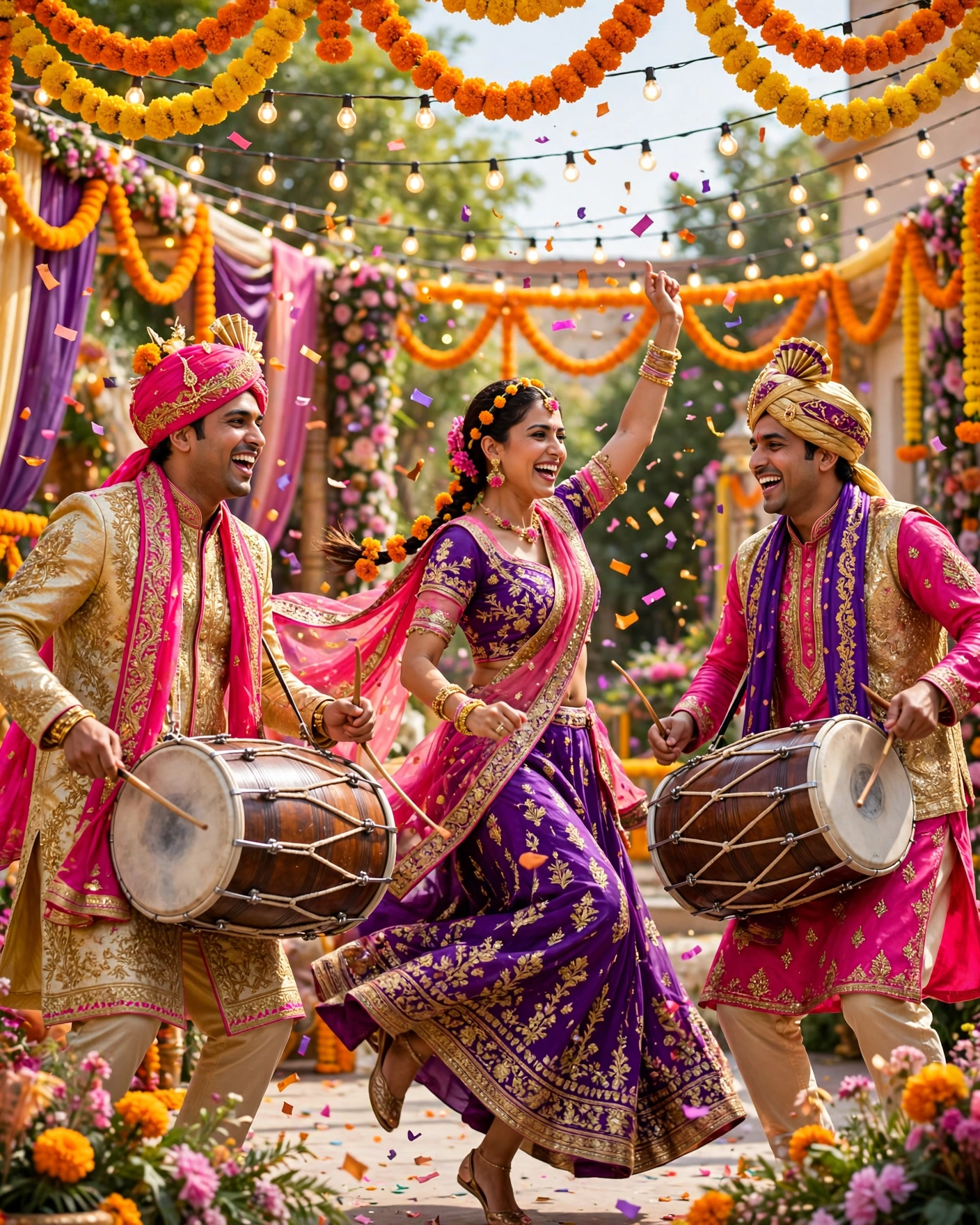
The usual shape works well. Open with something warm and easy, like the grandparents or the parents, so the room settles and the applause comes easily. Follow with the friends' groups, which carry the energy. Put the couple's dance in the middle or near the end, never first, since the couple deserves a warm room, not a cold one. Close with a group finale, the whole family on stage together, so the night ends with everyone involved.
Keep the whole show to ninety minutes at most, including the gaps between acts. A sangeet that runs two hours tires the audience, and the last acts suffer. If the lineup is too long, cut an act, or shorten two. Nobody remembers the act that was cut, but everyone remembers a show that dragged.
Who performs, and in what order
The classic order is: grandparents, parents, bride's friends, groom's friends, siblings, couple, finale. That order works because it builds. The elders open gently, the friends bring the energy, the siblings add the emotion, and the couple closes the story. But the order should follow your families, not a formula. If the groom's friends are the strongest act, put them later, when the room is warm. If the parents are nervous, put them early, when the room is forgiving.
Give every group a clear slot, with a start time, and tell them the slot a week in advance. Groups that do not know when they perform will either be missing or will be waiting anxiously for an hour. Keep the gaps between acts short, under two minutes. A long gap, while the next group finds its place, drains the energy. A host who keeps the show moving is worth more than any single act.
Surprise acts, and how to use them
A surprise act is a gift, but only if it is truly a surprise and truly good. The classic surprise is the groom's friends performing for the bride, or the bride's siblings performing a skit about the couple. It works when the performers have rehearsed, and when the surprise is kind. A surprise that embarrasses the couple, or that is under rehearsed, is worse than no surprise at all.
Keep surprises to one or two in the whole night. A sangeet full of surprises becomes chaotic, and the audience stops trusting the order. Tell the host about the surprise in advance, so they can set it up smoothly, but tell nobody else. And keep the surprise short, two to three minutes. A surprise that runs long stops being a surprise and becomes a second show.
The best surprise is often the simplest: the couple's parents dancing together to the song from their own wedding, or the siblings performing a song the couple loves. It does not need to be elaborate. It needs to be heartfelt, and it needs to be rehearsed.
The host, the music and the backstage plan
A good host is the difference between a smooth sangeet and a messy one. The host introduces each act, keeps the energy up, fills the gaps, and handles the surprises. Pick someone confident, funny, and organised, from either family, and give them the running order a week in advance. The host should know every act, every song, and every cue.
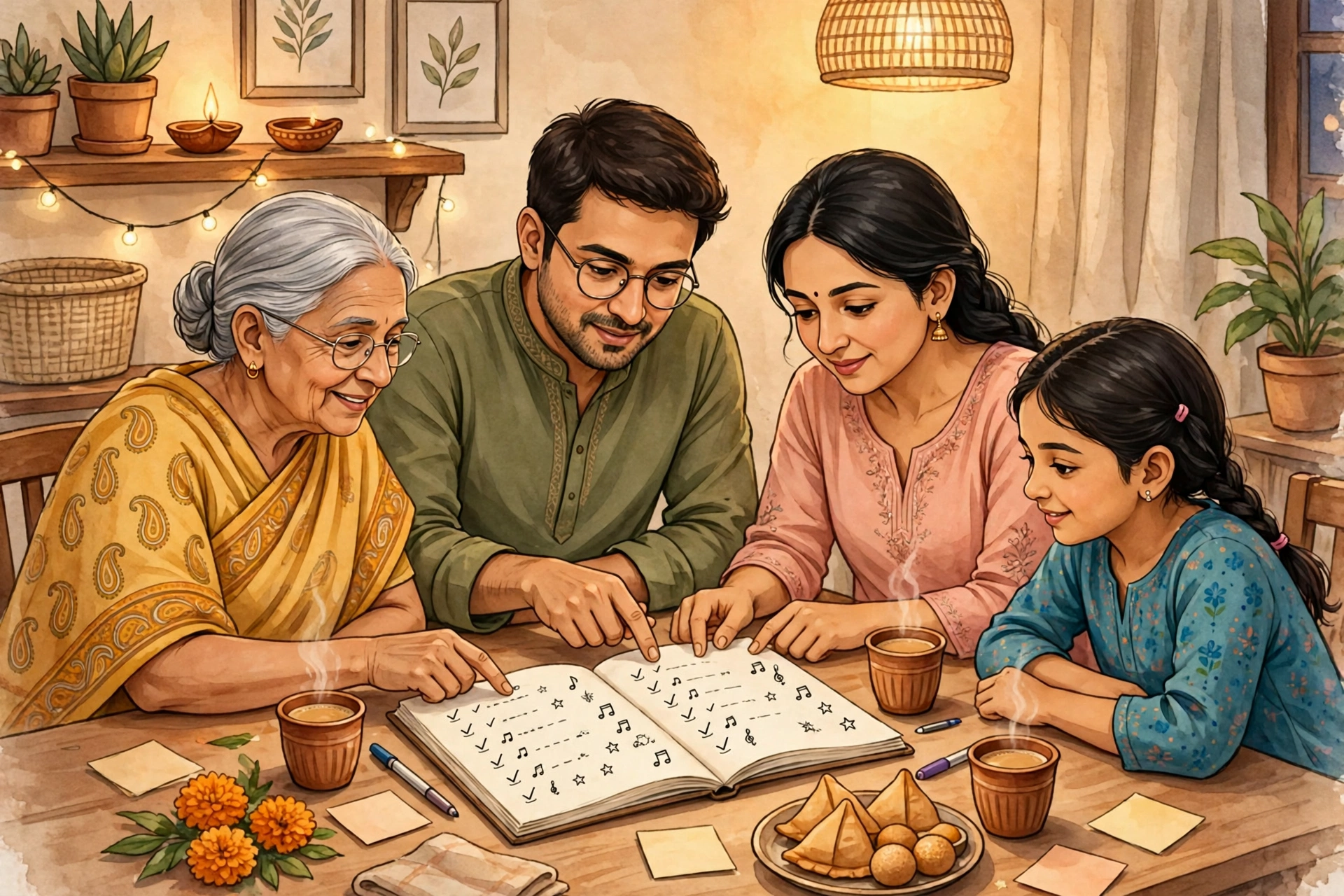
The music needs one owner, with the playlist downloaded in advance and the songs in the right order. The owner should sit near the sound system, with a printed running order, and should test the sound before the guests arrive. A song that starts late, or at the wrong volume, can ruin an act that took weeks to rehearse.
Backstage needs a plan too. A small room or a curtained corner, where the next group can wait, with water and a mirror. A printed running order on the wall. And one person, a stage manager, who calls the groups. Without a stage manager, groups will be in the wrong place at the wrong time, and the host will be left filling gaps that should not exist.
Rehearsals, and the day before
Rehearse the lineup, not just the dances. A full run through, in order, with the host, the music, and the gaps, is the only way to know whether the show works. Do it the day before, on the actual stage if possible, and time it. If it runs over ninety minutes, cut something. If a gap is too long, fix the handover. If an act is weak, move it earlier, where the room is forgiving.
On the night, keep the printed running order backstage, and keep a spare copy with the host. Remind every group of their slot an hour before the show, and again ten minutes before they perform. And remind everyone of the one rule that matters: if something goes wrong, keep going and smile. The audience will not remember a missed step, but they will remember a show that stopped.
After the finale, let the open dancing begin at once, while the energy is high. Do not let the room cool down with speeches or a long pause. The finale should flow straight into the dancing, so the night ends the way it should, with everyone on the floor.
What it costs
On MyIndiAura, a Cinematic Invite is ₹499, an Invite App is ₹399, and an Invitation Suite is ₹99. Choose by what your invitation needs to do, not by price alone. A cinematic invite suits a wedding with a film led opening, while an invite app suits a full week of functions with RSVP and maps.
How to create your sangeet invitation
- Pick a design from the designs page at myindiaura.com/designs.
- Add the sangeet date and time, the venue, and the dress code for guests.
- Add photos of the couple, the venue map, and the RSVP button.
- Preview the invitation on your own phone, then share the link on WhatsApp. See myindiaura.com/create to start, and myindiaura.com/pricing for the full price list.
Details to check before you send
- The names of the bride and groom, spelt exactly as the families use them
- The sangeet date and time, checked with the venue
- The full venue address, with the area and a map link
- The dress code, if you want guests in festive colours
- An RSVP contact for guests who need directions
- The order of events, if the haldi or mehndi is the same day
Frequently asked questions
How long should a sangeet lineup run?
Ninety minutes at most, including the gaps between acts. A show that runs two hours tires the audience, and the last acts suffer. If the lineup is too long, cut an act or shorten two.
Where should the couple's dance go in the lineup?
In the middle or near the end, never first. The couple deserves a warm room, not a cold one. Close with a group finale, so the night ends with everyone involved.
How many surprise acts should there be?
One or two in the whole night. A sangeet full of surprises becomes chaotic. Tell the host in advance, keep the surprise short, and make sure it is kind and rehearsed.
Do we need a host and a stage manager?
Yes, both. The host introduces the acts and keeps the energy up. The stage manager calls the groups and keeps them in the right place. Without them, the gaps between acts will drain the show.
MyIndiAura theme showcase
These Cinematic Invites from MyIndiAura fit this wedding. Each one is ₹499.
- Music Box: a musical invitation, made for a night of songs.
- Sangmarmar Shaam: a marble evening, made for a sangeet stage.
- Saanjh Mandir: an evening temple glow, made for a sangeet at dusk.
Related reading
- Sangeet Ceremony Invitation Ideas
- Sangeet Invitation Wording and Messages
- Wedding Schedule Template for Indian Ceremonies
Create your sangeet invitation on MyIndiAura, and plan a lineup with a beginning, a middle, and an end.
Explore invitation designs
Choose a design and preview it free with your own names.

Found this useful? Share it with someone planning a celebration.
Share