How to Choose a Wedding Videographer
A wedding videographer makes the film your family will watch for years. Here is how to judge full films, check audio, and book a team that tells your story well.
What a videographer actually does
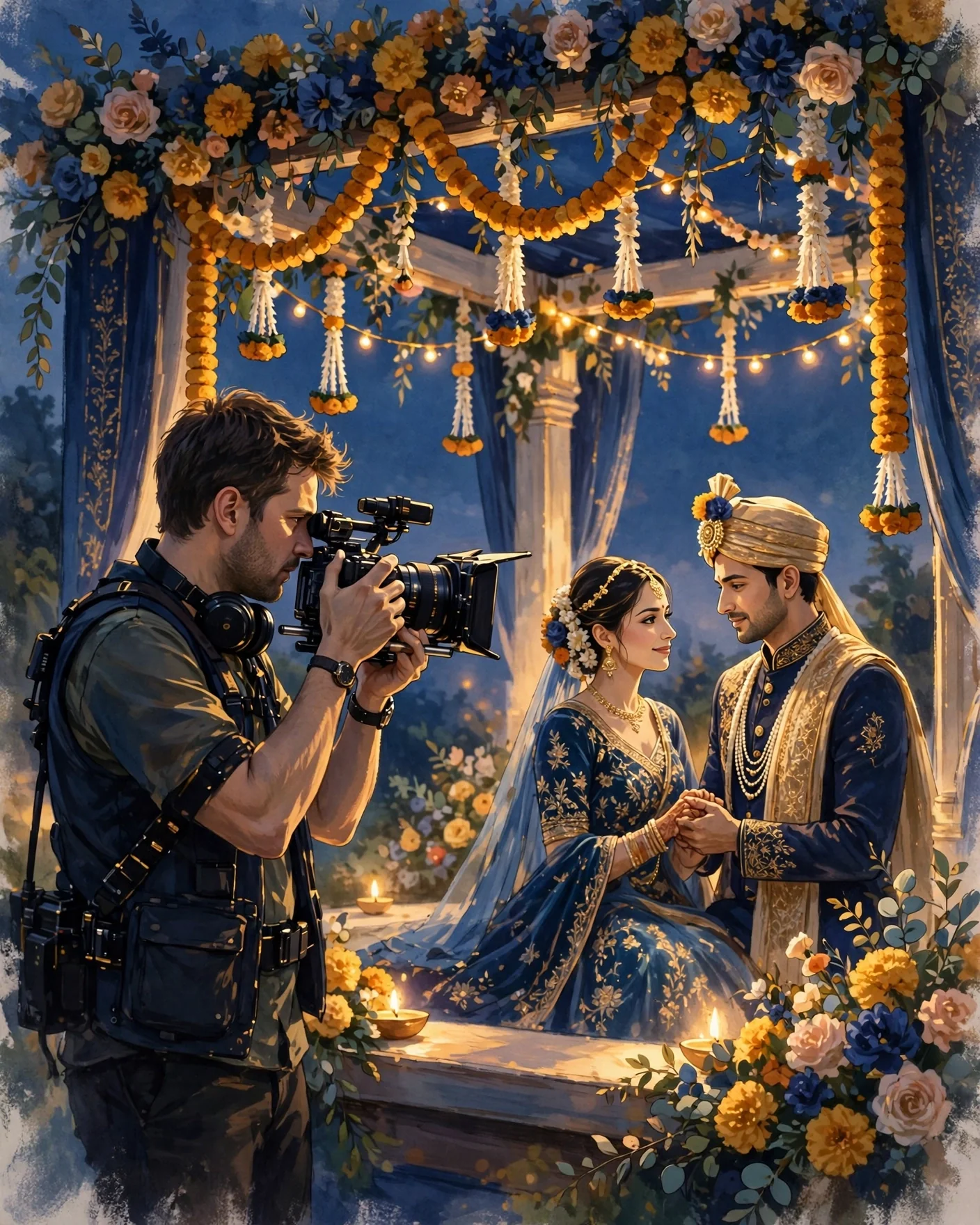
A wedding videographer does more than record the day. They plan the story, choose the angles, capture the sound, and edit hours of footage into a film that feels like the wedding itself. The camera work is only half the job. The editing is the other half, and it is where a good film is made or lost. A videographer who shoots beautifully but edits poorly will give you a film you watch once. A videographer who does both well will give you a film you watch every year.
Start by deciding what kind of film you want. Some couples want a short cinematic film of fifteen minutes, with music and emotion. Others want a long documentary film of forty minutes, with the full rituals and the speeches. Some want both, which is the most common choice. Your answer shapes the team you need, the price you should expect, and the questions you should ask.
How to judge a full film, not just a teaser
Watch two or three full wedding films from the videographer, from start to finish. A teaser is a highlight reel, and anyone can make a good one from a good day. A full film shows whether the videographer can hold a story: whether the vows are clear, whether the rituals make sense in order, whether the music fits the mood, and whether the pacing keeps you watching to the end.
Listen as well as watch. Good films have clean audio of the vows and the speeches, because the team placed microphones properly and recorded the sound separately. Bad films drown the vows in music, because the audio was never captured well. Ask how the team records audio during the pheras and the speeches, and whether they use a second camera, a gimbal, or a drone for the wide frames. The answers tell you whether you are hiring filmmakers or camera operators.
The team, the style and the edit
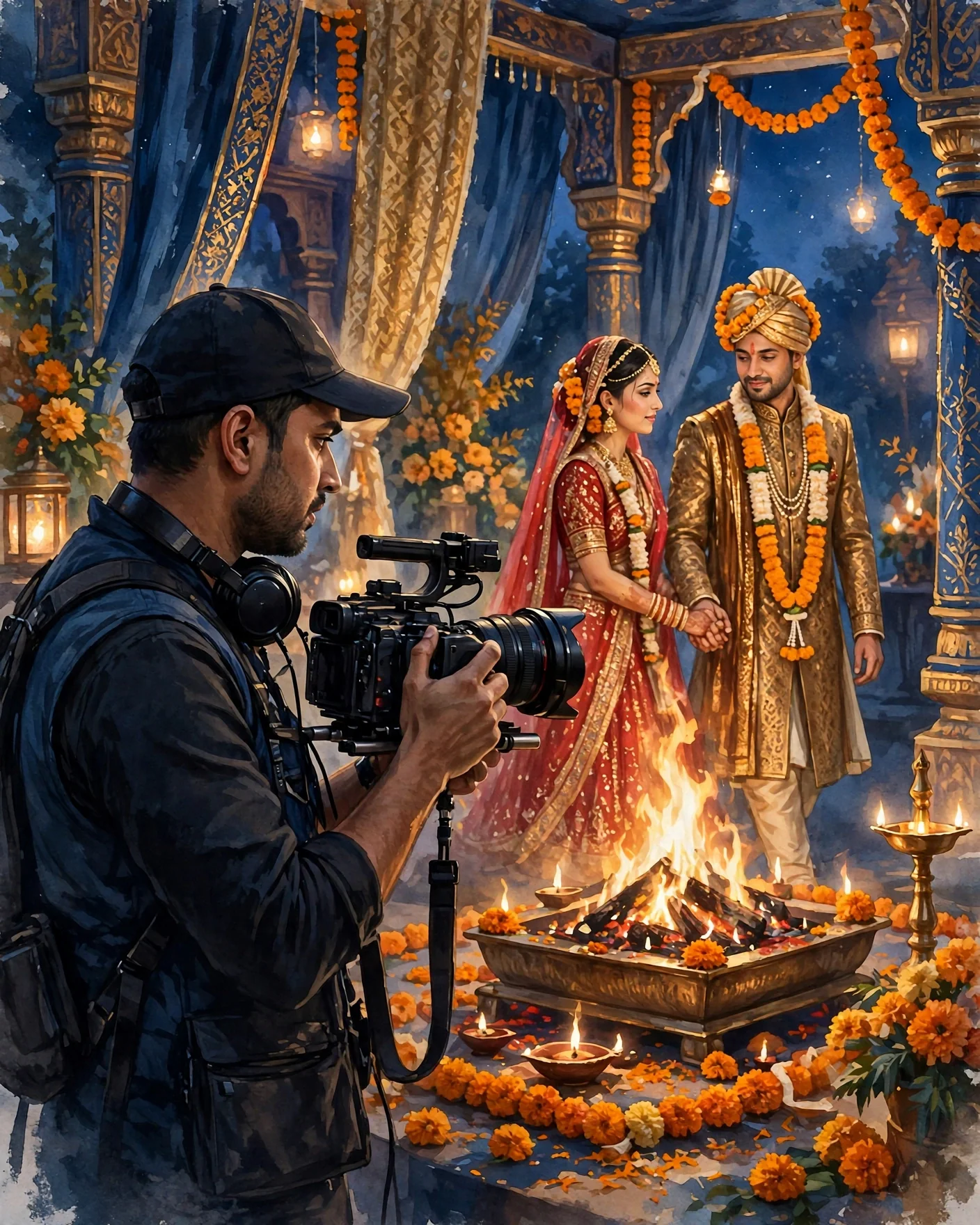
Ask who will actually shoot your wedding. Many studios have a lead filmmaker and a team, and the person you meet may not be the person who films your day. Ask for the names of the team, and watch a film shot by that team, not by the studio owner. Ask how many cameras will be used, and whether the film will be shot in the cinematic style, with shallow depth and slow movement, or in the documentary style, with the rituals covered plainly and fully.
Ask about the edit. How long will the full film be, and what is included: the teaser, the reels, the full film, the raw footage? How long after the wedding will you get each one? Who chooses the music, and can you request songs that matter to you? A videographer who answers all of this clearly, in writing, is a professional. One who is vague about the edit is a risk, because the edit is where the film is made.
Booking, backup and the day itself
Book early, because good videographers take only one wedding a day, and the best dates go months ahead. The agreement should name the team, the dates and venues, the deliverables, the delivery timeline, and the payment schedule. Ask what happens if a team member falls ill, and whether the footage is backed up on the day. A professional team backs up the footage before leaving the venue, because a lost card means a lost wedding.
Share the full schedule with the team at least two weeks before the wedding, with the times of every function, the venue addresses, and the names of the key family members. Tell them which moments cannot be missed, and tell them about any surprises, so they can be in position before it happens. Introduce the film team to the photo team, so they coordinate and do not block each other during the rituals.
What it costs
Videography is usually priced with photography, as a combined package, and the film is often the larger share. A teaser and a few reels are usually included; a full film, a second camera, and a drone are often extra. On MyIndiAura, a Cinematic Invite is ₹499, an Invite App is ₹399, and an Invitation Suite is ₹99. The invitation can carry your teaser film as its opening, so the film reaches every guest before the wedding, and the videography money works harder than the album alone.
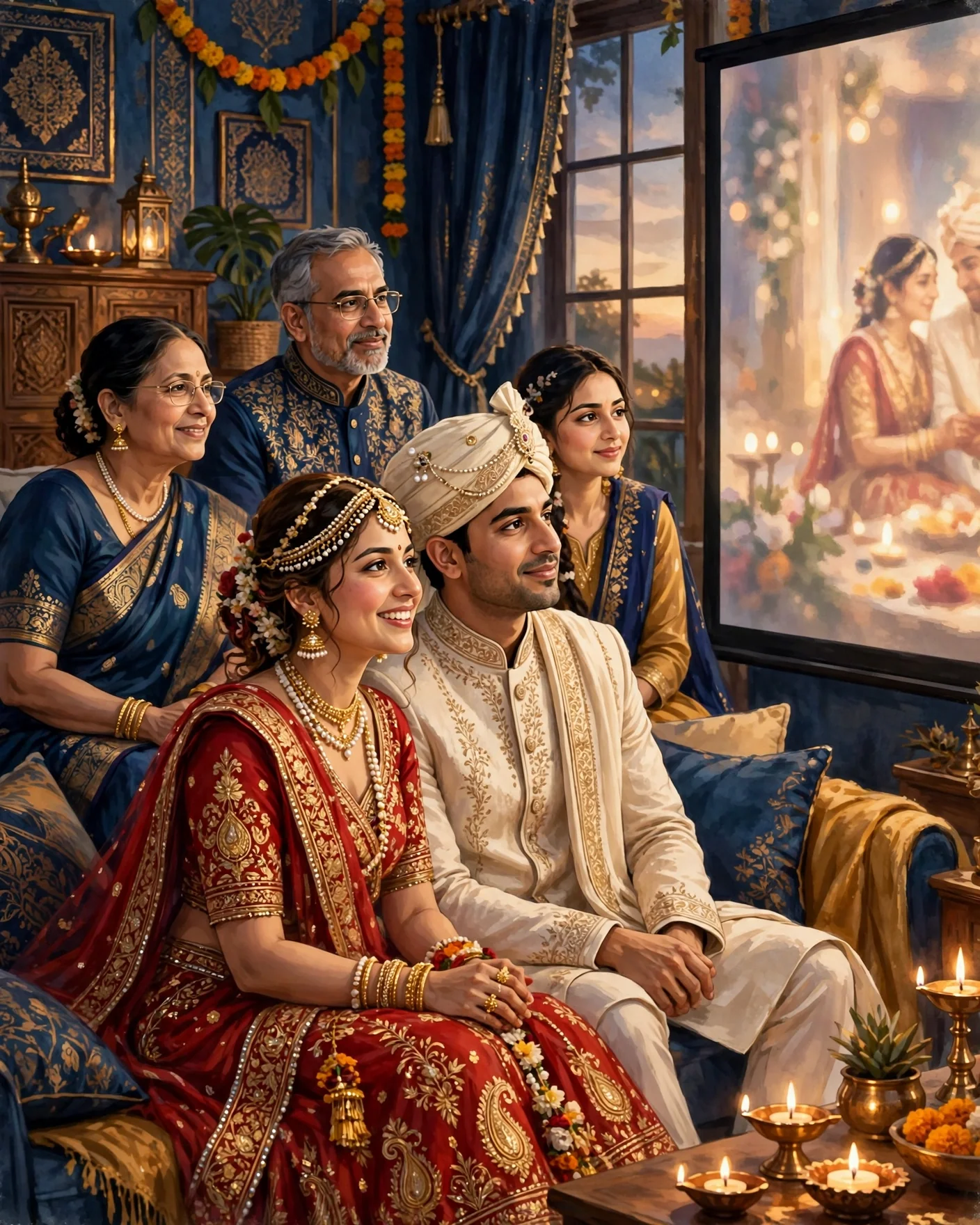
How to use your wedding film in your invitation
Your teaser film is the most powerful opening your invitation can have. A Cinematic Invite from MyIndiAura can open with the film, so guests feel the wedding before they read the details.
- Pick the teaser film, or the best ninety seconds of your wedding film, for the opening.
- Choose a design from the designs page at myindiaura.com/designs that suits the mood of the film.
- Add the names, the dates, the venue, and the RSVP button, then preview the invitation on your own phone.
- Share the link on WhatsApp. See myindiaura.com/create to start, and myindiaura.com/pricing for the full price list.
Details to check before you book
- Two or three full wedding films watched, start to finish
- Audio plan confirmed for vows and speeches
- Team named in writing, with the lead filmmaker confirmed
- Teaser, full film, and reels agreed, with delivery dates
- Backup plan confirmed: footage backed up before leaving the venue
- Photo and film teams introduced, so they coordinate on the day
Frequently asked questions
What is the difference between a videographer and a cinematographer?
The words are often used for the same job. A videographer usually covers the day plainly and fully, while a cinematographer aims for a film-like look, with careful framing, movement, and editing. Ask to see full films, not the title, because the work matters more than the word.
How long should a wedding film be?
A teaser is one to two minutes. A cinematic wedding film is fifteen to twenty five minutes. A documentary film can be thirty to forty minutes, with the full rituals and speeches. Most couples choose a cinematic film plus a teaser, because the short film gets watched and shared, and the long film preserves the day.
Do we need two videographers?
Two cameras suit a wedding with parallel events, a large baraat, or a long ceremony, because one can stay wide while the other goes close. One camera is enough for a small wedding with one function. Ask your videographer what they recommend for your guest count and your venue.
When will we get our wedding film?
A teaser usually arrives within a week. A full film takes six to twelve weeks, because the editing is long and detailed. Ask for the timeline in writing before you book, and ask how the film will be delivered: a link, a drive, or a pen drive.
Should we give the videographer a list of shots?
Yes, a short list of the moments that cannot be missed: the vows, the pheras, the vidaai, the first dance, the speeches. Share it two weeks before the wedding. Trust the videographer for the rest, because the best frames are the ones they find, not the ones you listed.
MyIndiAura theme showcase
These Cinematic Invites from MyIndiAura fit this wedding. Each one is ₹499.
- Rose Film: a film-like invitation that opens the way your wedding film will.
- Music Box: a musical invitation that suits a wedding with a strong film and song story.
- The Wedding Post: a photo-led design that carries your film stills beautifully.
Related reading
- Wedding Invitation Video Trends for 2026
- Best Wedding Invitation Video Ideas for Indian Weddings
- How to Create a Wedding Invitation Video with Music
Create your wedding invitation on MyIndiAura, and let your film open the story.
Explore invitation designs
Choose a design and preview it free with your own names.


Found this useful? Share it with someone planning a celebration.
Share