Groom Shoes Guide: Mojari, Loafers and Juttis
Mojaris are traditional, loafers are modern, and juttis are the comfortable middle. Here is how grooms choose shoes that look right and survive the day.
Why groom's shoes deserve a real decision
Grooms spend weeks choosing the sherwani and minutes choosing the shoes, and the photographs punish that order. Shoes appear in every full length photograph, in the baraat, in the pheras where the groom sits cross legged, and in the couple portraits. Bad shoes, or shoes that hurt, show in the groom's face long before anyone looks at his feet.
The good news is that groom's shoes are a small decision with a small price. Three options cover almost every wedding: mojaris, juttis and loafers. Each suits a different outfit and a different function, and most grooms end up owning two of the three by the wedding week.
Mojaris: the royal traditional shoe
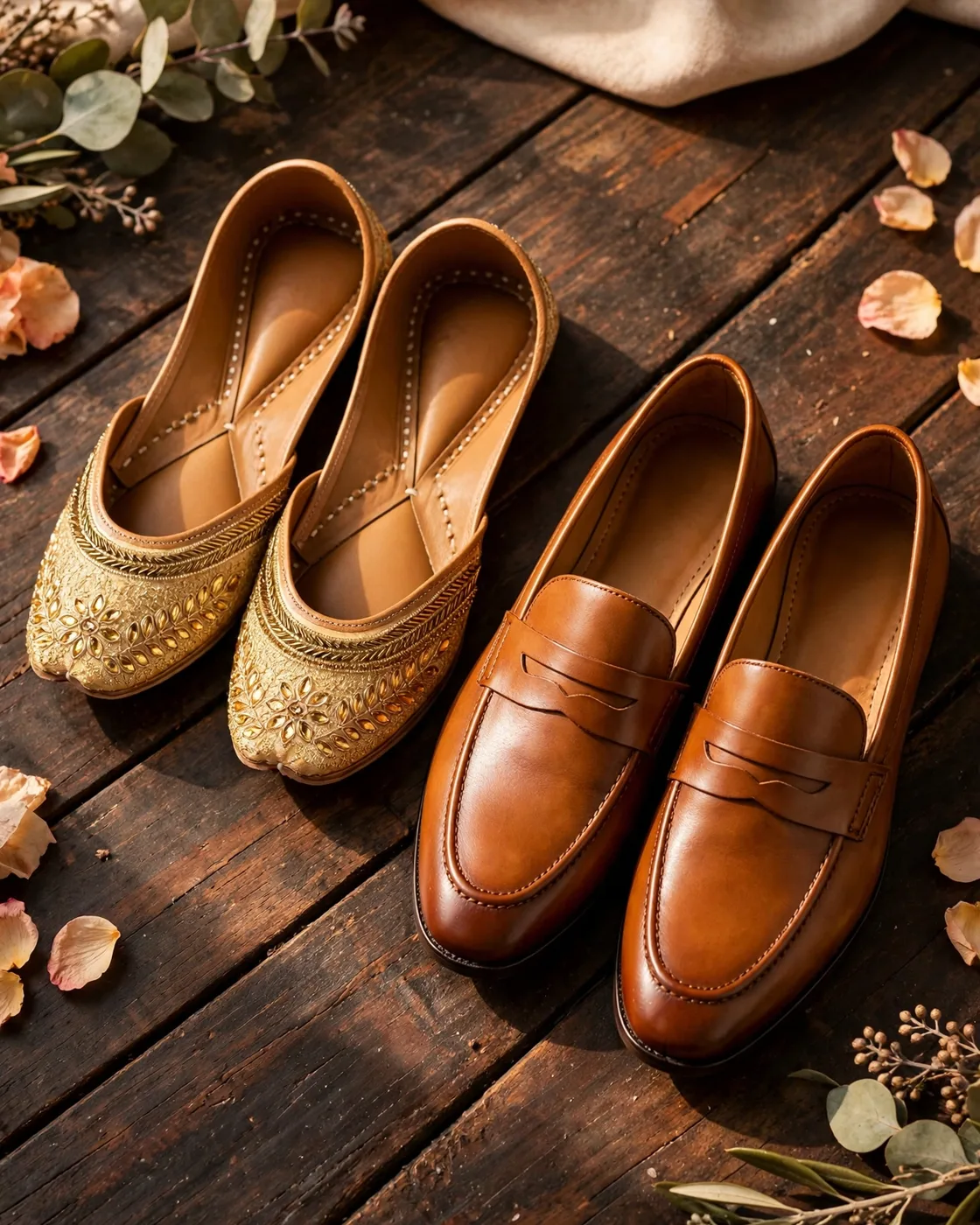
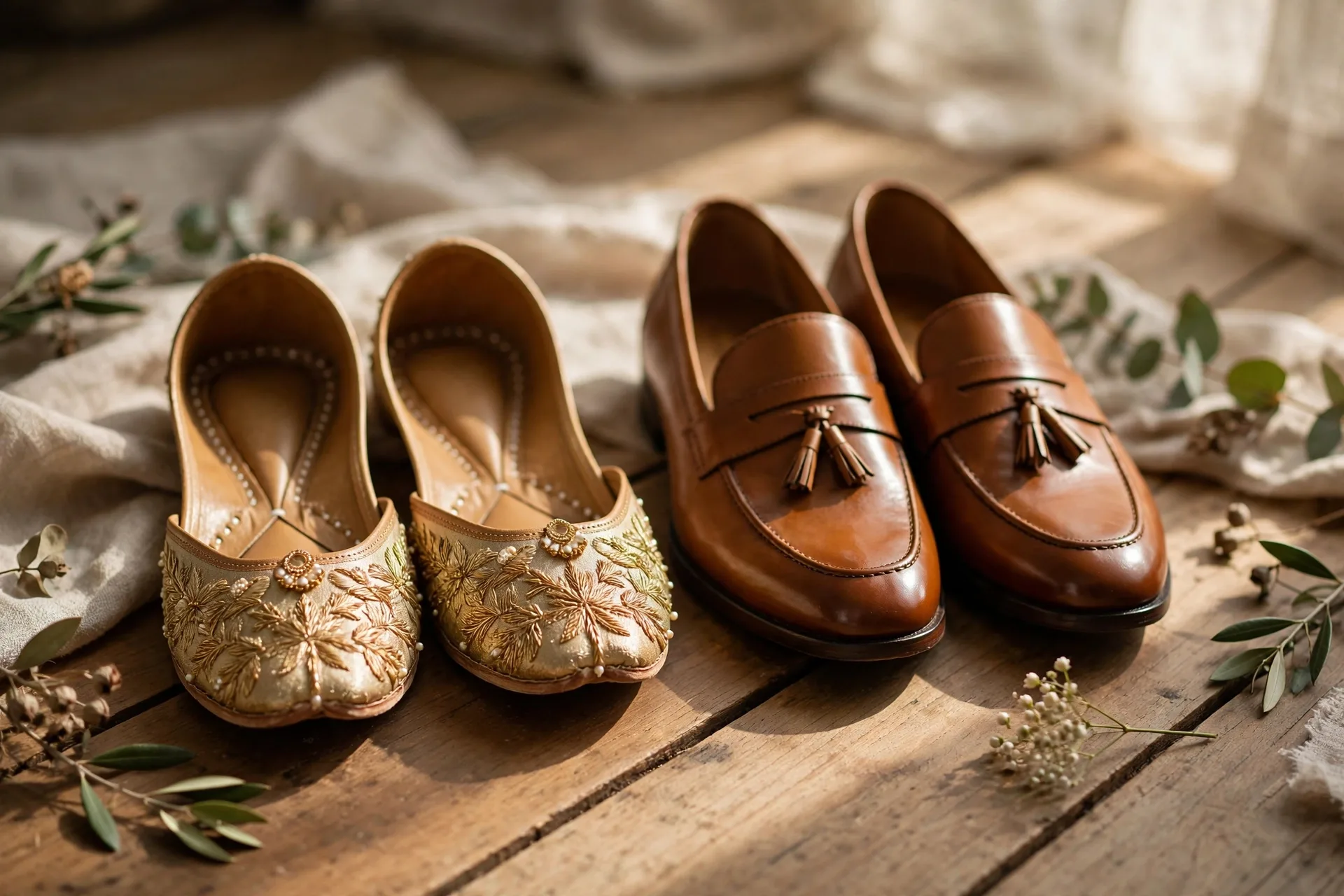
The mojari is the classic North Indian groom's shoe: a slip on leather shoe with a curled toe, often embroidered with gold or silver thread. It is the natural partner for a sherwani and a Jodhpuri suit, and it is the shoe most families expect to see on the groom at the ceremony.
A good mojari is made of soft leather with a cushioned sole, and it should feel comfortable from the first wearing. The embroidery should match the sherwani: gold work on the shoe for a gold sherwani, a plain leather mojari for a heavily embroidered one. The toe curl is traditional, but a very high curl can look costume like, so choose a gentle curve.
Mojaris are slip on, which matters more than grooms expect. The groom will take his shoes off and put them back on many times during the wedding: at the mandap, at the temple, at the house. A shoe that slips on and off easily saves minutes and patience across the day.
Juttis: the comfortable middle
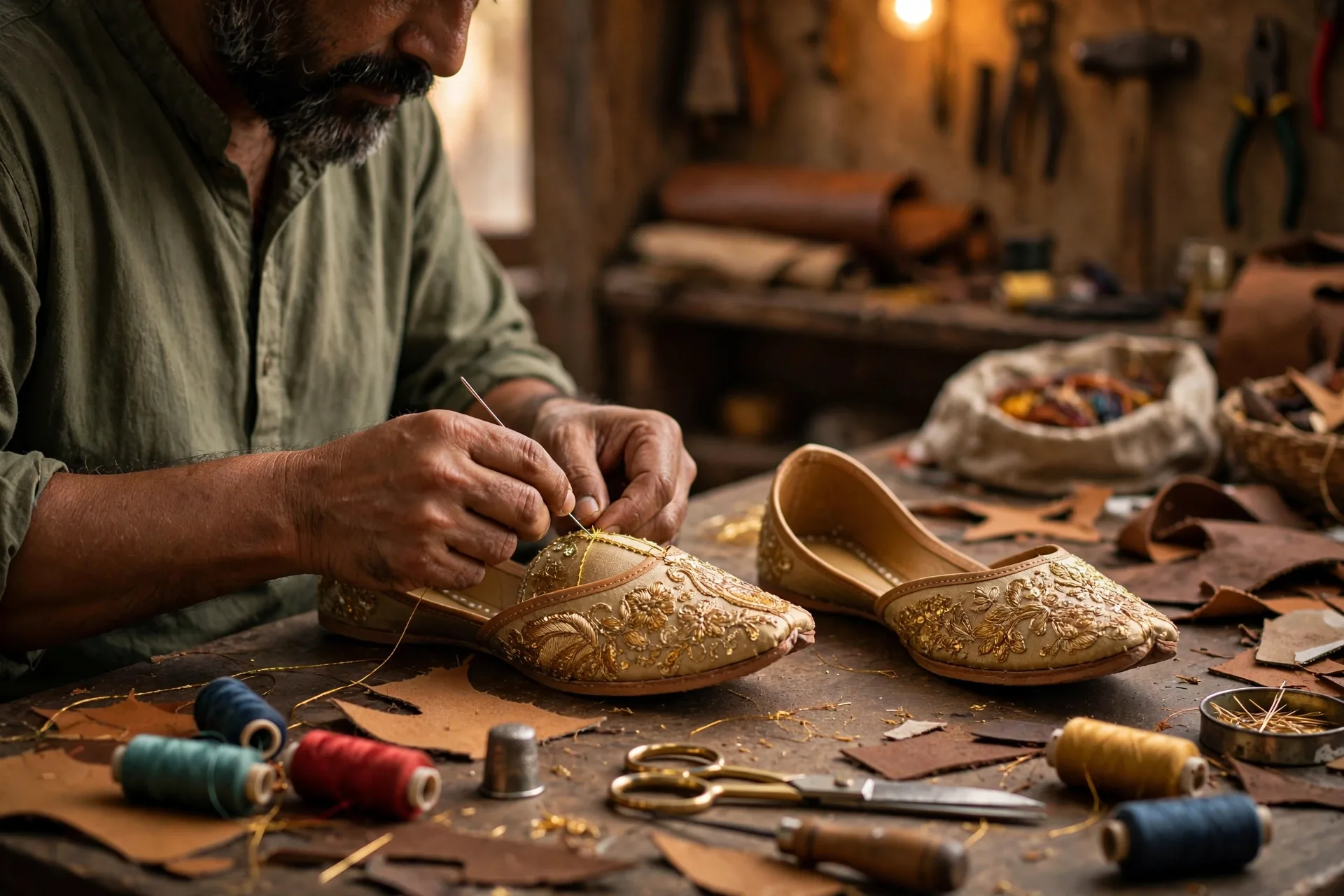
Juttis are similar to mojaris but usually softer, flatter and less formal, with more embroidery and colour. Punjabi juttis, with their bright thread work and mirrors, are the most famous, and they suit haldi, mehndi and sangeet beautifully. They are the most comfortable traditional shoe, because the leather is soft and the sole is flexible.
Choose juttis for the daytime functions, where comfort matters more than formality. A groom in a kurta and juttis looks relaxed and appropriate, and the embroidery adds colour to the photographs. For the main ceremony, most grooms step up to a mojari, which is the more formal of the two.
The famous wedding ritual of jutta chupai, where the bride's sisters hide the groom's shoes and demand a ransom, happens with these shoes. It is a real tradition, so keep the shoes somewhere safe during the ceremony, and keep some cash ready for the negotiation. It is part of the fun, and every groom should budget for it.
Loafers and oxfords: the modern choice
Leather loafers are the best modern groom's shoe. They suit bandhgalas, Indo-western outfits and suits, they are comfortable for a long reception, and they look polished in photographs. A tan loafer with a navy bandhgala, or a black loafer with a charcoal suit, is a combination that never fails.
Oxfords are the most formal option, and they suit a western suit or a very formal bandhgala. They are lace up, so they are slower to remove, which is a real drawback at a wedding where shoes come off often. Most grooms who choose oxfords end up changing into loafers or mojaris by the evening.
Whatever leather shoe you choose, break it in before the wedding. Wear it around the house for a few days, with the socks you will wear on the day. A new leather shoe on a wedding day is a blister waiting to happen, and a groom who cannot walk comfortably cannot enjoy his own wedding.
Matching shoes to the outfit
The rule is simple: traditional outfit, traditional shoe; modern outfit, modern shoe. Sherwani and Jodhpuri go with mojaris. Kurta sets go with juttis. Bandhgala and Indo-western go with loafers. A suit goes with oxfords or loafers. Mixing the two worlds, like sneakers with a sherwani, only works when the whole outfit is deliberately casual, and it usually is not.
Colour matching matters less than grooms fear. Gold and tan mojaris go with almost every sherwani colour. Black loafers go with navy, charcoal and black outfits. Tan loafers go with beige, brown and lighter colours. When in doubt, choose a shoe one shade darker than the trousers.
The shoe ritual and the practical kit
Jutta chupai is not the only shoe moment. The groom's shoes will be handled by many people during the day, and they will get dusty, scuffed and occasionally lost. Keep a shoe care kit in the groom's bag: a soft cloth, a small brush, and a little polish in the right colour. Five minutes with a cloth before the photographs makes a visible difference.
Also keep a spare pair. A comfortable pair of juttis in the car, for the moment the formal shoes start to hurt, is one of the best wedding day decisions a groom can make. Nobody in the photographs will know, and the groom's feet will thank him by midnight.
What it costs
Good embroidered mojaris typically cost between ₹2,000 and ₹6,000. Handmade Punjabi juttis usually fall between ₹1,500 and ₹5,000. Leather loafers from a good brand typically start around ₹4,000 and go up to ₹15,000. Oxfords are similar. Budget for two pairs, one traditional and one modern, and buy them at least two weeks before the wedding so you can break them in.
Frequently asked questions
Should the groom wear mojaris or loafers for the wedding?
Mojaris for the ceremony with a sherwani or Jodhpuri, loafers for the reception with a bandhgala or suit. Most grooms wear both across the wedding week, changing shoes with the outfit.
What is jutta chupai?
Jutta chupai is the tradition where the bride's sisters hide the groom's shoes during the ceremony and return them for a negotiated gift, usually cash. Keep some cash ready, keep the shoes somewhere safe, and enjoy the negotiation.
How do I break in new wedding shoes?
Wear them around the house for a few days before the wedding, with the socks you will wear on the day. Walk, sit and stand in them. Never wear a brand new pair of leather shoes for the first time on the wedding day.
Can a groom wear sneakers to his wedding?
Only if the whole outfit is deliberately casual, like a relaxed sangeet look. Sneakers with a sherwani or a bandhgala look wrong in photographs. For the main ceremony and reception, choose the shoe that matches the outfit.
MyIndiAura theme showcase
These Cinematic Invites from MyIndiAura fit this wedding. Each one is ₹499.
- Charbagh Dastaan: gardens and heritage paths for a traditional ceremony.
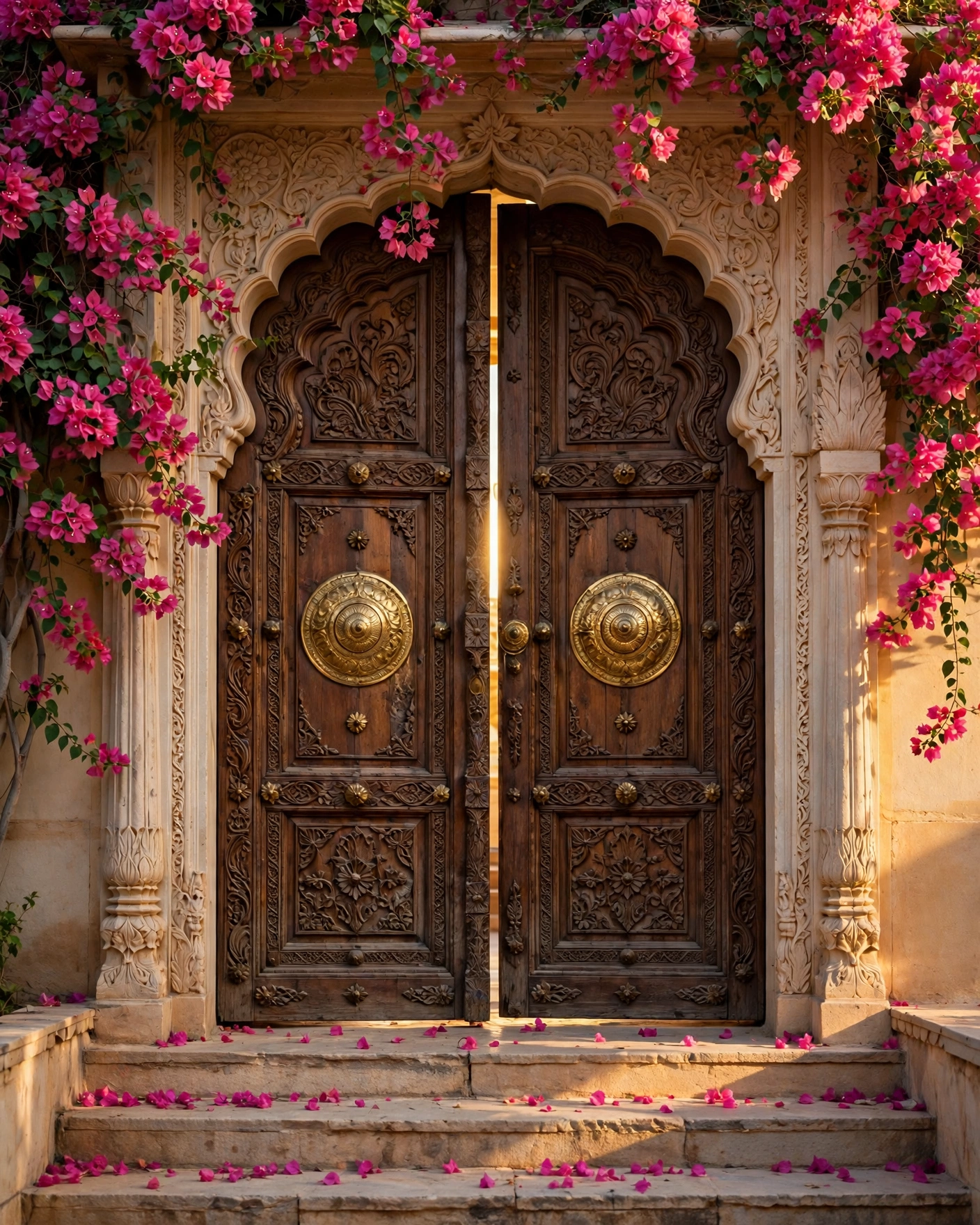
- Arched Doors: grand arches for a groom walking in with his baraat.
- Mandap Yatra: a walk through the venue to the mandap, made for the ceremony.
Related reading
- Baraat Planning: Music, Timing and Keeping the Energy Up
- Indian Wedding Planning Checklist: 12 Months to the Wedding Day
- How to Choose the Perfect Wedding Invitation Theme
Buy the shoes two weeks early, break them in at home, and keep a comfortable spare pair in the car.
Explore invitation designs
Choose a design and preview it free with your own names.
Found this useful? Share it with someone planning a celebration.
Share