Groom Accessories Guide: Brooches, Kalgi and Pocket Squares
A brooch, a kalgi and a pocket square are small things that change the whole outfit. Here is how grooms accessorise without overdoing it.
Small things, big difference
Accessories are the difference between a groom who looks dressed and a groom who looks finished. The sherwani is the canvas, and the brooch, the kalgi, the pocket square, the stole and the watch are the details that give it personality. The rule for all of them is the same: two or three accessories, chosen well, beat six accessories chosen in a hurry.
The most common mistake grooms make is over accessorising. A brooch and a kalgi and a stole and a pocket square and a watch and a bracelet and a necklace is not a look, it is a display. The photographs will show a man buried under his own accessories. Choose the two or three that matter most for your outfit, and leave the rest in the box.
The brooch and the sarpech
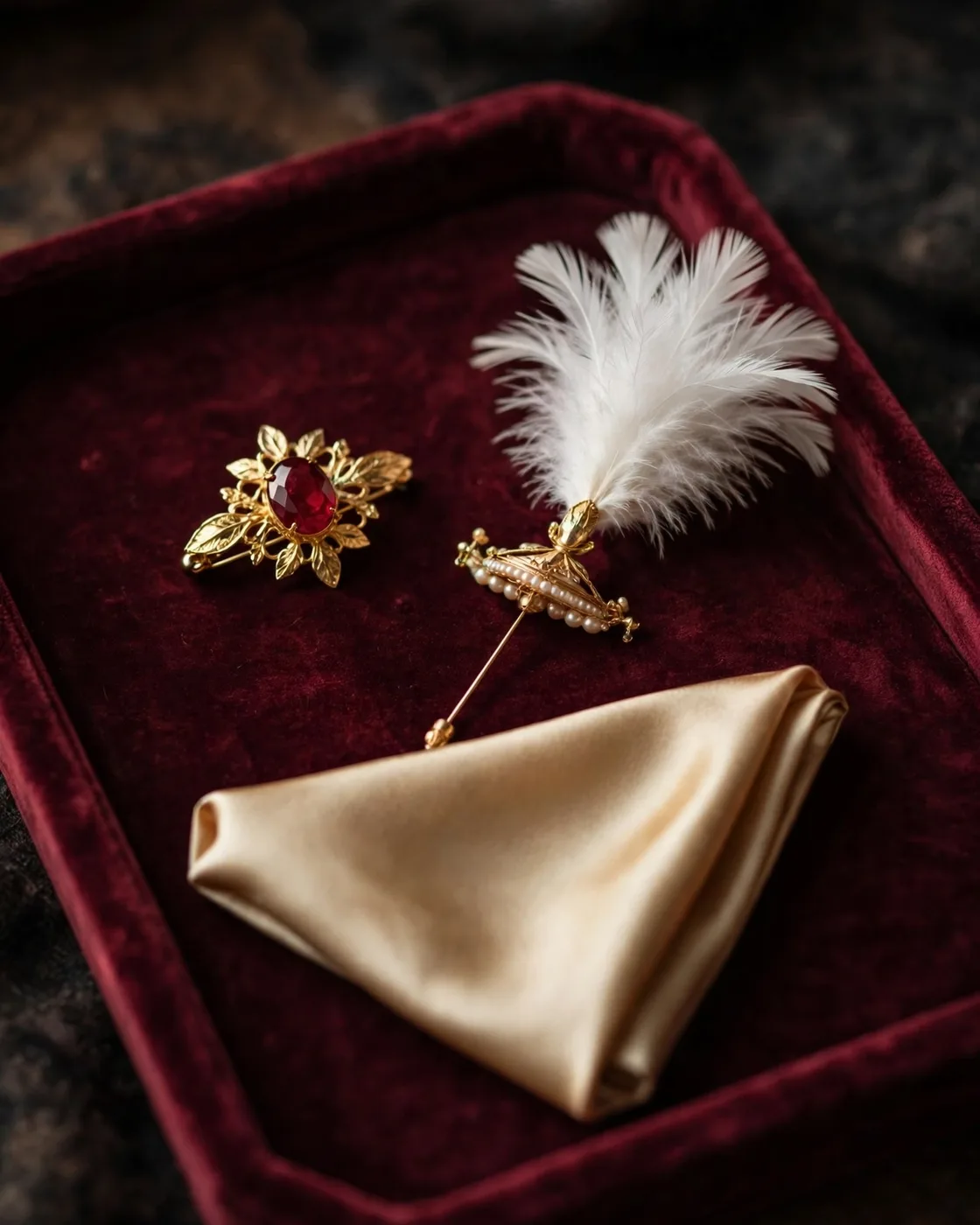
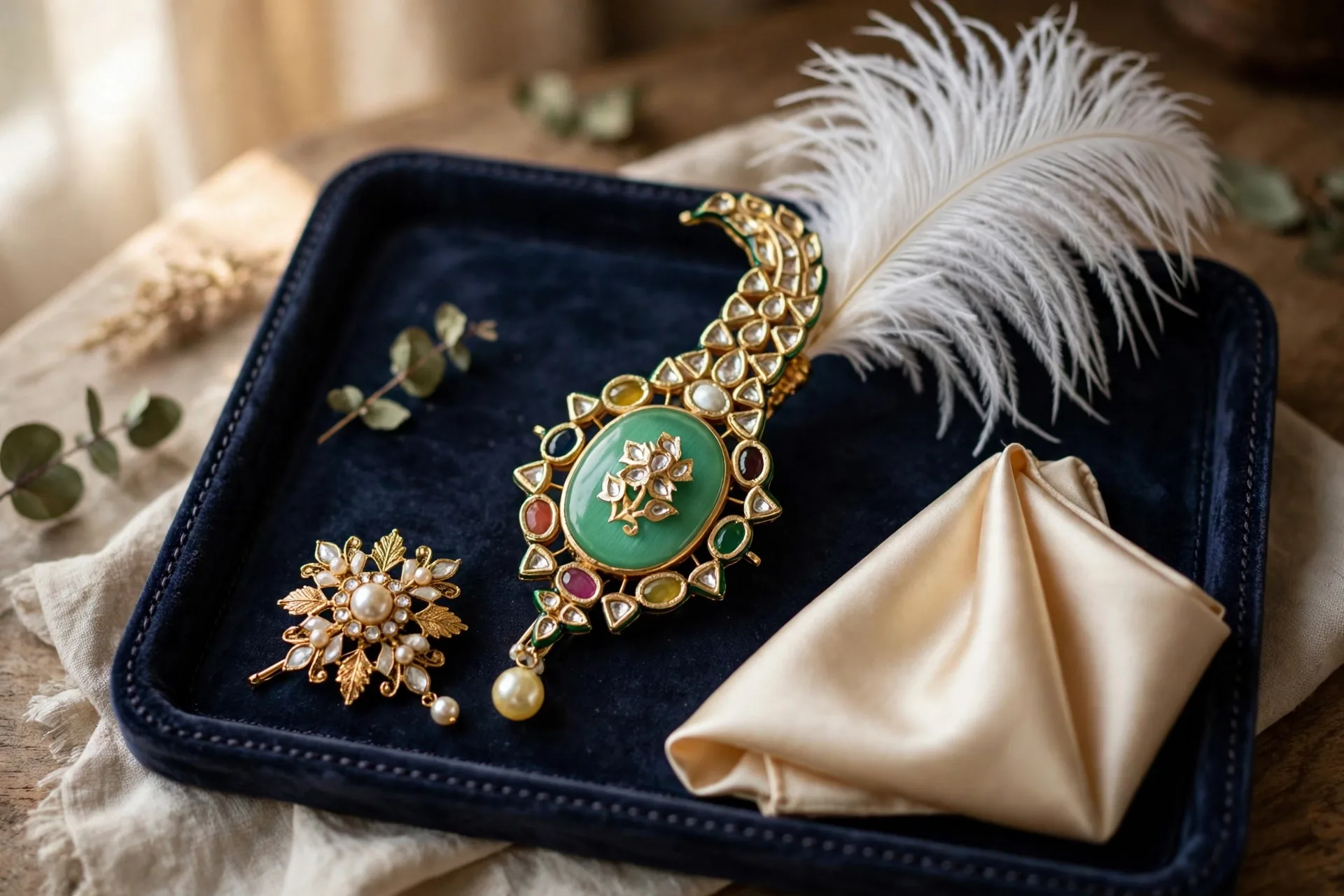
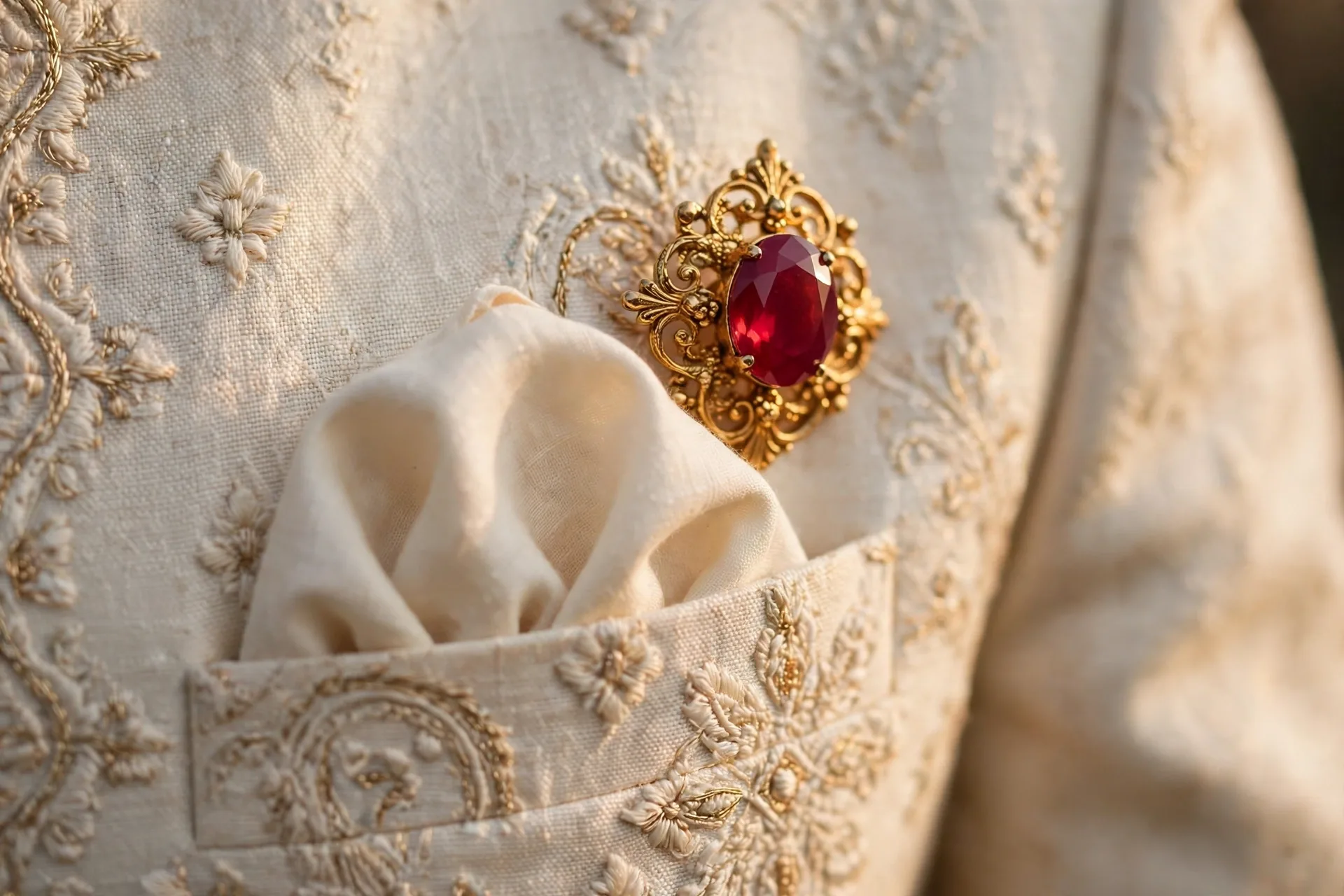
The brooch is the most important groom's accessory. It sits on the chest of the sherwani or on the safa, and it is the single piece of jewellery most guests will notice. A sarpech is the traditional fan shaped brooch worn on the safa, often with a feather. A chest brooch is smaller, usually a single stone or a small design in gold.
Choose the brooch after the outfit, not before. Gold with a ruby suits a maroon or burgundy sherwani. Gold with an emerald suits a green or ivory outfit. A pearl brooch suits a cream or ivory sherwani beautifully. The stone should pick up a colour from the bride's outfit, so the couple coordinates without matching exactly.
Pin the brooch securely. A brooch that hangs crooked or slips during the ceremony is a distraction in every photograph. Use a safety pin behind it, and check it before the baraat leaves.
The kalgi and the plume
The kalgi is the pin that holds the plume or feather on the safa. It is smaller than a sarpech and more delicate, and it suits grooms who want the royal touch without the weight of a large brooch. A single white or cream feather with a small gold kalgi is the classic combination, and it photographs beautifully against a maroon safa.
The plume should be fresh, or a good quality artificial one. A wilted feather looks sad in close up photographs, so buy it the day before the wedding and keep it in a box until the morning. If the venue is windy, ask the tier to pin the plume firmly, because a plume that flops in the wind will annoy the groom all day.
The pocket square
The pocket square is the easiest accessory to get right and the easiest to get wrong. It should be a colour picked from the outfit or from the bride, folded neatly, and showing just a small amount above the pocket. A square that billows out of the pocket looks like a handkerchief, not an accessory.
For a sherwani, a silk pocket square in a solid colour works best. For a bandhgala, a linen or cotton square with a subtle pattern is fine. White is the safest choice for any outfit, and it suits grooms who are unsure. Avoid matching the pocket square exactly to the tie, because grooms do not wear ties with sherwanis, and avoid matching it exactly to the stole, because the two will compete.
The stole, the watch and the rest
The stole is both an accessory and a practical piece: it adds colour to the outfit and it can be draped over the shoulders during the ceremony. A silk stole in a contrasting colour, gold on ivory, maroon on cream, burgundy on gold, gives the outfit depth. Keep it light, because a heavy stole will slip and need constant adjusting.
The watch should be simple and classic. A slim watch with a leather strap suits a sherwani better than a large metal sports watch, which fights the traditional outfit. If you wear a watch at all, make sure it is comfortable and that you have worn it before, because a new watch on the wedding day is one more thing to think about.
A kada or bracelet is traditional in many families, and a single gold kada is enough. A necklace is usually too much with a sherwani, unless it is a family piece with meaning. If the necklace matters to the family, wear it for the ceremony photographs and remove it for the reception.
The groom's kit: what to carry
Put the accessories in a small kit the morning of the wedding, and give it to one trusted person, usually the best man or a brother. The kit should hold safety pins, a needle and thread in the sherwani's colour, fashion tape, a lint roller, a small cloth for the shoes, breath mints, and the spare brooch pin. A groom who can fix a loose brooch in thirty seconds is a groom who enjoys his wedding.
What it costs
A good brooch typically costs between ₹2,000 and ₹10,000, depending on the stones and the work. A kalgi with a plume usually falls between ₹1,000 and ₹4,000. A silk pocket square costs between ₹500 and ₹2,000. A silk stole typically costs between ₹2,000 and ₹6,000. None of these need to be expensive to look good, and a simple gold brooch with one stone often looks better than an elaborate one.
Frequently asked questions
How many accessories should a groom wear?
Two or three, chosen well. A brooch, a pocket square and a stole is a complete look. Adding more usually makes the outfit look crowded rather than richer.
What is the difference between a brooch and a sarpech?
A sarpech is the traditional fan shaped brooch worn on the safa, often with a feather. A brooch is the smaller piece worn on the chest of the sherwani. Many grooms wear both, one on the safa and one on the chest.
Should the pocket square match the stole?
No. It should coordinate, not match. Pick a colour from the bride's outfit or from the sherwani's embroidery, and let the stole carry its own colour. Two identical colours side by side look staged.
Can a groom wear a watch with a sherwani?
Yes, a slim classic watch with a leather strap suits a sherwani well. Avoid large metal sports watches, which fight the traditional outfit. If in doubt, skip the watch for the ceremony photographs.
MyIndiAura theme showcase
These Cinematic Invites from MyIndiAura fit this wedding. Each one is ₹499.
- Atelier Seal: a tailored classic for a groom who chose his details with care.
- Velvet Curtain: deep velvet drapes for a winter evening wedding.
- Porcelain Doves: soft and elegant, made for a classic ceremony.
Related reading
- How to Choose the Perfect Wedding Invitation Theme
- Royal Wedding Invitation Card Designs for Indian Weddings
- Indian Wedding Planning Checklist: 12 Months to the Wedding Day
Two or three accessories, chosen well, are enough. Let the sherwani do the talking and the accessories do the finishing.
Explore invitation designs
Choose a design and preview it free with your own names.


Found this useful? Share it with someone planning a celebration.
Share