Dhol Players for Baraat and Sangeet
How to book dhol players for the baraat and the sangeet, what a good dhol team costs, and how to brief them so the whole family dances.
In short
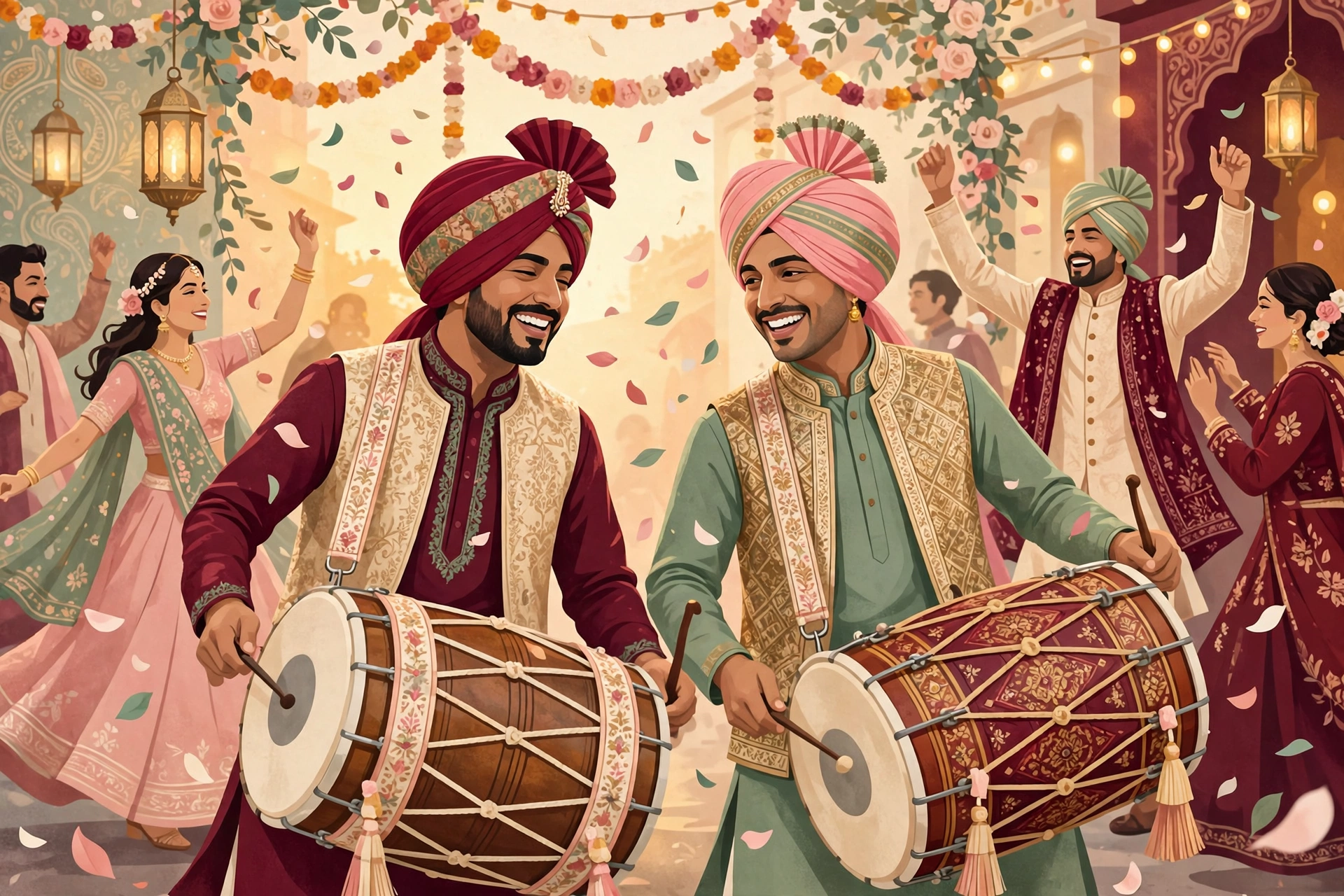
The dhol is the heartbeat of the baraat. One good dhol player can pull a hundred reluctant uncles onto the road.
Book two to four players for a baraat and one or two for a sangeet. Agree the route, the timings, and the volume with the venue first.
Why the dhol matters
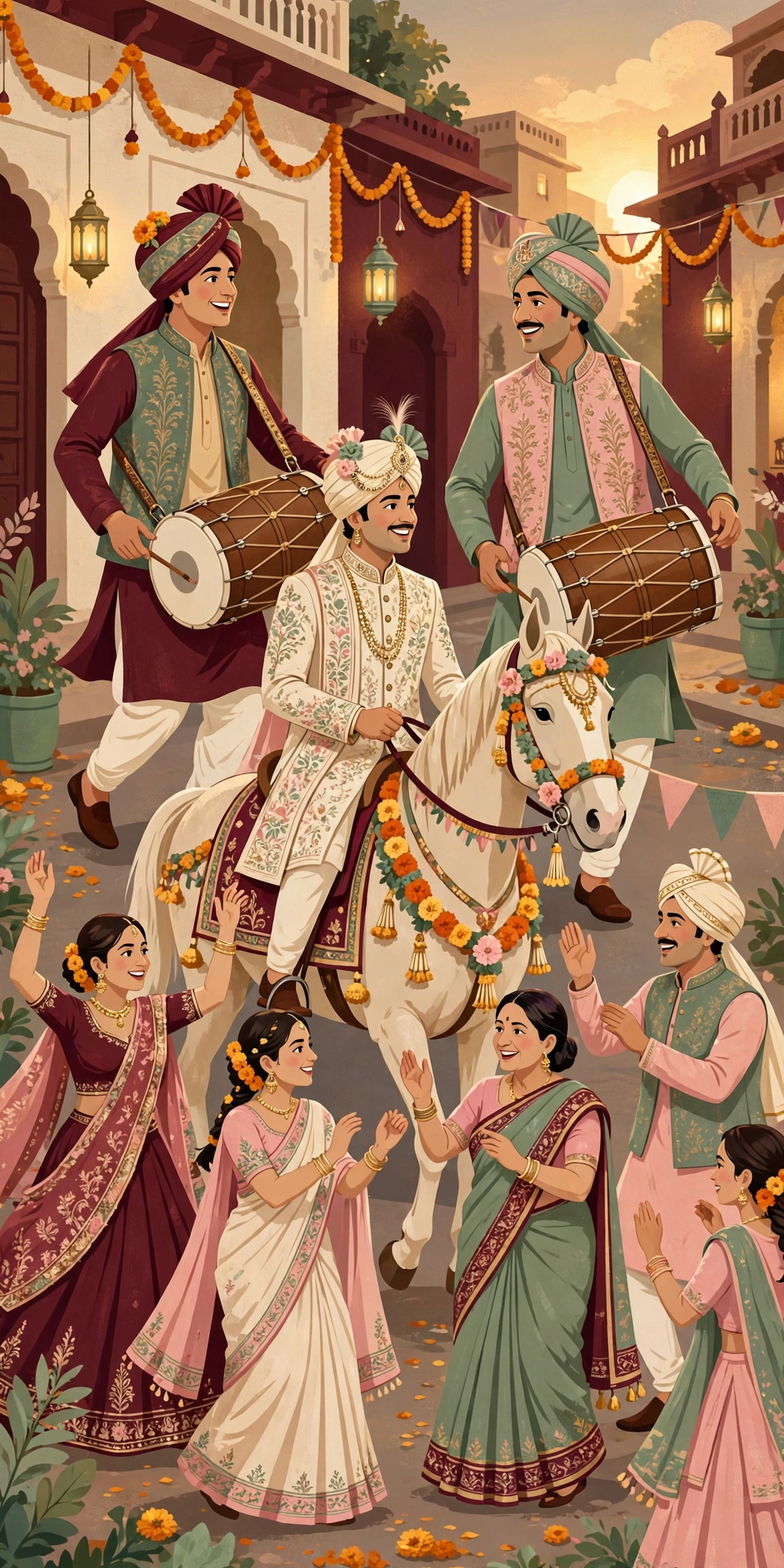
Every Indian wedding has a sound that guests carry home, and for most Punjabi and North Indian weddings it is the dhol. The first beat tells the whole street that the baraat has arrived. Children run to the door, neighbours come to their balconies, and the groom's friends start dancing before the groom has even climbed onto the horse or into the car.
The dhol does something no speaker can do. It is live, loud, and physical. You feel it in your chest. A recorded track played through speakers can sound polished, but it never pulls people onto the road the way a dhol player walking backwards in front of the baraat does. That is why even weddings with a big DJ and a full band still book dhol players for the baraat.
A good dhol player also reads the crowd. They speed up when the young cousins form a circle, slow down when the elders join, and pause at the right moment for the family to shower the groom with flowers or notes. The rhythm follows the people, not the other way round.
Baraat: how many players and how long
A standard baraat needs two dhol players. One leads the beat and one answers, which keeps the sound full while they take short turns to rest. For a long route or a crowd of more than two hundred guests, four players work better: two play while two rest, and the sound never drops.
A baraat usually runs for forty five minutes to ninety minutes, from the time the groom leaves the hotel or home to the time he reaches the venue gate. Agree the start time with the players, not just the family. Dhol players often have two baraats in a day during peak season, so a late start can mean a rushed finish.
Sangeet: the dhol inside the hall
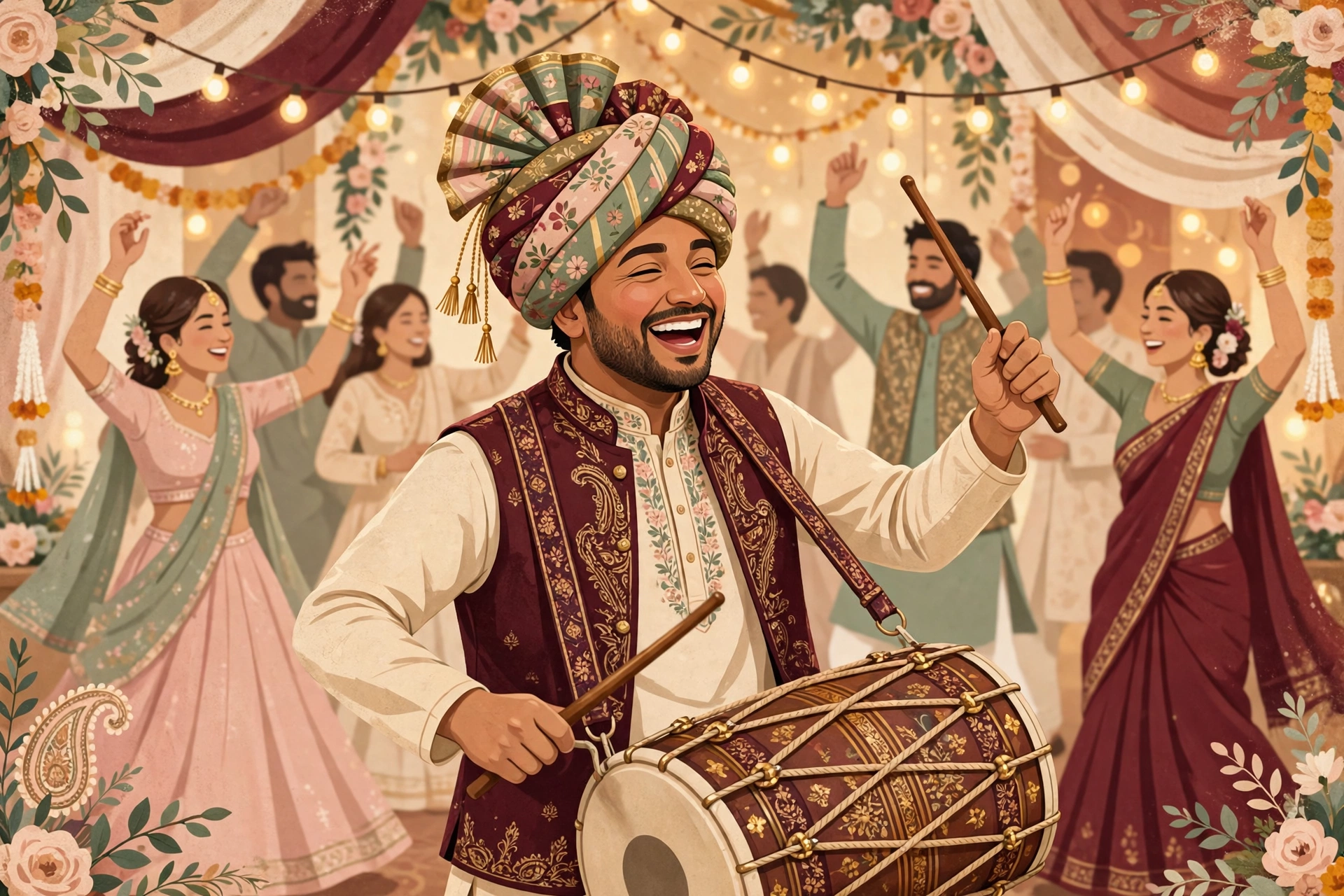
At the sangeet, the dhol plays a different role. Here it supports the performances and the open dance floor rather than leading a procession. One or two players are enough, and they should coordinate with the DJ or the band so the beats match the tracks.
Volume matters indoors. A dhol in a closed banquet hall is very loud. Ask the players to keep the beat softer during the family performances and save the full power for the open floor. Seat the elders away from the dhol corner, and check with the venue about sound limits before the night begins.
How to choose the right players
Hear them play before you book. A video of a full baraat is better than a studio recording, because you can see whether the players keep time for an hour, how they handle a crowd, and whether they look like they enjoy it. Energy is contagious: a bored dhol player makes a bored baraat.
Ask for two references from recent weddings and call them. Ask whether the players arrived on time, whether they lasted the whole route, and whether they took direction from the family. Also ask what they charged and whether anything was added on the day. A clear quote in writing is worth more than a friendly promise.
Check the team, not just the leader. Some well known players send a junior team on the day. Ask for the names of the players who will actually come, and put them in the booking message. If the leader is the reason you booked, make sure the leader is the one who turns up.
The brief: route, songs, and signals
Write the brief on one page. The route with the pause points, the start and end times, the key songs or beats the family loves, and the signals for starting and stopping. Name one family member as the point of contact on the day, so the players are not taking instructions from ten different uncles.
Agree the dress code. Many families ask the dhol players to wear matching turbans or kurtas in the wedding colours. It photographs beautifully and makes the team look like part of the celebration rather than hired help. Confirm this a week ahead so the players can arrange it.
Style guidance: matching the dhol to your wedding
A big, high energy baraat with hundreds of guests needs a strong team of four and a clear route plan. A small, intimate baraat with fifty guests needs two players who can play gently and let the family sing along. Bigger is not always better; a dhol that drowns out the family singing has missed the point.
Match the style to the community. Punjabi baraats expect a fast, driving beat with plenty of bhangra. Rajasthani and Gujarati baraats may want a slower, more melodic rhythm with folk songs. Ask the players what styles they know, and listen to a sample of each before you decide.
Remember the neighbours and the law. Many cities have time limits on loud music and processions, and some housing societies need prior notice. Check the rules, inform the neighbours, and keep the baraat within the agreed hours. A joyful baraat that ends with a police visit is a story nobody wants to retell.
What you need before you book
Have these ready and the booking moves fast:
- The date, start time, route, and pause points of the baraat.
- The number of players you want: two for a small baraat, four for a large one.
- The performance list for the sangeet, with the songs and the cues.
- The venue sound limit and the local time rules, confirmed in writing.
- The names of the players who will actually come on the day.
- One family point of contact for the team.
Cost
Dhol players in India usually cost between ₹8,000 and ₹40,000 for a baraat, depending on the number of players, the city, and the season. A single player for a small sangeet can cost less, while a well known team of four for a long baraat can cost more. Travel and late night charges are often extra, so ask for an itemised quote.
The invitation that tells guests when and where the baraat gathers is the Cinematic Invite at ₹499, the Invite App at ₹399, and Invitation Suites at ₹99. Put the baraat start time and the meeting point in the invite, so no guest misses the dance.
How to create
- Pick your invite design from the Cinematic Invites on MyIndiAura and note the theme name.
- Add the baraat meeting point, start time, and route note for guests.
- Add the sangeet details, with the venue and time.
- Preview the invite on your phone, then share it on WhatsApp, family first.
Start with the invitation
The dhol will bring the street to life, but guests need to know where to gather and when to arrive. Send an invitation with the baraat time and meeting point written clearly, and the whole family will be there when the first beat sounds.
MyIndiAura theme showcase
These Cinematic Invites from MyIndiAura fit this wedding. Each one is ₹499.
- Music Box: A musical theme that suits a wedding where the dhol leads the celebration.
- Laal Doli: Bold and festive, it carries the energy of a baraat beautifully.
- Jharokha Ki Shaam: Warm and traditional, it fits an evening of folk rhythm and family dance.
Related reading
Explore invitation designs
Choose a design and preview it free with your own names.
Found this useful? Share it with someone planning a celebration.
Share