Who Pays for What at an Indian Wedding
There is no single rule for who pays for an Indian wedding, and the families who talk about it early are the ones who avoid the argument later.

The old rule and the new reality
The old rule was simple. The bride's family paid for the wedding. The groom's family paid for the baraat and the reception. That rule made sense when weddings were small, families lived in one town and the bride's family hosted the ceremony. It does not fit most weddings today. Couples live in different cities, both families earn, the couple often pays for part of the wedding themselves, and the celebration spans four days with guests flying in from three countries.
There is no single correct split anymore. There are only splits that feel fair to the two families involved. The families who talk about money early, plainly and without embarrassment are the ones who avoid the argument later. The families who avoid the talk until the bills arrive are the ones who fight about it at the worst possible time.
The traditional split
In the traditional split, the bride's family hosts and pays for the wedding ceremony, the venue, the food, the decor and the invitations. The groom's family pays for the baraat, the groom's outfit and the reception if there is one. The bride's family also pays for the bride's outfit, jewellery and makeup. The groom's family pays for the groom's outfit and the gifts for the bride.
This split still works when the bride's family is hosting in their city and the groom's family is travelling. It feels unfair when the bride's family is paying for a 300 guest wedding while the groom's family invites half the guests. If the groom's side is bringing 150 guests to a wedding the bride's family is paying for, that is a conversation, not an assumption.
The traditional split also breaks down when the couple lives abroad and both families are contributing equally to a destination wedding. In that case, the old labels do not help. A new split is needed.
The equal split
The most common split today is equal. Both families pay half the total budget, and the couple pays for their own outfits, honeymoon and personal extras. This works well when both families earn similarly and both sides bring a similar number of guests. It is simple to track, easy to explain and hard to argue with.
The equal split needs one clear rule: who approves spending above the budget. If one family wants a more expensive photographer and the other does not, the family that wants it pays the difference. Without that rule, the equal split becomes unequal very fast.
The couple pays
More couples today pay for a large part of their own wedding. Some pay for everything. Some pay for the parts that matter most to them: the photographer, the outfits, the honeymoon and the invitation. The couple paying changes the power balance. When the couple pays, the couple decides. That is fair, but it needs to be said out loud so nobody is surprised.
If the couple is paying, set the budget from their savings, not from a loan. A wedding loan adds monthly payments to the first year of marriage. If the couple's savings cover 10 lakhs, plan a 10 lakh wedding. Do not plan a 20 lakh wedding and borrow the rest.
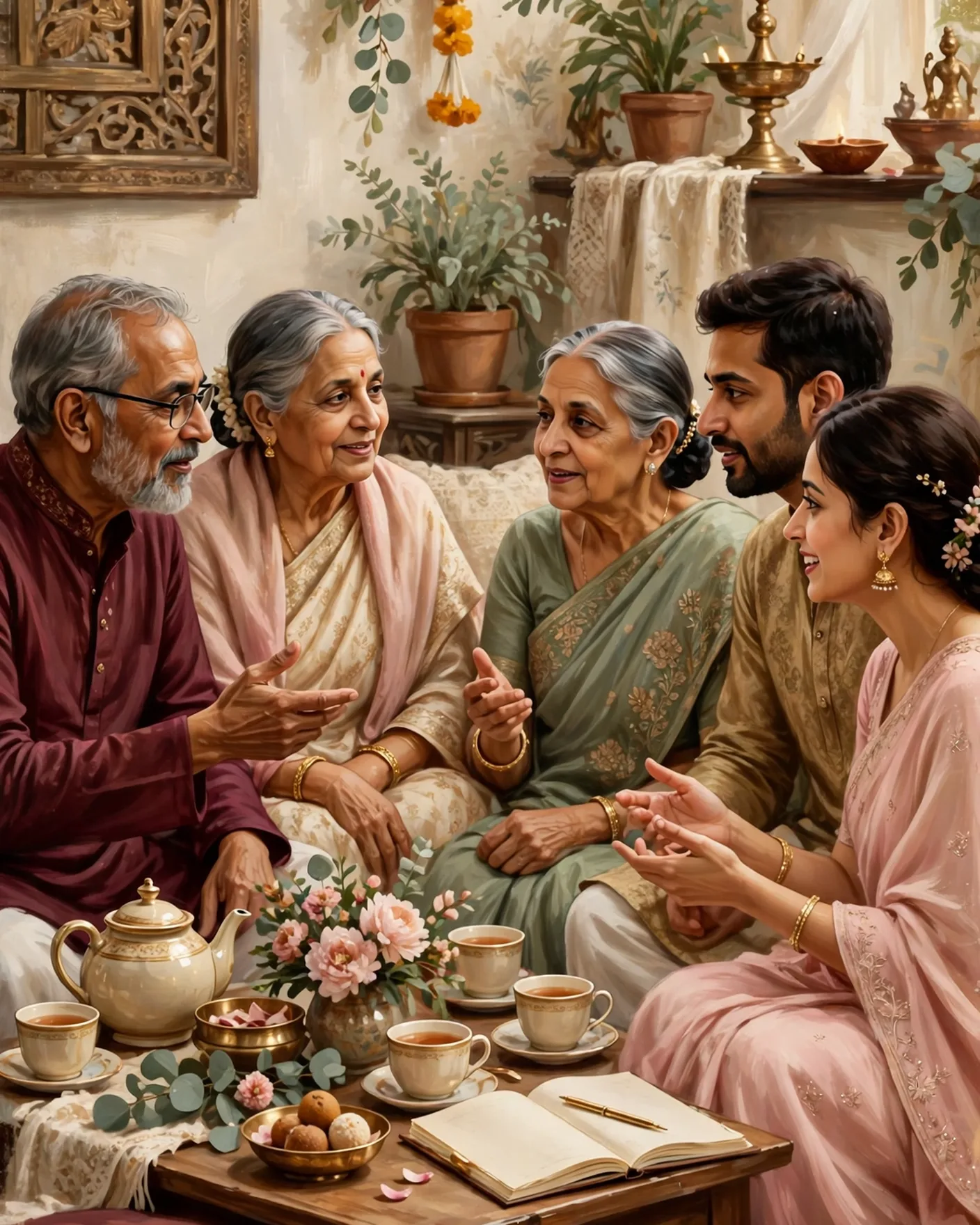
Who pays for what, line by line
Here is a practical split that many families use today. The bride's family pays for the venue, the food, the decor and the invitations. The groom's family pays for the baraat, the groom's outfit and the reception. Both families split photography and music equally. The bride pays for her outfit, jewellery and makeup, or her family pays for them. The groom pays for his outfit, or his family pays for it. The couple pays for the honeymoon, the outfits for the sangeet and the personal extras.
Guest stay is the line most families forget. If the groom's family brings 100 outstation guests, who pays for their rooms? Decide this before the wedding, not after the hotel bill arrives. A fair rule is that each family pays for the stay of its own outstation guests. The same rule works for transport.
Choosing the style
Money talks are easier when the wedding has one clear plan. Agree on the guest list, the venue type and the number of functions before you talk about who pays. A 200 guest wedding in a banquet has a very different cost from a 400 guest wedding in a farmhouse. The split is easy to agree on when the total is known. It is impossible when the total is a guess.
Put the agreement in writing. A simple note on paper, signed by both families, that says the total budget, the split and who approves extra spending. It is not a legal document. It is a memory aid. When the argument comes, and it will come, the note settles it in five minutes.
What it costs
On MyIndiAura, a Cinematic Invite is ₹499 and an Invite App is ₹399. All Invitation Suites are ₹99. The invitation is the smallest cost in the wedding and the first thing guests see. Choose the design that matches your celebration, add your photos and your venue details, and share it on WhatsApp. When both families share the cost of the invitation, it is a small symbol of the partnership the wedding celebrates.
How to create your invitation
- Browse the designs at myindiaura.com/designs and pick one that both families like.
- Choose Cinematic Invite at ₹499 or the Invite App at ₹399, and add your names, dates and venue.
- Upload your best photos and write the ceremony details in plain words.
- Preview the invite on your phone, check every name and date, then share the link on WhatsApp.
Details to check before you send
- Both families have agreed the total budget, the split and who approves extra spending, in writing.
- Guest stay and transport are assigned, each family paying for its own outstation guests.
- The gift budget is fixed, with a number, not a feeling.
- The invitation carries the correct date, time, venue name and address.
- Every vendor payment is assigned to one family, so no bill is paid twice or not at all.
Frequently asked questions
Who traditionally pays for an Indian wedding?
Traditionally the bride's family pays for the ceremony, venue, food, decor and invitations, and the groom's family pays for the baraat and the reception. Today most families split the cost equally or in proportion to what they can afford.
Should the couple pay for their own wedding?
Many couples today pay for part or all of their wedding, especially for the photographer, outfits and honeymoon. When the couple pays, the couple decides. That should be said out loud at the start so nobody is surprised.
How do we split costs fairly if one family is richer?
Use a proportional split, where each family pays in proportion to what they can afford. The family that wants an upgrade above the agreed budget pays the difference. Put the agreement in writing.
Who pays for guest stay and transport?
A fair rule is that each family pays for the stay and transport of its own outstation guests. Decide this before the wedding, not after the hotel bill arrives.
MyIndiAura theme showcase
These Cinematic Invites from MyIndiAura fit this wedding. Each one is ₹499.
- Atelier Seal: an elegant seal design that suits a formal family celebration.
- Porcelain Doves: gentle doves and soft colours for a wedding both families love.
- Rose Film: a romantic film style design that fits a modern couple's wedding.
Related reading
- How to Plan a Wedding on a Budget in India
- Wedding Budget Planner: Essential Expenses to Include
- How to Politely Ask Guests to RSVP
There is no single rule for who pays for an Indian wedding. Talk about it early, put the agreement in writing, and let the wedding be a celebration, not a bill.
Explore invitation designs
Choose a design and preview it free with your own names.



Found this useful? Share it with someone planning a celebration.
Share