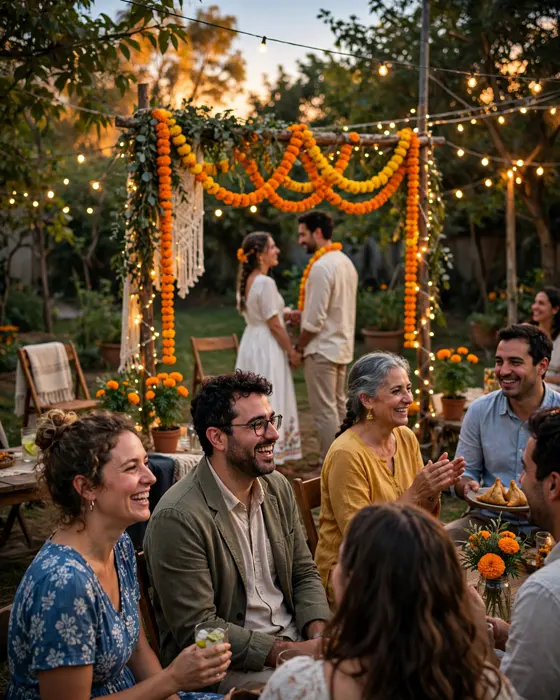
Wedding Weather Planning: Heat, Rain and Fog
Indian weddings meet heat, rain and fog in every season, so here is how to plan the venue, the timings and the backup for each of them.

The weather is a vendor you cannot negotiate with
Every Indian wedding meets the weather, and the weather does not care about the date. A May wedding meets heat. A July wedding meets rain. A January wedding in Delhi meets fog. Families who plan for the season have a comfortable wedding. Families who plan for the photograph have a wedding where guests are hot, wet, or cold, and the photographs show it.
The first step is to plan for the season of the date, not the season of the inspiration. A lawn wedding looks lovely in a photograph taken in February, but the same lawn in May at 3 in the afternoon is a different place. Check the usual weather for your city and your month: the high temperature, the chance of rain, and the morning fog. Then choose the venue and the timings for that weather, not for the picture.
The second step is to build a backup into every outdoor plan. A backup is not pessimism. It is the difference between a wedding that continues and a wedding that stops. A covered hall next to the lawn, a tent that can go up in an hour, and a plan for moving the food and the decor indoors are all cheaper than a ruined ceremony. Decide the backup in advance, and tell the vendors what triggers it, so nobody argues about the rain while the guests are getting wet.
Heat: shade, water, and the right hours
Heat is the most common weather problem at Indian weddings, and the most underestimated. A ceremony at noon in May can be dangerous for elders and children, however beautiful the venue. Move the outdoor functions to the morning or the evening, and keep the middle of the day indoors. A muhurat that falls at noon needs shade above the mandap, fans that actually reach the guests, and water within arm's reach of every row.
Shade is not decoration. It is the difference between a ceremony guests enjoy and one they endure. A canopy over the seating, a tent over the food, and a covered walkway from the cars to the hall all matter. Check the shade at the same hour as the function, because a tree that shades the lawn at 9 in the morning may leave it bare at noon. Ask the venue what cooling it provides, and test it. A cooler that works in an empty hall may fail when five hundred people fill it.

Rain: cover, drainage, and dry feet
Rain is the weather most couples fear, and the one with the simplest fix: a roof. If the wedding is in the monsoon, or in a month when rain is likely, book a venue with a covered hall that can hold the whole function, not only the ceremony. A tent over the lawn is a second choice, and it needs sides that can close, a floor that stays dry, and drainage that carries the water away from the guests.
Visit the venue after rain if you can, or ask what happens when it rains there. Where does the water collect. Does the entry flood. Do the cars get stuck on the approach road. A venue that looks perfect in dry weather can be miserable in wet weather, and the only way to know is to ask, or to see it. Check the power backup too, because rain and power cuts arrive together in many cities.
Tell guests about the rain plan on the invitation, briefly. A line that says the function is under cover, with parking near the hall, reassures outstation guests who are watching the forecast. On the day, keep towels at the entrance, keep the walkways dry, and keep one person watching the weather. If the rain starts during an outdoor function, move early. Guests remember a calm move far more kindly than a late scramble.
Fog and cold: light, warmth, and travel time
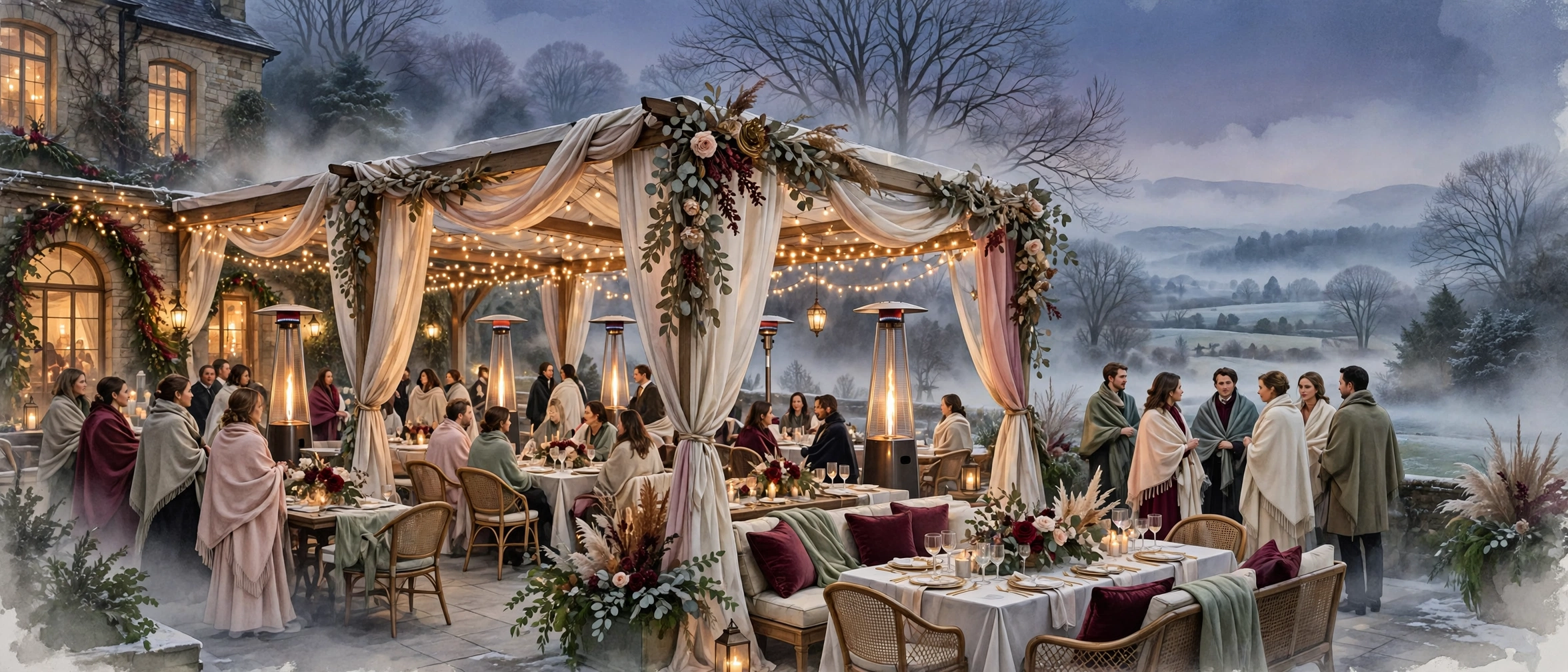
Winter weddings in North India meet fog and cold, and both need a plan. Fog delays flights and trains, so outstation guests need to arrive a day early, not on the morning of the wedding. Tell them that on the invitation, and keep the first function late enough that a delayed guest can still attend it. A baraat that must travel through fog should leave hours earlier than usual, with the route checked on the day.
Light matters in winter because the days are short. An outdoor function planned for 4 in the afternoon can end in darkness, and the photographs will show it. Plan the outdoor photographs for the early afternoon, and bring the evening functions under good light. Ask the decorator and the photographer what lighting they provide after dark, and check it at the venue in the evening, not only in the morning.
What it costs
On MyIndiAura, a Cinematic Invite is ₹499, an Invite App is ₹399, and an Invitation Suite is ₹99. Choose by what your invitation needs to do, not by price alone. A cinematic invite suits a wedding with a film led opening, while an invite app suits a full week of functions with RSVP and maps.
How to create your wedding invitation
- Pick a design from the designs page at myindiaura.com/designs.
- Add the names, the venue, the weather note, and the order of events with timings.
- Add photos of the couple, the venue map, and the RSVP button.
- Preview the invitation on your own phone, then share the link on WhatsApp. See myindiaura.com/create to start, and myindiaura.com/pricing for the full price list.
Details to check before you send
- The usual weather for your city and month checked before booking the venue
- A covered backup ready for every outdoor function, with a clear trigger to use it
- Shade, fans and water planned for heat, tested at the function hour
- Drainage, covered entry and power backup checked for rain
- Outstation guests asked to arrive a day early when fog is likely
- Heaters, warm drinks and evening lighting planned for winter functions
Frequently asked questions
Should we avoid a monsoon wedding date?
Not necessarily. A monsoon wedding in a well covered venue, with good drainage and a clear rain plan, can be beautiful. The mistake is booking an open lawn in the monsoon with no cover and hoping for the best. Choose the venue for the season, and the season stops being a risk.
How do we keep guests comfortable in May heat?
Move outdoor functions to the morning or evening, shade the seating, and keep water and a light drink available from the moment guests arrive. Test the cooling at the function hour with a full hall in mind, and keep the food covered and cool.
What should the invitation say about the weather?
One short line is enough: the function is under cover, parking is near the hall, or guests should arrive a day early because of fog. Guests who know the plan arrive relaxed, and relaxed guests enjoy the wedding more.
MyIndiAura theme showcase
These Cinematic Invites from MyIndiAura fit this wedding. Each one is ₹499.
- Ganga Ke Saath: a riverside ceremony for a wedding by the water.
- Pichola Parde: a lakeside palace setting for a destination celebration.
- Winter Glow: a warm glowing evening for a winter wedding.
Related reading
- Destination Wedding Planning Checklist
- How to Plan a Destination Wedding on a Budget
- Baraat Planning: Music, Timing and Keeping the Energy Up
Plan for the season, and the weather becomes part of the celebration.
Explore invitation designs
Choose a design and preview it free with your own names.



Found this useful? Share it with someone planning a celebration.
Share