Wedding Transport Guide: Buses, Cars and Logistics
Five hundred guests in three hotels and two venues need buses that run on time, cars for the couple and the elders, and one person who knows where every vehicle is.
Transport is the wedding nobody photographs
No one photographs the buses. No one frames the car that brought the grandmother to the mandap on time. And yet transport is the part of a wedding that fails most visibly, because a bus that is late is a hundred guests who are late, and a hundred guests who are late is a ceremony that starts without them. Transport is logistics, and logistics is the difference between a wedding that runs and a wedding that apologises.
The plan has three parts, the couple and the elders, the outstation guests, and the local guests, and each needs a different vehicle, a different time, and a different person responsible. Write it all down, on one sheet, with the vehicle, the driver, the phone number, the pickup point, the time, and the passengers, and give it to the coordinator a month before. Transport that lives in someone's head is transport that fails.
The couple, the elders, and the VIP cars
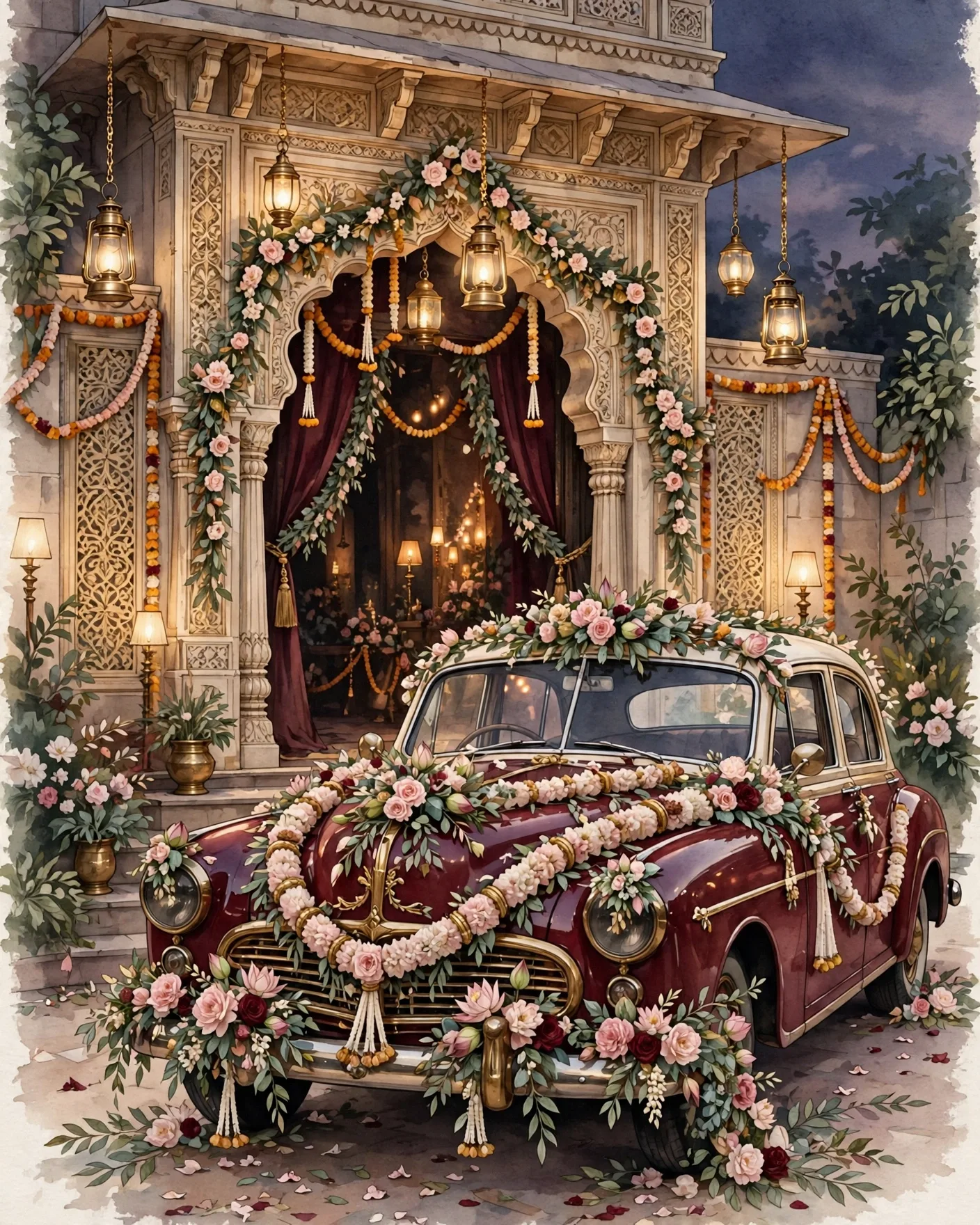
The couple needs a car for the whole wedding, not just the wedding day, a clean, decorated car with a driver who knows the venues, the hotels, and the timings, and who stays with the couple from the first function to the last. Book the car with the decoration, agree the hours, and agree that the driver does not leave until the coordinator releases him, because a couple waiting for a car at midnight is a wedding that has failed at the last step.
Elders need cars, not buses. A car that picks them up from home or the hotel and drops them at the hall door, and takes them home when they are ready. Keep a car on standby through the evening for an early departure.
The baraat needs its own transport, and it needs a plan. The groom's car, the band's vehicle, and the cars for the groom's family, all timed to leave together, with a route agreed in advance, because a baraat that loses its way loses its energy. Agree the route with the driver and the police if the procession blocks a road, because a baraat stopped by traffic is a baraat that arrives late and tired.
Buses for outstation guests
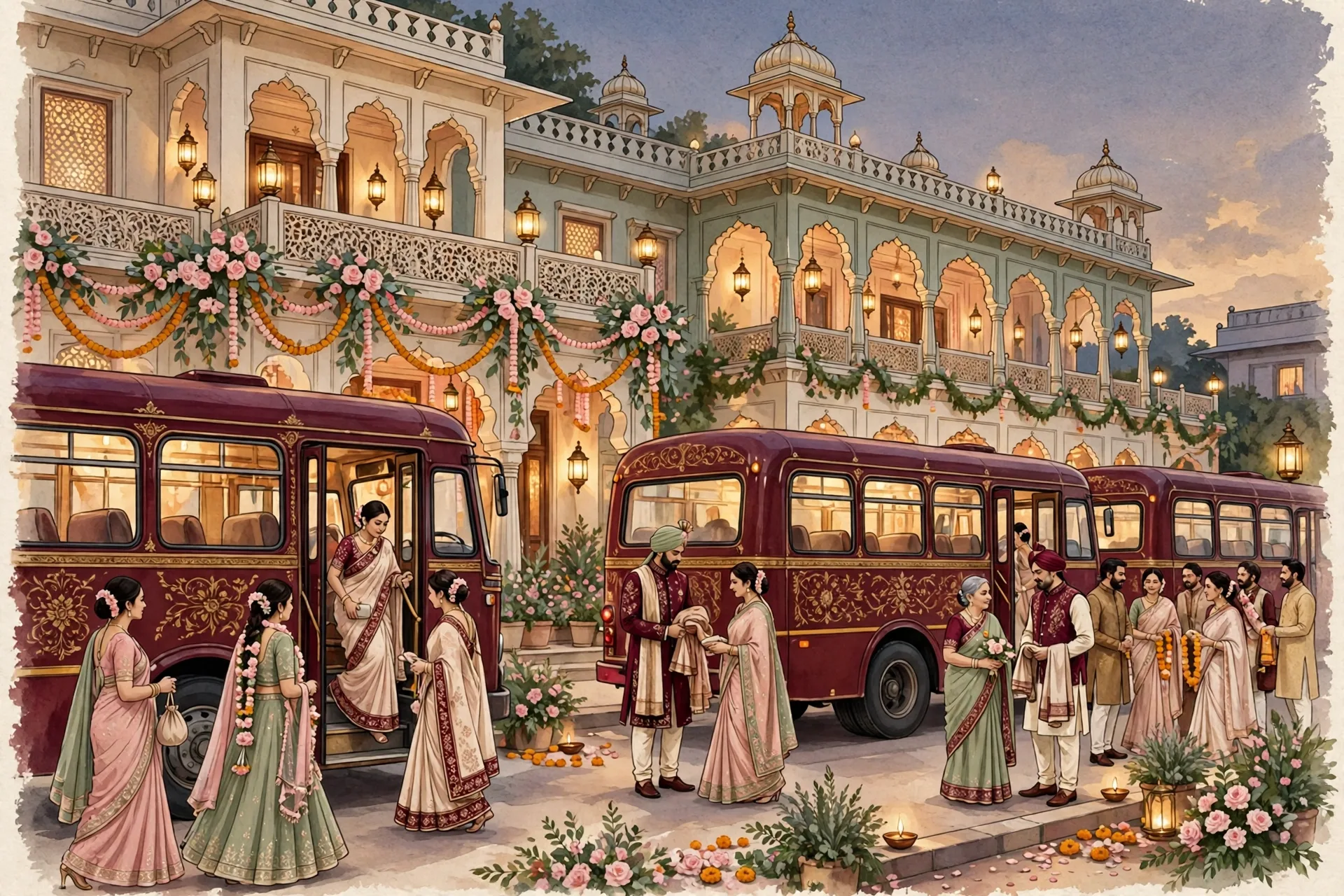
Outstation guests stay in hotels, and hotels are rarely next to the venue. Book buses by the function, not by the day, with a bus for every forty guests, and a printed schedule in the hotel lobby, on the family group, and on the invitation. The schedule says the bus leaves the hotel at a time, arrives at the venue at a time, and returns at a time, and it says it in large letters, because a guest who misses the bus misses the function.
Keep a buffer in the schedule. A bus that leaves at six for a seven o clock function arrives at half past six, and the guests have time to find their seats. Keep one spare bus, or one spare car, for the guests who miss the first bus.
Agree the bus company in writing, with the vehicle numbers, the driver names and phone numbers, the pickup points, and the times, and confirm it twice, a week before and the day before. Visit the buses if you can, because a bus with no air conditioning in May is a bus that arrives with a hundred sweating guests, and a bus with a broken seat is a bus with a guest who stands for an hour.
Local guests, parking, and the venue
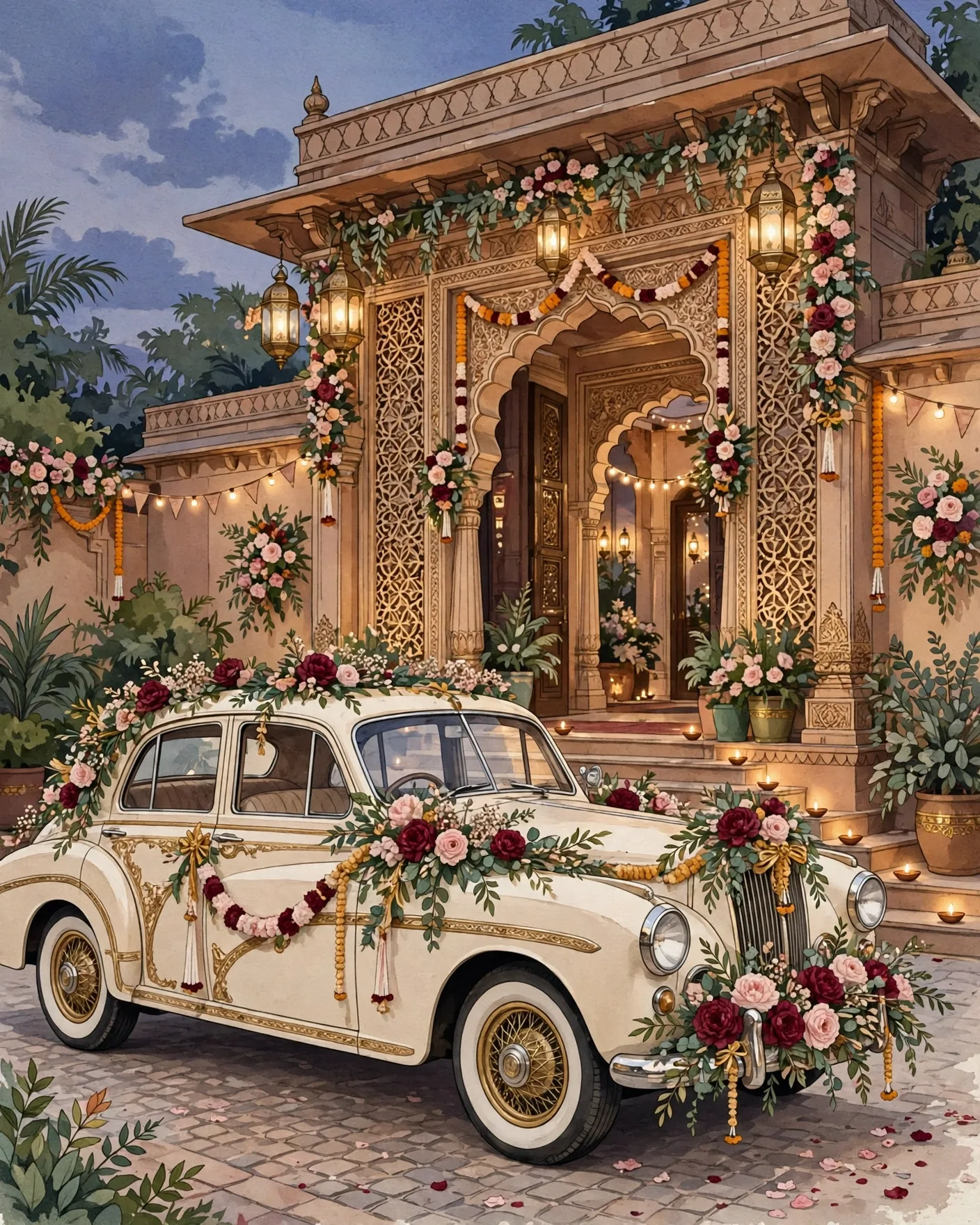
Local guests mostly drive themselves, and their problem is parking, not transport. Check the venue parking when you book it, count the cars, and agree overflow parking nearby, with a shuttle if the overflow is far. Tell guests the parking arrangement on the invitation, with the overflow address, because a guest who circles for parking for half an hour is a guest who arrives annoyed.
Keep a valet or a parking attendant at the venue, because a wedding with five hundred guests and no one directing cars is a traffic jam at the gate. Keep the entrance clear for the couple's car and the elders cars.
Keep the return journey in mind too. At the end of the night, guests need cars, cabs, and buses, and the venue should have a cab stand or a booked cab service, because a guest who cannot get home at one in the morning will remember the wedding for the wrong reason. Tell guests the return plan when they arrive, so they can enjoy the evening without worrying about the journey home.
The transport sheet, and the day
One sheet, with every vehicle, every driver, every time, and every pickup point, is the whole plan. Give it to the coordinator, who owns it on the day, who calls the drivers, who checks the buses, and who knows where every vehicle is at every hour. The coordinator's phone should have every driver's number saved, and the drivers should have the coordinator's number, because transport fails when people cannot reach each other.
On the day, the coordinator checks the first bus personally and confirms the first drop off. After that, the system runs itself, because the drivers know the route and the guests know the schedule.
What it costs
Transport is a real line in the budget, buses by the function, cars for the couple and the elders, and a standby car for the evening. The invitation that tells every guest the bus times, the pickup points, and the parking, so no one misses a function, is a fixed and small cost. On MyIndiAura, a Cinematic Invite is ₹499, an Invite App is ₹399, and an Invitation Suite is ₹99. An Invite App suits a wedding with transport best, because it holds every function with its time, venue and map in one link, and the bus times with it.
How to create your transport wedding invitation
- Pick a design from the designs page at myindiaura.com/designs that matches your wedding colours.
- Add every function with its date, time and venue, so guests can plan their journey.
- Add the hotel name, the bus times and pickup points, and the RSVP button.
- Preview the invitation on your own phone, then share the link on WhatsApp. See myindiaura.com/create to start, and myindiaura.com/pricing for the full price list.
Details to check before you send
- A car for the couple for the whole wedding, with a driver who knows the venues
- Cars for the elders, door to door, with a standby car for an early departure
- Buses booked by the function, one per forty guests, with a printed schedule
- The bus company agreed in writing, with vehicle numbers, driver names and times
- Venue parking counted, overflow agreed, and a valet at the gate
- The transport sheet with every vehicle, driver and time, given to the coordinator
Frequently asked questions
How many buses do we need?
One bus for every forty guests, per function, with one spare bus or car for the guests who miss the first one. Count from the guest list per function, not from the total guest list, because not every guest attends every function.
Should we arrange transport for local guests?
Usually not, except for parking and a cab stand at the end of the night. Local guests drive themselves, and their problem is parking, not a bus, so solve the parking and the return journey.
What if a bus breaks down on the day?
That is why the spare vehicle exists, and why the coordinator has every driver's number. A bus company with a spare bus on call is worth more than a cheap bus company with none.
MyIndiAura theme showcase
These Cinematic Invites from MyIndiAura fit this wedding. Each one is ₹499.
- Ganga Ke Saath: down the ghat steps to the Ganga, diyas floating and a decorated wedding boat.
- Jharokha Ki Shaam: climb a Rajasthani palace stair to a jharokha over the lake at blue hour.
- Pichola Parde: breeze blown curtains to a lake terrace at sunset as a flower boat glides by.
Related reading
- Wedding Accommodation Guide for Outstation Guests
- Wedding Welcome Hampers for Outstation Guests
- Wedding Guest Management and RSVP Tracking Guide
Transport is the wedding nobody photographs and everybody remembers. Write the sheet, book the buses, keep a spare, and let every guest arrive on time.
Explore invitation designs
Choose a design and preview it free with your own names.


Found this useful? Share it with someone planning a celebration.
Share