Wedding Seating Plan Guide for Indian Families
A good seating plan keeps elders comfortable, families together and the couple free to enjoy the ceremony, so here is how to build one that works.
Why seating deserves a plan at all
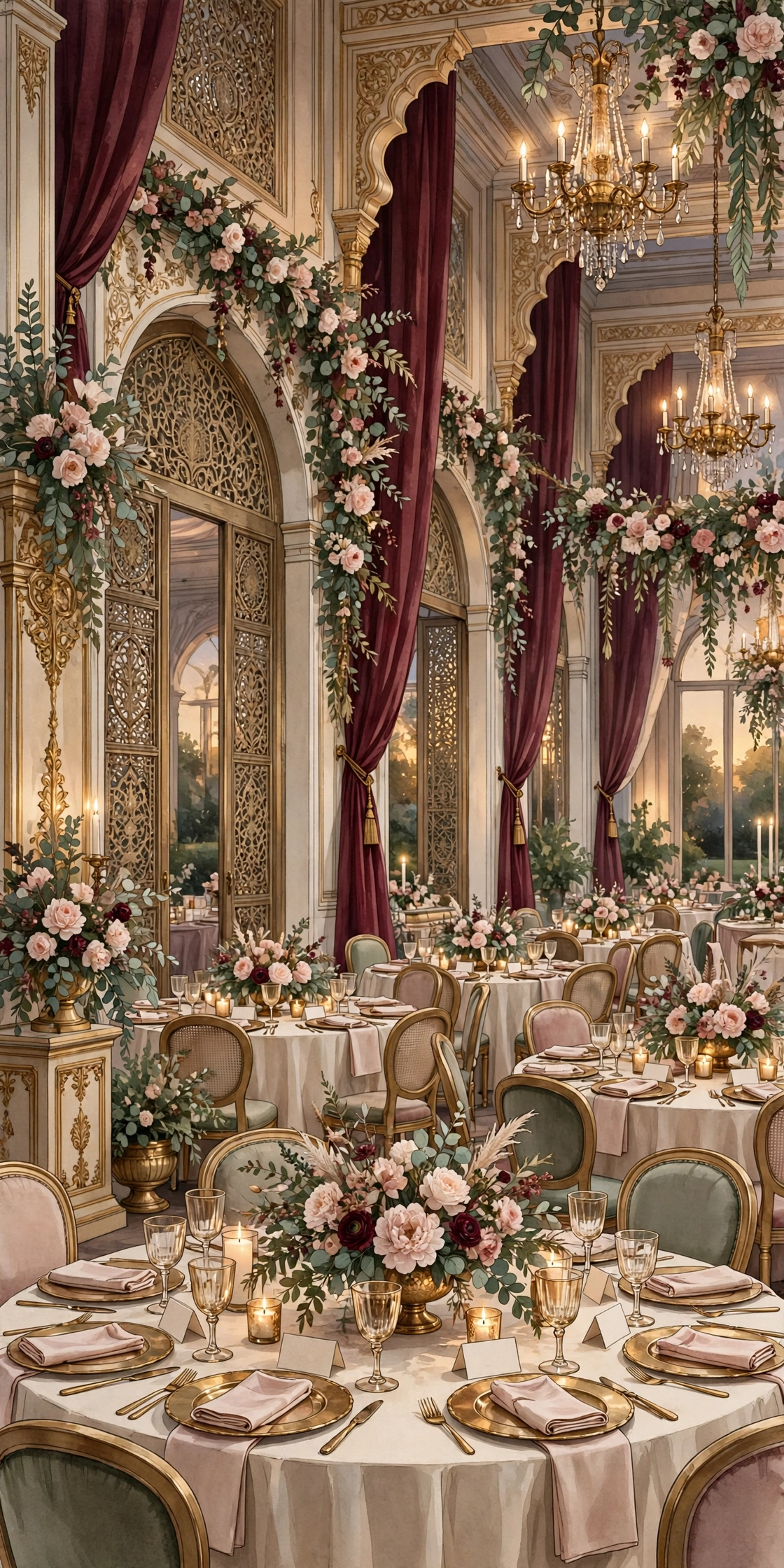
Many families leave seating to the day itself, and the result is easy to predict: elders standing while younger guests sit, two families on opposite sides of the hall, and the couple's parents searching for a chair during the pheras. A seating plan is not formality. It is care, shown in the most practical way. The people who travelled farthest and the people who are oldest should sit first, and sit well.
Start with the shape of the room. Walk the venue and mark where the mandap or stage stands, where the food is served, where the entrance is, and where the washrooms are. Elders need seats near the ceremony and near the washrooms, with a short, flat walk between them. Young children need seats near their parents, not at a separate table where they will wander. The couple's immediate families need seats where they can see the rituals without standing.
A plan also protects the couple. Without one, the bride and groom spend the evening answering the same question from every guest: where should I sit. With one, a cousin or the planner points each guest to a table, and the couple stays with the ceremony. That alone is worth the hour it takes to draw the plan.
Seat by family, age, and comfort
The simplest rule is to seat people with the people they know. Family with family, friends with friends, colleagues with colleagues. Mixed tables sound sociable, but they leave quiet guests with nobody to talk to, and they leave elders without the cousins they came to meet. Keep the groups together, and the room will sound happy on its own.
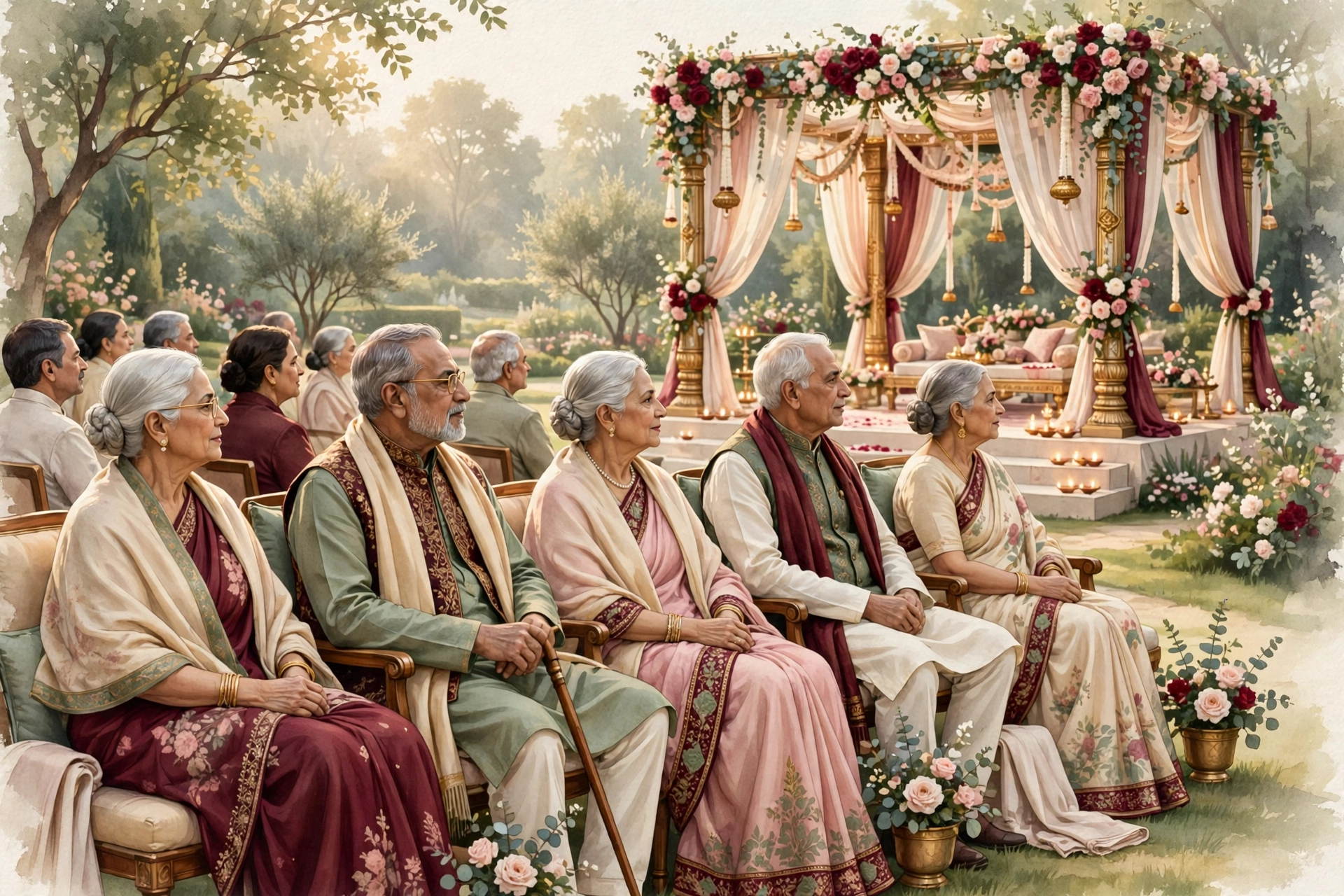
Within each group, think about age and comfort. Elders need chairs with backs and armrests, not low sofas or floor seating. Anyone with a bad knee or a walking stick needs a seat near the aisle, so they can stand and move without climbing over others. Pregnant guests and guests with small babies need seats near the exit, so they can step out without disturbing the ceremony. These are small kindnesses, and guests remember them.
Keep the two families close to the ceremony, but not necessarily mixed together. In many Indian weddings, each family has its own side near the mandap, and that is fine. What matters is that both sides can see, both sides can hear, and neither side feels pushed to the back. If the hall is long, place the elders in the front rows and the younger guests behind them, so every generation has a clear view.
The tables: numbers, names, and the head table
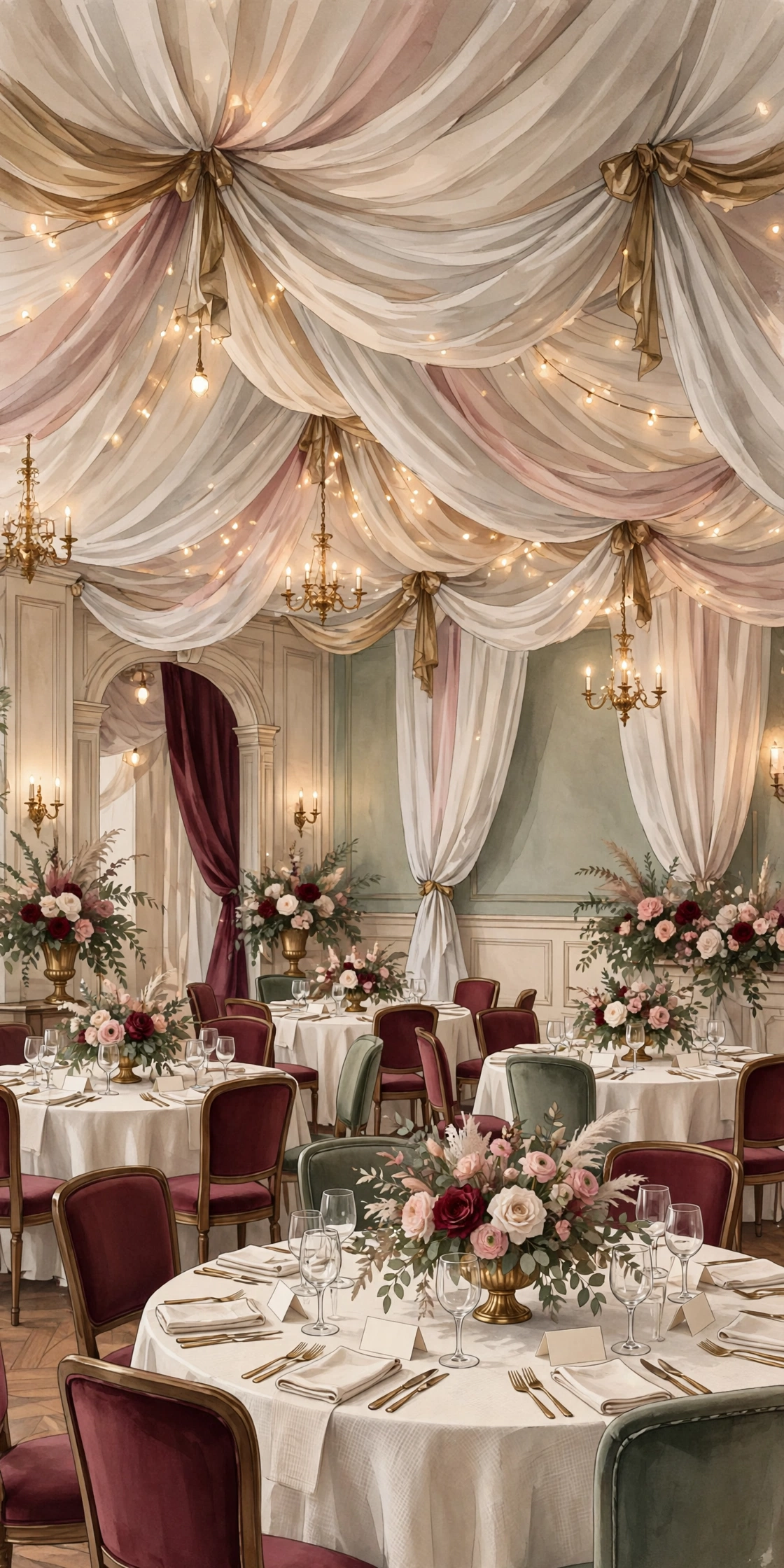
Give every table a number or a name, and put that on the invitation or on a board at the entrance. Guests should find their table in under a minute. A board at the door with names grouped by table works well, and a small card on each table confirms it. Avoid seating by arrival order, because the first guests take the best seats and the elders who arrive later stand at the back.
The head table, where the couple sits, should face the room, so the couple can see their guests and the guests can see them. Keep it small: the couple, their parents, and perhaps their siblings. A head table of twenty people becomes a stage, and the couple cannot talk to anyone on it. The rest of the family sits at the nearest tables, where they can reach the couple easily between functions.
How to make the plan without arguments
Seating plans cause arguments when they are made by one person in a hurry. Make the plan with both families, in one sitting, with the master guest list open. Start with the fixed seats: the elders, the couple's parents, and anyone with a mobility need. Then fill the family tables, then the friends, then the colleagues. Leave the difficult names for last, when the shape of the room is already clear.
Use a simple sheet: table number, seats, and the names on it. Share it with both families two days before the wedding, and take corrections once. After that, freeze it. Changes on the day should go through one person only, the planner or the cousin running the room. If two people move guests around, the plan falls apart in an hour.
On the day, place one calm person at the entrance with the plan. Their job is to greet guests and point them to their tables. That single job removes the most common source of confusion at an Indian wedding, and it lets the couple's parents enjoy the ceremony instead of managing the room.
What it costs
On MyIndiAura, a Cinematic Invite is ₹499, an Invite App is ₹399, and an Invitation Suite is ₹99. Choose by what your invitation needs to do, not by price alone. A cinematic invite suits a wedding with a film led opening, while an invite app suits a full week of functions with RSVP and maps.
How to create your wedding invitation
- Pick a design from the designs page at myindiaura.com/designs.
- Add the names, the venue, the seating note, and the order of events.
- Add photos of the couple, the venue map, and the RSVP button.
- Preview the invitation on your own phone, then share the link on WhatsApp. See myindiaura.com/create to start, and myindiaura.com/pricing for the full price list.
Details to check before you send
- The venue walked, with the mandap, food, entrance and washrooms marked
- Elders seated near the ceremony and the washrooms, with chairs that have backs
- Families seated with the people they know, both sides close to the ceremony
- Every table numbered or named, with a board at the entrance
- Ten spare chairs and one spare table kept ready for extra guests
- One person named to run the seating on the day, with the final plan in hand
Frequently asked questions
Do we really need a seating plan for an Indian wedding?
Yes, unless the wedding is very small. Without a plan, elders stand, families split, and the couple spends the evening directing guests. With a plan, everyone sits well, the couple stays with the ceremony, and the room feels cared for. One hour of planning saves a whole evening of confusion.
Should the two families sit together or apart?
Either is fine, as long as both sides sit close to the ceremony and can see and hear it. Many families keep their own side near the mandap, and that works well. What matters is that neither side feels pushed to the back, and that friends and colleagues sit with people they know.
How do we seat guests who do not know anyone?
Seat them with the warmest, most talkative members of the family, or with other guests of a similar age who share an interest. Never seat a lone guest at a table of strangers with no introduction. A short personal introduction from the host at the start of the evening makes all the difference.
MyIndiAura theme showcase
These Cinematic Invites from MyIndiAura fit this wedding. Each one is ₹499.
- Charbagh Dastaan: a four part garden story for a large family wedding.
- Sangmarmar Shaam: a marble palace evening for a grand celebration.
- Jharokha Ki Shaam: an evening balcony view for a warm family gathering.
Related reading
- Wedding RSVP Wording: Examples and Templates
- How to Create a Wedding Website for Your Guests
- Wedding Reception Invitation Wording and Examples
Seat the elders first, and the rest of the room will follow.
Explore invitation designs
Choose a design and preview it free with your own names.


Found this useful? Share it with someone planning a celebration.
Share