Wedding Jewellery for Men: Rings, Chains and Brooches
Groom jewellery is subtle, but it finishes the outfit. Here is how to choose a wedding ring, a chain and a brooch that suit your sherwani and your style.
How to choose wedding jewellery for men
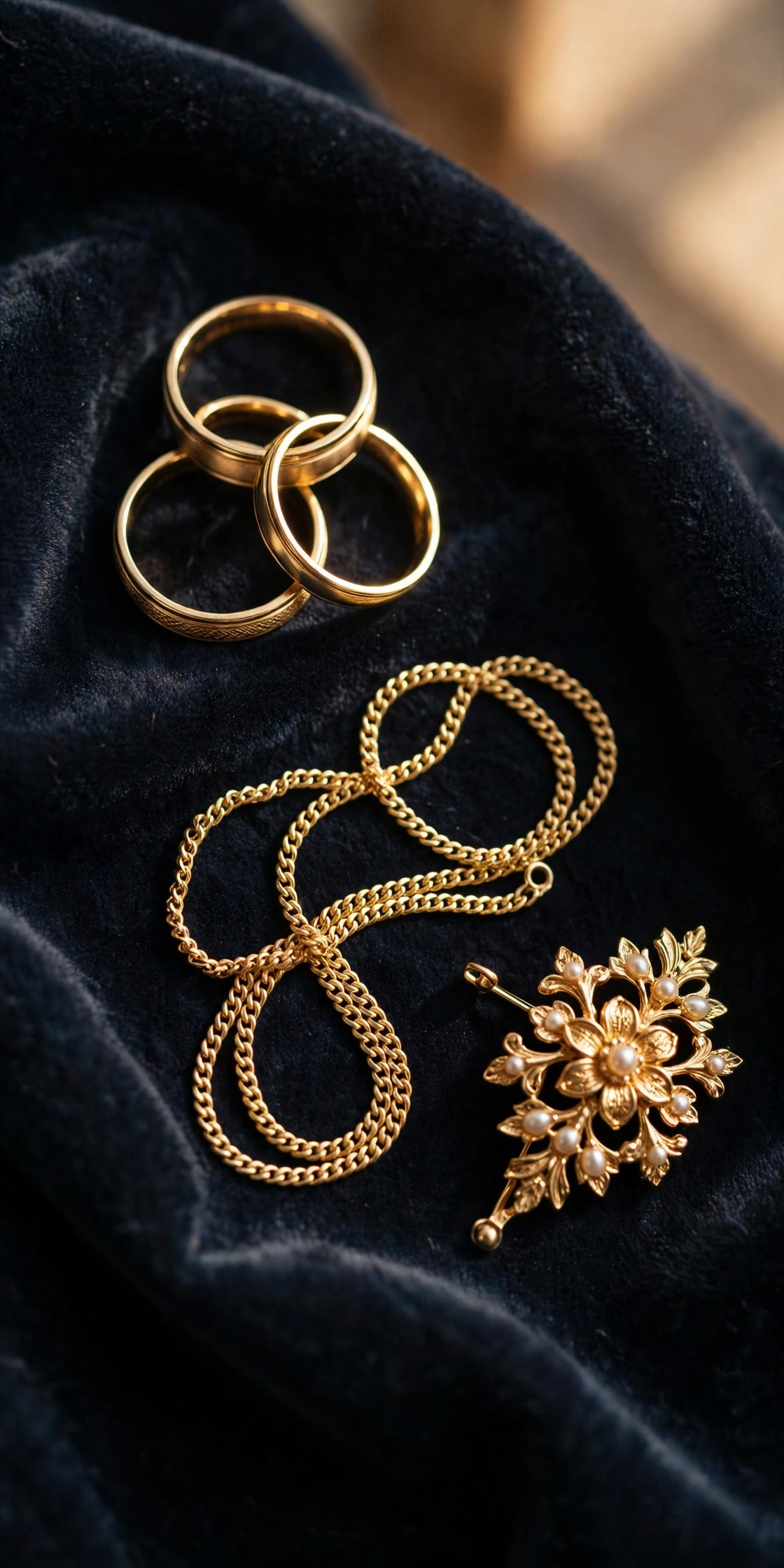
Wedding jewellery for men is subtle, but it finishes the outfit. A ring, a chain, and a brooch are small pieces, but they are the details guests notice in photographs, and they are the pieces the groom will keep for life. The rule is simple: keep it minimal, keep it meaningful, and let one piece be the focus. A groom who wears too much jewellery looks like a guest who dressed up, while a groom who wears one good piece looks like a groom.
The wedding ring: metal, style and fit
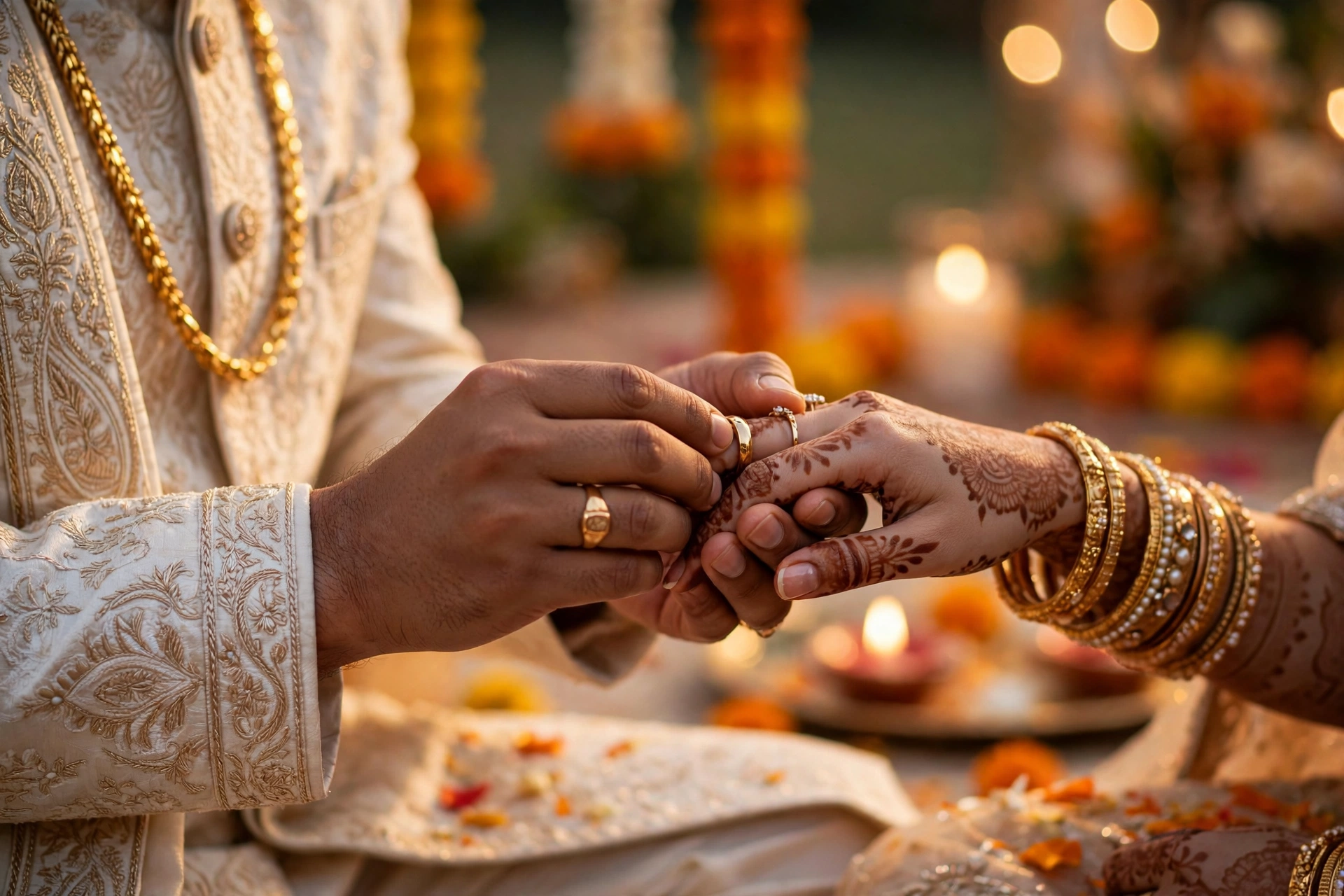
The wedding ring is the piece the groom will wear every day, so it deserves the most thought. Gold is the classic choice: yellow gold suits a traditional groom, white gold suits a modern groom, and rose gold suits a groom who wants something different. Platinum is the most durable and the most expensive, and it suits a groom who wants a ring that will never tarnish. A two tone ring, with yellow gold and white gold, suits a groom who mixes metals.
Chains: gold, pearl and minimal
A chain is the groom jewellery that shows most in photographs, because it sits at the neckline of the sherwani or the kurta. A gold chain is the classic choice: a thin, simple chain suits a modern groom, while a thicker chain with a pendant suits a traditional groom. A pearl chain, called a mala, is the royal choice, and it suits a sherwani with a safa and a brooch. A minimal chain, with a small pendant like an Om or an initial, suits a groom who wants a personal touch.
The length matters: a chain that sits at the collarbone suits a sherwani with a high collar, while a longer chain suits a kurta with an open neckline. The chain should be light, because a heavy chain will pull the collar and hurt the neck after hours. And the chain should match the other jewellery: a gold chain with a gold brooch, a pearl mala with a pearl brooch, so the set looks like one design. Keep the chain simple, because the sherwani itself is the statement, and the chain should support it, not compete with it.
Brooches and kalgi: the finishing touch
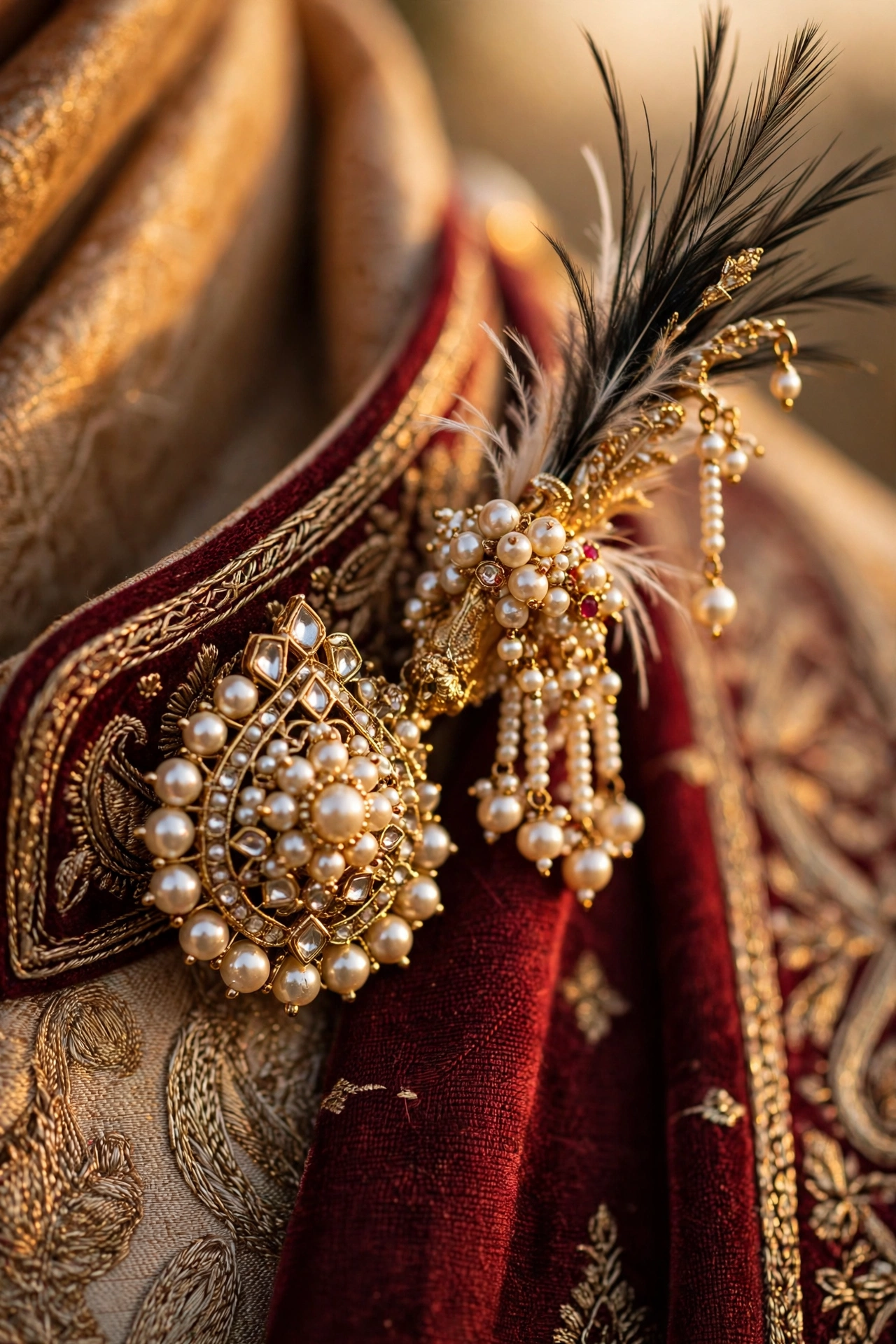
A brooch, called a kalgi when it sits on the safa, is the most decorative piece of groom jewellery. It sits on the chest of the sherwani or on the front of the turban, and it is the piece guests notice first in photographs. A brooch is usually made in gold with pearls, diamonds, or coloured stones, and it can be a floral design, a peacock, or a simple geometric shape. A kalgi is usually a feather shaped brooch, worn on the safa, and it is the traditional groom accessory.
Choose a brooch that matches the sherwani colour and the bride's jewellery. A pearl brooch suits an ivory sherwani, a ruby brooch suits a maroon sherwani, and an emerald brooch suits a green or navy sherwani. The brooch should be secure, because it will be photographed from every angle, and a loose brooch will tilt and look careless. Pin it firmly, and check it in the mirror before each ceremony. A single, good brooch is better than two small ones, because one focus looks sharper than a cluttered chest.
Matching groom jewellery to the bride
Groom jewellery should match the bride, but not copy her. If she wears gold, he should wear gold. If she wears polki, his brooch can have a polki stone. If she wears a ruby set, his brooch can have a ruby. The metals should match, the stones should echo each other, and the overall tone should be the same: traditional with traditional, modern with modern. A groom in gold with a bride in silver will look mismatched in photographs, even if each piece is beautiful alone.
The couple can also share a detail: the same engraving inside the rings, the same stone in the brooch and the bride's necklace, or the same motif in the groom's kalgi and the bride's maang tikka. These small, shared details make the couple photographs feel like a pair, not two separate outfits. Tell the jeweller about the bride's set, so he can match the groom's pieces to it. And try the groom's jewellery with the bride's, in the same trial, to see the pair together.
Buying, caring and keeping it safe
Buy groom jewellery from a trusted jeweller, and ask for the hallmark certificate for gold and the certificate for any diamonds. Check the clasp on the chain, the pin on the brooch, and the fit of the ring, because these small mechanisms decide whether the piece stays put all day. Ask about the making charges and the exchange policy in writing, because groom jewellery is also an investment, even if it costs less than bridal jewellery.
What it costs
A groom wedding ring in gold usually costs between ₹15,000 and ₹75,000, depending on the gold weight and the design. A ring with a diamond costs more, from about ₹30,000. A gold chain usually costs between ₹20,000 and ₹1,00,000, depending on the weight and the length. A brooch or kalgi usually costs between ₹10,000 and ₹50,000, depending on the stones and the work. A full groom jewellery set, with a ring, a chain, and a brooch, usually costs between ₹50,000 and ₹2,00,000. Set your budget before you shop, and remember that the ring is worn daily, so comfort and durability matter most.
The invitation is a fixed, small cost. On MyIndiAura, a Cinematic Invite is ₹499, an Invite App is ₹399, and an Invitation Suite is ₹99. Your groom jewellery photographs will look beautiful inside any of them. See the pricing page for the current prices.
How to create your groom jewellery invitation
- Pick a design that matches your wedding colours from the designs page at myindiaura.com/designs.
- Add your names, the ceremony dates and times, and the venue for each function.
- Add photographs of the couple, including one that shows the groom jewellery.
- Preview the invitation on your own phone, then share the link on WhatsApp. See myindiaura.com/create to start, and myindiaura.com/pricing for the full price list.
Details to check before you send
- The names of the bride and groom, spelt exactly as the families use them
- The date and time of each function, with the venue and the dress code
- A photograph that shows the wedding colours, so guests can plan their outfits
- The RSVP contact for guests who need directions or timings
- The ring size, checked at different times of day, and the jeweller's bill, kept safe
- The chain, the brooch, and the ring, all tried with the sherwani once
Frequently asked questions
Should a groom wear jewellery?
Yes, but keep it minimal. A ring, a chain, and a brooch are enough. One good piece looks sharper than a cluttered chest, and the sherwani itself is the statement.
What metal should a groom choose for his ring?
Yellow gold is the classic choice, white gold suits a modern groom, and platinum is the most durable. Pick the metal that matches the bride's ring and your daily style, because you will wear it every day.
How do I choose a brooch for a sherwani?
Match the brooch to the sherwani colour and the bride's jewellery. A pearl brooch suits ivory, a ruby brooch suits maroon, and an emerald brooch suits navy or green. Keep it secure, and wear one brooch, not two.
MyIndiAura theme showcase
These Cinematic Invites from MyIndiAura fit this wedding. Each one is ₹499.
- Gulposh Nikah: floral gold for a groom brooch and chain.
- Arched Doors: royal tones for a groom ring ceremony.
- Cream Crest: ivory for a subtle groom jewellery look.
Related reading
- Bachelor Party Invitation Ideas for the Groom
- Indian Wedding Planning Checklist
- Pheras: Seven Vows Explained
Create your groom jewellery invitation on MyIndiAura, and let the invitation carry the quiet shine of the day to every guest.
Explore invitation designs
Choose a design and preview it free with your own names.
Found this useful? Share it with someone planning a celebration.
Share