Wedding Invitation Wording in Tamil
Tamil wedding wording that families can copy, in Tamil, in Roman Tamil, and in formal English, with the muhurtham and the traditions behind it.
What a Tamil wedding invitation needs to say
A Tamil wedding, or Kalyanam, is built around the muhurtham, the auspicious moment fixed by the family priest. Everything on the invitation serves that moment. Guests need to know whose wedding it is, when the muhurtham falls, where to come, and which functions to attend. The wording around those facts should sound warm and respectful, with elders and blessings named first.
A good Tamil invitation names the bride and groom with their parents, gives the muhurtham date and time in full, lists the venue with the area, and carries the order of events: Kashi Yatra, Oonjal, Kanyadaan, Muhurtham, Saptapadi, and Nalangu. It also says what to wear, since many Tamil families ask guests to wear silk or bright colours for the muhurtham. Keep the language simple. Tamil families read invitations in Tamil, in English, and very often in both, so a bilingual card is the safest choice when the guest list spans generations.
Tamil invitation wording in Tamil
These lines are ready to use. Replace the words in brackets with your own names, dates and venues.
- திருமண விழாவிற்கு உங்களை அன்புடன் அழைக்கிறோம்.
- எங்கள் மகள் [பெயர்] திருமணத்திற்கு உங்கள் வருகையும் ஆசியும் வேண்டும்.
- [தேதி] அன்று [இடம்] நடைபெறும் திருமண விழாவிற்கு குடும்பத்துடன் வருகை தரவும்.
- உங்கள் வருகையும் ஆசியும் எங்களுக்கு மகிழ்ச்சி.
- முகூர்த்தம் [நேரம்] மணிக்கு நடைபெறும்.
The first line means, we lovingly invite you to the wedding ceremony. The second asks for the guest's presence and blessings at our daughter's wedding. The third asks the whole family to come to the wedding on the given date and venue. The fourth says your presence and blessings bring us joy. The fifth gives the muhurtham time. If your guest list includes elders who read Tamil comfortably, lead with the Tamil lines and follow with English for the details.
Tamil wording in Roman Tamil
Most family WhatsApp groups read Roman Tamil more easily than Tamil script on a phone. These lines keep the Tamil warmth in English letters.
- Thirumana vizhavukku ungalai anbudan azhaikiraom.
- Engal magal [Name] thirumanathirku ungal varugaiyum aasiyom vendum.
- [Date] andru [Venue] il nadakkum thirumanathirku kudumbathudan varuga.
- Ungal varugaiyum aasiyom engalukku magizhchi.
- Muhurtham [Time] manikku nadakkum.
Roman Tamil works best for the short lines: the invitation, the blessing request, and the date. Put the full details in English right after, so nobody has to guess the venue or the time. Avoid long Roman Tamil paragraphs, because they are hard to read on a phone screen.
Formal English wording for a Tamil wedding
Use these when the card goes to the whole family list, or when elders and family friends are invited.
- Mr and Mrs [Surname] request the pleasure of your company at the wedding of their daughter [Name] to [Name], son of Mr and Mrs [Surname], on [Date] at [Time], at [Venue].
- With joy in our hearts, we invite you to bless [Name] and [Name] at their Kalyanam. Muhurtham at [Time] on [Date], at [Venue].
- Please join us for the wedding of [Name] and [Name], followed by lunch. Your blessings will make the day complete.
- We welcome you to the Kalyanam of our son [Name]. Kashi Yatra at [Time], Muhurtham at [Time], at [Venue].
- The [Surname] family invites you to the wedding of [Name] and [Name] on [Date]. Reception to follow in the evening.
Formal wording suits the printed card and the main digital invite. Keep the muhurtham time prominent, because that is the moment guests plan around. If the muhurtham is early in the morning, say so plainly and add the breakfast note, so guests arrive on time.
The traditions behind the words
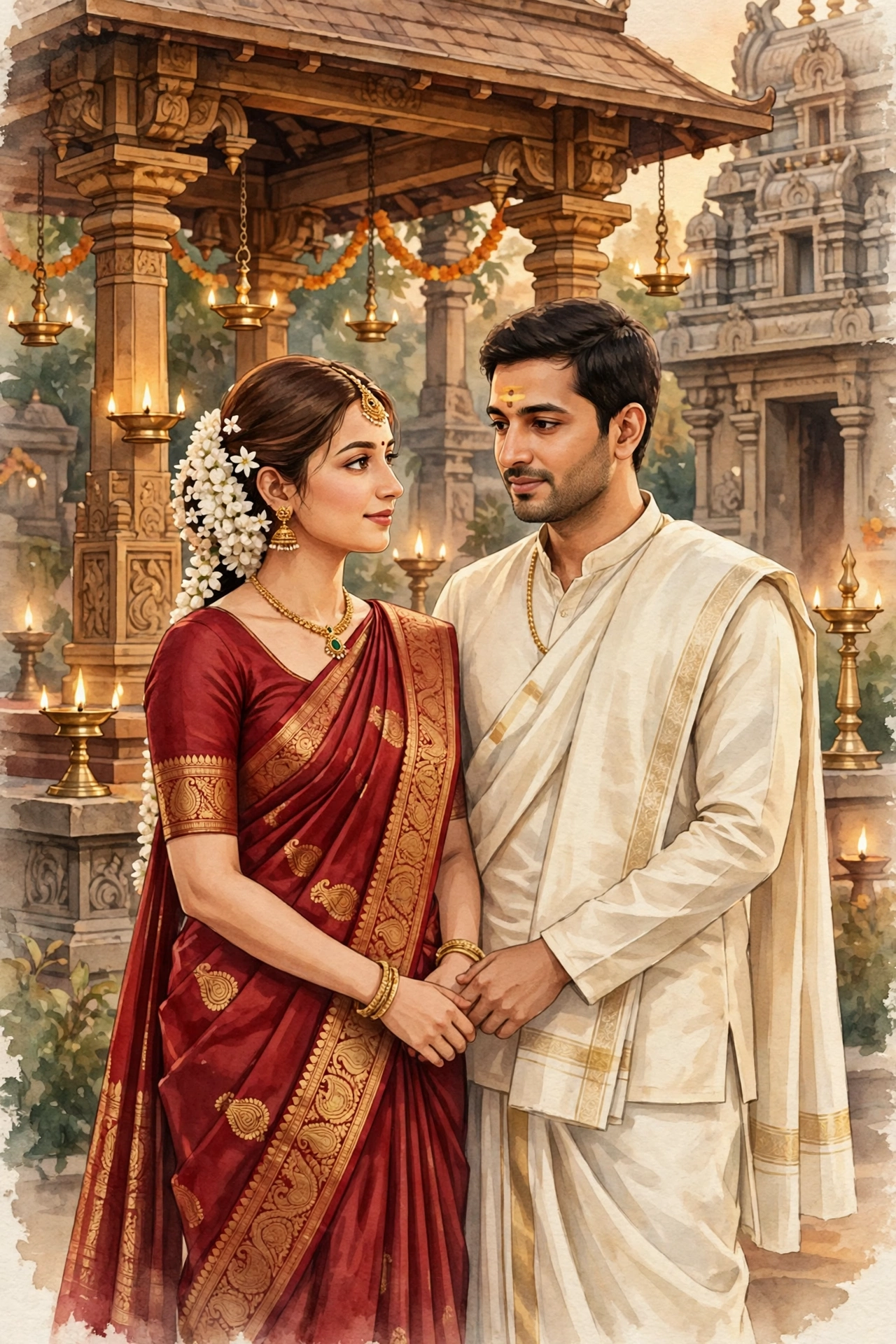
Tamil weddings follow a clear order, and the invitation reads better when it reflects it. The Kashi Yatra comes first, when the groom pretends to leave for Kashi and the bride's father persuades him to stay and marry. The Oonjal follows, when the couple sits on a decorated swing while women sing and sprinkle turmeric water. Kanyadaan is the giving away of the bride, and the Muhurtham is the tying of the thaali at the exact auspicious minute. Saptapadi, the seven steps, and Nalangu, the playful games, close the ceremony.
You do not need to explain every ritual on the card. Name the ones guests attend, with times, and let the priest and the families carry the meaning on the day. A short line about the muhurtham, and a line about lunch, covers most questions guests will ask.
Choosing the design
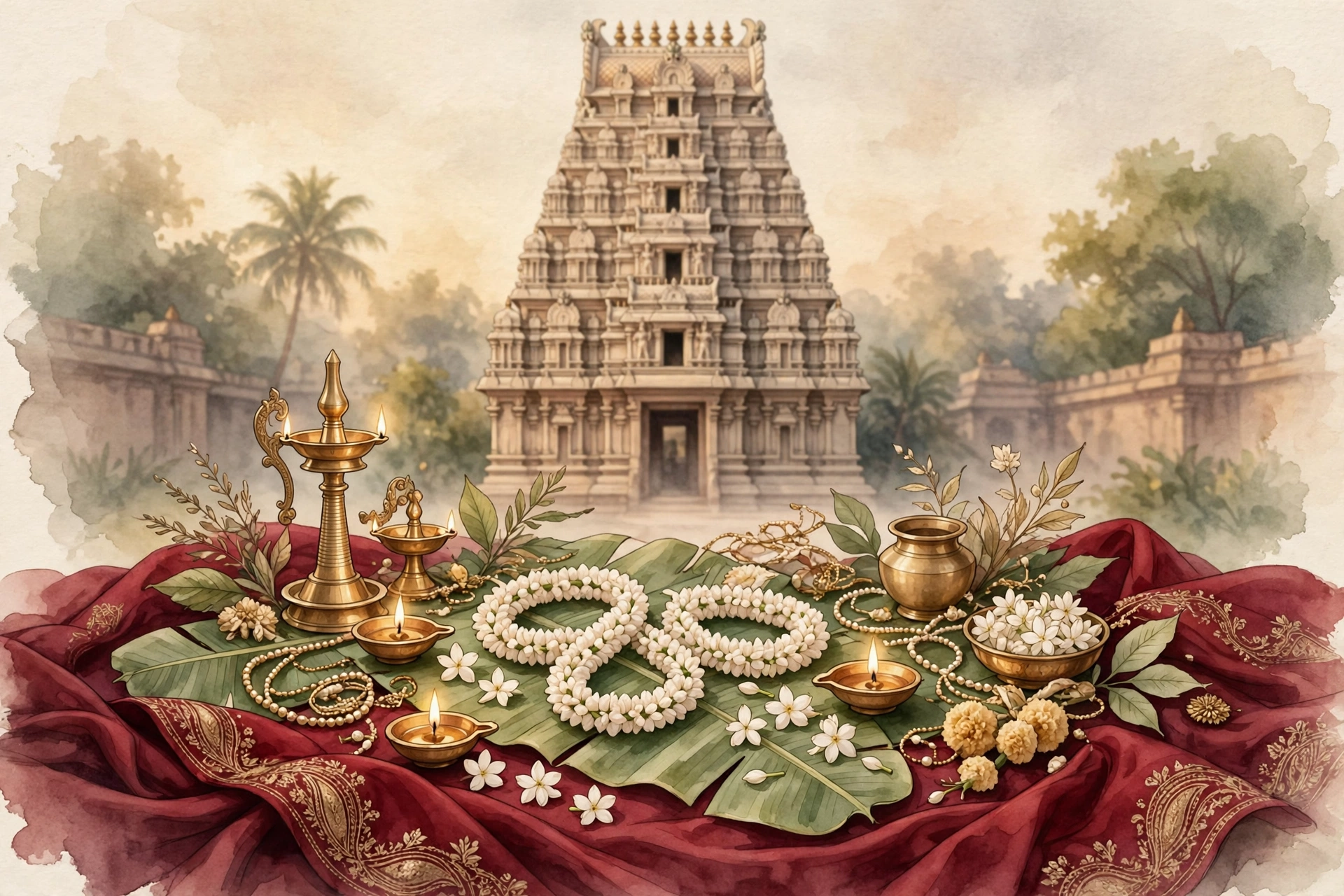
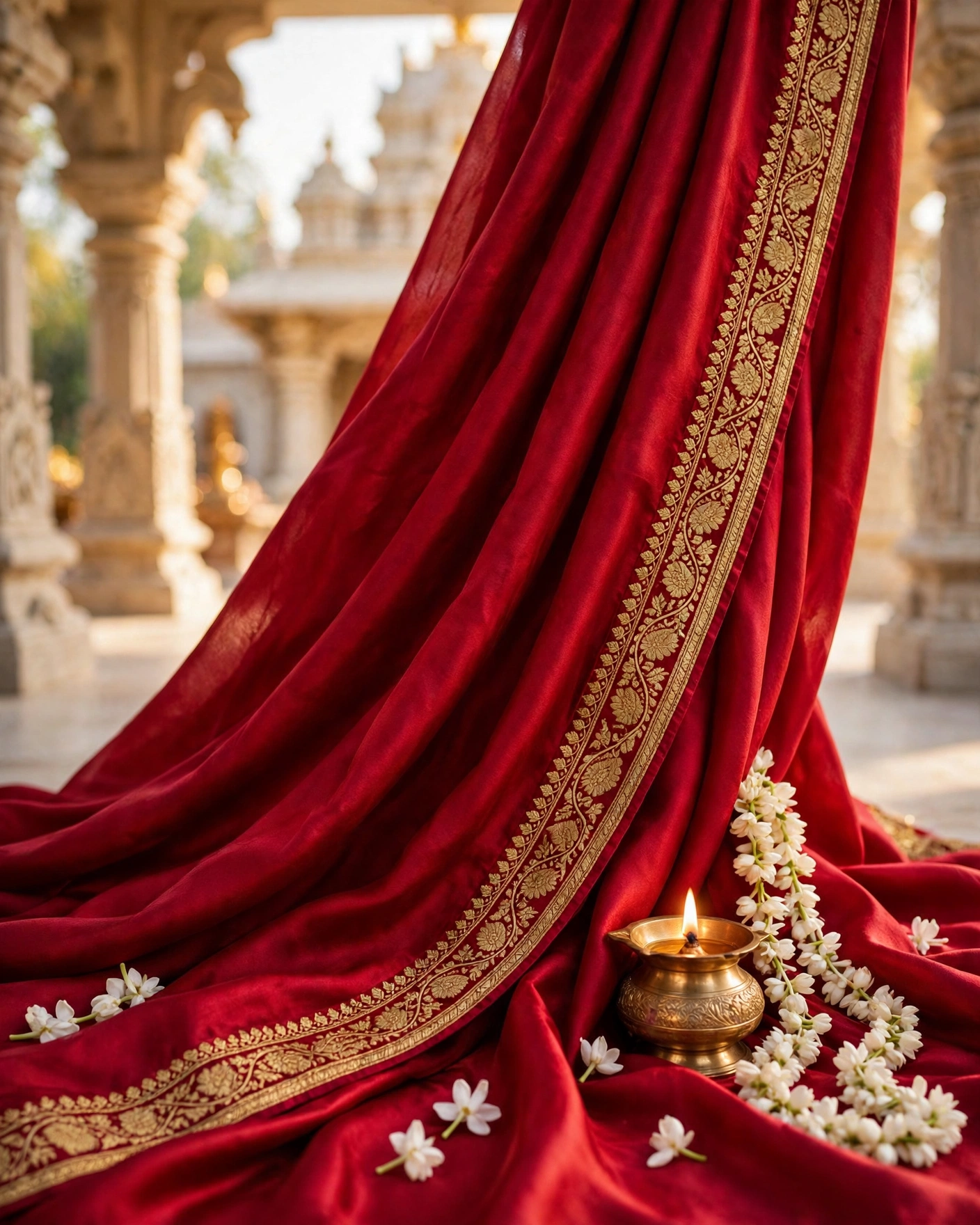
Tamil wedding cards traditionally use deep reds, maroon and gold, with Kanjivaram silk borders, temple motifs, jasmine and banana stems. A design in those colours tells guests at a glance that this is a Tamil Kalyanam. Keep the names large and clear, because Tamil names with initials are easy to misread in a small font.
If your families are modern, a cream and gold card with a single temple border works well, and it suits both Tamil and English text. Avoid dark backgrounds for the details page, because older guests read the time and venue better on a light card. See the South Indian designs on the designs page and pick one that carries your colours.
What it costs
On MyIndiAura, a Cinematic Invite is ₹499, an Invite App is ₹399, and an Invitation Suite is ₹99. Choose by what your invitation needs to do, not by price alone. A cinematic invite suits a wedding with a film led opening, while an invite app suits a full week of functions with RSVP and maps.
How to create your Tamil wedding invitation
- Pick a South Indian design from the designs page at myindiaura.com/designs.
- Add the Tamil and English wording, the muhurtham time, the venue, and the order of events.
- Add photos of the couple, the venue map, and the RSVP button.
- Preview the invitation on your own phone, then share the link on WhatsApp. See myindiaura.com/create to start, and myindiaura.com/pricing for the full price list.
Details to check before you send
- The names of the bride and groom, with parents, spelt exactly as the families use them
- The muhurtham date and time, checked with the priest
- The full venue address, with the area and a map link
- The order of events, with times for Kashi Yatra, Oonjal and Muhurtham
- A dress code note, if you want guests in silk or bright colours
- An RSVP contact for guests who need directions
Frequently asked questions
What is the muhurtham, and why does it matter on the invite?
The muhurtham is the auspicious minute fixed by the priest for the thaali tying. It is the heart of a Tamil wedding, and guests plan their arrival around it, so it should be the most prominent time on the card.
Should a Tamil wedding invitation be in Tamil or English?
Both, when the guest list mixes generations. Tamil for the blessing and the welcome, English for the date, time and venue. Elders read the Tamil, younger guests read the English, and nobody has to ask a relative what the card says.
What is Kashi Yatra?
Kashi Yatra is the ritual where the groom pretends to leave for Kashi, carrying an umbrella and a fan, and the bride's father persuades him to stay and marry his daughter. It is light and joyful, and it usually opens the wedding morning.
When should we send a Tamil wedding invitation?
Send digital invitations four to six weeks before the wedding, and earlier for outstation guests. A short WhatsApp reminder two or three days before, and again the evening before, is enough for most families.
What do guests wear to a Tamil wedding?
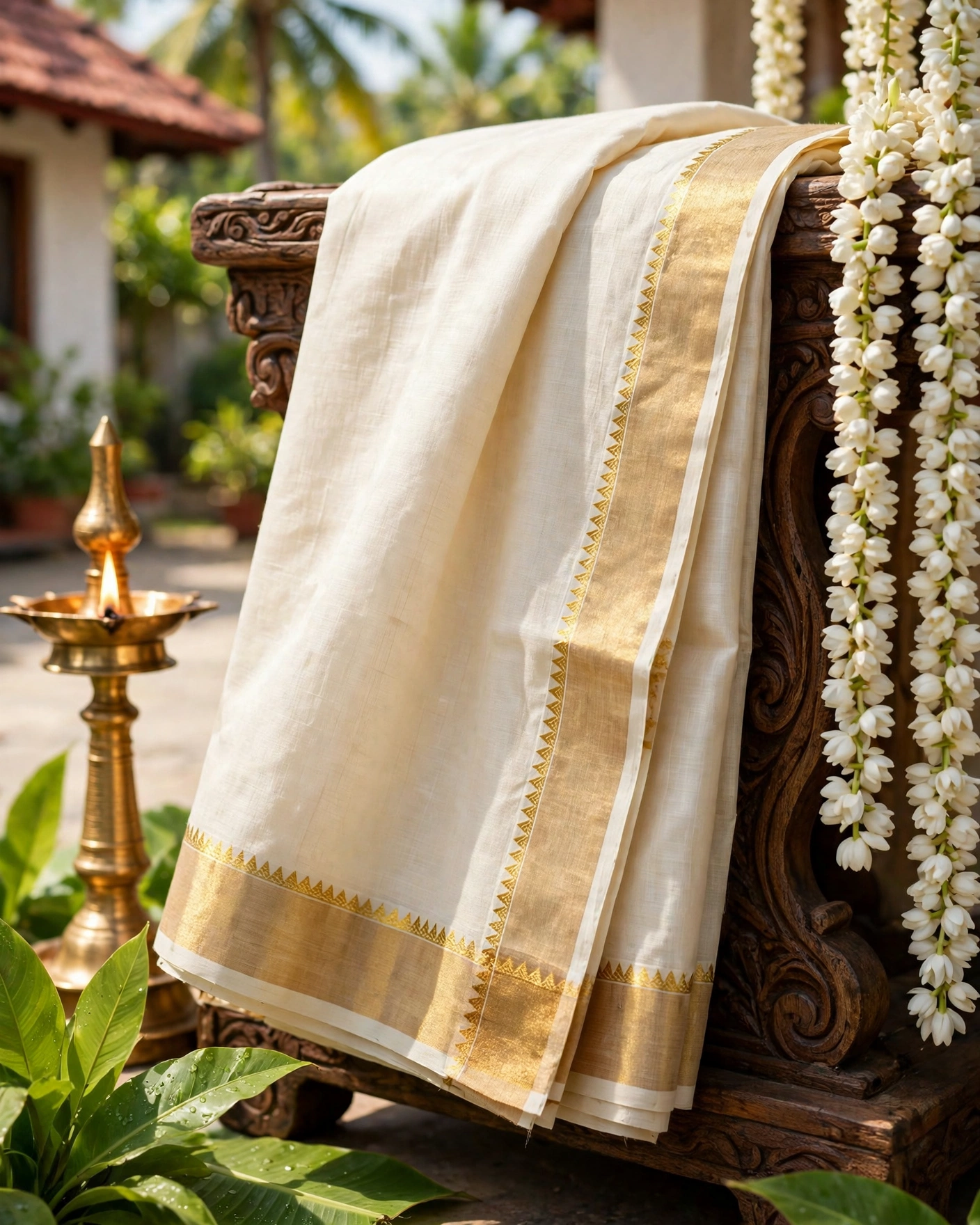
Silk sarees and bright colours for the muhurtham, with gold jewellery. Men often wear a dhoti and angavastram or a silk kurta. Mention the dress code on the invite if you want guests to match the morning.
MyIndiAura theme showcase
These Cinematic Invites from MyIndiAura fit this wedding. Each one is ₹499.
- Neelam Mandapam: a gopuram and temple tank at dusk, made for a Tamil ceremony.
- Deepa Tarang: a temple tank ringed with lamps under a glowing gopuram.
- Mandap Yatra: a walk through the venue, room by room, to the mandap.
Related reading
Explore invitation designs
Choose a design and preview it free with your own names.
Found this useful? Share it with someone planning a celebration.
Share