Wedding Guest List Mistakes to Avoid
The guest list decides the venue, the food and the budget, so here are the mistakes that make it grow out of control and how to keep it honest.
The guest list decides everything else
The guest list is the first real decision of a wedding, and the one most couples get wrong. It decides the size of the venue, the quantity of food, the number of rooms, the transport, and the total bill. A list that grows by a hundred people after the venue is booked cannot be fixed by a bigger tent. It needs a bigger hall, more food, more chairs, and more money, all arranged at short notice.
The most common mistake is building the list backwards: starting with who might be offended, instead of who matters. Every family has distant relatives, old neighbours, and colleagues who expect an invitation. Inviting all of them turns a wedding of two hundred into a wedding of five hundred, and the couple ends up greeting strangers instead of celebrating with the people they love. A wedding is not a census. It is a celebration with the people who belong in it.
The second mistake is letting the list grow in small steps. Ten names here, fifteen there, a whole office added in one message. Each addition feels small, but together they change the wedding. Fix the list once, in one sitting with both families, and then protect it. Any addition after that needs a removal somewhere else, or a clear decision that the budget and the venue can take it.
Count heads, not households
A list that counts households instead of people is always wrong. A family of four is four seats, four plates, and four chairs. A couple with two children needs a different table from a couple alone. When the venue asks for a number, give the number of people, not the number of cards. The caterer charges per plate, the decorator sets chairs per person, and the hall holds people, not invitations.
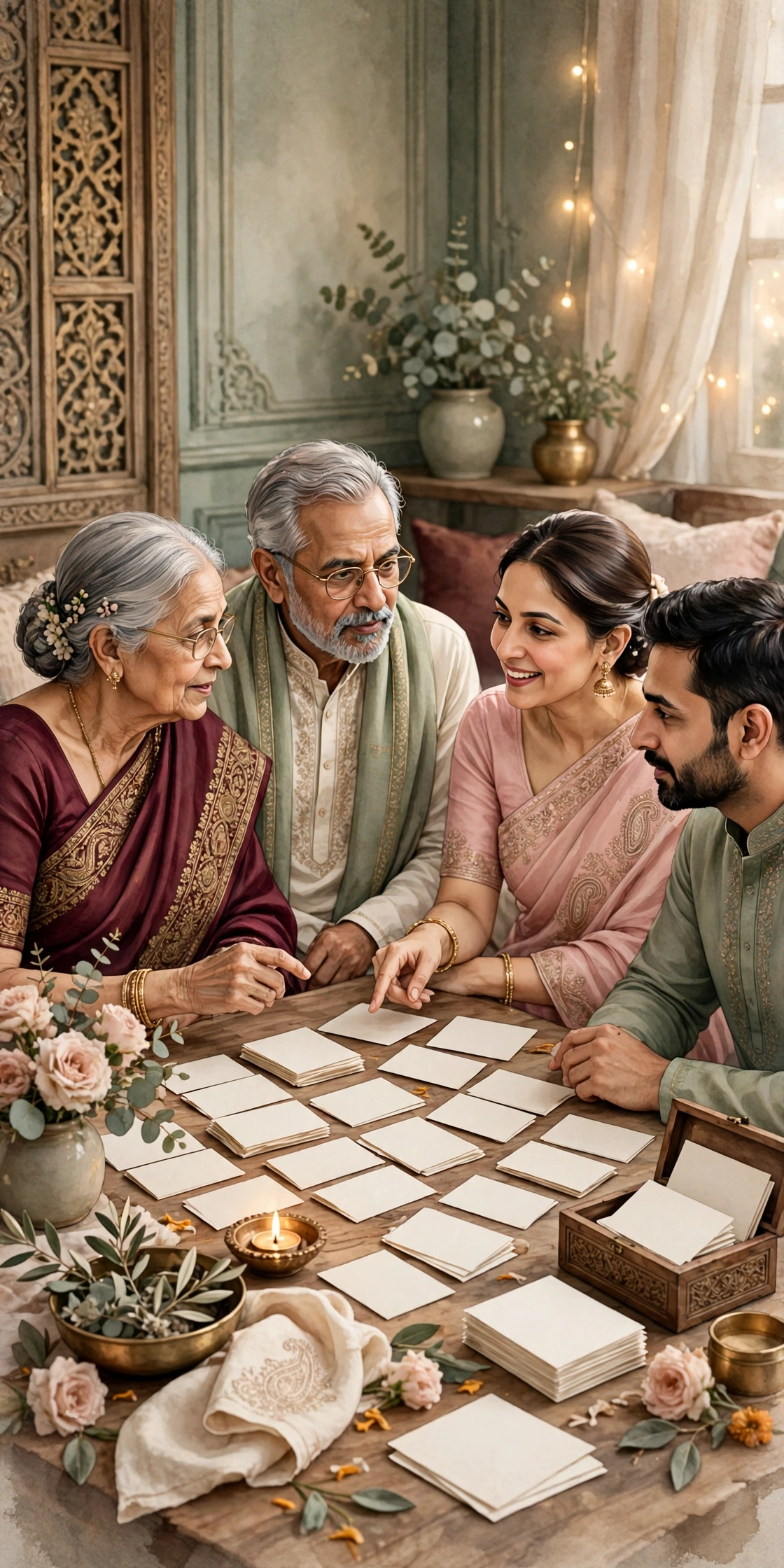
Ask both families to build the list in three groups: certain, likely, and courtesy. Certain means the person will come unless something serious stops them. Likely means they will probably come. Courtesy means they are invited out of obligation, and their attendance is uncertain. Plan the venue and the food for the certain and likely groups, with a small buffer for the courtesy guests who do arrive. This is far safer than planning for the full list and finding half the chairs empty, or planning for half and finding the hall overfull.
The two families, one list
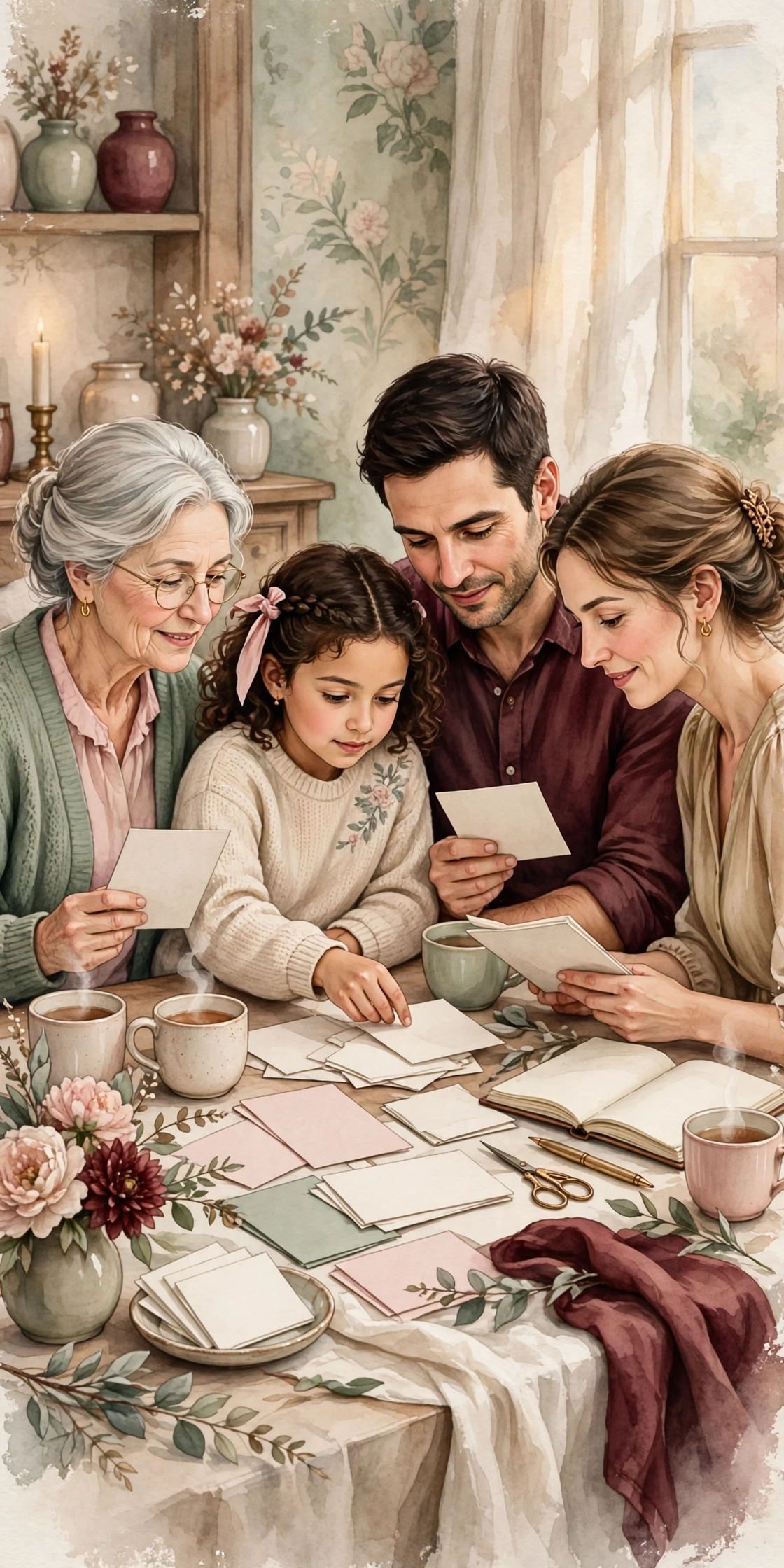
Most guest list arguments are not about names. They are about fairness between the two families. One side feels its list is being cut while the other side grows. The fix is a simple rule agreed at the start: each family gets a number, and each family spends its own number as it likes. The numbers need not be equal, but they must be agreed, and they must be respected.
Build the two lists separately, then merge them in one sitting. Remove duplicates, check spellings, and agree the final count. Then freeze the list for two weeks before sending invitations. In those two weeks, anyone can ask for a change, but after the freeze, changes need a family discussion, not a single message. This pause catches the names added in haste and the names forgotten in the rush.
Keep one master list, in one place, with one owner. A shared sheet works well, with columns for name, family side, function, RSVP status, and table. When the list lives in three different notebooks and two phone chats, names get missed and invitations get sent twice. The owner updates it, and everyone else reads it. On the wedding day, that same sheet becomes the seating plan and the RSVP record.
Invitations follow the list, not the other way round
Send the invitation only to the people on the frozen list, and send it once. A digital invitation makes this easy: one link per guest, with their name on it. It also makes the RSVP easy to track, because each guest answers on the same link. Avoid sending the invitation to a whole group chat and hoping the right people see it. Group messages get lost, and the people who matter most are the ones who never reply.
Set the RSVP date three weeks before the wedding, and send one reminder a week before the date. After the date, call the people who have not replied, once. Count the replies you have, plan the food and seating for that number plus a small buffer, and stop chasing. A guest who has not replied after a reminder and a call is unlikely to come, and the family should not spend the final week worrying about them.
If the list must grow after invitations are sent, add people with a fresh invitation and a personal message, not by forwarding the old link. A forwarded link with someone else's name on it feels careless, and the guest notices. A short personal note, with the correct name and the correct details, costs a minute and keeps the welcome warm.
What it costs
On MyIndiAura, a Cinematic Invite is ₹499, an Invite App is ₹399, and an Invitation Suite is ₹99. Choose by what your invitation needs to do, not by price alone. A cinematic invite suits a wedding with a film led opening, while an invite app suits a full week of functions with RSVP and maps.
How to create your wedding invitation
- Pick a design from the designs page at myindiaura.com/designs.
- Add the names, the final guest list count, the venue, and the order of events.
- Add photos of the couple, the venue map, and the RSVP button.
- Preview the invitation on your own phone, then share the link on WhatsApp. See myindiaura.com/create to start, and myindiaura.com/pricing for the full price list.
Details to check before you send
- The list split into certain, likely, and courtesy names, with heads counted
- Each family given a number, agreed and respected by both sides
- One master list in one place, with one owner and RSVP columns
- The children and plus one rules decided and written on the invitation
- The RSVP date set three weeks before the wedding, with one reminder planned
- The invitation previewed on a phone, with every name spelt correctly
Frequently asked questions
How many guests should we invite?
As many as the venue holds comfortably and the budget covers, and no more. Start with the people who matter, then add the courtesy names only if the venue and the budget allow it. A wedding of two hundred people who all belong there feels grander than a wedding of five hundred where the couple knows half the room.
How do we handle a family member who insists on extra guests?
Listen, thank them, and point to the agreed number. Offer a clear trade: any addition needs a removal, or a family decision that the budget can take it. Keep the tone warm, but keep the number firm. A list that bends for one person will bend for everyone.
Should children be invited to the wedding?
That is a family decision, and either answer is fine, as long as it is clear and early. If children are welcome, plan food and seating for them. If not, say so kindly on the invitation, so parents can plan. Silence is the only wrong answer.
MyIndiAura theme showcase
These Cinematic Invites from MyIndiAura fit this wedding. Each one is ₹499.
- Gulaabi Aangan: a pink courtyard welcome for a big family gathering.
- Pichola Parde: a lakeside palace setting for a destination celebration.
- Noor Bagh: a garden of light for an evening ceremony.
Related reading
- Wedding RSVP Wording: Examples and Templates
- How to Politely Ask Guests to RSVP
- Unique Wedding Guest Book Ideas
Count the people, then plan the wedding around them.
Explore invitation designs
Choose a design and preview it free with your own names.



Found this useful? Share it with someone planning a celebration.
Share