Wedding Film vs Wedding Video: What Is the Difference
A wedding film and a wedding video are not the same thing. Here is what each one is, how they are made, and which one suits your wedding.
The simple difference
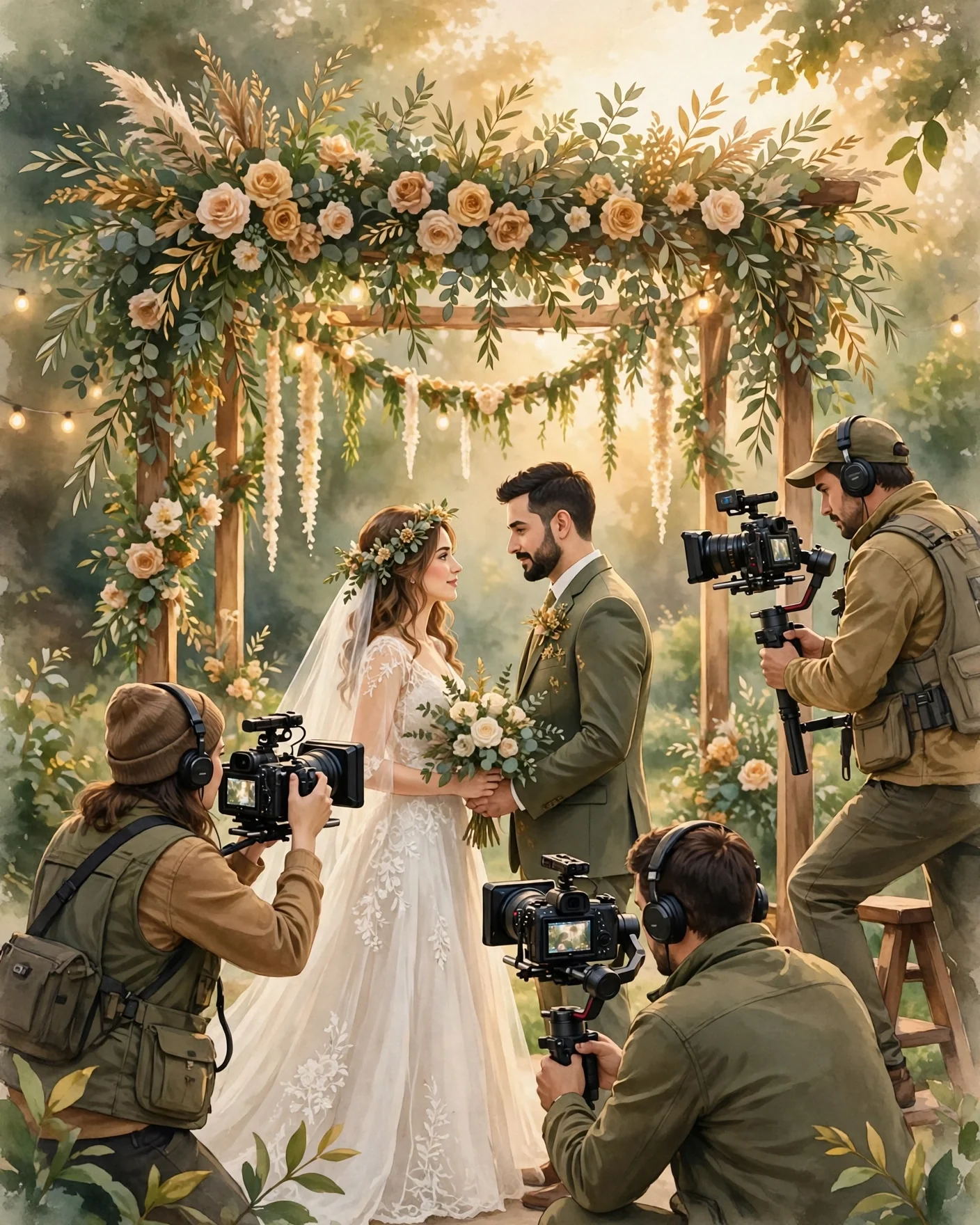
A wedding video records the day. A wedding film tells the story of the day. The difference is in the making, not in the camera. A video covers the rituals in order, with the sound as it happened, and the result is a faithful record. A film chooses the moments, shapes them with music and pacing, and the result is a story that feels like the wedding itself.
Both have a place. A video is the record your family will watch to remember exactly what happened. A film is the story your friends will watch because it moves them. Most couples today want both, and most good teams deliver both: a film for the feeling, and a video for the record. The choice is not which one, but how much of each.
How a wedding video is made
A wedding video is shot to cover, not to create. The camera stays on the rituals, records the full vows, the full speeches, and the full ceremonies, and the edit keeps them in order. The sound is the sound of the day: the priest, the families, the music, the laughter. The result is long, often an hour or more, and it is watched by the family, for the record.
Video suits couples who want everything preserved: every ritual, every speech, every blessing, in full. It suits large families, where the record matters to people who could not attend. And it suits traditional weddings, where the rituals themselves are the story, and the family wants to see them again, exactly as they happened.
How a wedding film is made
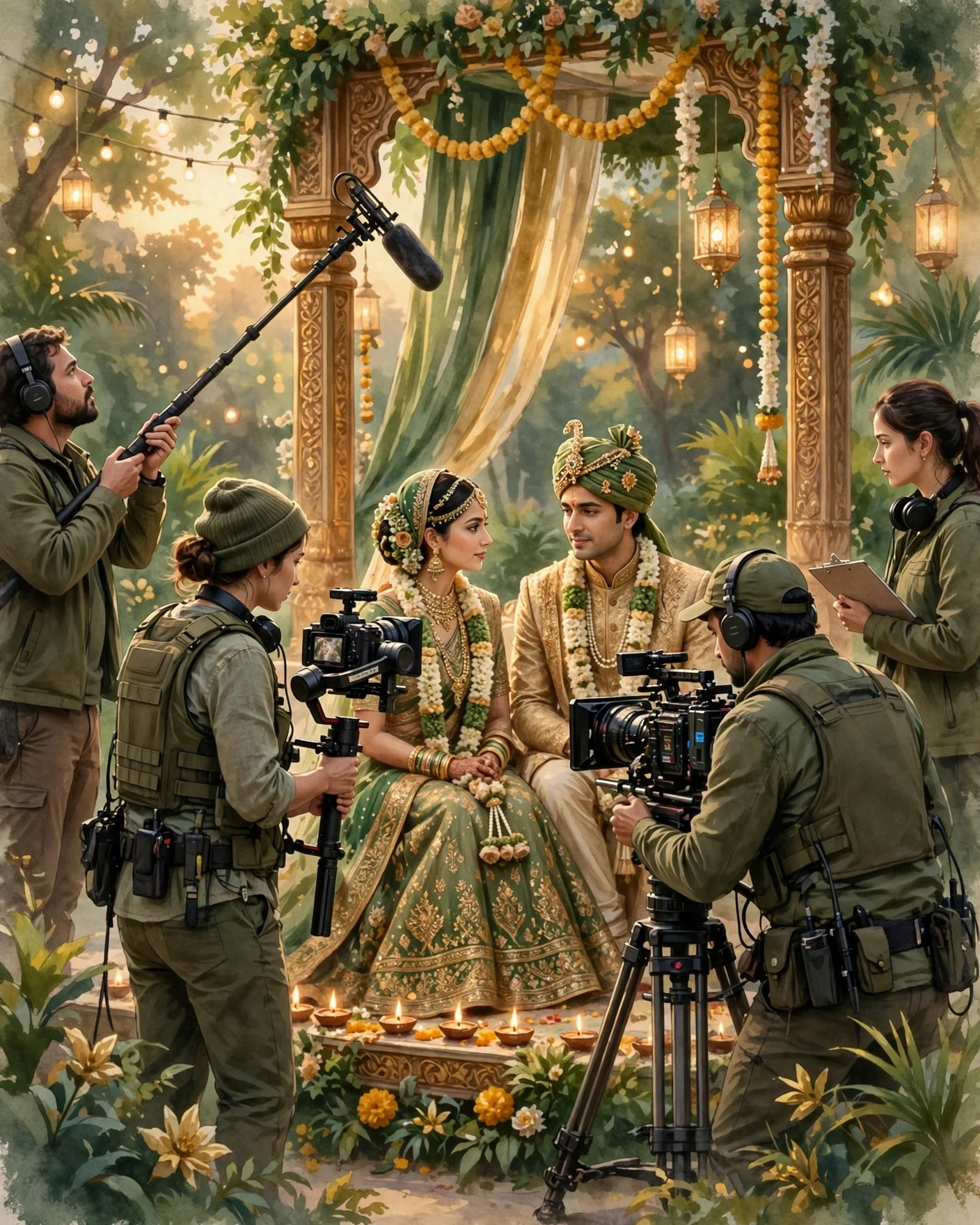
A wedding film is shot to tell a story. The filmmaker chooses the angles, the light, and the moments, and the edit shapes them into a narrative: the morning, the meeting, the rituals, the goodbye, with music that fits the mood and pacing that holds the attention. The vows are kept, but they are placed where they matter most, not where they happened. The result is short, usually fifteen to twenty five minutes, and it is watched by everyone, because it feels like a film.
Film suits couples who want the feeling of the day preserved, not just the facts. It suits couples who will share the work on social media, because a film is made to be shared. And it suits couples who trust the filmmaker, because a film needs the filmmaker's eye and judgement, not just the camera's record.
Which one should you choose
Choose the film if you want a story that moves people, and you trust the filmmaker to tell it. Choose the video if you want a complete record, and the rituals matter more than the mood. Choose both if you can, because they serve different people: the film for your friends and for the years ahead, the video for the family and for the record.
Ask the team what they deliver. A good team will offer a film, a teaser, and a full video, with clear prices for each. Ask to see both a full film and a full video from the same team, so you can judge each on its own terms. And ask about the audio: a film needs clean vows and speeches, and a video needs the full sound of the day. Both need a team that records sound properly, not just pictures.
What it costs
A film usually costs more than a video, because the editing is longer and the skill is rarer. A video is often included in a basic package, while a film is the premium offering. On MyIndiAura, a Cinematic Invite is ₹499, an Invite App is ₹399, and an Invitation Suite is ₹99. The invitation can carry your teaser film as its opening, so the film reaches every guest before the wedding, and the money you spend on the film works harder than the album alone.
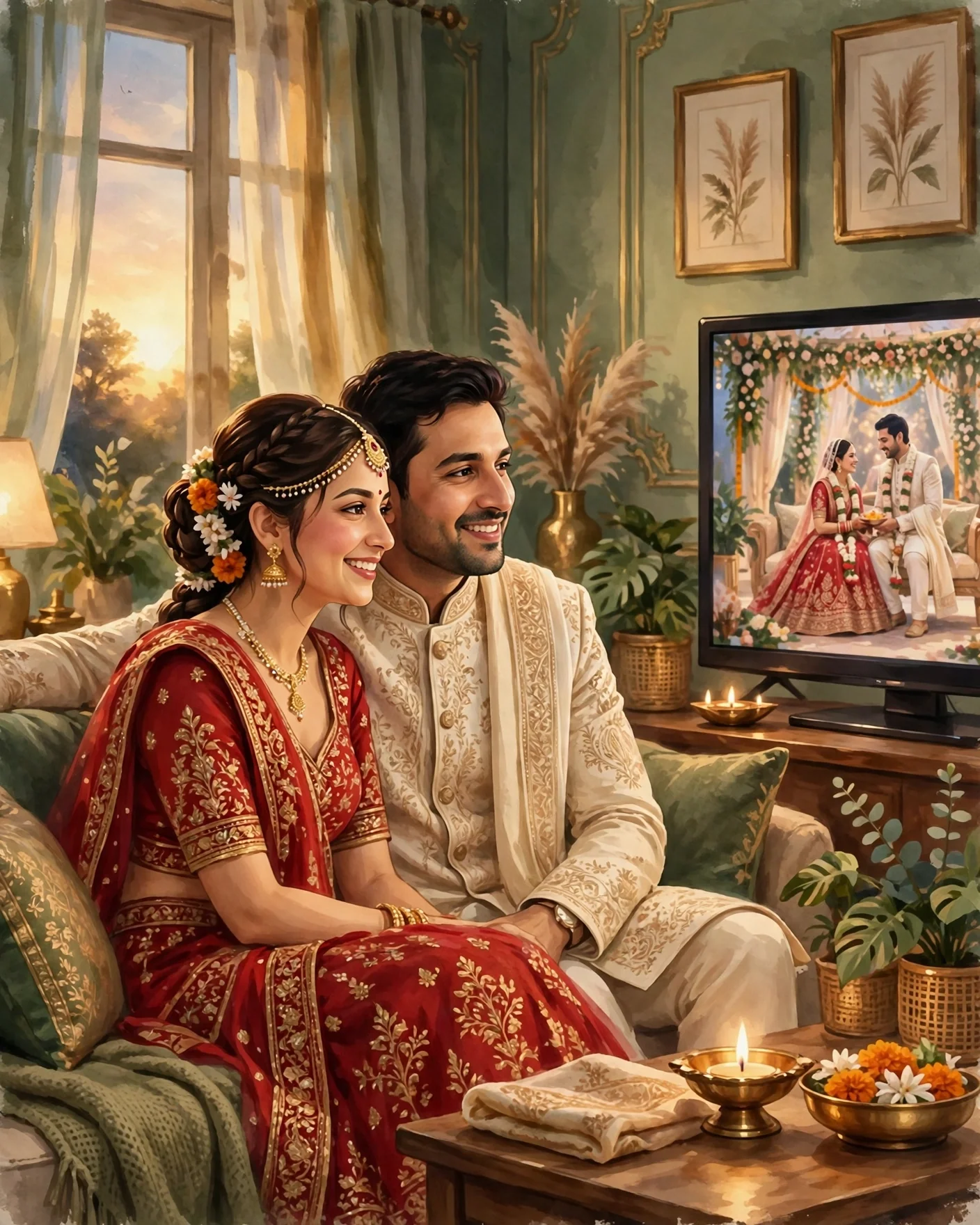
How to use your wedding film in your invitation
Your wedding film is the most powerful opening your invitation can have. A Cinematic Invite from MyIndiAura can open with the film, so guests feel the wedding before they read the details.
- Pick the teaser film, or the best ninety seconds of your wedding film, for the opening.
- Choose a design from the designs page at myindiaura.com/designs that suits the mood of the film.
- Add the names, the dates, the venue, and the RSVP button, then preview the invitation on your own phone.
- Share the link on WhatsApp. See myindiaura.com/create to start, and myindiaura.com/pricing for the full price list.
Details to check before you book
- Film and video both seen in full, from the same team
- Teaser, film, and full video agreed, with lengths and prices
- Audio plan confirmed for vows and speeches
- Music choice agreed, with licensing for sharing confirmed
- Delivery timeline agreed, with teaser date and film date
- Raw footage included, so the record is yours to keep
Frequently asked questions
What is the difference between a wedding film and a wedding video?
A wedding video records the day in order, with the sound as it happened, and it is a faithful record. A wedding film tells the story of the day, with chosen moments, music, and pacing, and it is a story that feels like the wedding itself. The video is the record, the film is the story.
Which is better, a film or a video?
Neither is better. A film moves people and gets shared. A video preserves everything and gets watched by the family. Most couples choose both, because they serve different people: the film for the feeling, the video for the record.
How long is a wedding film?
A cinematic wedding film is fifteen to twenty five minutes. A teaser is one to two minutes. A full wedding video can be an hour or more, with the rituals and the speeches in full. Ask the team for the lengths before you book, so you know what you are getting.
Do we need both a film and a video?
It helps, if the budget allows. The film is the story you share, and the video is the record you keep. If the budget is tight, choose the film, because it gets watched more, and ask for the raw footage as well, so the record is yours.
Can the same team make both the film and the video?
Yes, and most good teams do. The footage is shared, and the edit is different: one edit for the story, one edit for the record. Ask the team to show you both a film and a video they made from the same wedding, so you can judge each on its own terms.
MyIndiAura theme showcase
These Cinematic Invites from MyIndiAura fit this wedding. Each one is ₹499.
- Rose Film: a film-like invitation that opens the way your wedding film will.
- Music Box: a musical invitation that suits a wedding with a strong film and song story.
- The Wedding Post: a photo-led design that carries your film stills beautifully.
Related reading
- Wedding Invitation Video Trends for 2026
- Best Wedding Invitation Video Ideas for Indian Weddings
- How to Make Cinematic Wedding Invitation Videos
Create your wedding invitation on MyIndiAura, and let your film tell the story.
Explore invitation designs
Choose a design and preview it free with your own names.

Found this useful? Share it with someone planning a celebration.
Share