Wedding Draping Ideas: Fabric, Colour and Light
Draping turns a plain hall into a wedding venue. Here is how to choose fabrics, colours and light for the mandap, the stage and the ceiling.
Why draping changes a room
Draping is the fastest way to change a room. A plain banquet hall with white walls becomes a wedding venue when fabric falls from the ceiling, frames the stage, and softens the corners. Draping hides what you do not want guests to see, and it shows them what you do. It is also one of the cheapest ways to make a large room feel warm.
The fabric matters more than the pattern. Sheer fabric lets light through and feels airy. Heavy velvet absorbs light and feels grand. Silk falls beautifully and catches the light. Pick the fabric for the mood first, and the colour second, because the wrong fabric in the right colour still looks wrong.
Choosing fabrics for the wedding
Sheer organza and chiffon suit daytime and outdoor weddings. They move in the breeze, they let daylight through, and they make a venue feel light. Silk and satin suit evening weddings, because they catch warm light and shine. Velvet suits palace weddings and winter evenings, because it looks rich and it holds its shape in heavy drapes.
Avoid cheap shiny fabric that looks like plastic in photographs. It reflects the camera flash and turns the decor grey. Ask the decorator for a sample, hold it up in the venue light, and photograph it with a phone. If it looks good on the phone, it will look good on the day.
Draping colours for each function
The haldi suits yellow and orange drapes, to match the turmeric and the marigolds. The mehndi suits pink and green, to match the henna and the festive mood. The wedding ceremony suits red, maroon and gold, the classic colours of the pheras. The reception suits ivory, blush and gold, or a deep colour like burgundy for a grand evening.
Keep the draping to two colours per function, with one of them neutral. Ivory with gold suits almost every function, and it never fights the flowers. Red with gold is classic but heavy, so use it where the room is large. Pastels suit daytime, and deep colours suit the evening. Match the drape colour to the outfits, and the room will feel designed rather than decorated.
- Sheer organza and chiffon for daytime and outdoor weddings
- Silk and satin for evening weddings, velvet for palace and winter
- Two colours per function, with one neutral like ivory
- Photograph a fabric sample in the venue light before choosing
Draping the ceiling
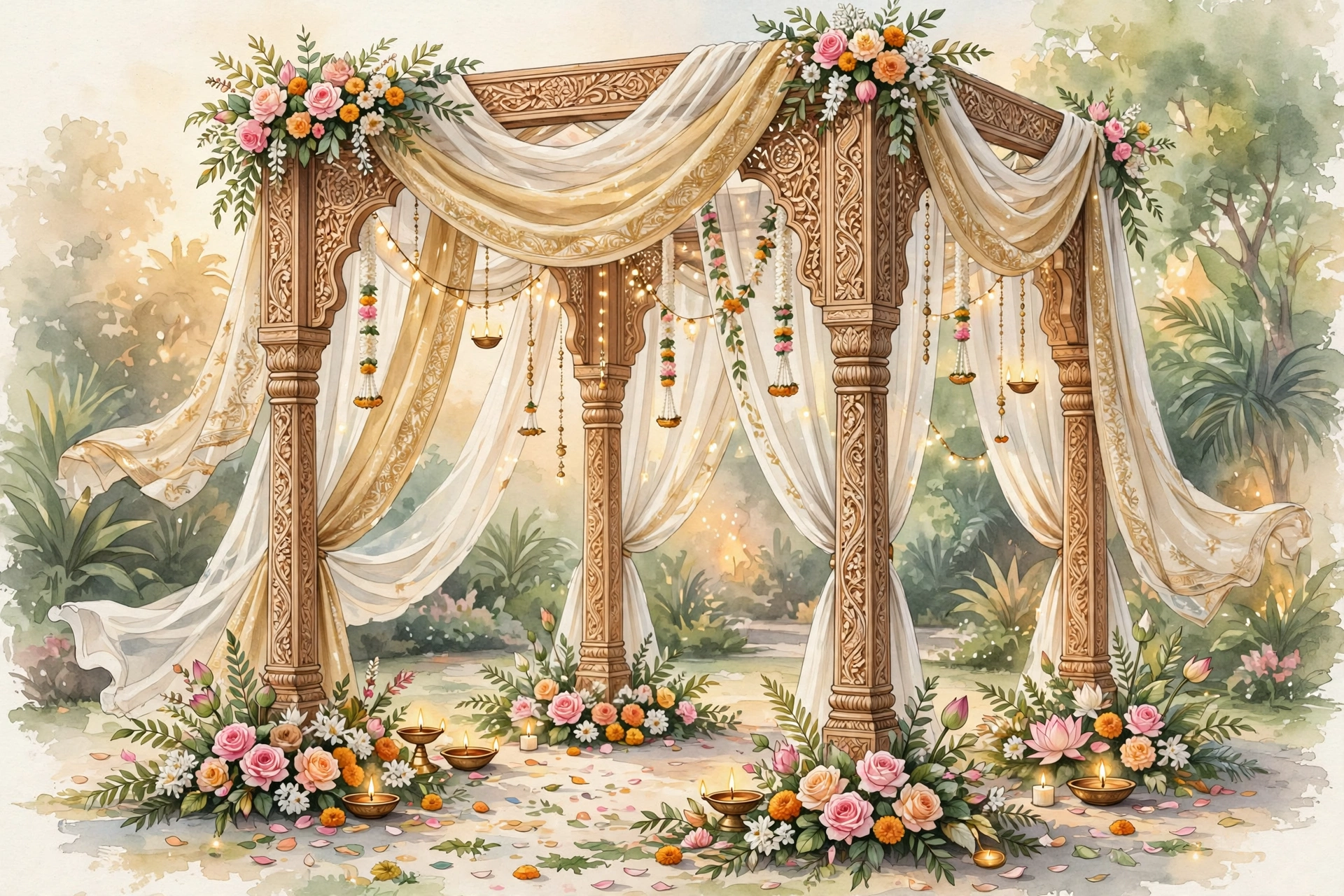
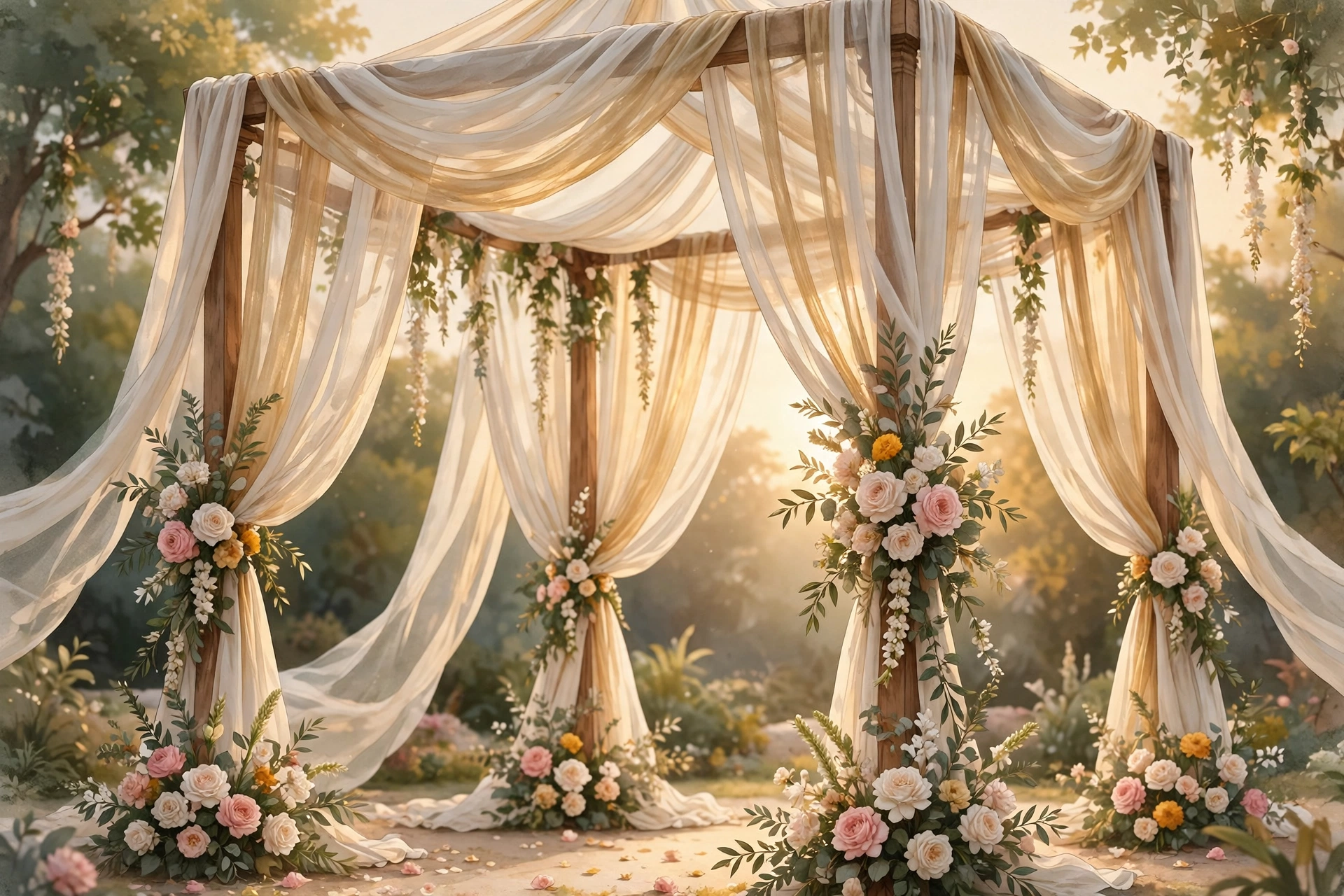
A draped ceiling turns a flat roof into a sky. Fabric gathered at the centre and falling to the walls, with fairy lights woven through it, makes a banquet hall feel like a tented celebration. Keep the drape high enough that tall guests never brush it, and keep the fabric away from fans and lights, because safety comes before beauty.
For a mandap, a fabric canopy overhead completes the sacred space. A sheer canopy lets daylight through for a morning ceremony, while a rich canopy with gold trim suits an evening ceremony. The canopy should be taut and even, with no sagging in the middle, because a sagging canopy photographs badly and worries the families below it.
Draping the stage and the entrance
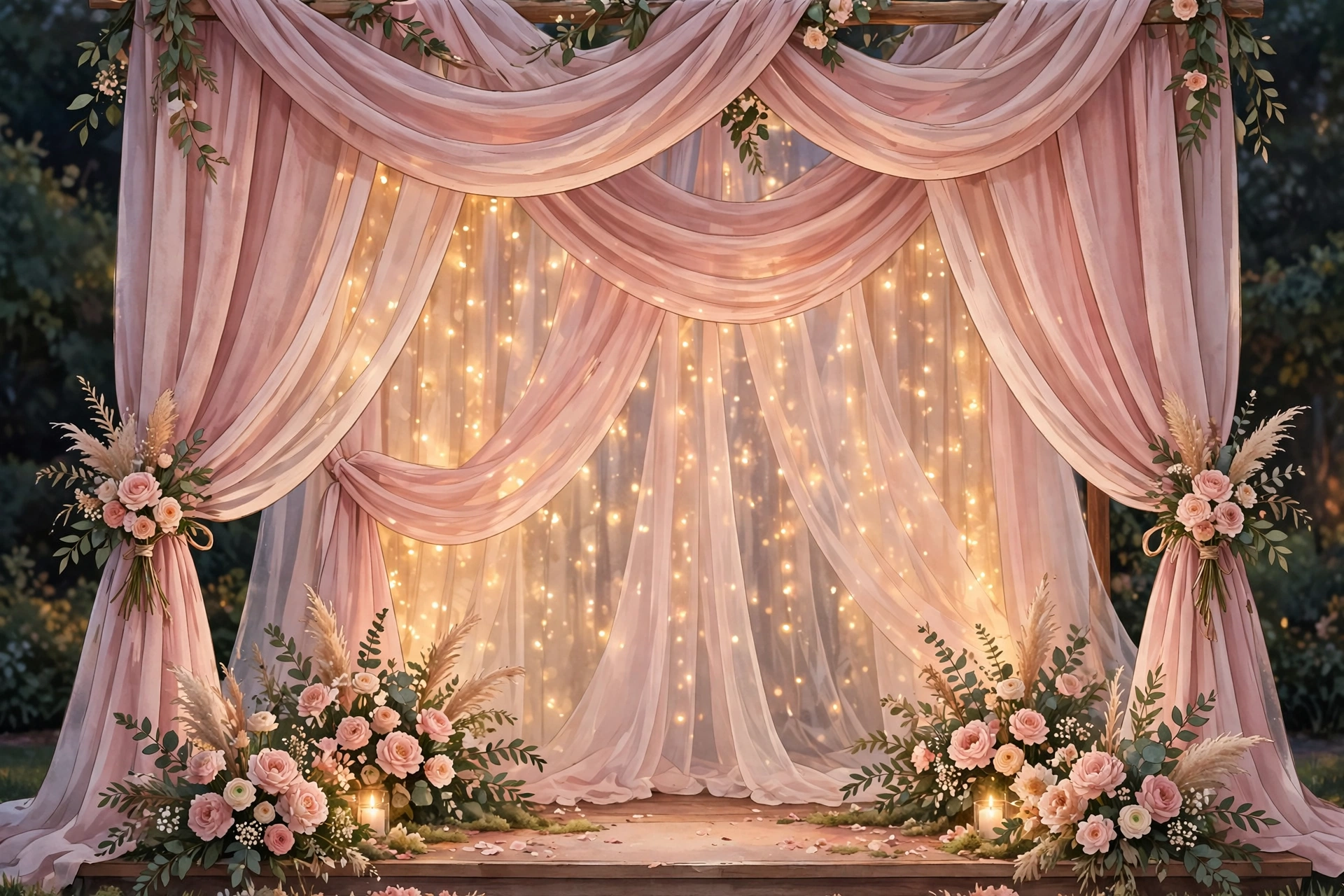
The stage backdrop is where draping does its most visible work. Layers of fabric in two colours, gathered and tied with flowers, make a backdrop that photographs beautifully and costs far less than a flower wall. Add fairy lights behind the sheer layer, so the backdrop glows in the evening.
At the entrance, sheer drapes on either side of the doorway, tied back with flowers, make a threshold that guests walk through. The drapes should be tied firmly, so they do not blow into the path, and they should be short enough that nobody trips on them. A draped entrance with a toran above it is the classic Indian welcome.
Light through the drapes
Draping and light work together. Fairy lights behind sheer fabric make the whole drape glow. Spotlights on velvet make the fabric look deep and rich. Uplights at the base of draped pillars wash the fabric in colour. The light should sit behind or below the fabric, never in front of it, because a light in front flattens the drape.
Common draping mistakes
The most common mistake is too much fabric. A room buried in drapes feels small and dark, and the flowers disappear. Use draping where it changes the room, and leave the rest of the walls plain. The second mistake is loose fabric: sagging canopies, wrinkled backdrops and drapes that pool on the floor. Fabric should be taut, steamed and fixed properly.
- Use draping where it changes the room, and leave the rest plain
- Keep canopies taut and backdrops steamed, with no sagging
- Confirm venue rules on fabric near lights and fans before ordering
- Put fairy lights behind sheer fabric, never in front of it
What it costs
On MyIndiAura, a Cinematic Invite is ₹499, an Invite App is ₹399, and an Invitation Suite is ₹99. Choose by what your invitation needs to do, not by price alone. A cinematic invite suits a wedding with a film led opening, while an invite app suits a full week of functions with RSVP and maps.
How to create your wedding invitation
- Pick an elegant design from the designs page at myindiaura.com/designs.
- Add the couple names, the dates, the venues, and the order of events for each function.
- Add photos of the couple, the venue map, and the RSVP button.
- Preview the invitation on your own phone, then share the link on WhatsApp. See myindiaura.com/create to start, and myindiaura.com/pricing for the full price list.
Details to check before you send
- The names of the bride and groom, spelt exactly as the families use them
- The date and time of each function, with the venue for each one
- The fabric samples photographed in the venue light
- The venue rules on draping near lights and fans, confirmed in writing
- The canopy and backdrop fixings checked before guests arrive
- An RSVP contact for guests who need directions
Frequently asked questions
Which fabric is best for wedding draping?
Sheer organza or chiffon for daytime and outdoor weddings, silk or satin for evening weddings, and velvet for palace weddings and winter evenings. Pick the fabric for the mood first, and the colour second.
How do I choose draping colours?
Match the function and the outfits. Yellow and orange for haldi, pink and green for mehndi, red and gold for the ceremony, ivory and gold for the reception. Keep it to two colours per function, with one neutral.
Is draping expensive?
It is one of the cheapest ways to transform a room, because fabric costs far less than flowers. A draped ceiling and a draped stage backdrop can change a plain hall for less than a flower wall of the same size.
Can draping hide an ugly venue?
Yes, and that is its best use. Drapes hide plain walls, pillars and ceilings, and they give the room a finished look. Use draping where the venue needs it most, and leave the good parts of the room plain.
Are fairy lights safe inside drapes?
Yes, if the lights are low heat LED lights and the fabric is kept away from hot bulbs. Use LED fairy lights, keep the wires hidden, and confirm the plan with the venue. Never put hot lights inside fabric.
MyIndiAura theme showcase
These Cinematic Invites from MyIndiAura fit this wedding. Each one is ₹499.
- Resham Satin: silk and satin light, made for an elegant evening.
- Velvet Curtain: deep velvet drama for a grand celebration.
- Sangmarmar Shaam: a marble evening in soft light.
Related reading
- Trending Wedding Decor Ideas for 2027
- How to Coordinate Wedding Invitations with Wedding Decor
- How to Plan a Memorable Wedding Reception
Draping is the quiet craft of wedding decor. Choose the fabric for the mood, keep it to two colours, light it from behind, and a plain hall becomes a celebration.
Explore invitation designs
Choose a design and preview it free with your own names.


Found this useful? Share it with someone planning a celebration.
Share