Wedding Day Timeline: Hour by Hour Schedule
A wedding day that runs on time is a wedding day everyone enjoys, and the timeline that makes it happen fits on one page.
The wedding day runs on the timeline, not on memory
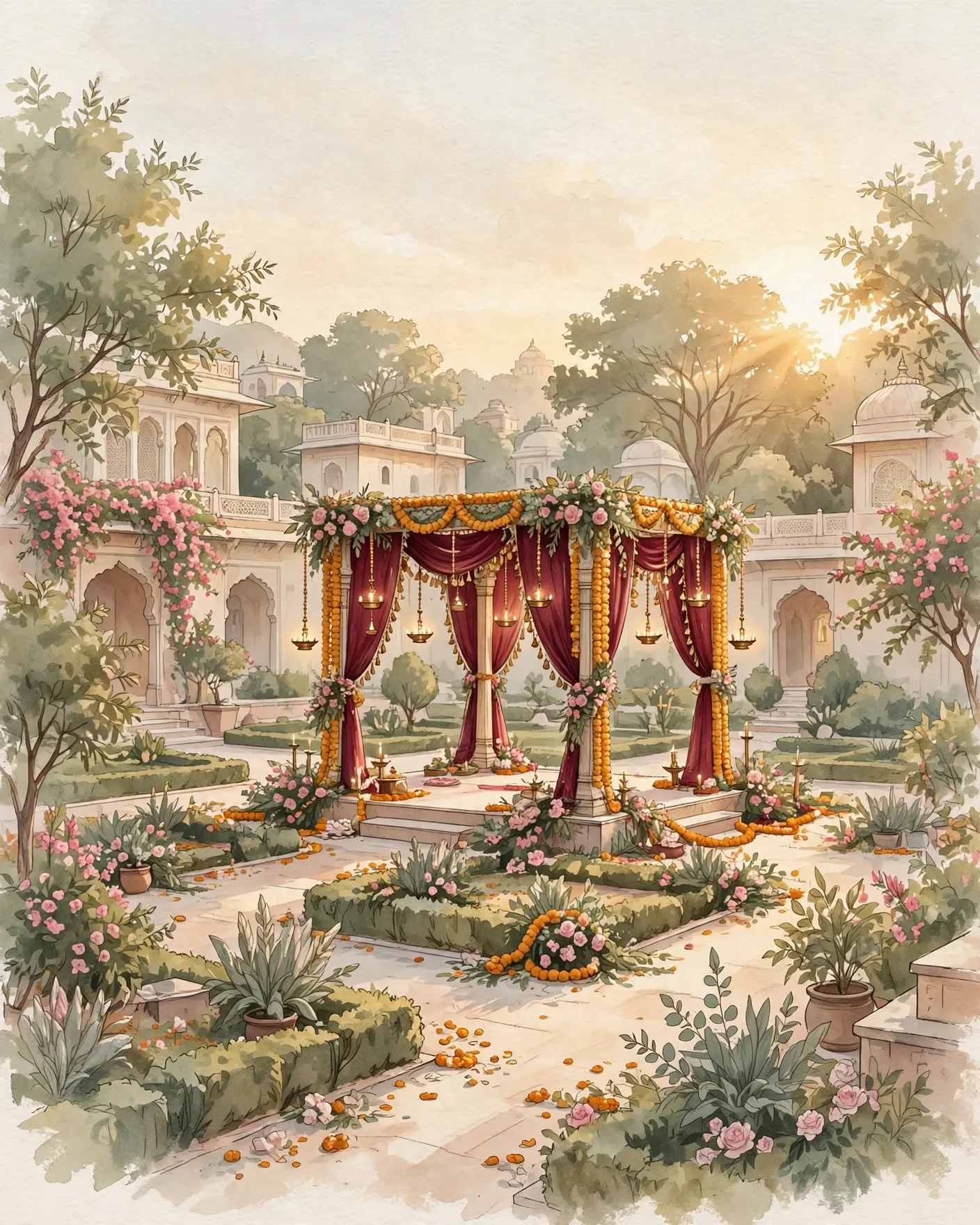
An Indian wedding day is a long chain of small moments, and each one depends on the one before it. The makeup has to be done before the photographer arrives. The photographer has to finish the getting ready shots before the baraat leaves. The baraat has to reach the venue before the groom's entry, and the entry has to happen before the pheras begin. When one link slips by half an hour, the whole chain slips with it, and the family spends the rest of the day catching up.
A written timeline stops that slide. It gives every person one page that says where to be, at what time, and for what. Nobody has to ask, nobody has to guess, and nobody has to call the bride in the middle of her makeup to ask where the garlands are.
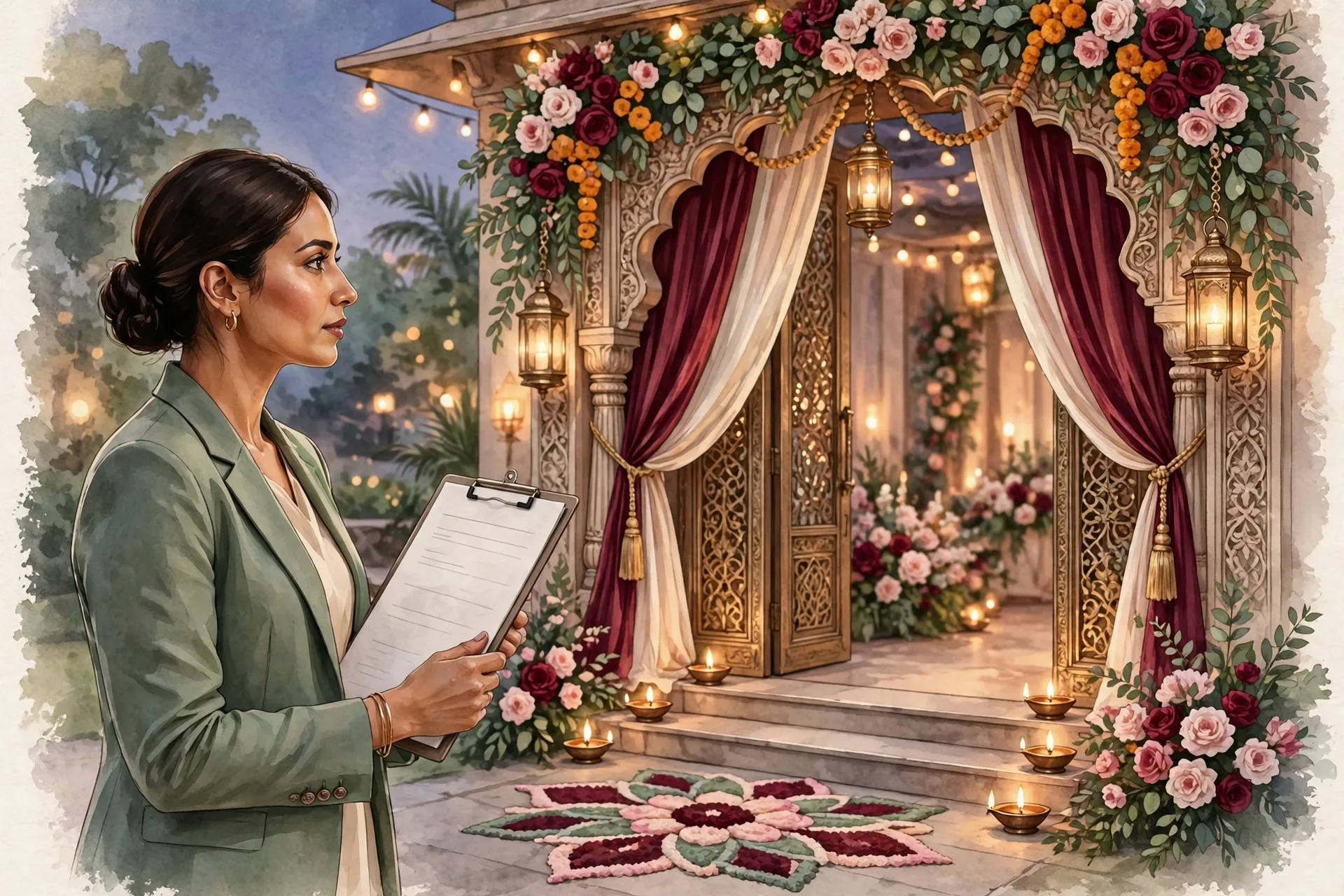
Build the timeline backwards from the muhurtham, the one time that cannot move. Everything before it is preparation, everything after it is celebration, and the timeline is the bridge between the two.
Morning: the quiet hours before the guests arrive
Most Indian weddings start early, and the morning belongs to the couple and their closest family. Hair and makeup begins three to four hours before the ceremony, because bridal makeup and a full hairstyle cannot be rushed, and a trial run the week before tells you exactly how long it takes.
Breakfast is served to the couple and the immediate family, and it is the last calm meal of the day. Keep it light and on time, because a skipped breakfast is the most common reason a bride feels faint by the pheras. The photographer uses this window for detail shots, the rings, the invitation, and the jewellery laid out on silk.
By late morning, the first guests begin to arrive, usually elders who want to bless the couple before the rush. Have someone at the door to receive them, and have the welcome drinks ready. The couple should be dressed and ready at least thirty minutes before the first function.
Afternoon: the ceremony block
The afternoon is the heart of the day, and it is also where delays hurt the most. The baraat usually leaves the groom's side two hours before the muhurtham, and the dance on the road takes longer than anyone plans, so build in thirty extra minutes for it.
The pheras themselves run for about an hour, and the priest sets the pace. A short printed order of the ceremony on each chair helps guests follow along. The photographer needs a clear line of sight to the mandap, so check the seating plan with them the day before.
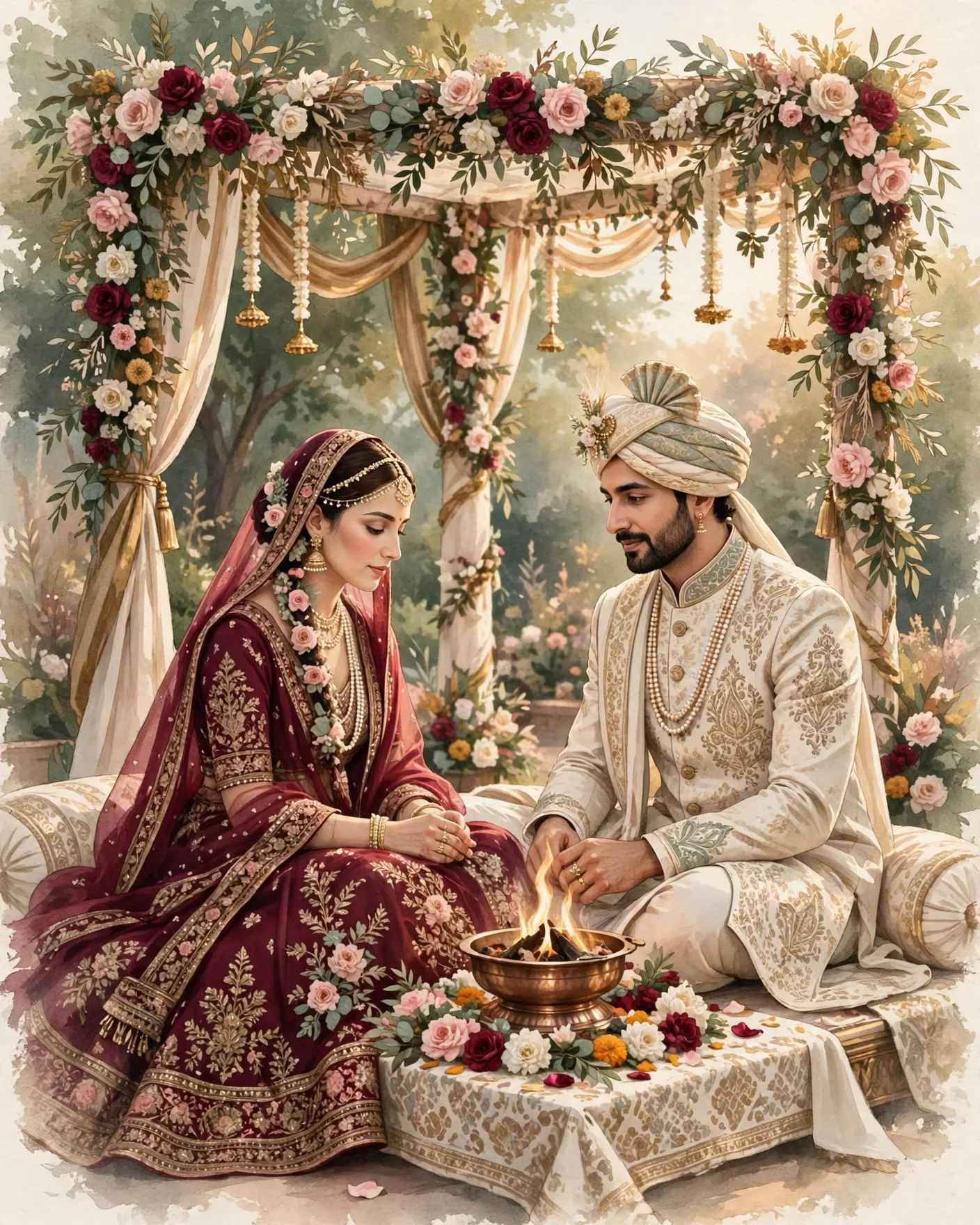
After the pheras come the blessings, the family photographs, and the sindoor and mangalsutra moments. Family photographs take longer than the ceremony itself when they are unplanned, so make a list of the ten group combinations that matter and hand it to the photographer. Thirty minutes, ten groups, done.
Evening: the reception and the farewell
The evening belongs to celebration. The reception usually opens with the couple's entry, and a first dance or a short family performance sets the mood. Dinner service should open within thirty minutes of the reception starting, because hungry guests leave early, and the best food is wasted on an empty hall. Live counters help here, because guests serve themselves and the queue never blocks the dance floor.
Speeches work best in the middle of the evening, short and few, three at most, each under three minutes. The cake cutting, the couple's dance, and the open dance floor follow.
The vidaai, when it happens on the same day, closes the evening. Give it a real slot on the timeline, not a gap between other things, because the family needs those twenty minutes without a photographer shouting for one more shot. End the night with a clear closing time for the venue, the transport for outstation guests, and someone whose job is to collect the couple's gifts and the leftover decor before the hall is locked.
Where Indian wedding timelines usually slip
Three moments cause most delays. Makeup running over, fixed by a trial and a firm start time. The baraat taking the scenic route, fixed by a realistic travel time plus thirty minutes of buffer. Family photographs with no list, fixed by the list itself, printed and handed to one cousin.
Build a buffer of fifteen minutes between every major block, and keep it invisible. Share the timeline on the family group a week before the wedding, and give the photographer and the caterer their own copies.
What it costs
A timeline costs nothing to make, and it saves the most expensive thing a wedding has, which is time. The invitation that carries the timeline to every guest is a different question. On MyIndiAura, a Cinematic Invite is ₹499, an Invite App is ₹399, and an Invitation Suite is ₹99. An Invite App suits a wedding day timeline best, because it holds the full schedule of functions with times, venues and maps in one link, and the couple can update it once if a time moves.
How to create your wedding day timeline invitation
- Pick a design from the designs page at myindiaura.com/designs that matches your wedding colours.
- Add every function with its date, time and venue, so the timeline lives inside the invitation itself.
- Add the venue map, the dress code for each function, and the RSVP button.
- Preview the invitation on your own phone, then share the link on WhatsApp. See myindiaura.com/create to start, and myindiaura.com/pricing for the full price list.
Details to check before you send
- The muhurtham time, checked with the priest and written in full
- Hair and makeup start time, confirmed after the trial
- Baraat departure time, with thirty minutes of buffer for the road
- The ten family photograph combinations, listed and printed
- Dinner service opening time, agreed with the caterer
- Venue closing time, and who collects the gifts and decor
Frequently asked questions
How early should the timeline start?
Start the timeline with the first real task of the day, usually hair and makeup three to four hours before the ceremony. Do not start it with the wake up time, because nobody follows a timeline that begins with breakfast.
Should guests see the full timeline?
Guests need the function times and the venue, not the internal schedule. Put the function times on the invitation, and keep the full hour by hour timeline for the family, the photographer, the caterer and the coordinator.
What if the muhurtham is very early in the morning?
An early muhurtham means an early start, and the timeline matters even more. Move hair and makeup to the night before where possible, keep the morning to dressing and photographs, and tell guests plainly on the invitation that the ceremony starts at dawn.
How do we handle two venues in one day?
Give each venue its own block on the timeline, with the travel time between them written in, plus a buffer. Tell guests which functions happen where, and put the map link for both venues on the invitation.
MyIndiAura theme showcase
These Cinematic Invites from MyIndiAura fit this wedding. Each one is ₹499.
- Mandap Yatra: push open the haveli gates and walk, room by room, to the mandap.
- Neelam Mandapam: a gopuram and a granite corridor leading to the temple tank at dusk.
- Sangmarmar Shaam: marble ghat steps up to a lake palace terrace at sunset.
Related reading
- Indian Wedding Planning Timeline: From Engagement to Wedding Day
- Wedding Schedule Template for Indian Ceremonies
- Indian Wedding Planning Checklist: 12 Months to the Wedding Day
A timeline is a promise the family makes to itself, that the day will run the way the couple dreamed it. Write it down, share it early, and let the day follow it.
Explore invitation designs
Choose a design and preview it free with your own names.

Found this useful? Share it with someone planning a celebration.
Share