Wedding Catering Menus Per Function
One menu for a whole week of functions is the fastest way to bore your guests, so plan a different menu for each function and let each meal feel like its own celebration.
One menu for a week is a tired menu
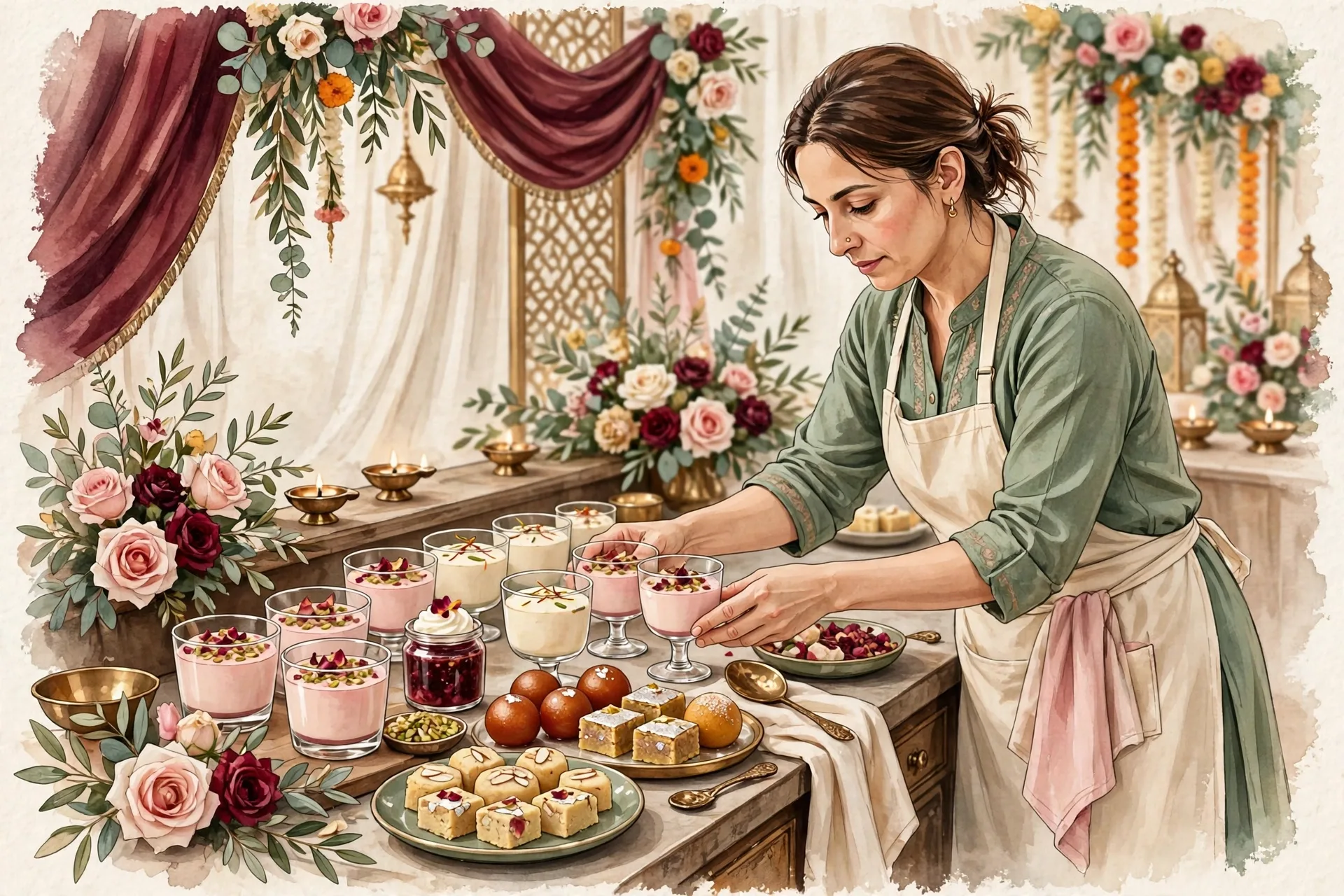
An Indian wedding is not one meal. It is five or six meals across a week, and the guests eat at most of them. The family that serves the same paneer, the same dal, and the same sweets at every function is the family whose guests start skipping meals by the third day, and a guest who skips a meal is a guest who leaves early. A different menu per function is not extravagance. It is the simplest way to keep guests happy, fed, and present for the whole week.
Plan the menus together, as a set, not one function at a time. Sit with the caterer three months before the wedding, with the guest count per function, and build each menu to fit its function, its hour, its guests, and its mood. A haldi lunch is not a reception dinner, and a sangeet supper is not a wedding feast, and the menus should show that.
Haldi and mehendi: light, bright, and early
Haldi and mehendi happen in the day, often at home or in a garden, and the food should be light, fresh, and easy to eat while standing. Think chaat, fresh fruit, juices, lassi, sandwiches, and small savoury bites, with a sweet that is light, like rasgulla or sandesh, not a heavy halwa. Guests are in yellow and green, the mood is playful, and the food should match, bright, fresh, and fun.
Keep the food vegetarian and keep it simple, because the haldi guest list is close family, and close family will tell you honestly if the food is bad. Keep water and juices flowing, because a daytime function in summer is hot, and a guest who is thirsty is a guest who leaves. Keep the serving quick, because the haldi is a short function, and the food should not outlast it.
Sangeet: the fun menu
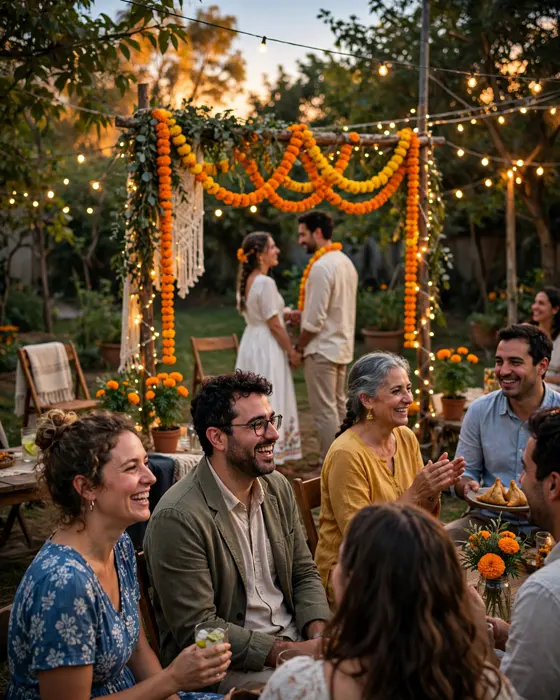
The sangeet is the evening of music and dancing, and the food should be fun to match. Live counters work best here, chaat counters, dosa counters, kebab counters, pasta counters, because guests graze while they watch the performances, and a live counter is entertainment as well as food. Keep the counters varied, one Indian, one continental, one sweet, so every guest finds something they love.
Keep the sangeet menu lighter than the wedding menu, because guests will dance, and a heavy meal before dancing is a mistake. Serve the main food after the performances, not before, so the dancers are not full, and keep dessert light, kulfi, ice cream, or fresh fruit, not a heavy cake. Keep the bar or the mocktail counter near the dance floor, because a guest who has to walk across the hall for a drink will not dance.
The wedding: the feast
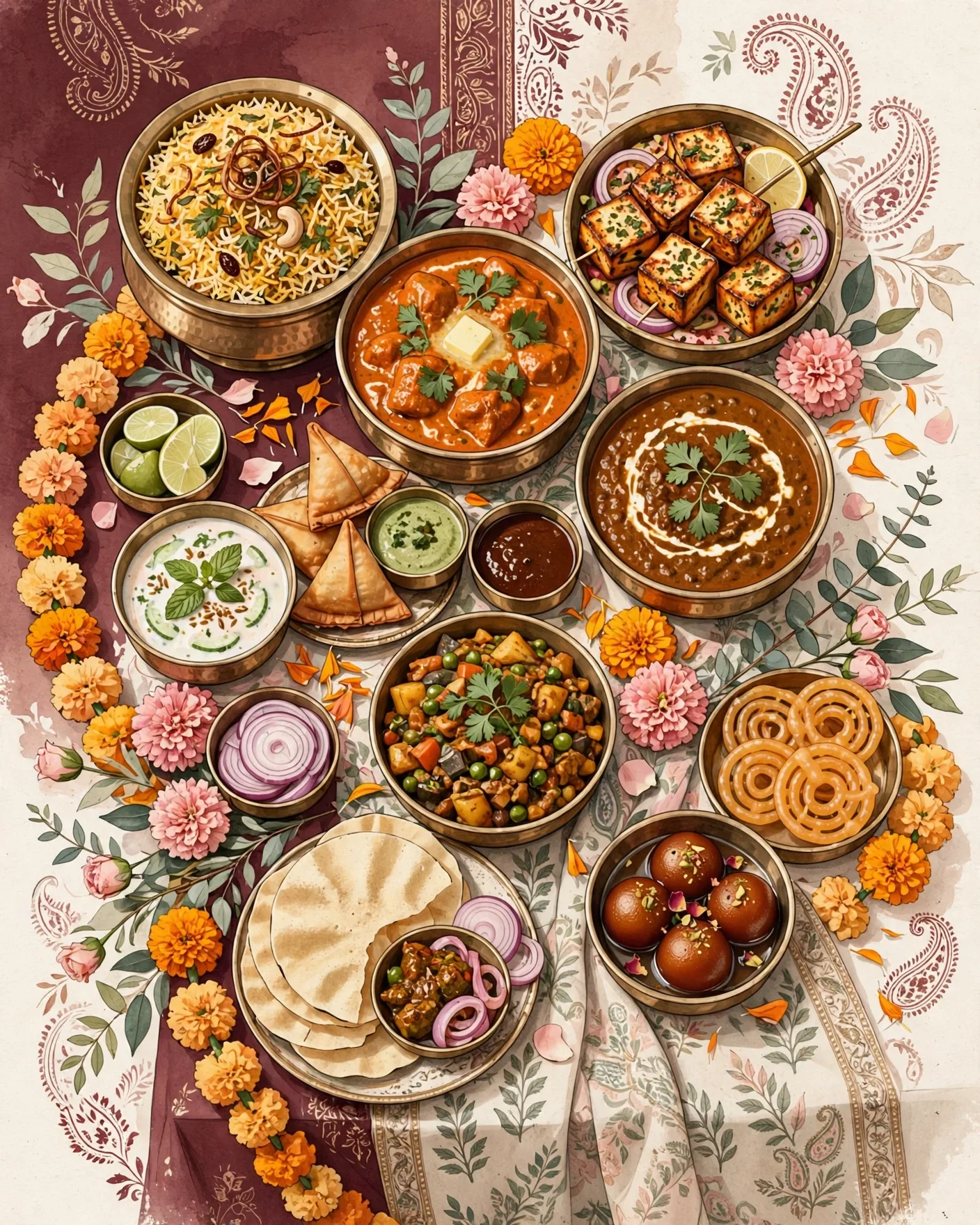
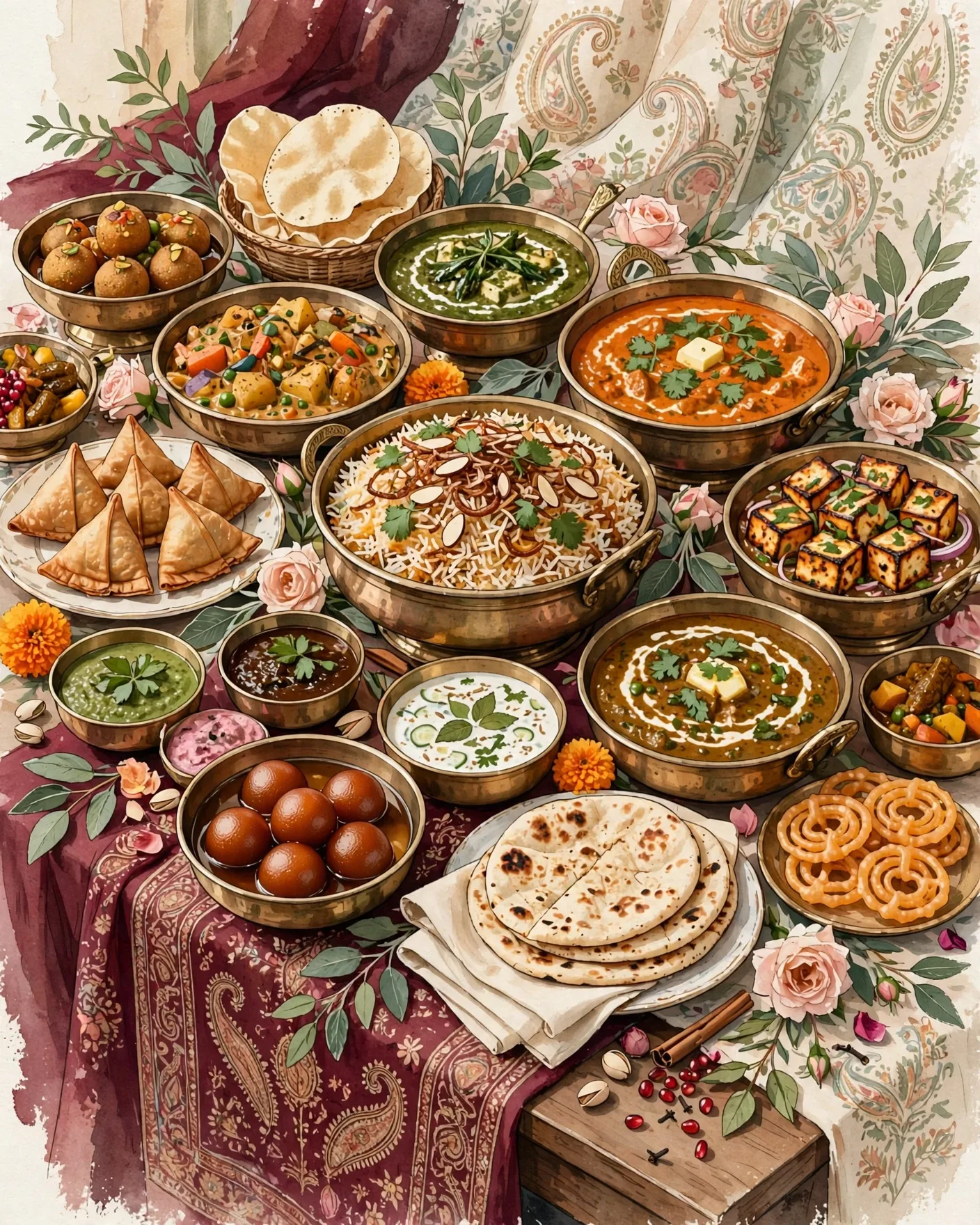
The wedding meal is the feast, and it should feel like one. A full thali or a rich buffet, with a starter, two or three mains, a dal, a seasonal vegetable, a bread, a rice, a salad, and two sweets, one traditional and one modern. The wedding lunch or dinner is the meal the elders judge, so make it the best food of the week, with the caterer's best dishes, and the freshest ingredients.
Serve the elders first, and serve them a mild, soft menu if they need it. Keep a Jain counter if the family needs one, with food prepared separately, and keep an allergy list with the caterer. Keep the sweets generous, because the wedding is the function where guests expect to eat well.
Reception: the celebration menu
The reception is the evening celebration, and the menu should be the most varied of the week. A mix of Indian and continental, with live counters, a chaat counter, a kebab counter, a pasta counter, and a dessert counter with a live jalebi or a chocolate fountain. The reception is where the colleagues and the friends eat, and they will compare it to every other wedding they have attended, so make it memorable.
Keep the reception food flowing all evening, with counters that stay open, because guests arrive at different times. Keep the dessert counter open late, because the guests who stay for the dancing will want something sweet at midnight.
The practical side: tasting, counting, and timing
Taste the food before you sign, and taste the same dishes that will be served on the day, not a special tasting menu. Taste with both families, because the food has to please both sides, and agree the menu in writing, with the dishes named, the price per plate, and the service style. Agree the guest count per function, and agree how the caterer handles a count that grows by fifty on the day, because it will, and a caterer who is surprised by fifty extra guests is a caterer who runs out of food.
Time the service with the functions. Dinner should open within thirty minutes of the reception starting, because hungry guests leave early. The wedding lunch should be ready when the pheras end, because the couple and the elders will be hungry. And the counters should be staffed through the evening, because a counter with no one behind it is a counter that closes itself.
What it costs
Catering is one of the largest lines in a wedding budget, and it depends on the guest count, the menu, and the service style. The invitation that tells guests the timings of every function, so they arrive hungry at the right hour, is a fixed and small cost. On MyIndiAura, a Cinematic Invite is ₹499, an Invite App is ₹399, and an Invitation Suite is ₹99. An Invite App suits a multi function wedding best, because it holds every function with its time, venue and map in one link, and the menu note with it.
How to create your catering wedding invitation
- Pick a design from the designs page at myindiaura.com/designs that matches your wedding colours.
- Add every function with its date, time and venue, so guests know when each meal is served.
- Add the venue map, the dress code for each function, and the RSVP button.
- Preview the invitation on your own phone, then share the link on WhatsApp. See myindiaura.com/create to start, and myindiaura.com/pricing for the full price list.
Details to check before you send
- A different menu per function, planned together with the caterer three months out
- The food tasted before signing, the same dishes as the day, with both families
- The menu agreed in writing, with dishes named, price per plate, and service style
- The guest count per function, with a plan for fifty extra guests on the day
- Elders served first, with a mild menu, and a Jain counter if the family needs one
- Dinner opening within thirty minutes of the reception starting
Frequently asked questions
Should we serve the same menu at every function?
No. Guests eat at several functions, and the same dishes repeated bore them. Plan a different menu per function, light for haldi and sangeet, a feast for the wedding, and varied counters for the reception.
How do we handle guests with allergies or Jain food?
Tell the caterer in advance, in writing, and keep a separate counter for Jain food, prepared separately. Label the dishes at the counter, so guests with allergies can see what is safe.
When should dinner be served at the reception?
Within thirty minutes of the reception starting, because hungry guests leave early. Keep the counters open all evening, so guests who arrive late still eat well.
MyIndiAura theme showcase
These Cinematic Invites from MyIndiAura fit this wedding. Each one is ₹499.
- Kesar Swagat: a palace courtyard as rose petals fall and fireworks open over the mandap.
- Gulaabi Aangan: a haveli courtyard under pink parasols and marigolds.
- Ganga Ke Saath: down the ghat steps to the Ganga, diyas floating and a decorated wedding boat.
Related reading
- Wedding Food: Live Counters and Dessert Ideas
- Wedding Bar Planning: Drinks and Mocktails
- Wedding Budget Planner: Essential Expenses to Include
A different menu per function is the simplest way to keep guests happy for a whole week. Plan the menus together, taste before you sign, and let each meal feel like its own celebration.
Explore invitation designs
Choose a design and preview it free with your own names.


Found this useful? Share it with someone planning a celebration.
Share