Vidaai Ceremony: Songs and Meaning
Vidaai is the farewell when the bride leaves her parents' home. Here are the songs that carry it, what they mean, and how to make the moment gentle for everyone.
Vidaai, explained simply
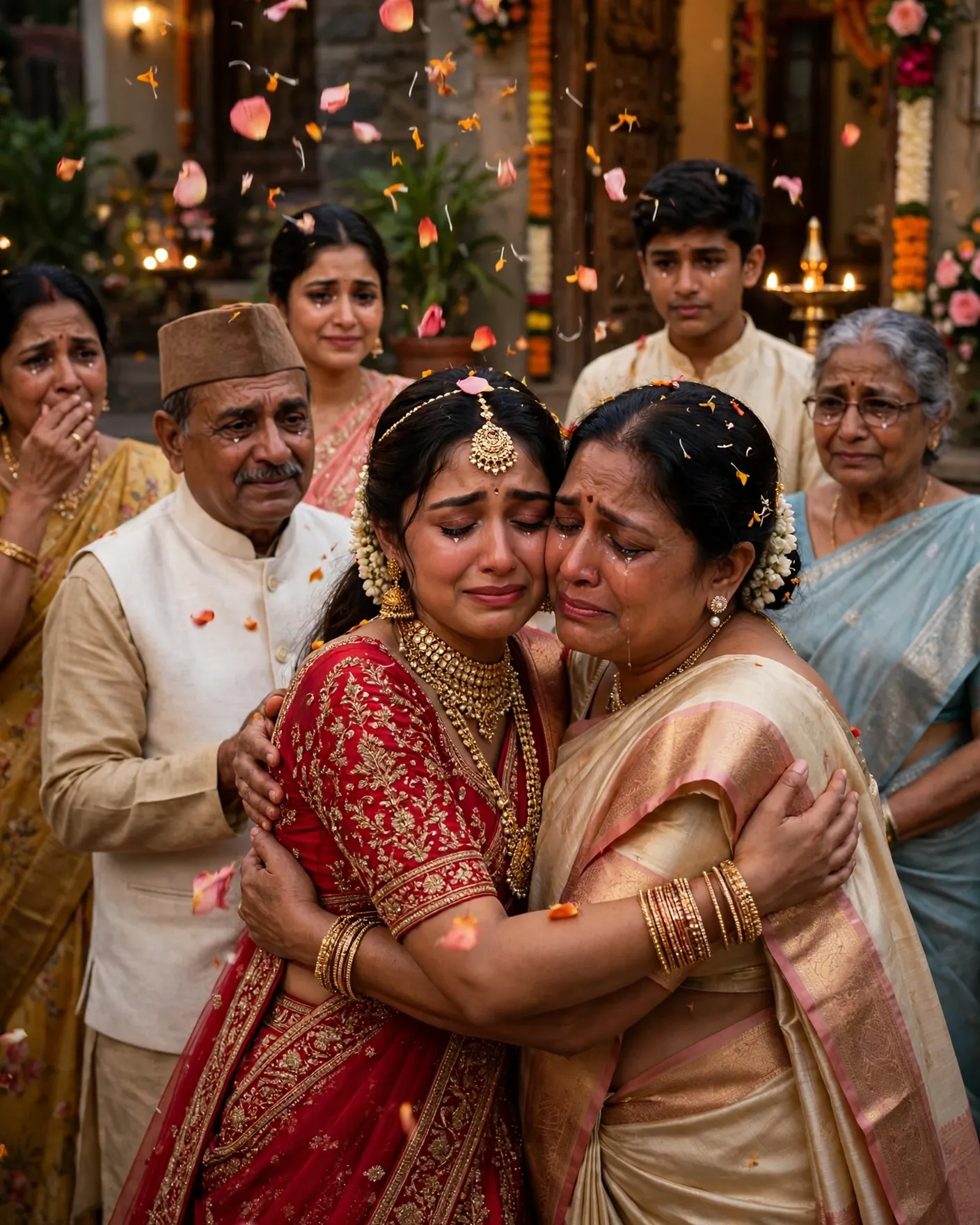
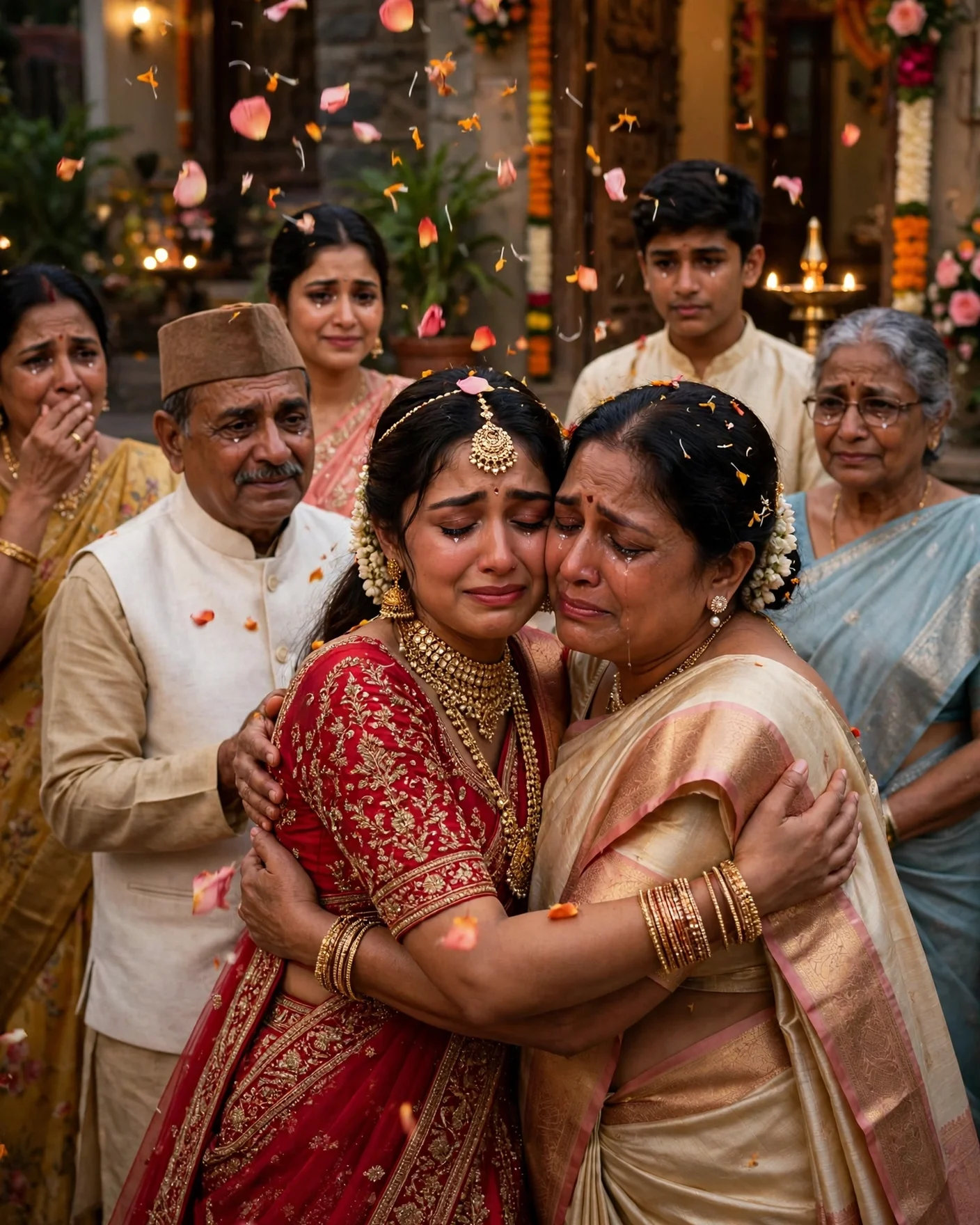
Vidaai is the farewell at the end of a Hindu wedding, when the bride leaves her parents' home and begins her new life with her husband. The word means farewell, and the ceremony is exactly that: the bride hugs her parents, her siblings and her friends, and walks out of the door with her husband, while everyone cries and blesses her. This article explains what Vidaai means, the songs that carry it, and how to make the moment gentle for everyone.
What does Vidaai mean?
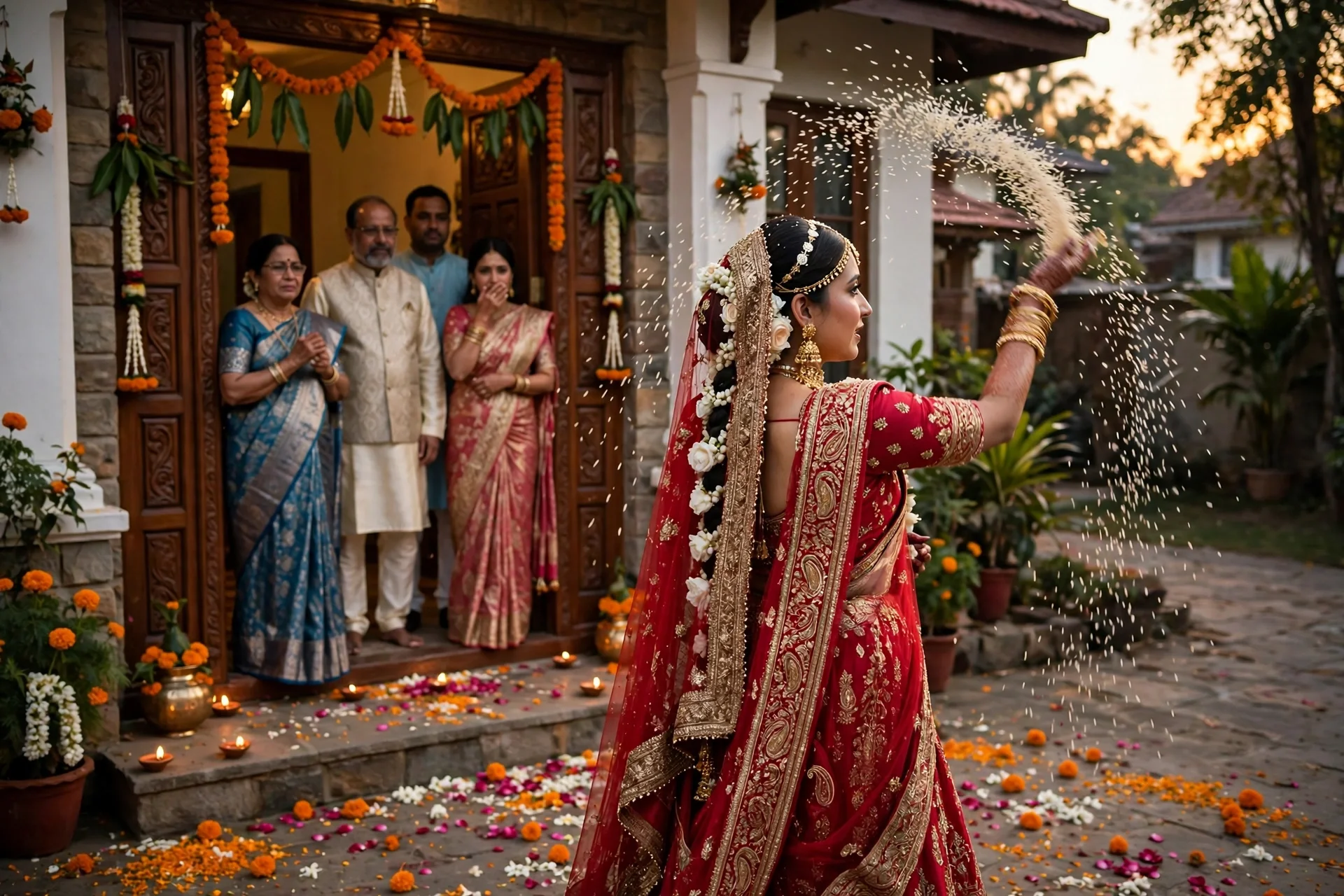
Vidaai comes from the Hindi word vida, meaning farewell. In the ceremony, the bride says goodbye to her parents' home and to the life she has known since childhood. She throws handfuls of rice over her shoulder as she leaves, a sign that she leaves prosperity and blessings behind for her parents. Her mother holds her hand until the last moment, and her father walks her to the car.
The ceremony is emotional because it marks a turning point. The bride leaves the home where she grew up, and her parents let her go with all their love. It is also joyful, because the groom's family welcomes her with open arms, and the wedding becomes a bond between two families, not just two people.
The songs of Vidaai
Vidaai is carried by songs, and the songs are some of the most beloved in Indian music. They are sung by the women of the family, and they tell the story of a daughter leaving home.
- Babul ki duayen leti ja, ja tujhko sukhi sansar mile.
- Yeh galiyan, yeh chaubara, yahan aana na dobara.
- Meri beti, meri beti, tujhe vida karte hain.
- Sasural genda phool, tujhe khushiyan milein.
- Babul ka ghar chhod ke, beti sasural chali.
The first song, Babul ki duayen leti ja, means take your father's blessings with you, and may you find a happy home. It is the most famous Vidaai song, and it is sung at almost every Hindu wedding. The second song says these streets and this courtyard will not see you again, and it is sung as the bride walks out of the door. The third is a mother's song, saying my daughter, we bid you farewell. The fourth is a joyful song about the marigold flowers of the new home. The fifth says the daughter leaves her father's home for her new home, and it is sung as the car drives away.
How does the ceremony unfold?
Vidaai happens at the end of the wedding, after the pheras and the reception, usually in the late evening or the next morning. The bride sits with her parents for a few minutes, and the women sing. Then she stands, hugs her mother, her father, her siblings, and her friends, and walks to the door.
- The bride throws handfuls of rice over her shoulder, as she leaves.
- Her mother holds her hand until the last moment.
- Her father walks her to the car, and the groom helps her in.
- The families shower the couple with flowers, and the car drives away.
- The groom's family welcomes the bride at their home, with aarti and blessings.
The whole ceremony takes about fifteen to twenty minutes. Guests watch quietly, and many wipe away tears, because it is one of the most moving moments of the wedding.
Vidaai across regions
Vidaai is practised across India, with small differences in each region. In North India, the bride throws rice over her shoulder as she leaves, and the song Babul ki duayen leti ja is sung. In South India, the ritual is similar, but it is often called Vidaai too, and the bride's mother gives her a small pot of turmeric and kumkum as a blessing. In Bengali weddings, the ritual is called Bidai, and the bride throws puffed rice over her shoulder. In Marathi weddings, the ritual is called Vidaai too, and the bride's father walks her to the car.
The meaning is the same everywhere: the parents let their daughter go with love, and the groom's family welcomes her. The details change, but the emotion does not.
How to make Vidaai gentle
Vidaai is emotional, and a few small things make it gentler for everyone. Keep the ceremony short, so the bride does not have to stand and cry for long. Let the mother and father hug the bride first, before the wider family, so the moment stays intimate. Ask the photographer to step back for a few minutes, so the family can have the moment without a camera in their faces.
Tell the groom to stay close to the bride, and to hold her hand as they walk to the car. Tell the families to sing, because the songs carry the emotion and make the farewell feel like a blessing, not a loss. And tell the bride that she can come home whenever she wants, because the door of her parents' home is always open.
What it costs
On MyIndiAura, a Cinematic Invite is ₹499, an Invite App is ₹399, and an Invitation Suite is ₹99. Choose by what your invitation needs to do, not by price alone. A cinematic invite suits a wedding with a film led opening, while an invite app suits a full week of functions with RSVP and maps.
How to create your wedding invitation
- Pick a design from the designs page at myindiaura.com/designs.
- Add the wording, the date, the time, the venue, and the order of events, including the vidaai.
- Add photos of the couple, the venue map, and the RSVP button.
- Preview the invitation on your own phone, then share the link on WhatsApp. See myindiaura.com/create to start, and myindiaura.com/pricing for the full price list.
Details to check before you send
- The names of the bride and groom, with parents, spelt exactly as the families use them
- The wedding date and time, checked with the priest
- The time for the vidaai, checked with the families
- The full venue address, with the area and a map link
- A dress code note, if you want guests in silk or bright colours
- An RSVP contact for guests who need directions
Frequently asked questions
What is the meaning of Vidaai?
Vidaai means farewell. The bride leaves her parents' home and begins a new life with her husband. She throws rice over her shoulder as she leaves, a sign that she leaves prosperity and blessings behind for her parents.
What is the most famous Vidaai song?
Babul ki duayen leti ja, from the film Neel Kamal, is the most famous Vidaai song. It means take your father's blessings with you, and may you find a happy home. It is sung at almost every Hindu wedding.
How long does Vidaai take?
Vidaai takes about fifteen to twenty minutes. It happens at the end of the wedding, after the pheras and the reception, and the families keep it short so the bride does not have to stand and cry for long.
Do both families take part in Vidaai?
Yes. The bride's family bids her farewell, and the groom's family welcomes her at their home with aarti and blessings. Both families are part of the moment, and both bless the couple.
Can we include a Vidaai song on the invitation?
Yes, and it is a lovely touch. A line from Babul ki duayen leti ja, or a short note about the farewell, tells guests at a glance what to expect and honours the moment.
MyIndiAura theme showcase
These Cinematic Invites from MyIndiAura fit this wedding. Each one is ₹499.
- Laal Doli: part the red zardozi curtain of the doli to a marigold mandap.
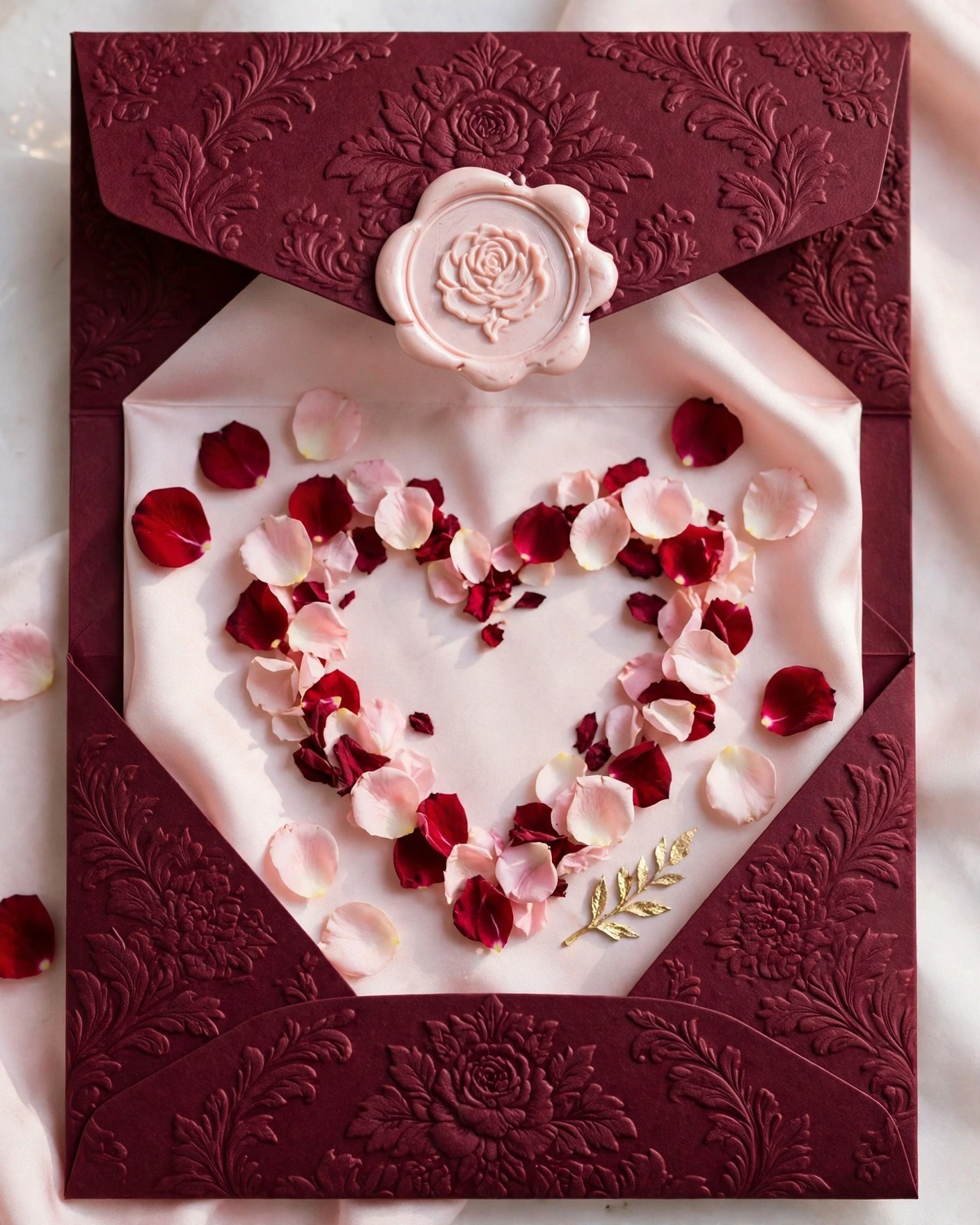
- Gulab Dil: a burgundy envelope, a blush wax seal, and a heart of rose petals.
- Peony Bloom: peony painted doors tied with an ivory satin bow.
Related reading
- Kanyadaan Ritual: Meaning and Ceremony
- Pheras: Seven Vows Explained
- Hindu Wedding Invitation Wording and Traditions
Create your wedding invitation on MyIndiAura, and let Vidaai be gentle, loving and full of blessings.
Explore invitation designs
Choose a design and preview it free with your own names.

Found this useful? Share it with someone planning a celebration.
Share