Vegetarian Wedding Menu Ideas for Every Guest
Paneer three ways, five regional thalis, and desserts that end the night well. How to build a vegetarian wedding menu that nobody calls plain, and that feeds every guest happily.
A vegetarian menu that nobody calls plain
A vegetarian wedding menu is not a compromise, it is a choice, and it can be the most generous menu at the wedding. India has the richest vegetarian food in the world, from paneer and dal to dosa and dhokla, and a wedding is the place to show it off. The trick is variety, not volume.
The complaint about vegetarian weddings is always the same: the same paneer, the same dal, the same pulao, at every function. The fix is to give each function its own character, with different regions, different textures and different sweets, so guests never eat the same meal twice.
Start with the regions that matter to the two families. One function can be North Indian, one South Indian, one Gujarati, and the wedding lunch can be a mix. The guest who eats four different vegetarian meals in a week will never call the menu plain.
Start with the regions: five thalis, one table
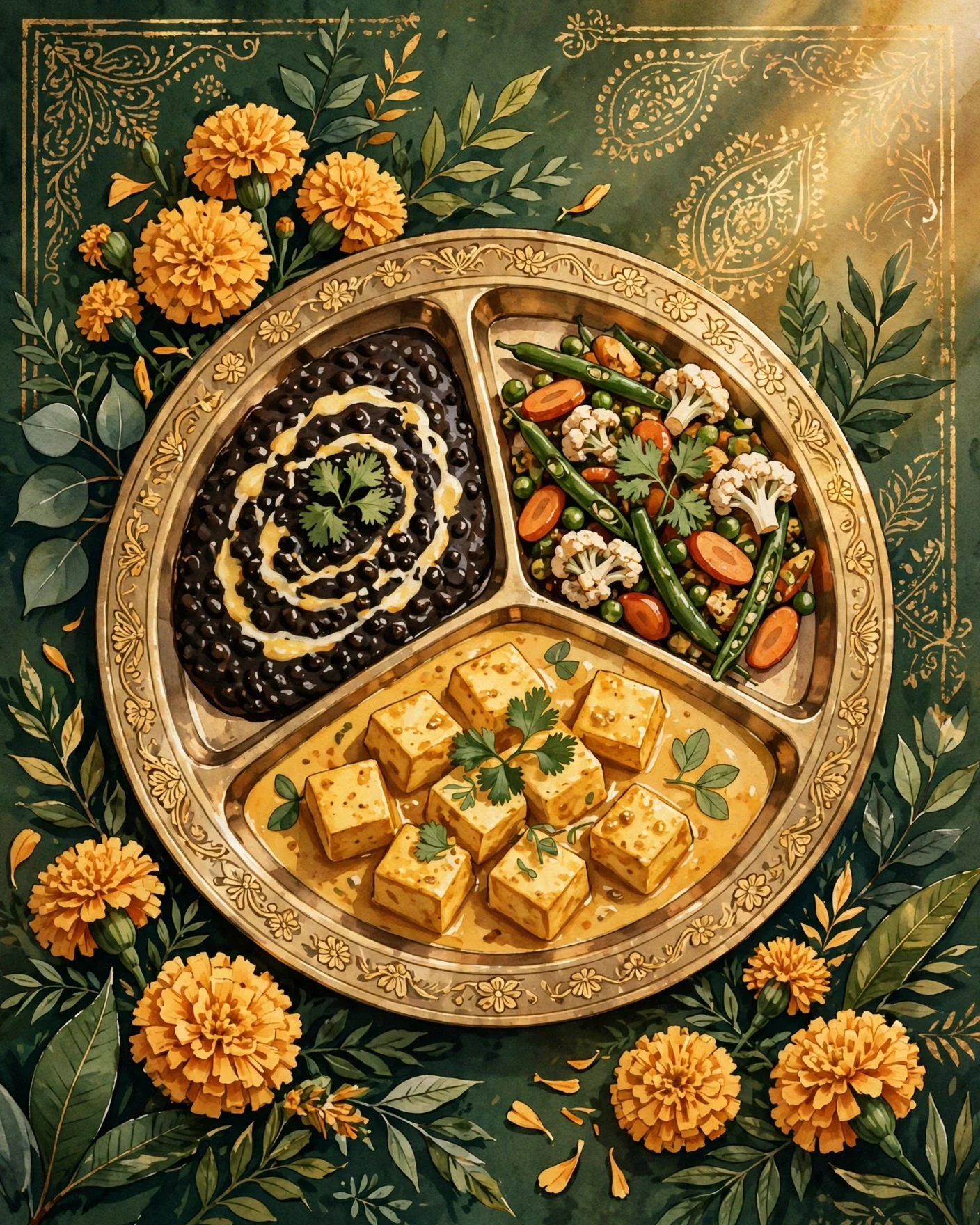
A regional thali is the easiest way to give a vegetarian menu variety. A North Indian thali brings dal makhani, paneer and naan. A South Indian thali brings sambar, rasam and dosa. A Gujarati thali brings sweet dal, undhiyu and dhokla. A Bengali thali brings shukto, aloo posto and mishti. A Rajasthani thali brings dal baati and gatte.
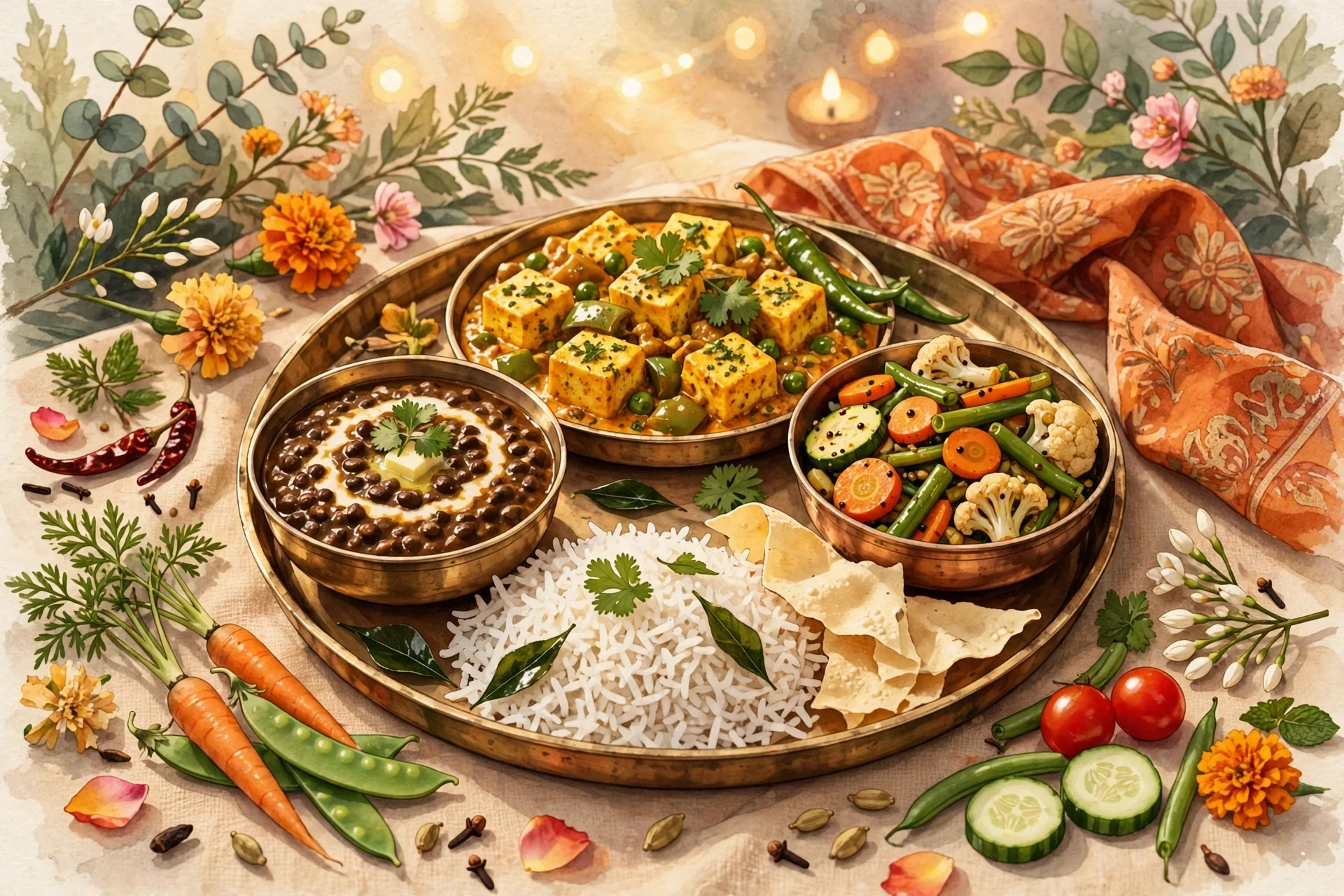
Pick one thali per function, and do it properly, rather than mixing all five into one confused buffet. A haldi lunch in Gujarati style, a sangeet dinner in South Indian style, and a wedding lunch in North Indian style gives guests three distinct meals to remember.
Ask the caterer which cuisines their kitchen genuinely cooks well. A caterer who does South Indian food every week will serve a better dosa than one who reads the recipe for the first time. Regional food is about the cook's hands, not the menu card.
Paneer, done three ways, not one
Paneer is the most loved vegetarian dish at Indian weddings, and the most misused. The mistake is to serve the same paneer butter masala at every function, in the same orange gravy, until guests stop touching it. The fix is to serve paneer three ways, in three different styles.
For the first function, serve a paneer tikka, charred and smoky, from a live grill. For the second, serve a kadai paneer, with peppers and a dry spice. For the wedding lunch, serve a shahi paneer, rich and mild, with a cashew gravy. Three dishes, three flavours, one ingredient, and nobody gets bored.
Keep the paneer fresh and soft. Paneer that has sat in gravy for hours goes rubbery, so ask the caterer to cook it in small batches through the meal. A live paneer tikka counter solves this, and it gives guests a small show as well.
The mains, the breads and the rice
Beyond paneer, the vegetarian table has its own stars. Dal makhani, cooked overnight, is the dish every guest expects, and it should be rich and smooth. A seasonal vegetable, like aloo gobi in winter or bhindi in summer, adds freshness. A chole or rajma gives the meal body, and a pulao or biryani gives it fragrance.
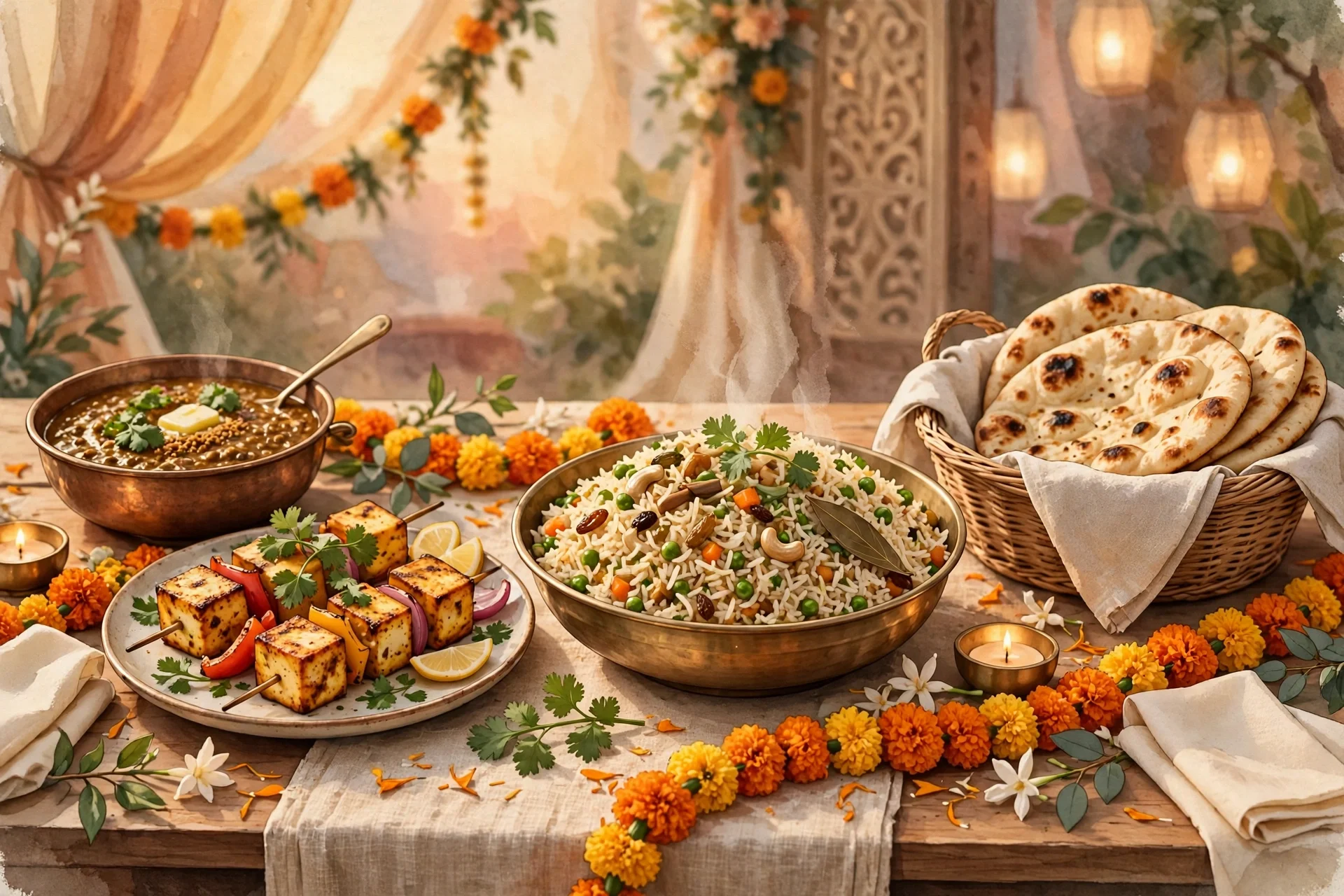
The breads should be made fresh through the meal. A tandoor counter, with naan, roti and kulcha coming hot off the wall, is the best way to serve bread, and guests love watching it. Keep the rice simple, a jeera rice or a vegetable pulao, so the curries can shine.
For a South Indian function, swap the breads for dosa and appam, and the dal makhani for sambar and rasam. The structure stays the same, the flavours change, and the guests feel they have eaten a new meal.
Desserts and the last impression
A vegetarian meal ends with the dessert table, and it should be generous. Gulab jamun, rasgulla and kheer are the classics, and a live jalebi counter adds a small show. Keep the sweets small, because guests have eaten a full meal, and they will want a taste of each one.
A fruit counter, with seasonal fruit cut fresh, gives guests a light finish, and it suits elders and health conscious guests. A kulfi counter, with malai and mango in the season, is the cool finish that everyone loves.
End the meal with paan, for the elders, and a small sweet box for guests to carry home. A sweet box is a lovely parting gift, and it costs little, but guests remember it.
What it costs
On MyIndiAura, a Cinematic Invite is ₹499, an Invite App is ₹399, and an Invitation Suite is ₹99. Choose by what your invitation needs to do, not by price alone. A cinematic invite suits a wedding with a film led opening, while an invite app suits a full week of functions with RSVP and maps.
How to create your wedding invitation
- Pick a design from the designs page at myindiaura.com/designs.
- Add the couple's names, the dates, the venue, and the order of events, with the menu highlights for each function.
- Add photos of the couple, the venue map, and the RSVP button.
- Preview the invitation on your own phone, then share the link on WhatsApp. See myindiaura.com/create to start, and myindiaura.com/pricing for the full price list.
Details to check before you send
- The names of the bride and groom, with parents, spelt exactly as the families use them
- The wedding date, time and full venue address, with a map link
- The menu highlights for each function, named on the invite
- The RSVP contact for guests who need directions or food help
- The order of events, with times for each ceremony
- A dress code note, if you want guests in a particular style
Frequently asked questions
How do we keep a vegetarian menu interesting?
Give each function its own region and its own character, so guests never eat the same meal twice. Three regions across the week, with different dishes and sweets, is enough.
Should we serve paneer at every function?
Yes, but in a different form each time: tikka, kadai, shahi, or a new style the caterer suggests. The same paneer butter masala at every meal is the mistake to avoid.
What about guests who eat non vegetarian food?
Serve a full vegetarian menu with the same care and variety as a non vegetarian one, and most guests will not miss meat. If the families want it, add a small non vegetarian counter, kept separate, with its own serving spoons.
Is a vegetarian wedding cheaper?
Not always. Good paneer, fresh vegetables and a full dessert table cost as much as a meat menu, but the kitchen is simpler, and the food stays fresh longer. The saving is in the cooking, not in the quality.
How many dishes should a vegetarian wedding menu have?
Eight to ten dishes per meal is ideal: two starters, three mains, one dal, one rice, two breads and two sweets. More than that and the kitchen loses focus, and guests cannot taste everything.
MyIndiAura theme showcase
These Cinematic Invites from MyIndiAura fit this wedding. Each one is ₹499.
- Bodhi Saanjh: calm and green, made for a gentle vegetarian table.
- Mero Vrindavan: Vrindavan lanes and temple bells for a sattvik feast.
- Nadavathil: a Kerala doorway and courtyard, made for a sadya lunch.
Related reading
- How to Plan a Wedding on a Budget in India
- Wedding Budget Planner: Essential Expenses to Include
- How to Plan a Memorable Wedding Reception
A vegetarian wedding menu is not a smaller menu, it is a wider one, and India gives you the whole world to cook from.
Explore invitation designs
Choose a design and preview it free with your own names.

Found this useful? Share it with someone planning a celebration.
Share