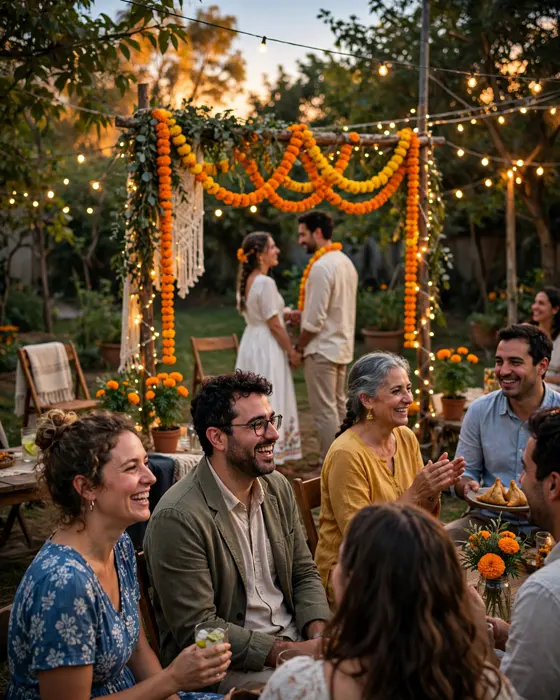
Vegan Wedding Food Ideas in India
Coconut curries, dosa, dhokla and dairy free desserts that still feel like a feast. How to plan a vegan wedding menu in India, without compromise and without fuss.
A vegan wedding menu in India, without compromise
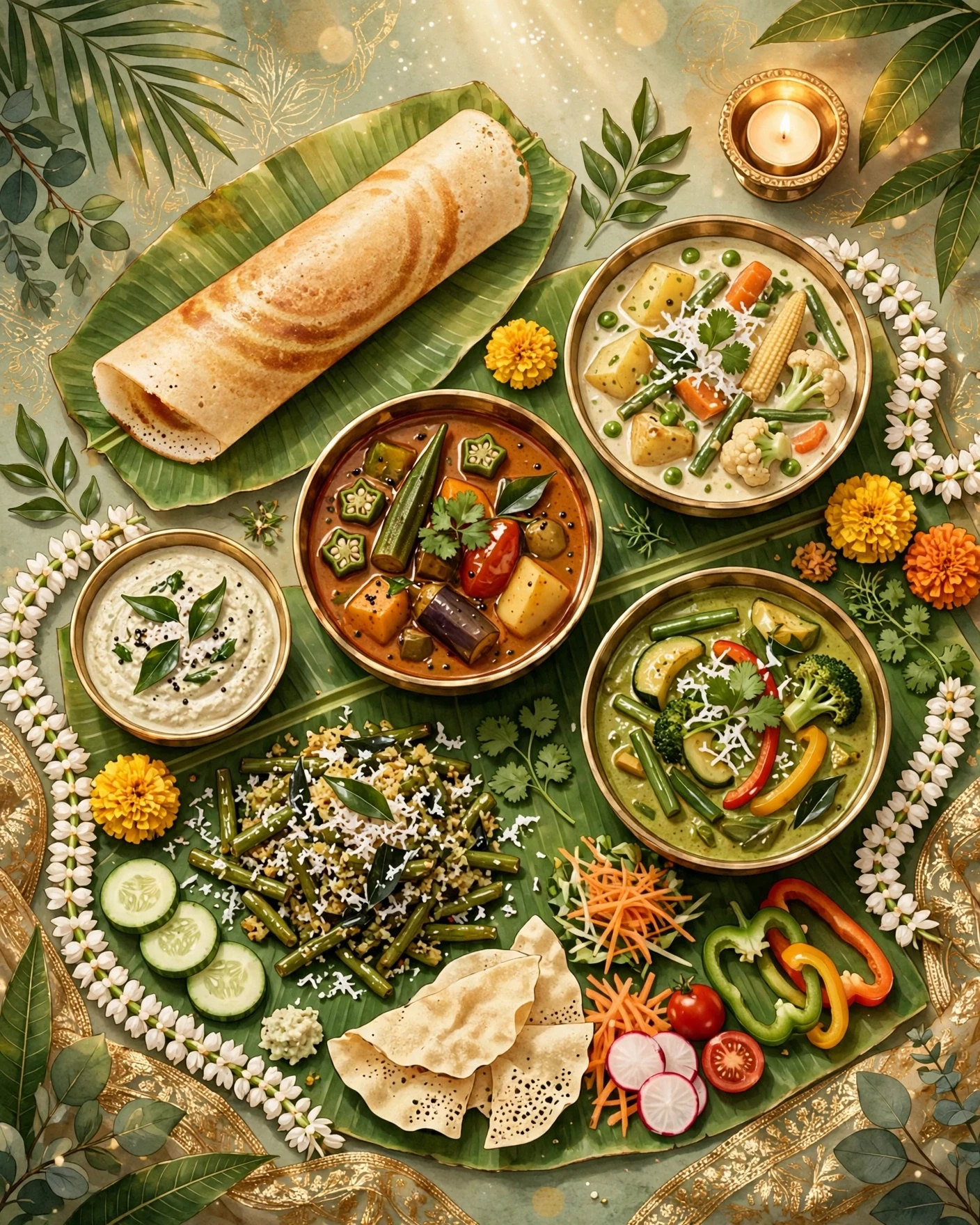
India is one of the easiest places in the world to eat vegan at a wedding, because so much of Indian food is already plant based. Dosa, dhokla, sambar, dal, vegetable curries, rice and most chutneys need no dairy at all, and a skilled cook can make a vegan feast that every guest enjoys, vegan or not.
The mistake is to treat vegan food as a small side table with two dishes and a salad. A vegan wedding deserves a full menu, with starters, mains, breads, rice and desserts, all planned with the same care as any other menu. When the vegan table is generous, nobody calls it a compromise.
Start by telling the caterer early, and asking what they already cook that is vegan. Most Indian caterers have a long list of vegan dishes they make every week, and the best vegan menu is built from those, not from dishes invented for the occasion.
The dishes that are already vegan
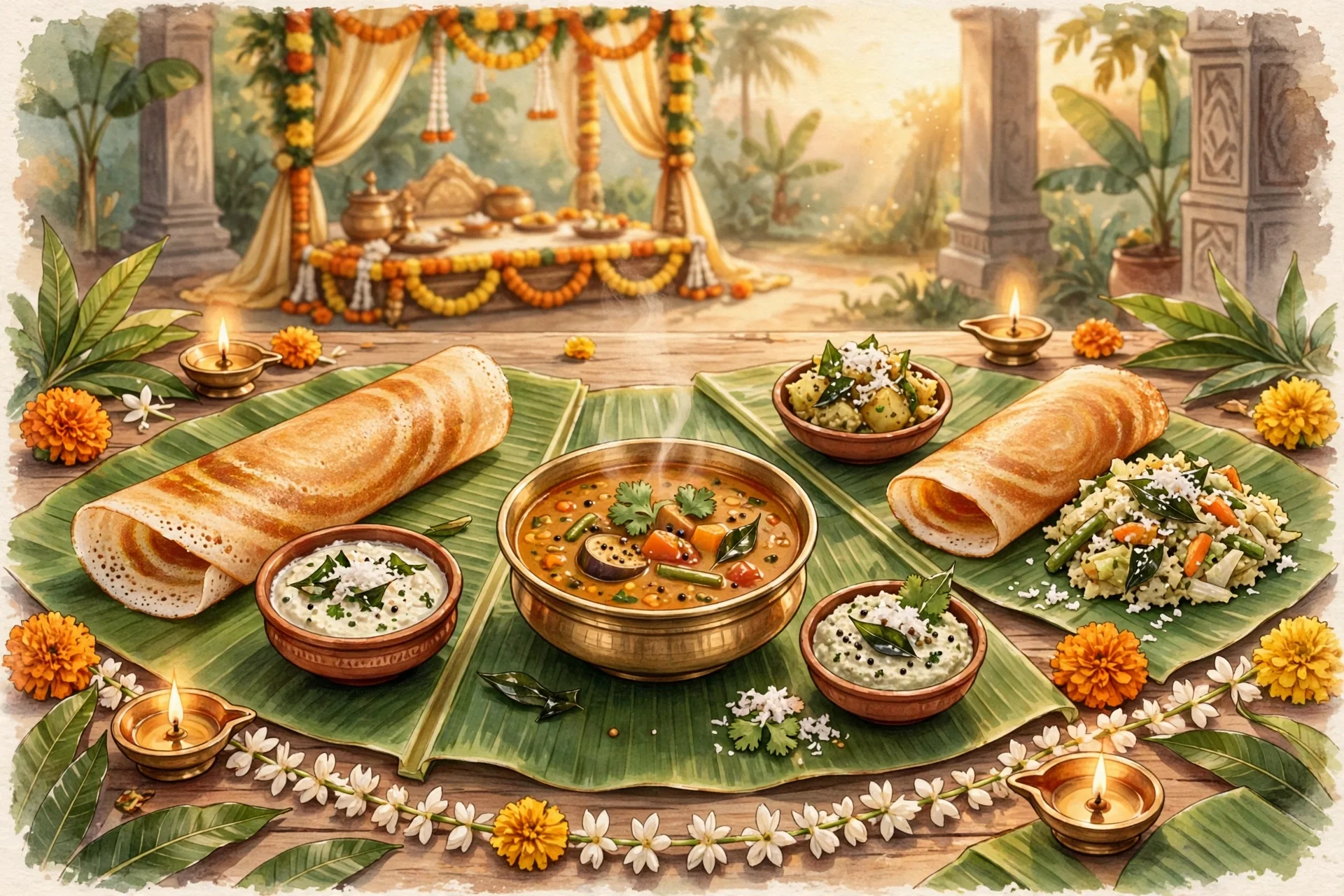
A South Indian table is the easiest vegan menu in India. Dosa, idli, sambar, rasam, poriyal, avial and coconut chutney are all naturally vegan, and a banana leaf feast can be served fully vegan without changing a single recipe. The payasam needs a swap, with coconut milk instead of dairy milk, and the meal is complete.
A Gujarati table is nearly as easy. Dhokla, khandvi, undhiyu, dal and the vegetable dishes are vegan or nearly so, and the sweets need only a check. A North Indian table needs more work, because paneer, ghee and cream are central, but the dal, the chole, the aloo gobi and the breads can all be vegan with small swaps.
For the wedding lunch, build the menu around the dishes that are already vegan, and use swaps only where needed. The food will taste better, and the guests will eat a meal that feels natural, not adapted.
Dairy swaps that actually taste good
The hard part of a vegan Indian menu is dairy, because ghee, butter, paneer and curd are everywhere. The swaps work when they are chosen for flavour, not just for absence. Coconut oil replaces ghee in South Indian cooking beautifully. Peanut oil suits a North Indian tadka. Tofu, pressed and marinated, replaces paneer in a tikka or a curry, and it takes the spice well.
For the curries, coconut milk replaces cream in a South Indian kurma, and a cashew paste replaces cream in a North Indian gravy. Both give richness without dairy, and both are familiar to Indian cooks. A soy or almond curd can replace dairy curd in a raita, but taste it first, because the flavour is different.
Tell the caterer which swaps to use, and taste them at the tasting. A swap that works in a home kitchen may not work at a thousand guest scale, and the tasting is where you find out.
The dessert question, solved
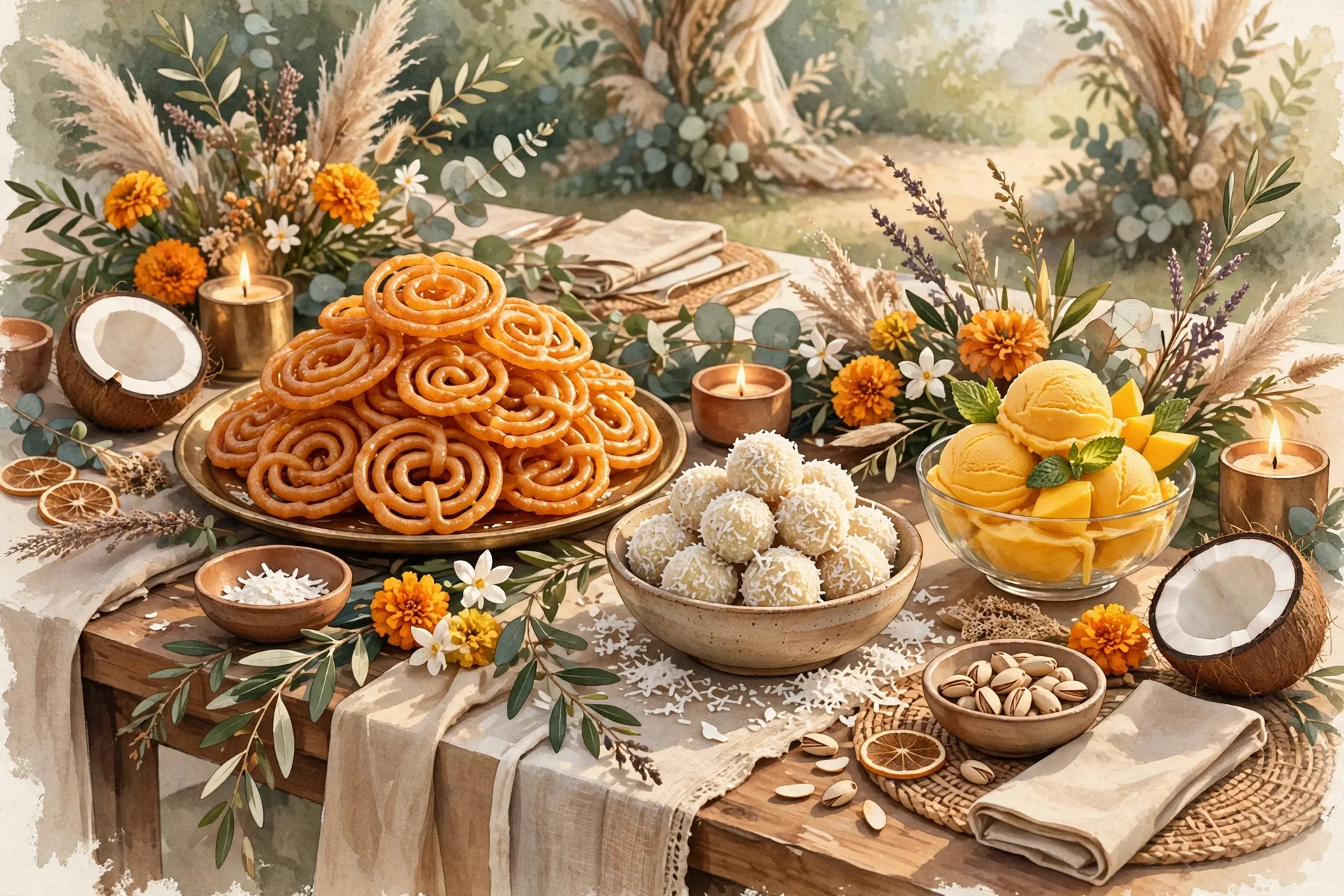
Dessert is where vegan weddings are tested, because most Indian sweets use milk, ghee or khoya. The answer is not to serve a sad fruit salad, it is to choose the sweets that are already vegan, or nearly so. Jalebi is vegan, and a live jalebi counter is the most loved dessert at any Indian wedding. Coconut ladoo, made with coconut and jaggery, is vegan. A coconut milk payasam, a mango sorbet, and a dark chocolate mousse made without dairy all work beautifully.
For the cake, ask the baker for a vegan cake, made without egg, milk or butter, with a fruit or chocolate flavour. A good vegan cake can taste just as rich, but the baker must know from the start, and you must taste it before you sign. Label the cake as vegan on the table, so guests can choose with confidence.
Keep the dessert table generous, with six or seven sweets, so the vegan guests feel celebrated, not catered to. A dessert table that is full and beautiful tells every guest that the wedding thought of them.
Telling guests, and feeding everyone
Tell guests about the vegan menu on the invitation, with the highlights named: dosa, undhiyu, jalebi. Guests who are not vegan will be curious, and the names build excitement. Guests who are vegan will be relieved, and they will come knowing they can eat everything.
If only some guests are vegan, serve a full vegan menu at a dedicated counter, clearly labelled, alongside the main menu. The vegan counter should have the same number of dishes and the same care as the main buffet, not a smaller version of it. A vegan guest who finds two dishes while others find twenty will feel forgotten.
Plan the quantities for the full guest list, because many non vegan guests will eat from the vegan counter too, out of curiosity. Order for a tenth more than the headcount for the popular dishes, and keep the counters refilled through the meal.
What it costs
On MyIndiAura, a Cinematic Invite is ₹499, an Invite App is ₹399, and an Invitation Suite is ₹99. Choose by what your invitation needs to do, not by price alone. A cinematic invite suits a wedding with a film led opening, while an invite app suits a full week of functions with RSVP and maps.
How to create your wedding invitation
- Pick a design from the designs page at myindiaura.com/designs.
- Add the couple's names, the dates, the venue, and the order of events, with the menu highlights for each function.
- Add photos of the couple, the venue map, and the RSVP button.
- Preview the invitation on your own phone, then share the link on WhatsApp. See myindiaura.com/create to start, and myindiaura.com/pricing for the full price list.
Details to check before you send
- The names of the bride and groom, with parents, spelt exactly as the families use them
- The wedding date, time and full venue address, with a map link
- The menu highlights for each function, named on the invite
- The RSVP contact for guests who need directions or food help
- The order of events, with times for each ceremony
- A dress code note, if you want guests in a particular style
Frequently asked questions
Is Indian food easy to make vegan?
Yes, much of it already is. South Indian and Gujarati food are largely vegan by tradition, and North Indian dishes can be made vegan with small swaps like coconut oil for ghee and tofu for paneer.
What replaces paneer in a vegan menu?
Pressed tofu, marinated and grilled or cooked in a curry, is the best swap. It takes spice well, holds its shape, and suits a tikka, a kadai or a shahi style gravy.
What vegan desserts can we serve?
Jalebi, coconut ladoo, coconut milk payasam, mango sorbet and a dark chocolate mousse are all vegan and loved. A vegan cake, made without egg or dairy, can be ordered from a good baker.
Should the whole wedding be vegan?
If the couple is vegan, yes, and the whole wedding can be a vegan feast. If only some guests are vegan, serve a full vegan menu at a dedicated counter, clearly labelled, alongside the main menu.
How do we tell guests the food is vegan?
Name the menu highlights on the invitation, and label the vegan counter clearly at the venue. Guests who are vegan will be relieved, and guests who are not will be curious.
MyIndiAura theme showcase
These Cinematic Invites from MyIndiAura fit this wedding. Each one is ₹499.
- Bodhi Saanjh: calm and green, made for a gentle plant based table.
- Peony Bloom: soft flowers that suit a fresh, modern feast.
- Blush Bow: blush and ribbon, sweet and modern.
Related reading
- How to Plan a Wedding on a Budget in India
- How to Plan a Memorable Wedding Reception
- Wedding Budget Planner: Essential Expenses to Include
A vegan wedding in India is not a compromise, it is a return to the food the country has cooked for centuries.
Explore invitation designs
Choose a design and preview it free with your own names.

Found this useful? Share it with someone planning a celebration.
Share