Varmala Flower Ideas: Roses, Jasmine and Orchids
The varmala is exchanged in front of everyone, and every camera is on it. Here is how to choose the flowers, the weight and the freshness for the garland exchange.
Why the varmala deserves its own thought
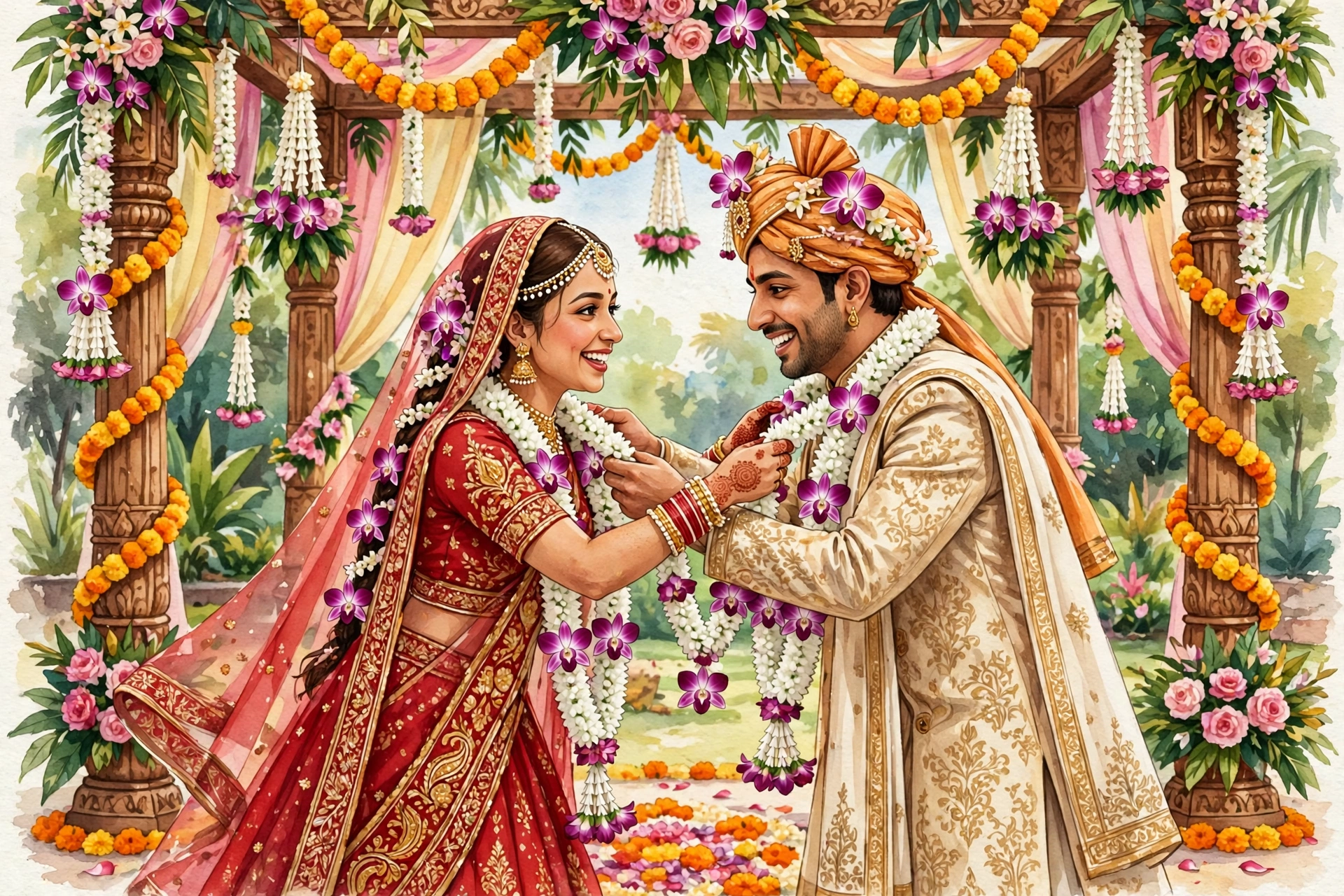
The varmala exchange is one of the most photographed moments of the wedding. The couple lifts the garlands, the families cheer, and every camera in the room points at the flowers. A varmala that is fresh, well made and easy to wear makes that moment beautiful. A varmala that is heavy, wilted or falling apart distracts from it.
A good varmala is light enough to wear, bright enough to photograph, and strong enough to survive being lifted over the head twice. Those three needs decide the flowers, the making and the timing.
Rose varmalas: the classic choice
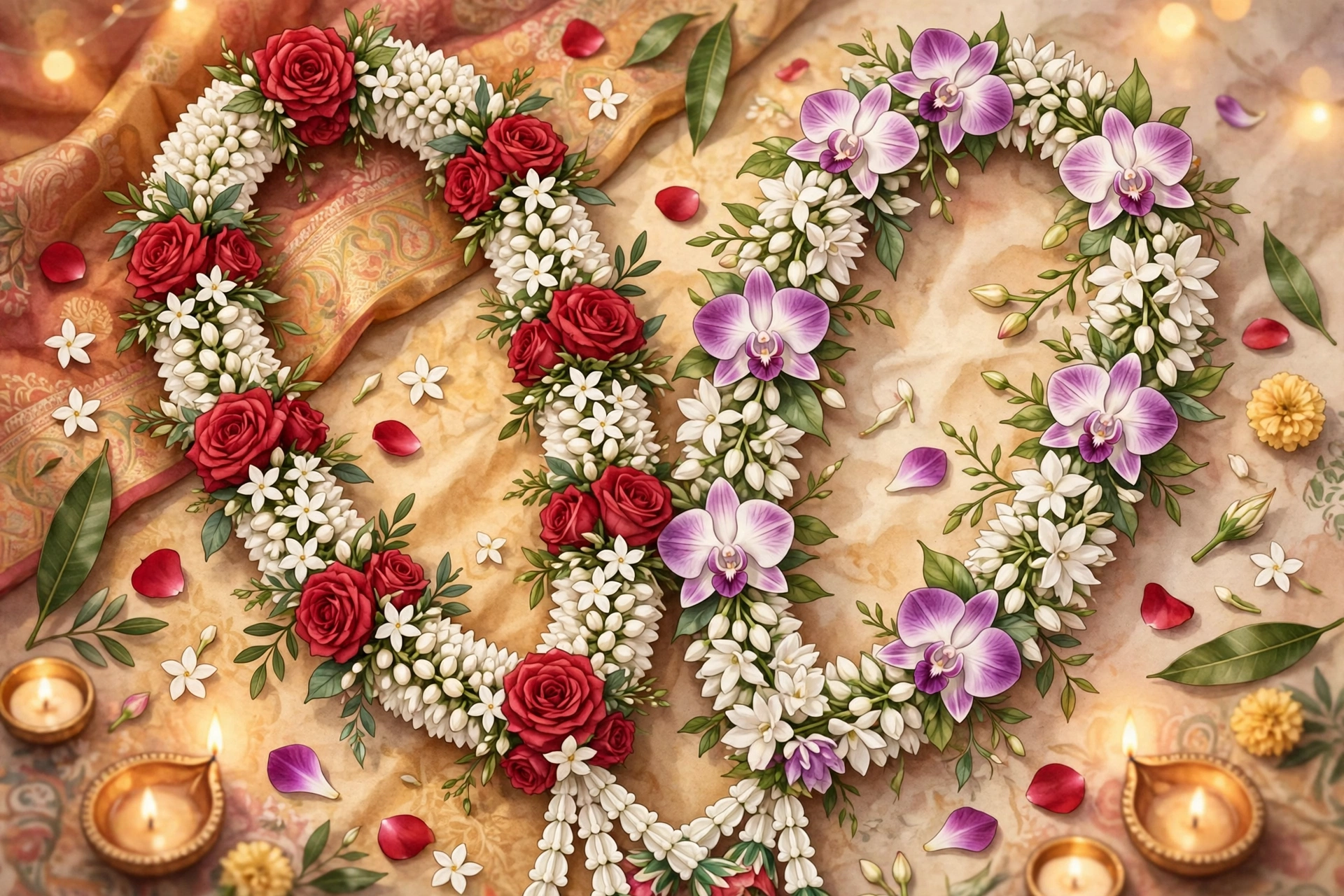
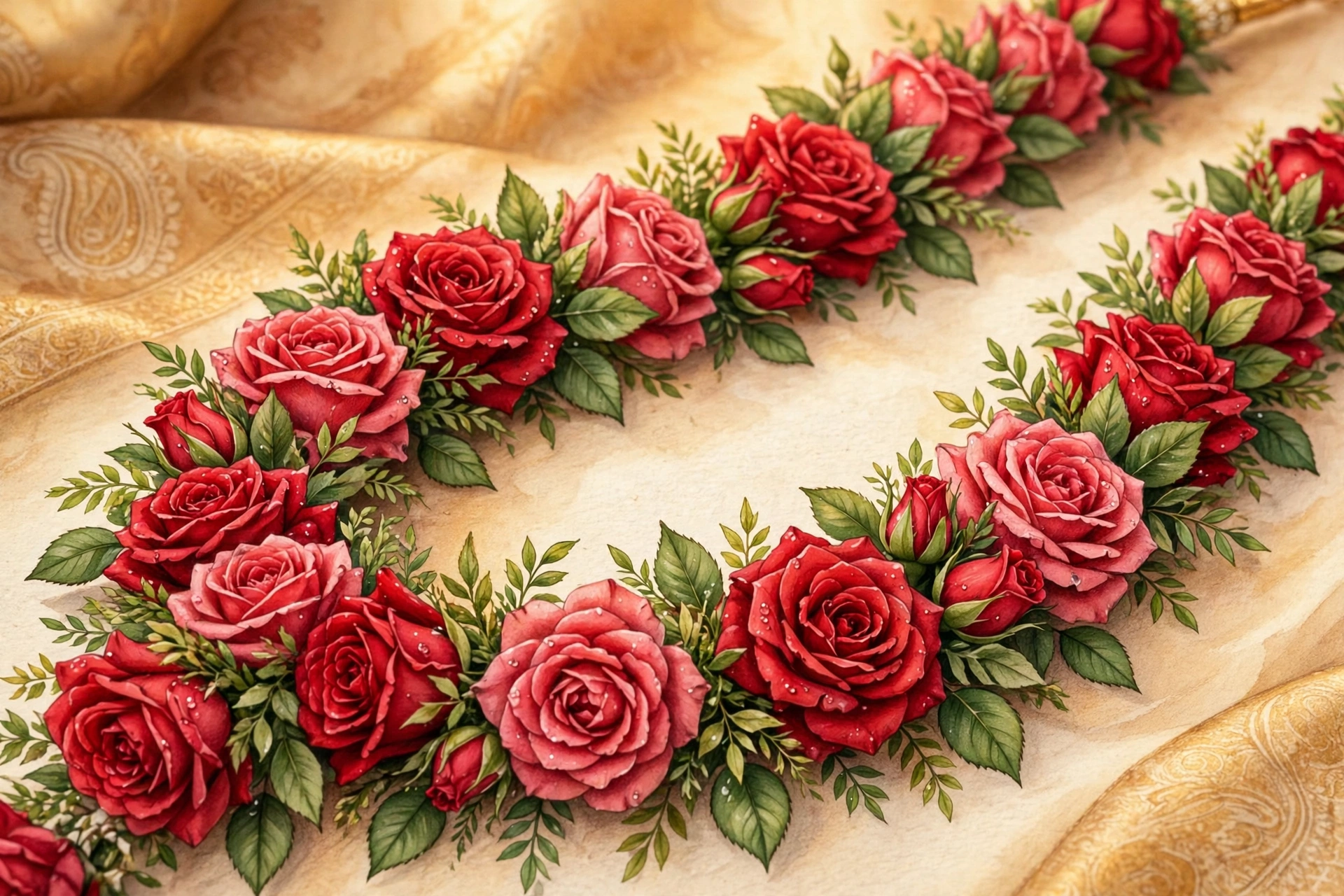
Red roses are the traditional varmala flower. A varmala of fresh red roses, with a few green leaves and a white flower at the centre, is bright, romantic and photogenic. Roses hold their shape when strung, and their colour stays true in photographs. Order the varmalas to be made the morning of the wedding, and keep them cool until the ceremony.
For a modern varmala, use pink or blush roses instead of red. They suit a pastel wedding, and they photograph softly against the outfits. Mix roses with a few orchids for height, but keep the roses as the lead flower, because their round shape fills the garland evenly.
Jasmine varmalas: light and fragrant
A jasmine varmala is the lightest choice, and its fragrance fills the air as the couple exchanges garlands. Jasmine suits a morning ceremony and a South Indian wedding, where the flower is part of the tradition. A full jasmine varmala is delicate, so many florists mix jasmine with roses or orchids to give it strength.
Keep a jasmine varmala cool until the last moment, because the buds wilt fast in heat. Have it made as late as possible, and carry it to the mandap in a cool box. A jasmine varmala that has sat in a hot room for three hours will look tired in the exchange photographs.
- Rose varmalas for the classic look, made fresh the morning of the wedding
- Jasmine varmalas for lightness and fragrance, kept cool until the exchange
- Orchid varmalas for a modern look, with long stems that photograph well
- Mix flowers for strength, but keep one flower as the lead
Orchid varmalas: modern and striking
Orchid varmalas suit a modern or reception style wedding. Their long stems and bold colours make a garland that looks sculptural in photographs. White orchids suit a calm ceremony, purple orchids suit an evening function, and pink orchids suit a romantic wedding. Orchids are hardy, so they survive the exchange better than jasmine.
An orchid varmala can feel stiff if it is made too tightly, so ask the florist to string the orchids loosely, with a little space between the flowers. The garland should drape, not stand rigid. Mix a few roses at the centre to soften the shape.
Weight, length and comfort
A varmala should be light. A heavy garland pulls on the neck, it is hard to lift over the head, and it makes the couple look uncomfortable in photographs. Ask the florist for the weight before the wedding, and hold the finished varmala yourself. If it feels heavy in your hands, it will feel heavier around the neck.
The length matters too. A varmala should fall to the middle of the chest, not to the waist. Too long, and it tangles in the outfits. Too short, and it looks like a necklace. Ask the florist to measure the garland against the couple's outfits before the ceremony, and to adjust it on the day.
Keeping the varmala fresh and preserving it
The varmala is worn for minutes, but it is photographed for decades. Have it made the morning of the wedding, keep it cool, and put it on only when the exchange begins. Carry a spare garland in case one breaks, because a broken varmala in the middle of the exchange is the one thing nobody can fix in the moment.
After the wedding, many couples preserve the varmala. The simplest way is to press a few flowers in a book, or to dry the garland in a cool, dark place and frame it. A florist can also preserve the flowers professionally. Decide before the wedding, so the garlands are handled carefully after the ceremony instead of being left on a chair.
- Have the varmalas made the morning of the wedding, and keep them cool
- Check the weight and the length against the outfits before the ceremony
- Carry a spare garland in case one breaks during the exchange
- Decide how to preserve the varmala before the wedding day
What it costs
On MyIndiAura, a Cinematic Invite is ₹499, an Invite App is ₹399, and an Invitation Suite is ₹99. Choose by what your invitation needs to do, not by price alone. A cinematic invite suits a wedding with a film led opening, while an invite app suits a full week of functions with RSVP and maps.
How to create your wedding invitation
- Pick a romantic, floral design from the designs page at myindiaura.com/designs.
- Add the couple names, the dates, the venues, and the order of events for each function.
- Add photos of the couple, the venue map, and the RSVP button.
- Preview the invitation on your own phone, then share the link on WhatsApp. See myindiaura.com/create to start, and myindiaura.com/pricing for the full price list.
Details to check before you send
- The names of the bride and groom, spelt exactly as the families use them
- The date and time of each function, with the venue for each one
- The varmala flowers chosen, with a spare garland ordered
- The weight and length checked against the outfits before the ceremony
- A cool place to keep the garlands until the exchange
- An RSVP contact for guests who need directions
Frequently asked questions
Which flower is best for a varmala?
Red roses are the classic choice, and they suit most weddings. Jasmine suits a morning or South Indian ceremony. Orchids suit a modern wedding. Pick the flower that matches the ceremony, the outfits and the hour.
How heavy should a varmala be?
As light as possible. A heavy garland pulls on the neck and is hard to lift. Ask the florist for the weight, hold the finished garland yourself, and choose the lighter option if two are offered.
How long should a varmala be?
To the middle of the chest. Too long, and it tangles in the outfits. Too short, and it looks like a necklace. Ask the florist to measure it against the couple's outfits before the ceremony.
Can I preserve my varmala after the wedding?
Yes. Press a few flowers in a book, dry the garland in a cool dark place and frame it, or ask a florist to preserve it professionally. Decide before the wedding, so the garlands are handled carefully after the ceremony.
Should the bride and groom have matching varmalas?
They should sit in the same family of flowers and colours, but they do not need to be identical. A bride's varmala can be slightly fuller or lighter than the groom's. The pair should look like a set, not like two copies.
MyIndiAura theme showcase
These Cinematic Invites from MyIndiAura fit this wedding. Each one is ₹499.
- Rose Film: roses and cinema light, made for a romantic ceremony.
- Gulab Dil: a rose garden story that opens on the couple.
- Mero Vrindavan: jasmine and temple gardens, made for a sacred ceremony.
Related reading
- Floral Wedding Invitation Designs for a Romantic Celebration
- Haldi Ceremony Invitation Card Designs
- How to Coordinate Wedding Invitations with Wedding Decor
The varmala is worn for minutes and photographed for decades. Choose flowers that are fresh, light and true to the ceremony, and the exchange will look as beautiful as it feels.
Explore invitation designs
Choose a design and preview it free with your own names.

Found this useful? Share it with someone planning a celebration.
Share