South Indian Banana Leaf Wedding Feast Guide
Rice, sambar, rasam, poriyal and payasam, served in order on a fresh banana leaf. How the South Indian wedding feast works, and how to serve it well for a full guest list.
What a banana leaf feast is
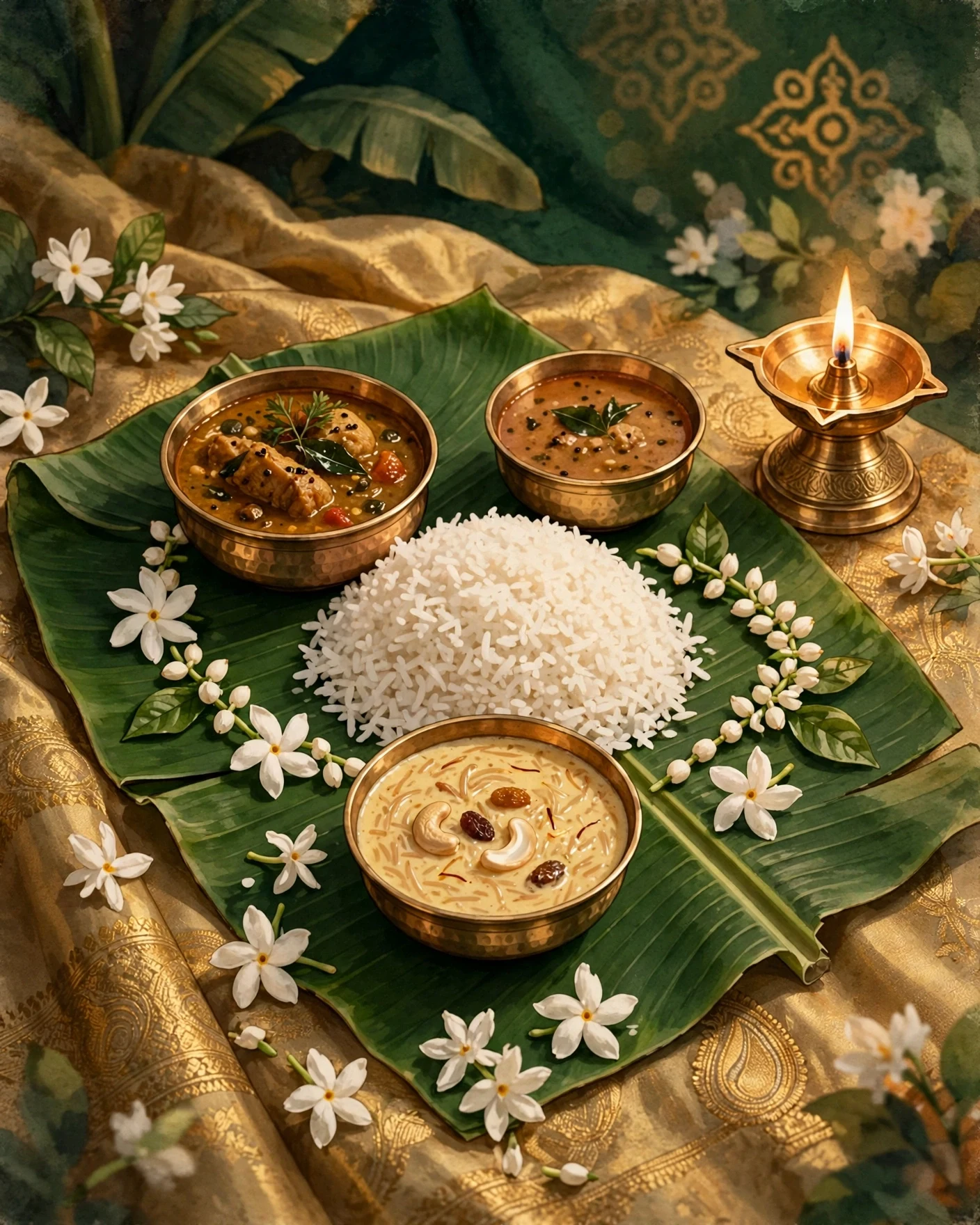
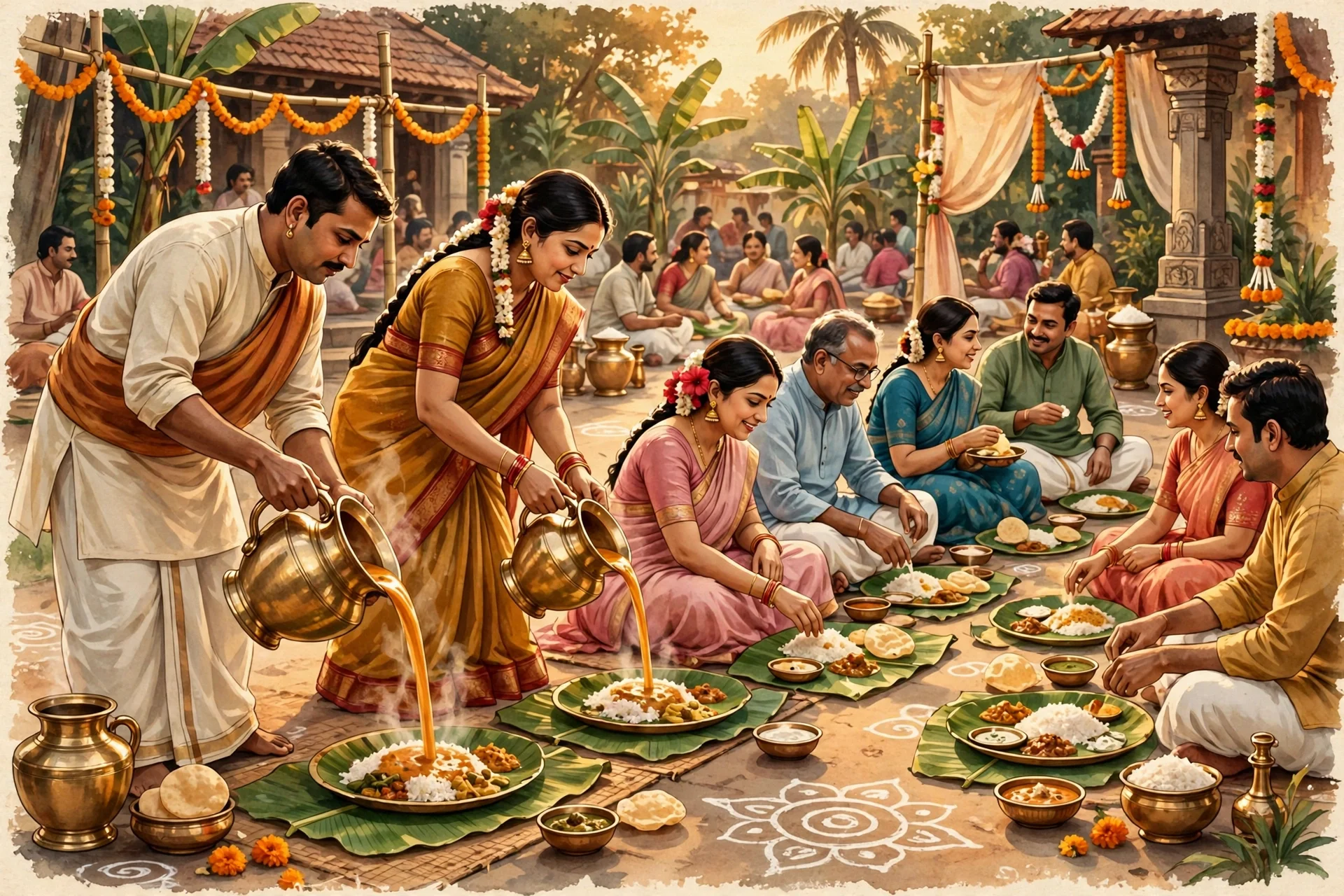
A South Indian wedding feast, or sadya, is a full meal served on a fresh banana leaf, eaten with the hand, in a fixed order. It is one of the oldest wedding meals in India, and it is also one of the most satisfying, because every taste has its place: sweet, salt, sour, bitter, spice and astringent, all on one leaf.
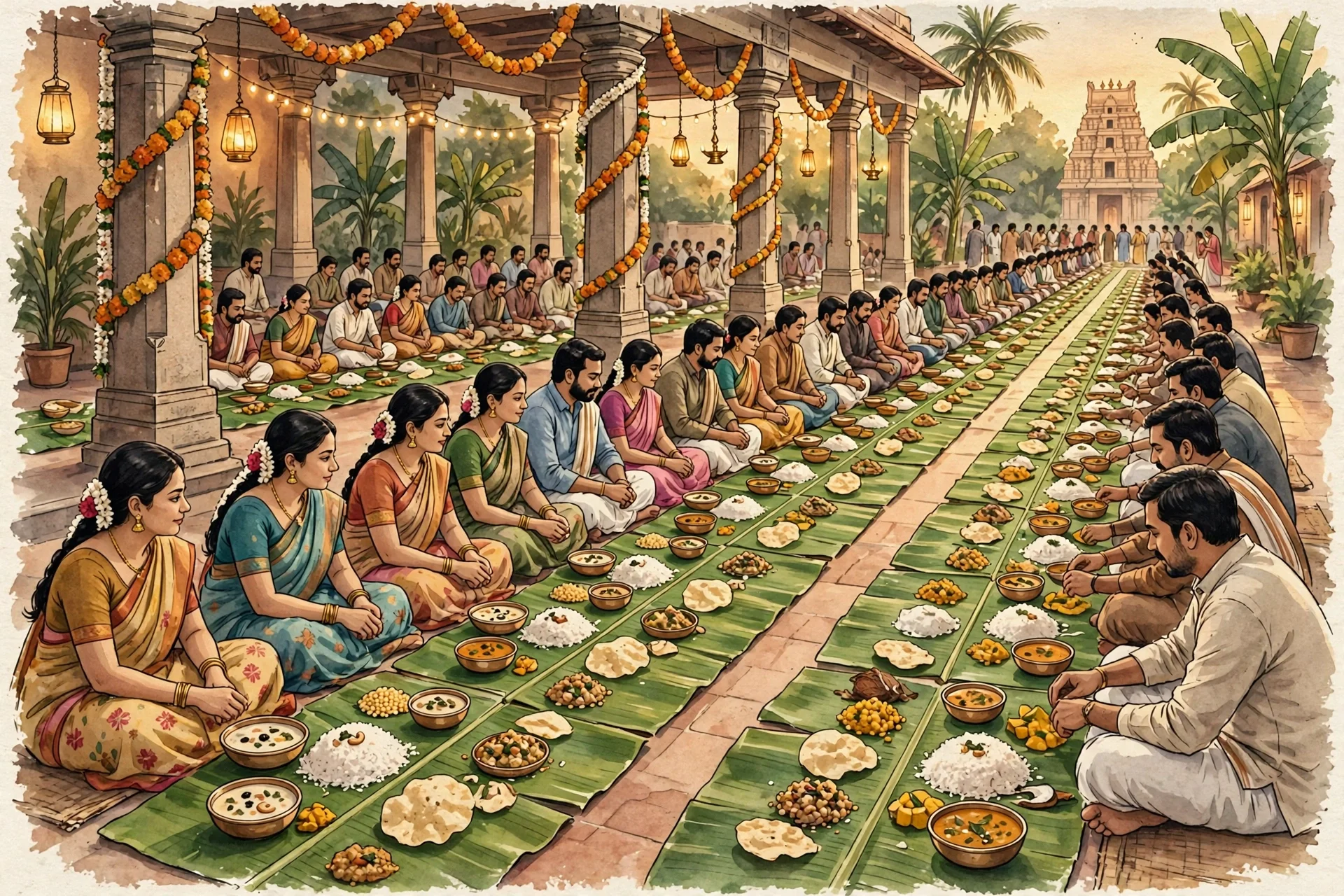
The leaf is not decoration. It adds a gentle flavour to hot food, it is naturally clean, and it tells the servers exactly where each dish goes. Guests sit in rows, leaves are laid in one direction, and the meal moves course by course, from the first pickle to the last payasam.
For a wedding, the feast is usually the lunch after the ceremony. It suits a daytime wedding perfectly, because it is filling, vegetarian by tradition, and it brings the whole family to the table at the same time.
The order of the leaf: where each dish sits
A banana leaf has a geography, and the servers know it by heart. The narrow end points to the left, and the dishes sit in a fixed pattern. Salt and pickles go at the top left, then the dry dishes, the poriyal and the thoran, then the wet curries and the avial.
Rice sits in the centre, with sambar poured first, then rasam, then curd. The appalam and the vadai sit at the top, the banana sits at the bottom right, and the payasam comes last, in a small cup or poured over the leaf. A guest who knows the leaf can read the meal at a glance.
This order matters because the flavours build on each other. The meal starts sharp and salty, moves to rich and spiced, and ends sweet and cool. When dishes are served out of order, the meal feels wrong even if every dish tastes good on its own.
The dishes, from rice to payasam
A wedding feast usually carries twelve to twenty dishes, and the count is part of the pride. The core is steamed rice, sambar with vegetables, rasam, and curd. Around them sit poriyal, kootu, avial, and a pachadi, plus pickles, appalam and a banana.
The payasam deserves special care. Pal payasam, made with milk and rice, is the classic wedding sweet, but many families also serve a jaggery based paruppu payasam. Serve it warm, in a generous portion, because guests will ask for a second helping. The feast is judged by its payasam as much as by its sambar.
For a Tamil wedding, ask for a full sadya with a vadai and a sweet bonda. For a Kerala wedding, the sadya leans on coconut, with olan, thoran and a red rice option. For a Telugu wedding, the meal adds a pulihora and a sweet boorelu. Tell the caterer which tradition you follow, because the dishes change with it.
Serving it well: servers, timing and seconds
A banana leaf feast is served by people, not by a buffet line. Servers walk the rows with vessels, calling out each dish, and guests hold out their leaf. Plan one server for every fifteen to twenty guests, and one helper to lay fresh leaves and clear finished ones.
Timing is everything. The leaves must be laid minutes before the guests sit, not hours, or they wilt. The rice must be hot, the sambar must be fresh, and the payasam must arrive while guests still have room. A good catering team runs the feast like a quiet parade, course by course, with nobody waiting long.
Seconds matter. Guests will ask for more rice, more sambar and more payasam, and the team should be ready with full vessels. Running out of payasam halfway through the hall is the one mistake guests will remember. Order for a third more than the headcount for the popular dishes.
What guests should know
Guests from outside South India may not know how to eat from a leaf. A short note on the invitation helps: eat with the right hand, fold the leaf towards you when you finish to show you enjoyed it, and ask the server for anything you need. A little guidance makes everyone comfortable, and nobody feels watched.
Children and elderly guests need smaller portions and softer food. Keep a few chairs ready for elders who cannot sit cross legged on the floor, and serve their leaf on a low table. The feast is for everyone, and comfort is part of hospitality.
If the venue cannot seat everyone on the floor, a leaf on a table works well too. Lay the leaf on a clean plate or directly on the table, and keep the serving order the same. The taste does not change, and guests still eat together.
What it costs
On MyIndiAura, a Cinematic Invite is ₹499, an Invite App is ₹399, and an Invitation Suite is ₹99. Choose by what your invitation needs to do, not by price alone. A cinematic invite suits a wedding with a film led opening, while an invite app suits a full week of functions with RSVP and maps.
How to create your wedding invitation
- Pick a design from the designs page at myindiaura.com/designs.
- Add the couple's names, the dates, the venue, and the order of events, with the feast timing for each function.
- Add photos of the couple, the venue map, and the RSVP button.
- Preview the invitation on your own phone, then share the link on WhatsApp. See myindiaura.com/create to start, and myindiaura.com/pricing for the full price list.
Details to check before you send
- The names of the bride and groom, with parents, spelt exactly as the families use them
- The wedding date, time and full venue address, with a map link
- The feast timing and seating plan for each function
- The RSVP contact for guests who need directions or food help
- The order of events, with times for each ceremony
- A dress code note, if you want guests in a particular style
Frequently asked questions
How many dishes should a banana leaf feast have?
Twelve to twenty is the wedding standard. Fewer feels thin for a wedding, more becomes hard to serve well. Ask the caterer for their full wedding sadya list and pick the dishes your family loves.
Is a banana leaf feast only vegetarian?
By tradition, yes, and that is part of its charm. A full vegetarian sadya feeds everyone, and non vegetarian guests rarely miss meat when the sambar, avial and payasam are done well.
Can we serve a banana leaf feast at a city hotel?
Yes. Most hotels that host South Indian weddings know the service well. Confirm the leaf supply, the serving team size, and the floor or table seating before you book, and ask for a tasting of the full sadya.
Do guests eat with their hands?
Yes, with the right hand, and that is the tradition. Servers and family elders can guide first time guests gently. Keep finger bowls and napkins at the end of each row for washing up.
How do we fold the leaf when we finish?
Fold it towards you to show you enjoyed the meal. Folding it away from you is the sign used at a funeral, so this small detail matters, and it is worth telling guests on the invitation.
MyIndiAura theme showcase
These Cinematic Invites from MyIndiAura fit this wedding. Each one is ₹499.
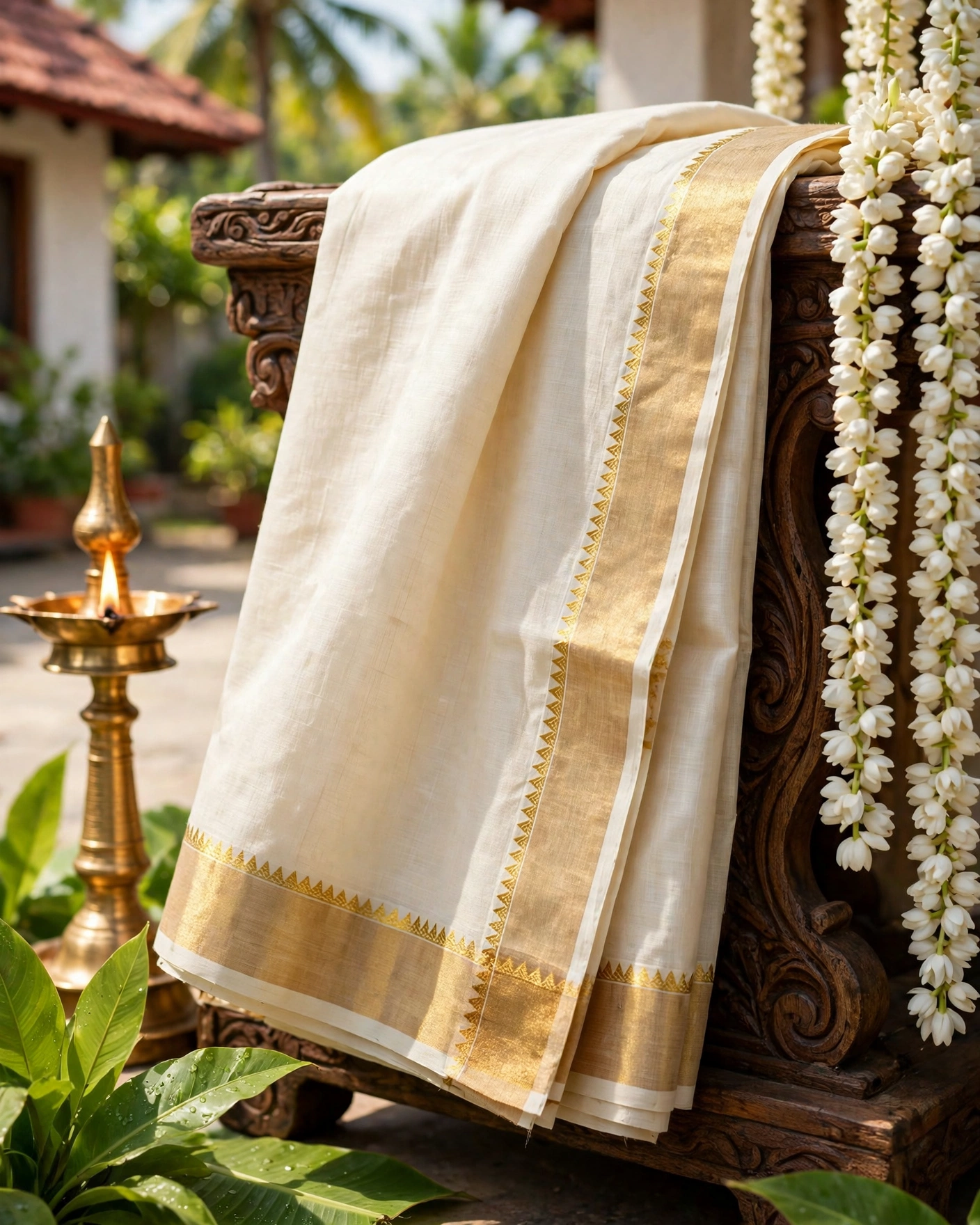
- Nadavathil: a Kerala doorway and courtyard, made for a sadya lunch.
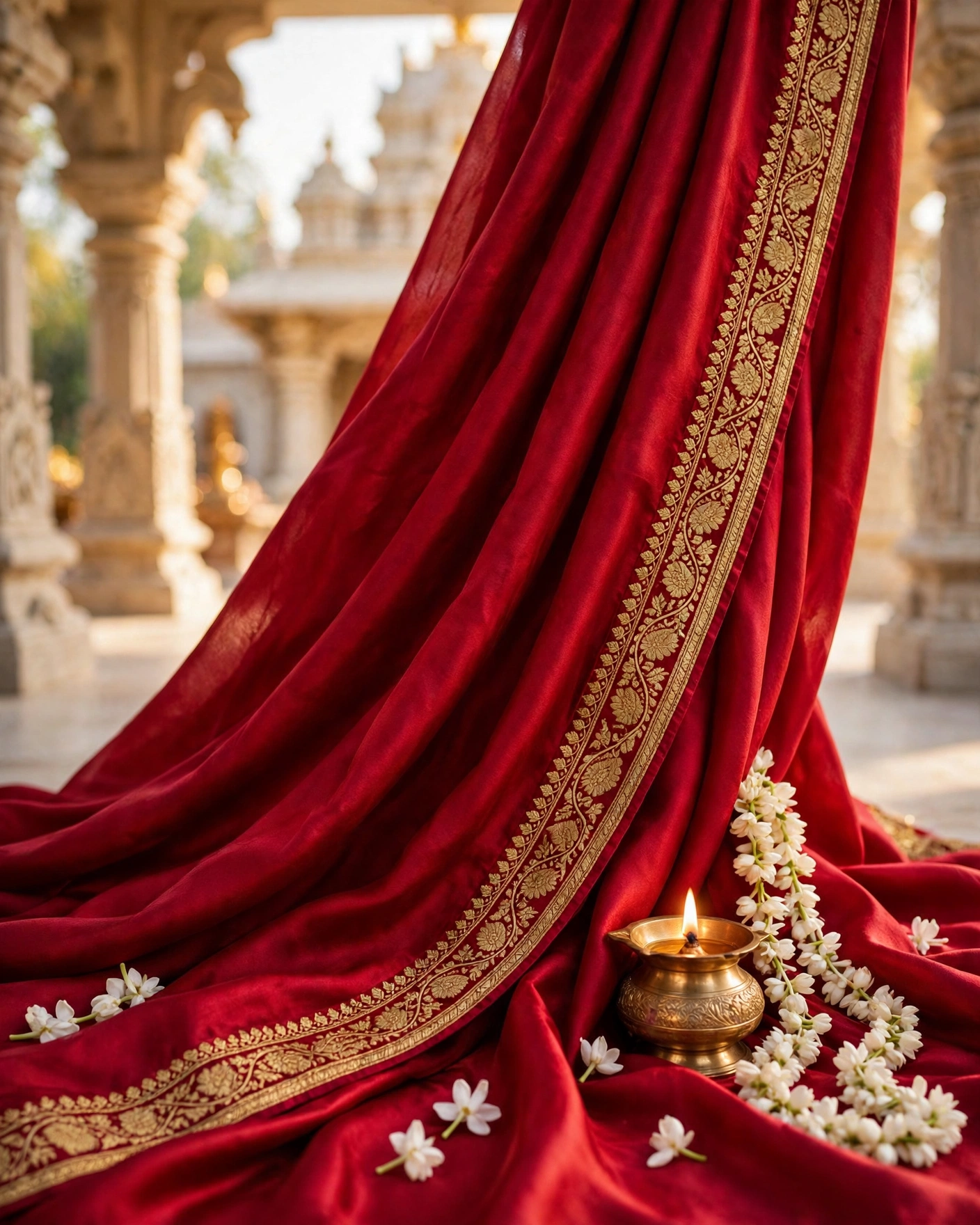
- Neelam Mandapam: a temple courtyard that suits a South Indian ceremony.
- Deepa Tarang: a temple tank ringed with lamps, warm and welcoming.
Related reading
- Haldi Ceremony Invitation Card Designs
- How to Plan a Memorable Wedding Reception
- Indian Wedding Planning Checklist: 12 Months to the Wedding Day
A banana leaf feast is simple food served with great care, and that care is what guests carry home with them.
Explore invitation designs
Choose a design and preview it free with your own names.
Found this useful? Share it with someone planning a celebration.
Share