Sindoor and Mangalsutra Ceremony Explained
Sindoor is the red powder in the bride's hair parting, and the mangalsutra is the sacred necklace. Here is what both mean, how they are given, and why they matter.
Sindoor and mangalsutra, explained simply
A Hindu wedding has two symbols that every guest recognises. The first is sindoor, the red powder the groom applies to the bride's hair parting. The second is the mangalsutra, the sacred necklace the groom ties around the bride's neck. Both mark the moment the bride becomes a married woman, and both carry deep meaning. This article explains what they are, how they are given, and why they matter.
What is sindoor?
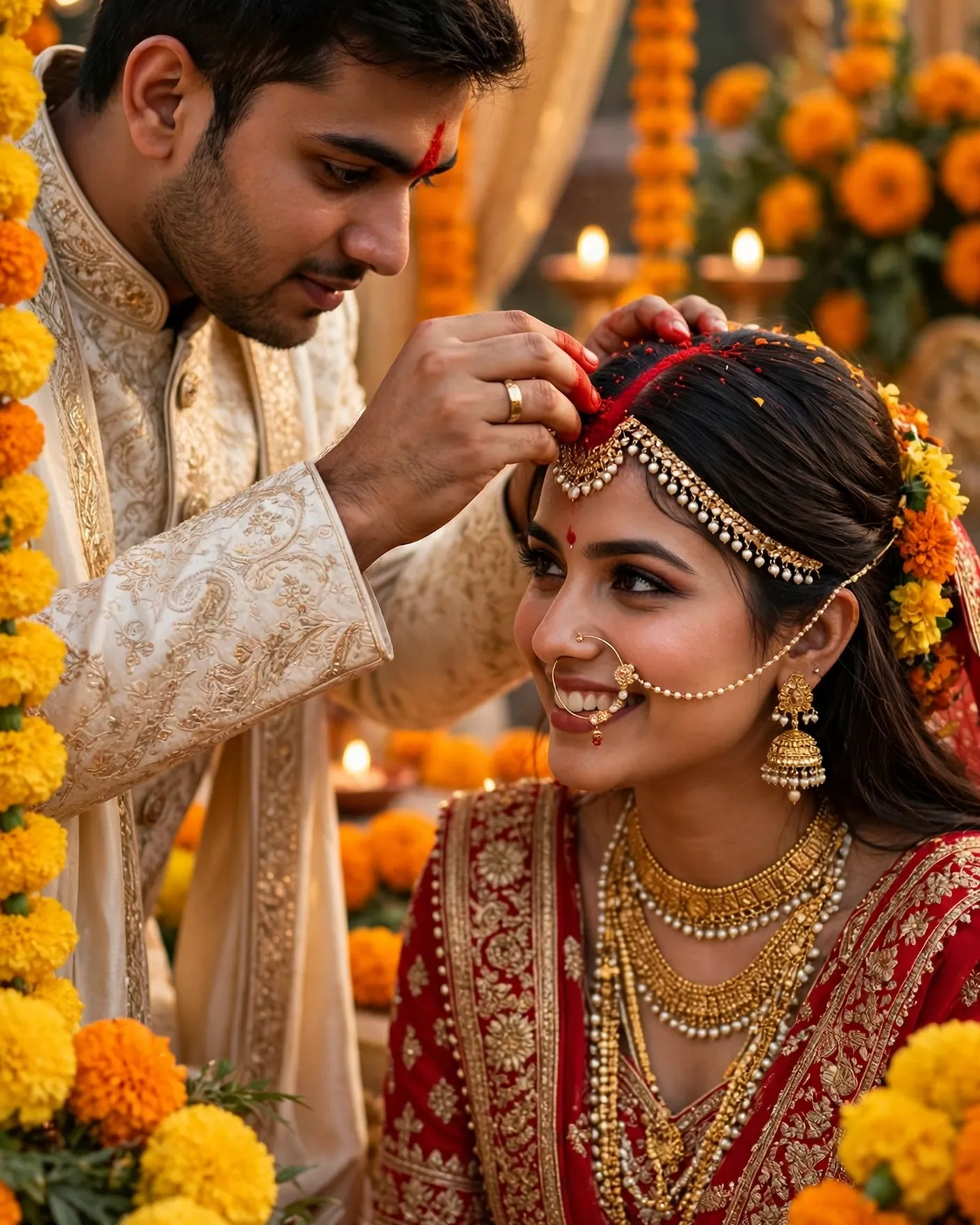
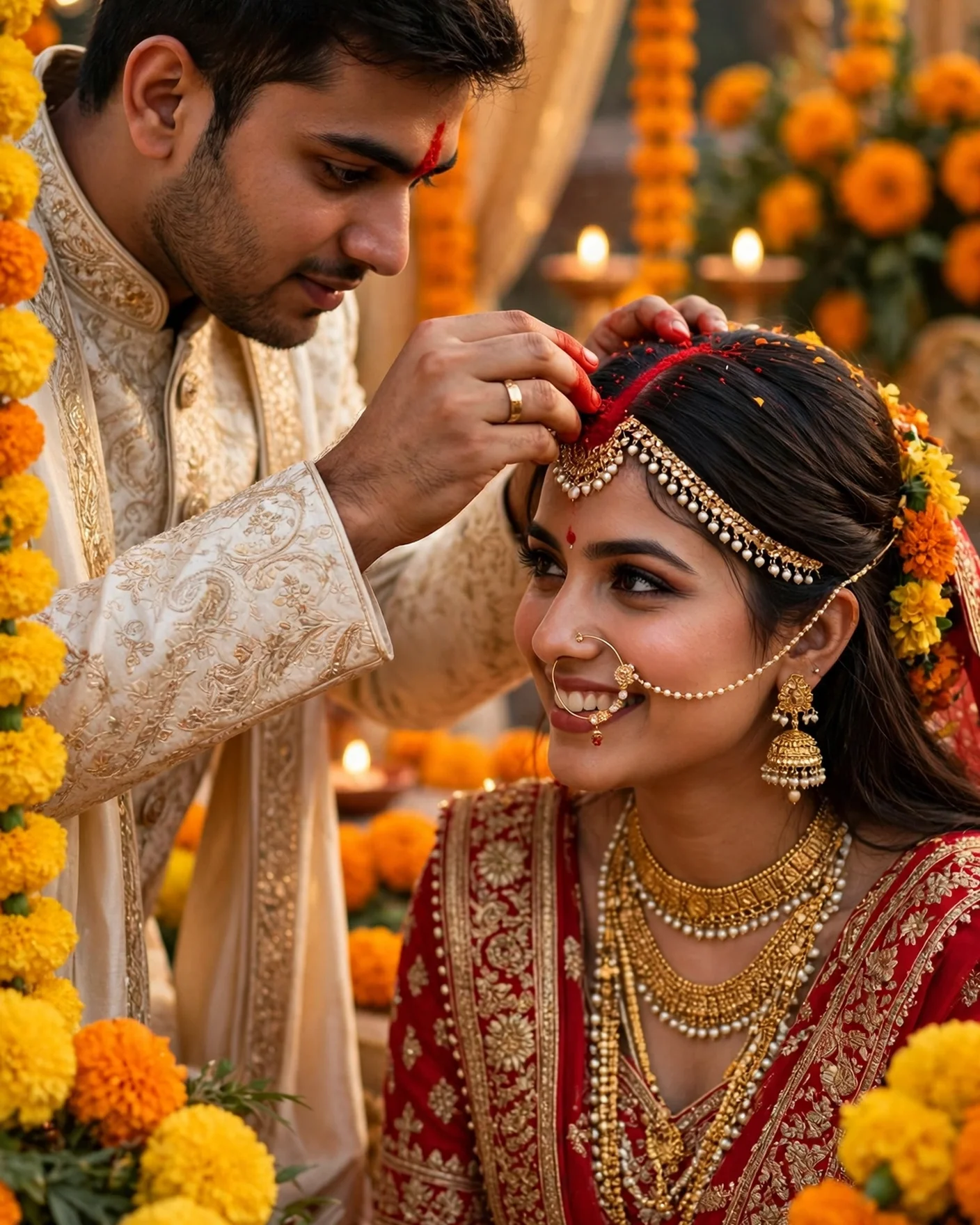
Sindoor is a red powder, traditionally made from turmeric and lime, that the groom applies to the bride's hair parting during the wedding ceremony. The red colour stands for love, fertility and prosperity, and the act of applying it is one of the most sacred moments of the wedding. The bride wears sindoor every day after her marriage, as a sign of her married status.
The sindoor ceremony happens during the main wedding ceremony, at the muhurtham, the exact auspicious minute. The groom takes a pinch of sindoor and applies it to the bride's hair parting, while the priest chants mantras and the families shower the couple with flowers. The moment is tender and joyful, and it is one of the most photographed moments of a Hindu wedding.
What is the mangalsutra?
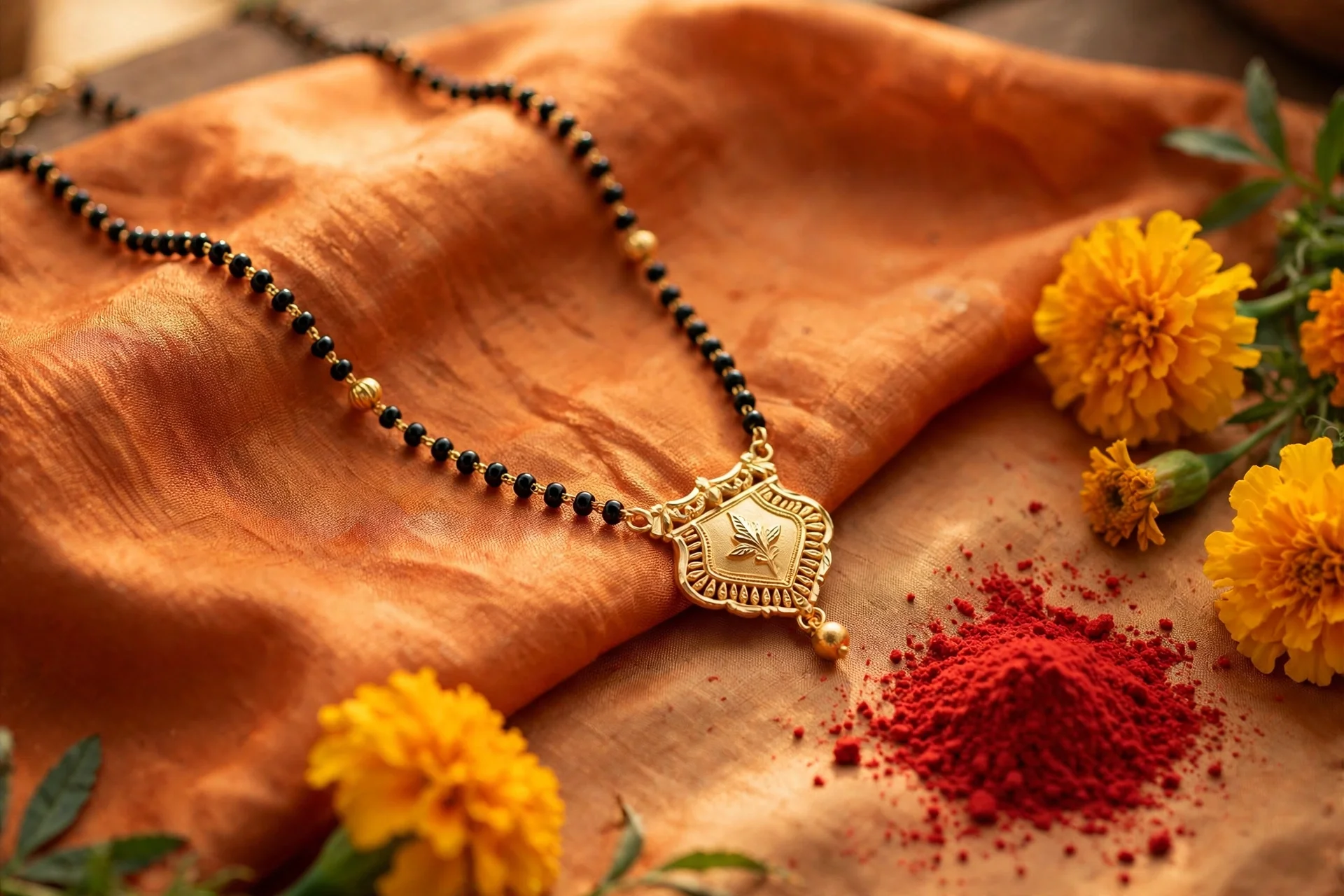
The mangalsutra is a sacred necklace, traditionally made of black beads and gold, that the groom ties around the bride's neck during the wedding ceremony. The word means a sacred thread, and the necklace is exactly that: a thread that binds the couple together for life. The bride wears the mangalsutra every day after her marriage, as a sign of her married status.
The mangalsutra ceremony happens during the main wedding ceremony, at the muhurtham, just before or just after the sindoor. The groom ties the necklace around the bride's neck with three knots, while the priest chants mantras. The three knots stand for the three promises of marriage: love, duty and devotion. The moment is sacred and joyful, and it is one of the most photographed moments of a Hindu wedding.
The order of the ceremony
Sindoor and the mangalsutra are given during the main wedding ceremony, at the muhurtham, and the order is fixed.
- The priest chants mantras and blesses the couple.
- The groom ties the mangalsutra around the bride's neck, with three knots.
- The groom applies sindoor to the bride's hair parting.
- The families shower the couple with flowers and bless them.
- The ceremony moves to the pheras, the seven vows around the sacred fire.
The whole moment takes about five to ten minutes. Guests watch quietly, and many wipe away tears, because it is one of the most moving moments of the wedding.
Sindoor and mangalsutra across regions
Sindoor and the mangalsutra are worn across India, with small differences in each region. In North India, the mangalsutra is made of black beads and gold, and the sindoor is applied in a long line down the hair parting. In South India, the mangalsutra is called the thaali, and it is made of gold with a small pendant, and the sindoor is applied as a small dot. In Bengali weddings, the sindoor is applied as a wide line, and the bride also wears a red and white bangle called shakha pola. In Marathi weddings, the mangalsutra is made of green beads and gold, and the sindoor is applied as a small dot.
The meaning is the same everywhere: the sindoor and the mangalsutra mark the bride as a married woman, and they bind the couple together for life. The designs change, but the meaning does not.
What guests should know
Guests at a Hindu wedding should arrive before the muhurtham, because the sindoor and mangalsutra are given at the exact auspicious minute and the moment passes quickly. Women often wear silk sarees in bright colours, and men wear a kurta or a sherwani. The groom's family and the bride's family sit on opposite sides of the mandap, and guests are welcome to sit anywhere.
The lunch or dinner after the ceremony is a full feast, and guests should stay for it if they can, because it is a central part of the celebration. If you are invited to the vidaai after the ceremony, come, because it is emotional and the families will be glad you were there.
How to include these moments on your invitation
If you are writing a Hindu wedding invitation, name the muhurtham with its time, so guests know when to arrive for the sindoor and mangalsutra. A short line is enough: "Muhurtham at 10:15 AM, followed by lunch." Do not explain the rituals in full on the card, because the card is for details, not for a lesson.
If your guest list includes people who have never attended a Hindu wedding, add one warm line: "Join us for the muhurtham, when the groom ties the mangalsutra and applies the sindoor." That is enough, and it makes new guests feel welcome. You can also add a photo of the mangalsutra or the sindoor from a family wedding, or a design that shows the necklace, to tell guests at a glance what to expect.
What it costs
On MyIndiAura, a Cinematic Invite is ₹499, an Invite App is ₹399, and an Invitation Suite is ₹99. Choose by what your invitation needs to do, not by price alone. A cinematic invite suits a wedding with a film led opening, while an invite app suits a full week of functions with RSVP and maps.
How to create your wedding invitation
- Pick a design from the designs page at myindiaura.com/designs.
- Add the wording, the date, the time, the venue, and the order of events, including the muhurtham.
- Add photos of the couple, the venue map, and the RSVP button.
- Preview the invitation on your own phone, then share the link on WhatsApp. See myindiaura.com/create to start, and myindiaura.com/pricing for the full price list.
Details to check before you send
- The names of the bride and groom, with parents, spelt exactly as the families use them
- The wedding date and time, checked with the priest
- The muhurtham time, checked with the priest
- The full venue address, with the area and a map link
- A dress code note, if you want guests in silk or bright colours
- An RSVP contact for guests who need directions
Frequently asked questions
What is the meaning of sindoor?
Sindoor is a red powder the groom applies to the bride's hair parting during the wedding ceremony. The red colour stands for love, fertility and prosperity, and the act of applying it is one of the most sacred moments of the wedding.
What is the meaning of the mangalsutra?
The mangalsutra is a sacred necklace the groom ties around the bride's neck during the wedding ceremony. The three knots stand for the three promises of marriage: love, duty and devotion. The bride wears it every day after her marriage, as a sign of her married status.
When are sindoor and the mangalsutra given?
Both are given during the main wedding ceremony, at the muhurtham, the exact auspicious minute. The mangalsutra is tied first, with three knots, and the sindoor is applied just after.
Do all Hindu brides wear sindoor and a mangalsutra?
Most Hindu brides do, but the designs vary by region. In the South, the mangalsutra is called the thaali and is made of gold. In Bengal, the bride also wears shakha pola bangles. The meaning is the same everywhere.
Can we include a photo of the mangalsutra on the invitation?
Yes, and it is a lovely touch. A photo of the mangalsutra or the sindoor from a family wedding, or a design that shows the necklace, tells guests at a glance what to expect and honours the moment.
MyIndiAura theme showcase
These Cinematic Invites from MyIndiAura fit this wedding. Each one is ₹499.
- Laal Doli: part the red zardozi curtain of the doli to a marigold mandap.
- Gulab Dil: a burgundy envelope, a blush wax seal, and a heart of rose petals.
- Mandap Yatra: a walk through the venue, room by room, to the mandap.
Related reading
- Pheras: Seven Vows Explained
- Kanyadaan Ritual: Meaning and Ceremony
- Hindu Wedding Invitation Wording and Traditions
Create your wedding invitation on MyIndiAura, and let the sindoor and mangalsutra be honoured with the love they deserve.
Explore invitation designs
Choose a design and preview it free with your own names.
Found this useful? Share it with someone planning a celebration.
Share