Shehnai Music for Wedding Ceremonies
Why the shehnai still opens Indian weddings, where it belongs in the ceremony, and how to book a player who honours the moment.
In short
The shehnai is the sound of a wedding beginning. It has opened Indian ceremonies for centuries, and it still does the job nothing else can.
Book a player who knows the ceremony order. Let the shehnai lead the morning, and keep the volume gentle so the rituals stay the focus.
What the shehnai is
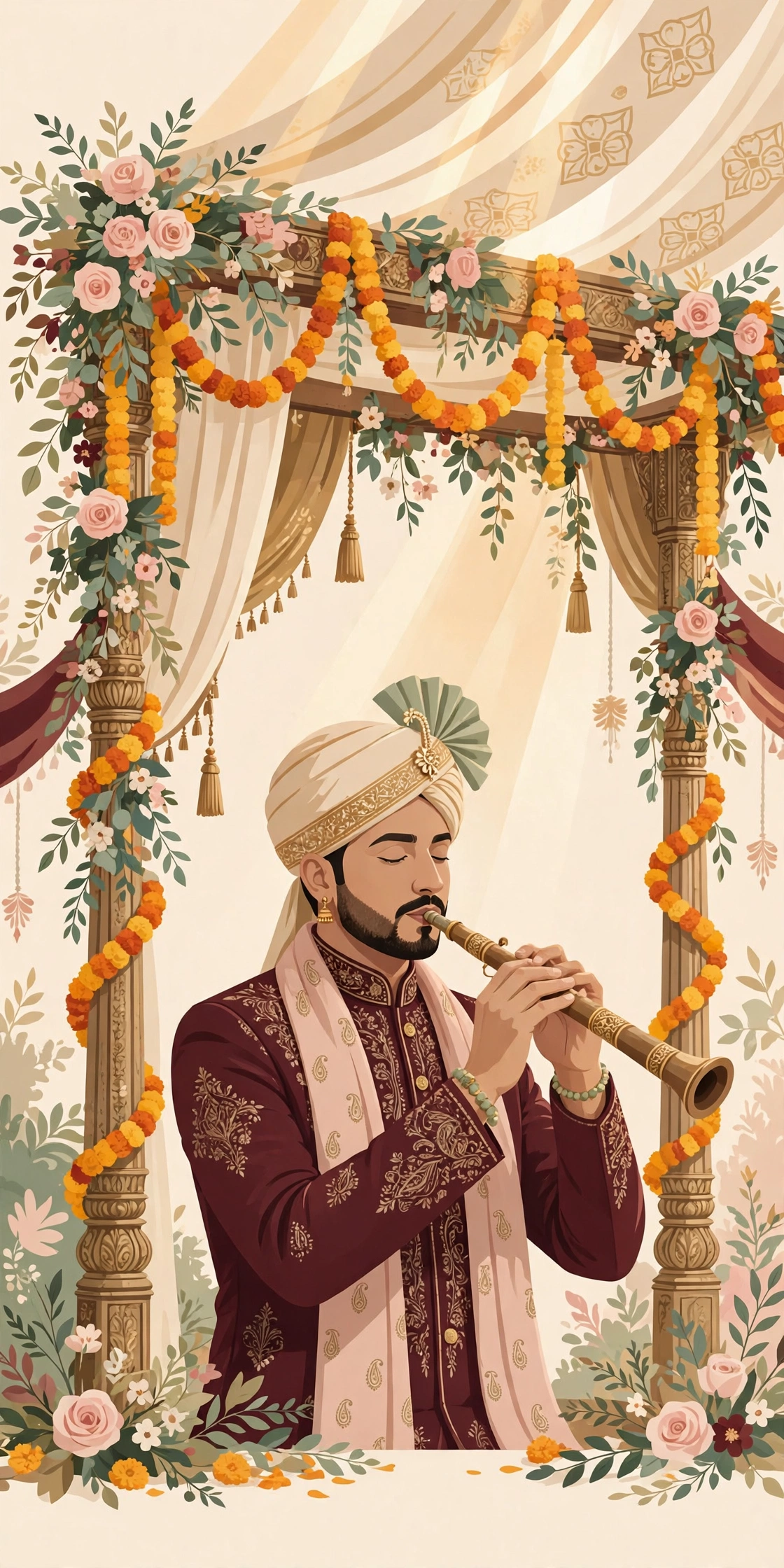
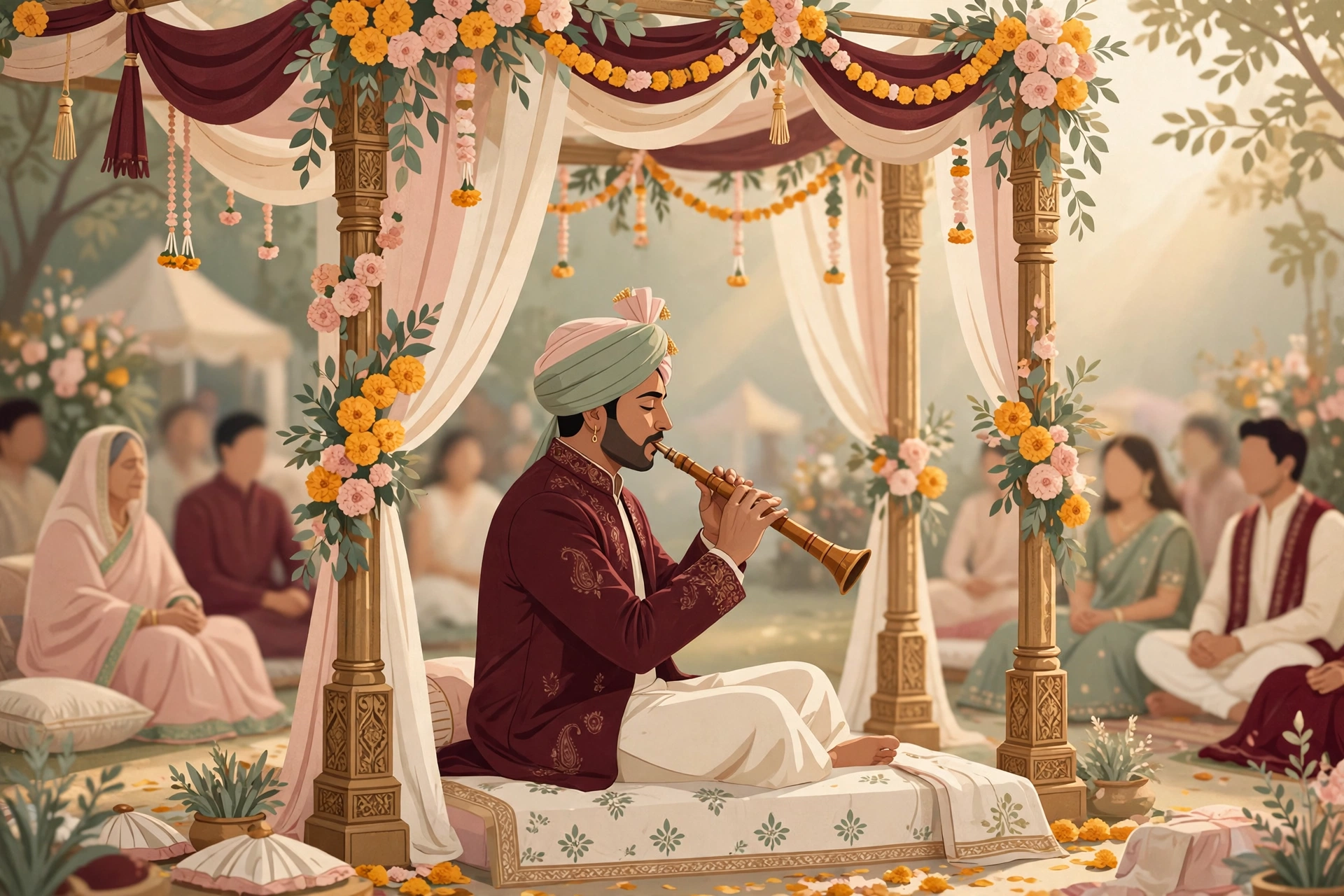
The shehnai is a wind instrument with a reedy, singing voice, often called the sound of the wedding itself. It is traditionally played at the start of the ceremony, as the groom arrives and as the couple take their vows. The great Ustad Bismillah Khan carried the shehnai to concert halls around the world, but its home has always been the wedding mandap.
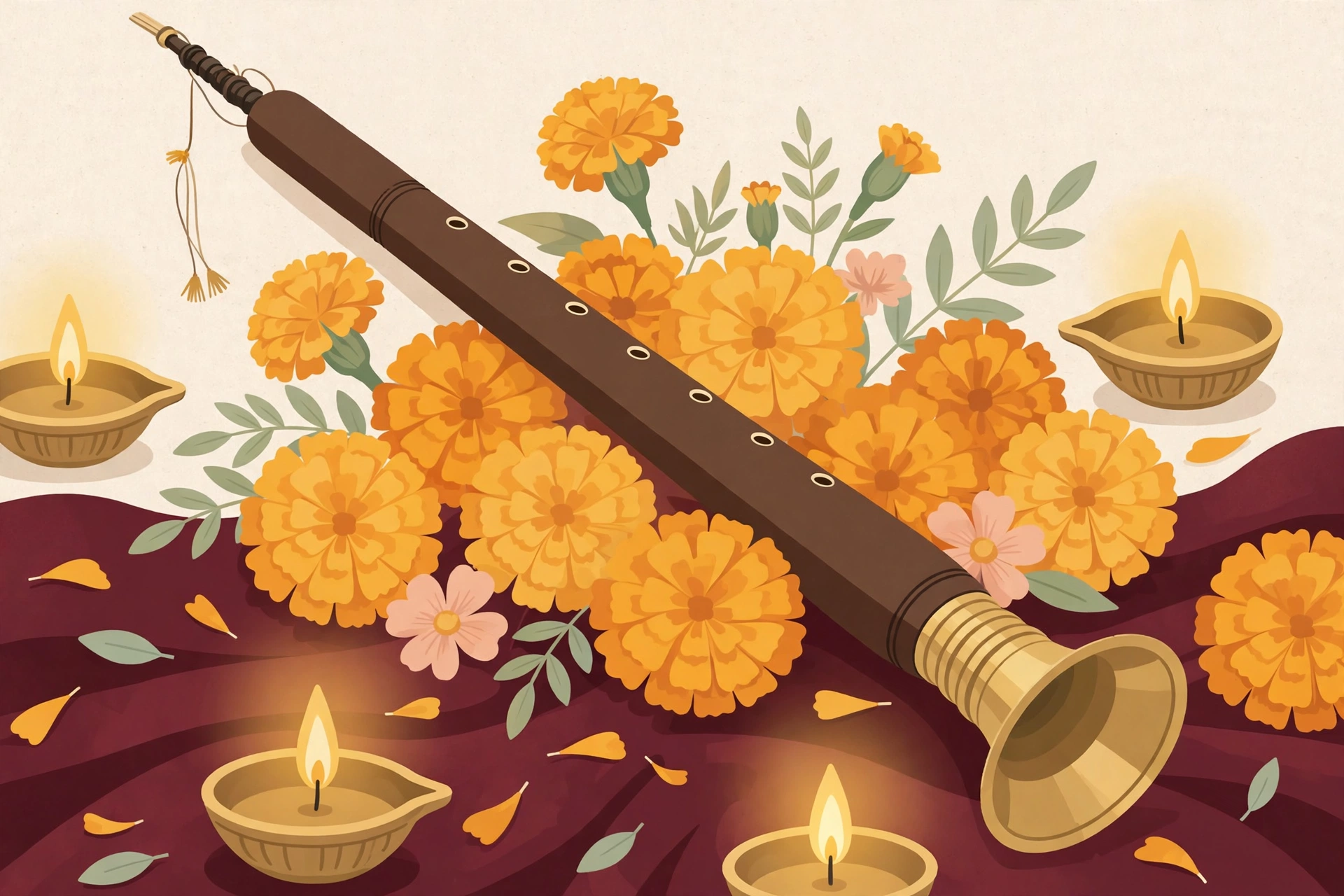
The instrument works because of its tone. It is bright without being harsh, and it carries emotion in a way that a keyboard or a recorded track rarely does. A single shehnai can fill a hall with a feeling of occasion. Two shehnais with a tabla can carry a whole morning of rituals without ever sounding thin.
Families choose the shehnai for the same reason they choose fresh flowers and real ghee lamps: it is authentic. Guests may not know the name of the instrument, but they recognise the feeling at once. The ceremony has begun, and something important is happening.
Where the shehnai belongs in the ceremony
The shehnai belongs to the quiet parts of the wedding. It plays as guests arrive and take their seats, during the groom's entry, through the varmala, and under the pheras. It suits moments of blessing and welcome, not moments of high energy dance.
Plan the music around the ceremony order. Give the player a written list of the rituals in order, with rough timings, so they know when to play and when to fall silent. The shehnai should pause during the priest's mantras and the vows, then return gently between rituals. A player who keeps playing over the mantras will distract the couple and annoy the priest.
Choosing a player
Hear the player live before you book. A recording can hide weak breath control and thin tone. Go to a morning function where they are playing, or ask for a full video of a recent ceremony, and listen to the whole thing. A good player holds the note steady, moves between ragas smoothly, and never rushes the slow passages.
Ask what the player knows. Can they play the ragas suited to the morning, such as Bhairavi and Yaman. Can they play the film and folk tunes your family loves, if you want them at the welcome. A player with a wide repertoire can shift from devotional to celebratory without a jarring change.
Ask whether they play solo or with accompaniment. A solo shehnai suits a small ceremony. A shehnai with tabla suits a larger hall and gives the music a pulse. A small group with a harmonium can carry the welcome music for a hundred guests without any amplification at all.
The brief: ceremony order and sound
Write the brief on one page. The ceremony order, the timings, the moments the shehnai should lead, and the moments it should stay silent. Share it with the priest too, so the priest and the player agree on the pauses. A five minute conversation between them before the ceremony prevents every misunderstanding on the day.
Sound needs care. The shehnai is naturally loud, and in a small hall it needs no microphone. In a large banquet, one gentle microphone is enough. Ask the venue about the sound setup and agree it with the player at the rehearsal or the sound check. Over amplification ruins the tone, so less is usually more.
Shehnai and the modern wedding
Many couples worry that the shehnai will feel old fashioned next to a DJ and a light show. In practice, the contrast is the point. Guests who danced all night at the sangeet often say the shehnai morning was their favourite part, because it felt real and calm after the noise.
The shehnai also suits the invitation itself. Couples who choose a shehnai ceremony often pick an invite with a classical, warm design, and they add a line about the morning ceremony so guests arrive on time. The instrument sets the tone for the whole day, and the invite can carry that tone to the guests.
If the budget is tight, a single shehnai player for the ceremony is one of the best value choices in the whole wedding. It costs less than most decor items, yet guests remember it for years. Spend on the moments people feel, not only on the things they see.
Style guidance: matching the music to your wedding
Match the shehnai to a ceremony that values tradition. A North Indian Hindu wedding, a temple wedding, or a morning ceremony with elders present are all natural homes for it. A purely modern, evening only celebration may suit a string quartet or a soft jazz group better.
Talk to the elders before you decide. For many grandparents, the shehnai is not a choice, it is the wedding. Including it honours them, and it costs little. If the elders ask for it and you include it, the whole family relaxes, because the wedding feels right to everyone.
Keep the rest of the morning simple. The shehnai, fresh flowers, and a clean mandap are enough. Adding a loud sound system or a second act at the same time will crowd the moment. Let one beautiful thing lead, and the morning will feel calm and complete.
What you need before you book
Have these ready and the booking moves fast:
- The date, venue, and start time of the ceremony.
- The ceremony order in writing, with the moments for music and silence.
- The style you want: classical ragas, folk tunes, or a mix of both.
- Solo or with tabla and harmonium, agreed in advance.
- The sound setup and the seating spot, confirmed with the venue.
- One family point of contact for the player.
Cost
A shehnai player in India usually costs between ₹10,000 and ₹50,000 for a ceremony, depending on the city, the fame of the artist, and the length of the performance. A small group with tabla and harmonium costs more, while a well known maestro can cost far more. Travel is often extra, so ask for an itemised quote.
The invitation that carries the ceremony details to your guests is the Cinematic Invite at ₹499, the Invite App at ₹399, and Invitation Suites at ₹99. Add the ceremony start time clearly, so guests arrive while the shehnai is still playing its welcome.
How to create
- Pick your invite design from the Cinematic Invites on MyIndiAura and note the theme name.
- Add the ceremony details, with the venue and the start time.
- Add a line about the morning ceremony, so guests plan to arrive early.
- Preview the invite on your phone, then share it on WhatsApp, family first.
Start with the invitation
The shehnai will open your wedding beautifully, but only the guests who arrive on time will hear it. Send an invitation with the ceremony time written clearly, and the hall will be full before the first note.
MyIndiAura theme showcase
These Cinematic Invites from MyIndiAura fit this wedding. Each one is ₹499.
- Music Box: A musical theme that suits a ceremony where the shehnai leads.
- Bodhi Saanjh: Calm and devotional, it fits a quiet morning ceremony.
- Saanjh Mandir: Warm and sacred, it carries the feeling of a temple morning.
Related reading
Explore invitation designs
Choose a design and preview it free with your own names.

Found this useful? Share it with someone planning a celebration.
Share