Regional Wedding Food Menus: Awadhi to Chettinad
Awadhi kebabs, Chettinad pepper and everything between. How to plan a regional wedding menu that honours both families and still feeds a thousand guests well.
Why one menu never fits a whole wedding
Food is the part of an Indian wedding guests remember longest. They may forget the decor by the next morning, but they will talk about the kebabs, the biryani and the dessert table for years. That is why the menu deserves the same planning as the venue and the outfits.
A single menu rarely fits a whole wedding. The two families often come from different regions, the guests span generations and tastes, and the week has several functions, each with its own mood. The answer is not one giant menu. It is a plan that gives each function its own character, with regional food leading at least once.
Start by asking both families which dishes feel like home. One family may dream of Awadhi kebabs and sheermal, the other of Chettinad chicken and dosa. Write both lists down. The overlap between them is your wedding day menu, and the differences become the haldi lunch and the sangeet dinner.
The Awadhi table: slow cooking and rich gravies
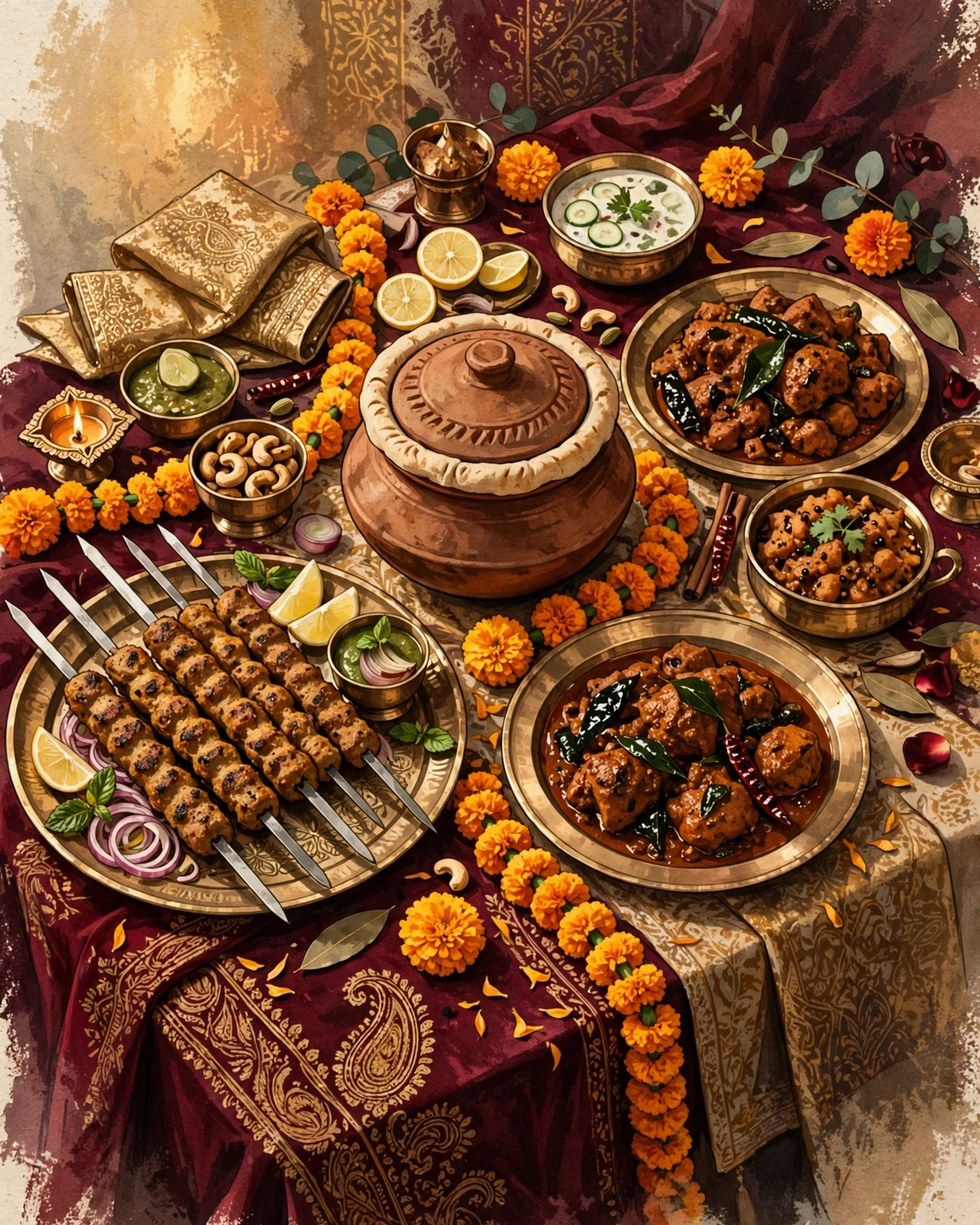
Awadhi food comes from the kitchens of Lucknow, where cooking was slow, patient and perfumed. The star is the galouti kebab, so soft it is said to melt on the tongue, served with sheermal or a small paratha. Around it sit kakori kebabs, nihari, and a dum biryani sealed with dough and opened at the table.
Awadhi food is rich, so it needs balance. Serve it with a light salad, a simple raita and a mild dal, and keep the portions small at a live counter so guests can taste more than one thing. A live kebab counter with a skilled cook is worth more than ten extra dishes on a buffet, because guests watch the food being made and eat it at its best.
The Chettinad table: heat, pepper and coconut
Chettinad food comes from Tamil Nadu, and it is the opposite of Awadhi in mood. It is bold, peppery and full of freshly ground spice. The star is Chettinad chicken or mutton, dark and fiery, served with rice, rasam and a crisp dosa or appam.
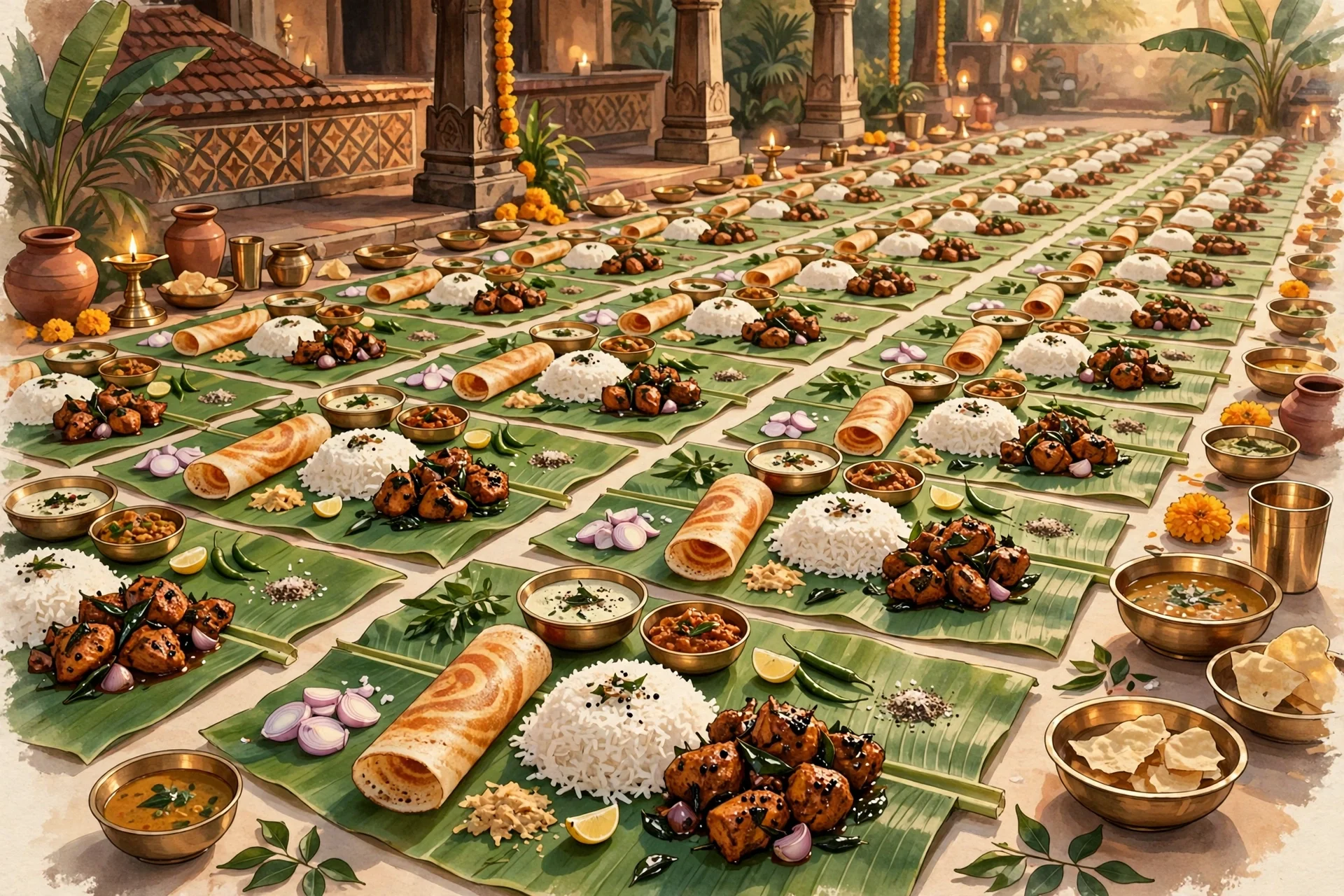
Chettinad heat needs a plan. Keep a mild counter beside the fiery one, with coconut rice, vegetable kurma and curd rice, so guests who cannot take spice still eat well. Label the spice level on each dish, plainly, with one chilli for mild and three for hot. Nobody should discover the heat by surprise.
The banana leaf is the natural way to serve a Chettinad meal, and it suits a wedding lunch beautifully. If a full leaf service is too much for a thousand guests, serve the Chettinad dishes on a leaf lined plate at a dedicated station, and keep the main buffet for the rest of the menu.
Other regions worth a station
Bengal brings shorshe fish, kosha mangsho and a misti doi finish that guests love. Rajasthan brings dal baati churma and ghevar. Gujarat brings a sweet, light thali with dhokla and undhiyu. Maharashtra brings puran poli and modak. Each one can anchor a single function, so the week feels like a journey across India rather than one long buffet.
Pick one region per function, and do it properly, rather than mixing all of them into one confused menu. A haldi lunch in Gujarati style, a sangeet dinner in Chettinad style, and a wedding lunch in Awadhi style gives guests three distinct meals to remember. The caterer will also cook better, because each kitchen team focuses on one cuisine at a time.
Ask your caterer which cuisines their kitchen genuinely cooks well. A caterer who does Awadhi food every week will serve better kebabs than one who reads the recipe for the first time. Regional food is about the cook's hands, not the menu card.
How to mix regions without confusing guests
The risk of a regional menu is a buffet that looks like a random collection of dishes. Avoid that with clear signs and clear stations. Name each station after its region, write the dish names in full, and put the spice level and vegetarian mark on every label. Guests should know what they are eating before they take a spoonful.
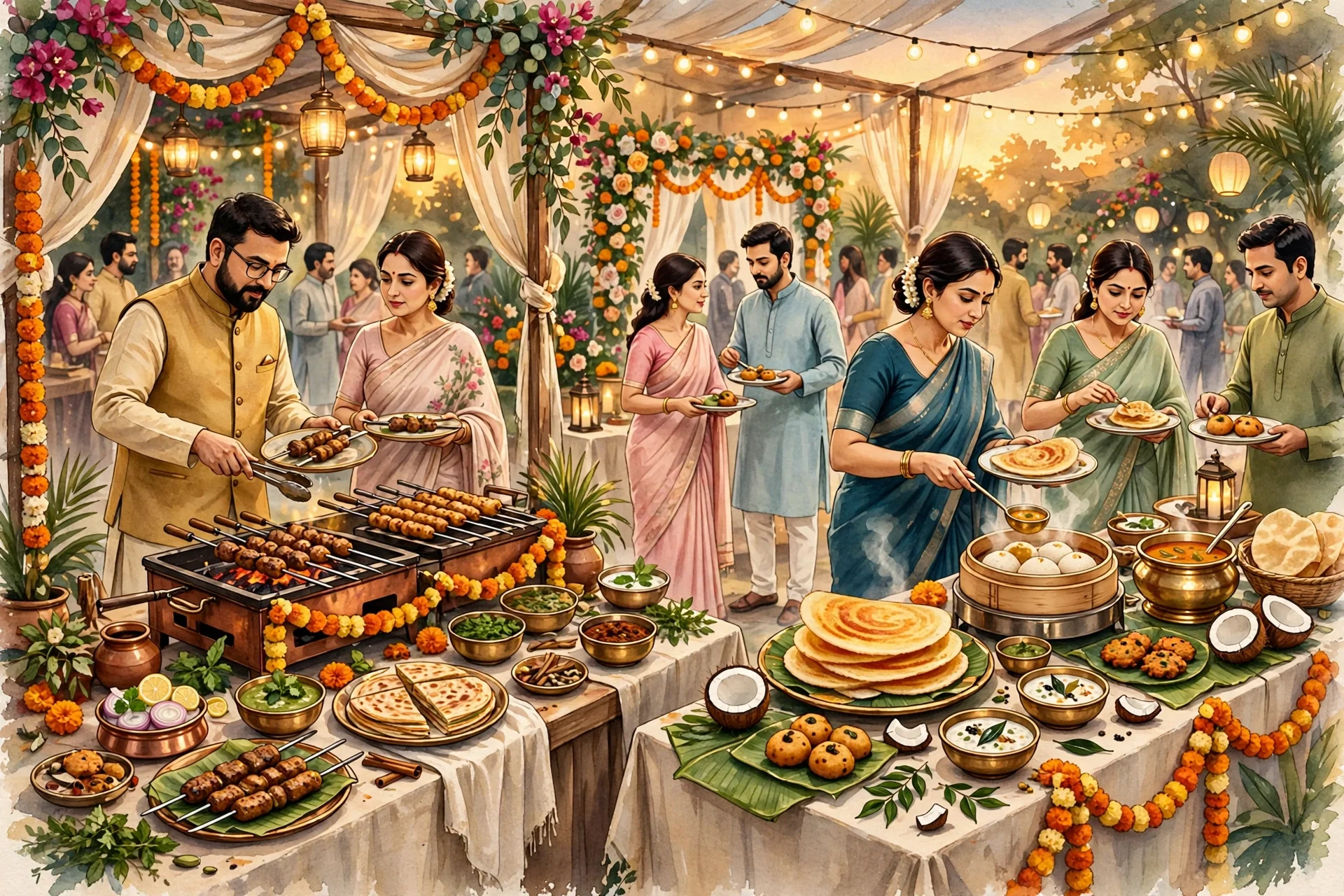
Keep the bread and rice simple and shared. One good naan, one good steamed rice and one biryani can serve every station. The regional character comes from the curries, the starters and the sweets, not from ten kinds of bread.
Plan the quantities with the caterer by function, not by the week. A sangeet dinner with dancing guests needs lighter food and more chaat. A wedding lunch with elders needs softer food and more rice. The same menu, served at the wrong function, will disappoint.
What it costs
On MyIndiAura, a Cinematic Invite is ₹499, an Invite App is ₹399, and an Invitation Suite is ₹99. Choose by what your invitation needs to do, not by price alone. A cinematic invite suits a wedding with a film led opening, while an invite app suits a full week of functions with RSVP and maps.
How to create your wedding invitation
- Pick a design from the designs page at myindiaura.com/designs.
- Add the couple's names, the dates, the venue, and the order of events, with the menu highlights for each function.
- Add photos of the couple, the venue map, and the RSVP button.
- Preview the invitation on your own phone, then share the link on WhatsApp. See myindiaura.com/create to start, and myindiaura.com/pricing for the full price list.
Details to check before you send
- The names of the bride and groom, with parents, spelt exactly as the families use them
- The wedding date, time and full venue address, with a map link
- The menu highlights for each function, named on the invite
- The RSVP contact for guests who need directions or food help
- The order of events, with times for each ceremony
- A dress code note, if you want guests in a particular style
Frequently asked questions
How many cuisines should a wedding menu have?
Two or three, one per function, works best. More than that and the kitchen loses focus, and guests cannot tell the dishes apart. Pick the regions that matter to the two families and give each one its own meal.
Should we serve both vegetarian and non vegetarian food?
Yes, at every function, with separate counters and separate serving spoons. Most Indian guest lists mix both, and the vegetarian table deserves the same care and variety as the non vegetarian one.
How do we handle guests who cannot eat spicy food?
Label every dish with a spice level, and keep a mild counter with curd rice, dal and plain vegetables at every meal. Tell the caterer the number of elderly guests and children, and ask for softer, milder dishes for them.
When should we finalise the wedding menu?
After the food tasting, at least a month before the wedding. Taste every dish you plan to serve, in the same form guests will eat it, and confirm the final menu and the guest count in writing.
Can a regional menu work for a small wedding?
Yes, and often better. A small wedding lets the caterer cook in small batches, so the kebabs stay soft and the dosas stay crisp. Pick one region, cook it well, and let it be the memory of the day.
MyIndiAura theme showcase
These Cinematic Invites from MyIndiAura fit this wedding. Each one is ₹499.
- Charbagh Dastaan: a Lucknow garden at dusk, made for an Awadhi feast.
- Neelam Mandapam: a temple courtyard that suits a South Indian meal.
- Kesar Swagat: a warm saffron welcome for a table full of guests.
Related reading
- Indian Wedding Planning Checklist: 12 Months to the Wedding Day
- How to Plan a Memorable Wedding Reception
- Wedding Budget Planner: Essential Expenses to Include
Plan the menu like you plan the ceremony, region by region, and your guests will remember the food as fondly as the vows.
Explore invitation designs
Choose a design and preview it free with your own names.

Found this useful? Share it with someone planning a celebration.
Share