Qawwali and Sufi Nights for Weddings
How to plan a qawwali or Sufi night that moves the whole room, from choosing the singers to setting the space, the sound, and the order of the evening.
In short
A qawwali night is the most soulful evening of the wedding week. Low lights, close seating, and voices that carry the room.
Keep it small and unhurried: ninety minutes, one break, and songs the family already loves.
Book singers who know the poetry, and give them a quiet room to fill.
What a qawwali night feels like
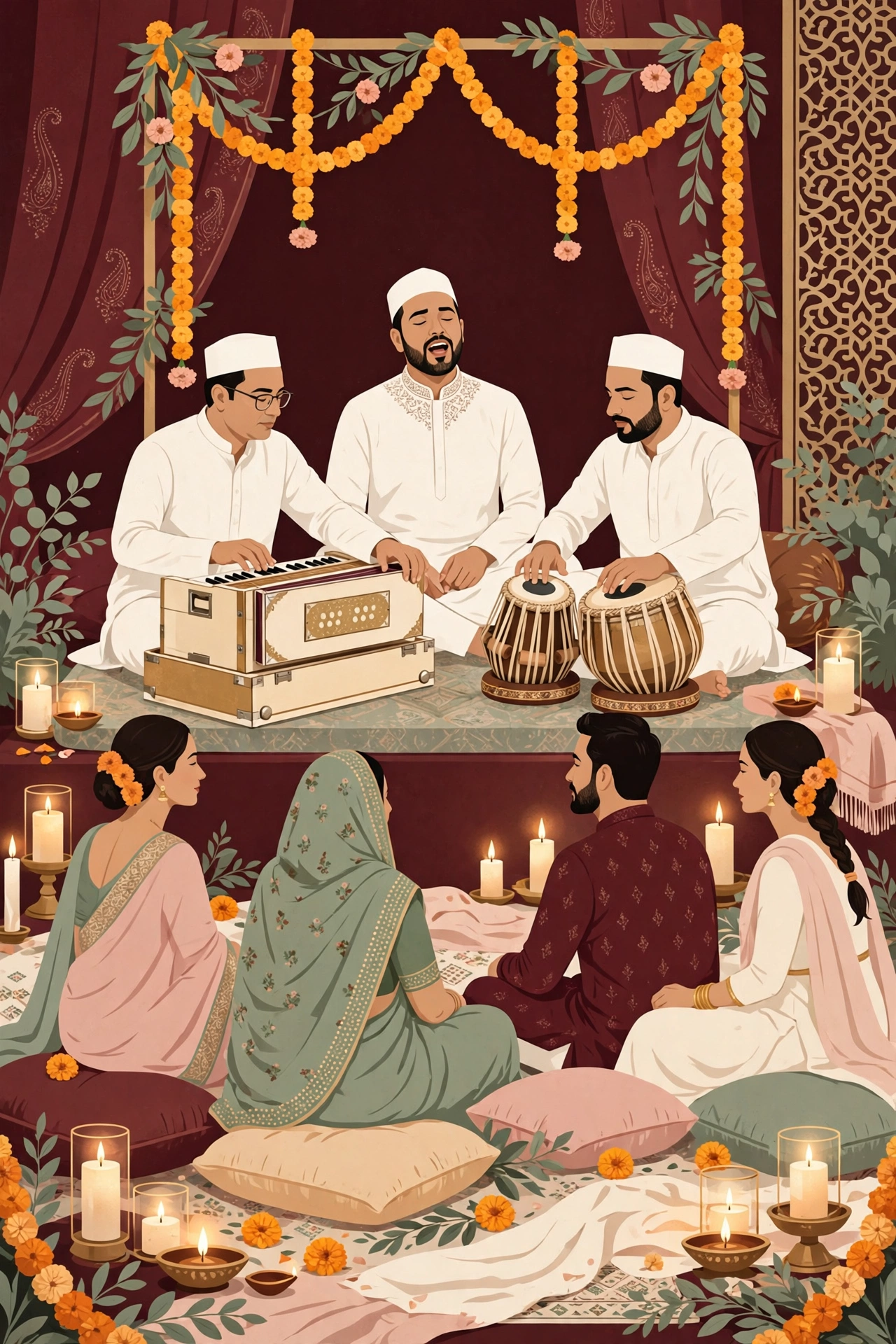
A qawwali night is not a concert and not a party. It sits between the two. The singers sit close to the guests, the harmonium and tabla set a slow pulse, and the voices rise and fall with the words. Guests do not dance. They listen, they close their eyes, and many of them sing along to the lines they know by heart.
The form comes from the Sufi tradition, where music is a way of reaching the divine. The kalaams speak of love, longing, and surrender, and the best singers treat the words as sacred. That is why the evening feels different from every other function in the week: it is the one night where the wedding slows down and breathes.
Qawwali suits the evening before the wedding, or a quiet night after the sangeet. It works best with a hundred guests or fewer, seated close together on cushions or low chairs. A large banquet hall with scattered tables will swallow the intimacy, so choose the space with the same care as the singers.
Choosing the singers
The singer matters more than anything else. A qawwali singer needs three things: a voice that can hold a long note without strain, a command of the poetry so every word lands clearly, and the patience to build a song slowly rather than rushing to the loud part. Ask for a full recording of a recent mehfil, not a short clip, and listen to the whole thing.
Ask who else comes with the singer. A traditional group has a lead singer, two supporting singers, a harmonium player, and a tabla player. Some groups add a dholak or a second harmonium. A group of five or six gives the sound its fullness; a solo singer with a harmonium can work for a very small gathering but may sound thin in a larger room.
Check the repertoire. Can the group sing the kalaams your family loves, from Amir Khusrau to the film qawwalis everyone knows. Can they sing in the languages your guests speak. A group that only knows a few famous songs will repeat itself within the hour, so ask for a list of twenty songs they can perform.
Setting the space
The room is half the performance. Low warm light, candles or diyas along the edges, floor seating with cushions, and the singers on a low platform at one end. Keep the stage simple: a carpet, a few cushions, and the instruments. The singers should be close enough that guests can see their faces.
Sound needs a light touch. A qawwali group in a small room needs almost no amplification, and a single microphone for the lead singer is often enough. Over amplification flattens the harmonium and makes the tabla harsh, so ask the sound engineer to keep it gentle. Do a sound check an hour before guests arrive, with the room in its final seating layout.
Keep the evening free of competing noise. Ask the venue to hold other functions, turn off the piped music in the corridors, and keep the kitchen and service doors quiet during the sets. A qawwali night interrupted by a clattering trolley loses its spell in a second.
The order of the evening
Shape the evening like a story. Open with a familiar kalaam that everyone recognises, so the room settles and joins in. Build slowly through the first set, with the singers taking their time. Take one break of fifteen minutes, with tea and light snacks, so guests can stretch and talk. Return for a second set that rises a little higher, and close with a song the whole room can sing together.
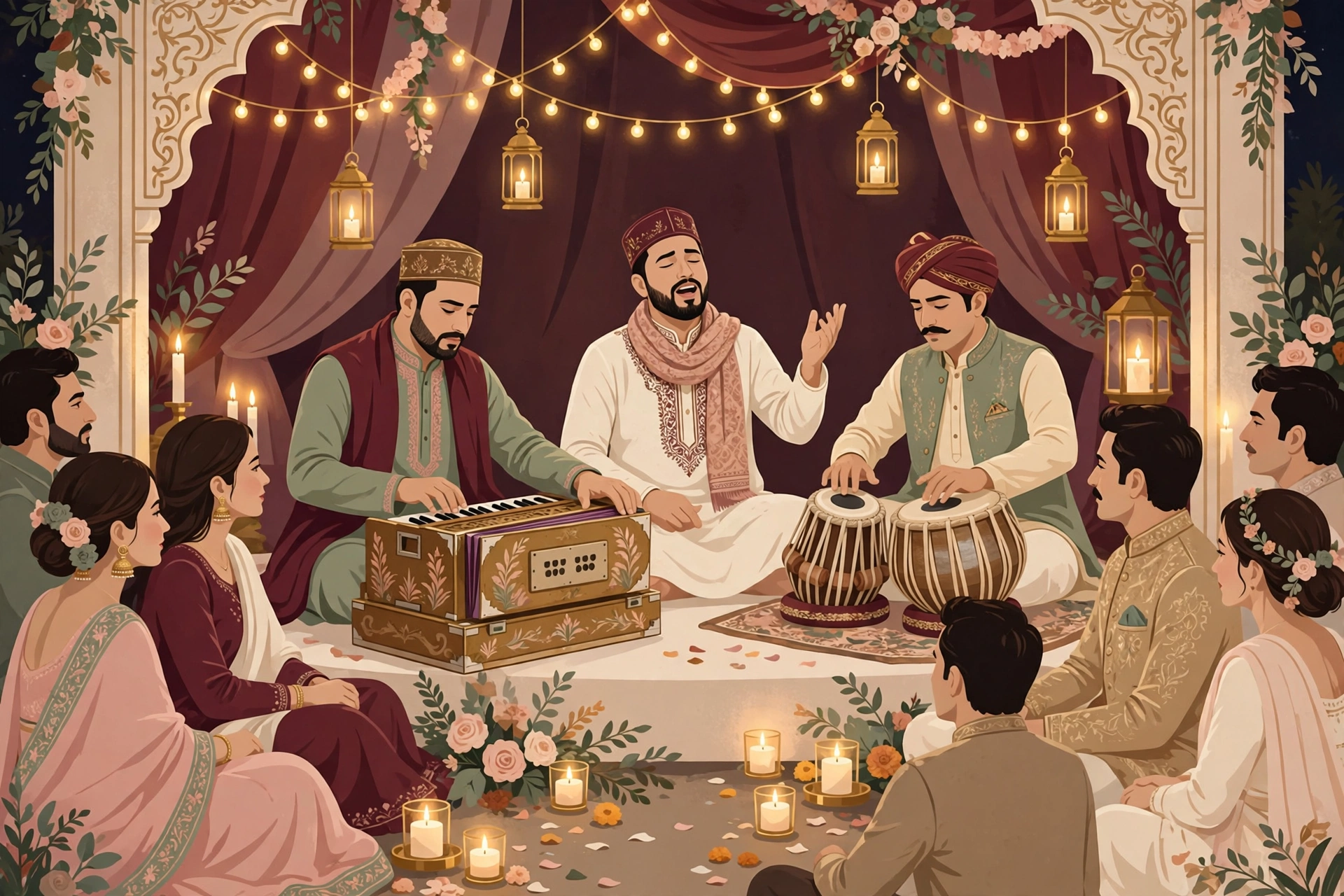
Ninety minutes of music with one break is usually right. Longer than two hours and the room tires, however good the singers are. Shorter than an hour and the evening feels unfinished. Agree the timings with the group in advance, and name the closing song yourselves, so the night ends on a note the family chose.
Give the singers the family details. Whose wedding it is, which elders are present, and whether any song carries a special meaning for the family. A singer who knows the bride's grandmother loves a particular kalaam can dedicate it to her, and that small moment becomes the memory of the night.
Style guidance: matching the night to your wedding
A qawwali night suits a family that values the devotional side of the wedding. It fits Muslim weddings naturally, and it fits any family that loves Sufi music, whatever their background. It is less suited to a crowd that wants dancing and high energy; for them, a Sufi fusion set at the sangeet may work better than a full mehfil.
Talk to both families before you book. Some elders consider qawwali the most important evening of the week, while others may prefer a quieter prayer gathering. Agree the format together, and make sure the singers know the family's boundaries: which songs are welcome, and whether the evening should stay purely devotional.
Keep the dress code soft. Ask guests to come in comfortable, elegant clothes in warm colours, and keep the decor simple. The night is about the voices, not the stage. A room full of flowers and candles with nothing else is enough.
What you need before you book
Have these ready and the booking moves fast:
- The date, venue, and timings of the evening, with the break planned.
- The size of the room and the seating plan, cushions or low chairs.
- A list of twenty songs the group can perform, with your favourites marked.
- The closing song, chosen by the family.
- The sound setup, agreed with the venue and the group.
- One family point of contact for the singers.
Cost
A qawwali group in India usually costs between ₹40,000 and ₹2,00,000 for an evening, depending on the fame of the singers, the size of the group, and the city. A local group for a small gathering can cost less, while a well known name can cost far more. Travel, stay, and sound are often extra, so ask for an itemised quote.
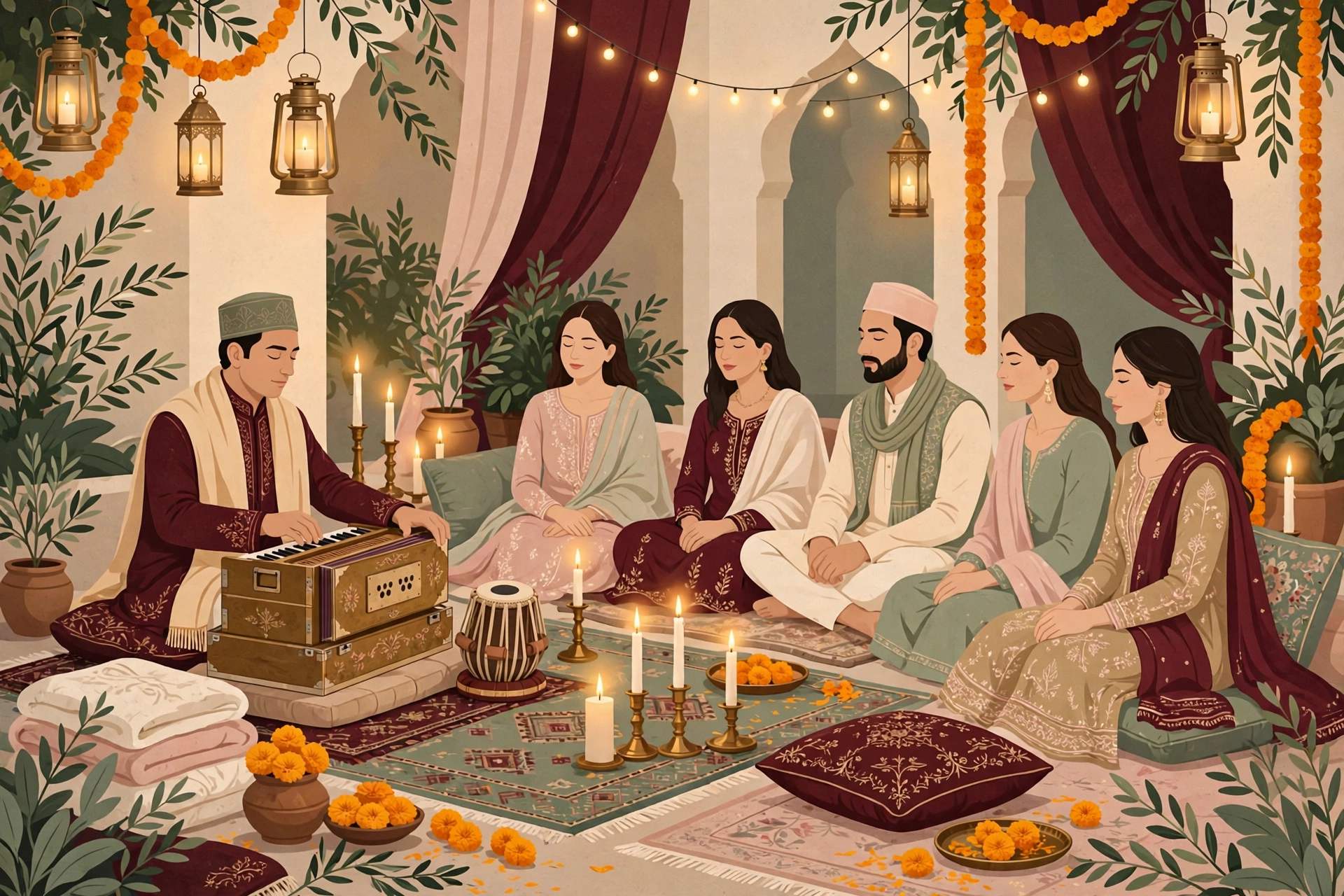
The invitation that tells guests about this special evening is the Cinematic Invite at ₹499, the Invite App at ₹399, and Invitation Suites at ₹99. Name the qawwali night in the invite, so guests keep the evening free and arrive on time.
How to create
- Pick your invite design from the Cinematic Invites on MyIndiAura and note the theme name.
- Add the qawwali night details, with the venue and start time.
- Add a line about the evening, so guests know it is a listening night.
- Preview the invite on your phone, then share it on WhatsApp, family first.
Start with the invitation
A qawwali night only works if the room is full and quiet and ready to listen. Send an invitation that names the evening clearly, and the people who love this music will be there before the first note.
MyIndiAura theme showcase
These Cinematic Invites from MyIndiAura fit this wedding. Each one is ₹499.
- Noor Bagh: Soft light and garden calm, it suits a quiet Sufi evening.
- Gulposh Nikah: Warm and floral, it carries the grace of a devotional night.
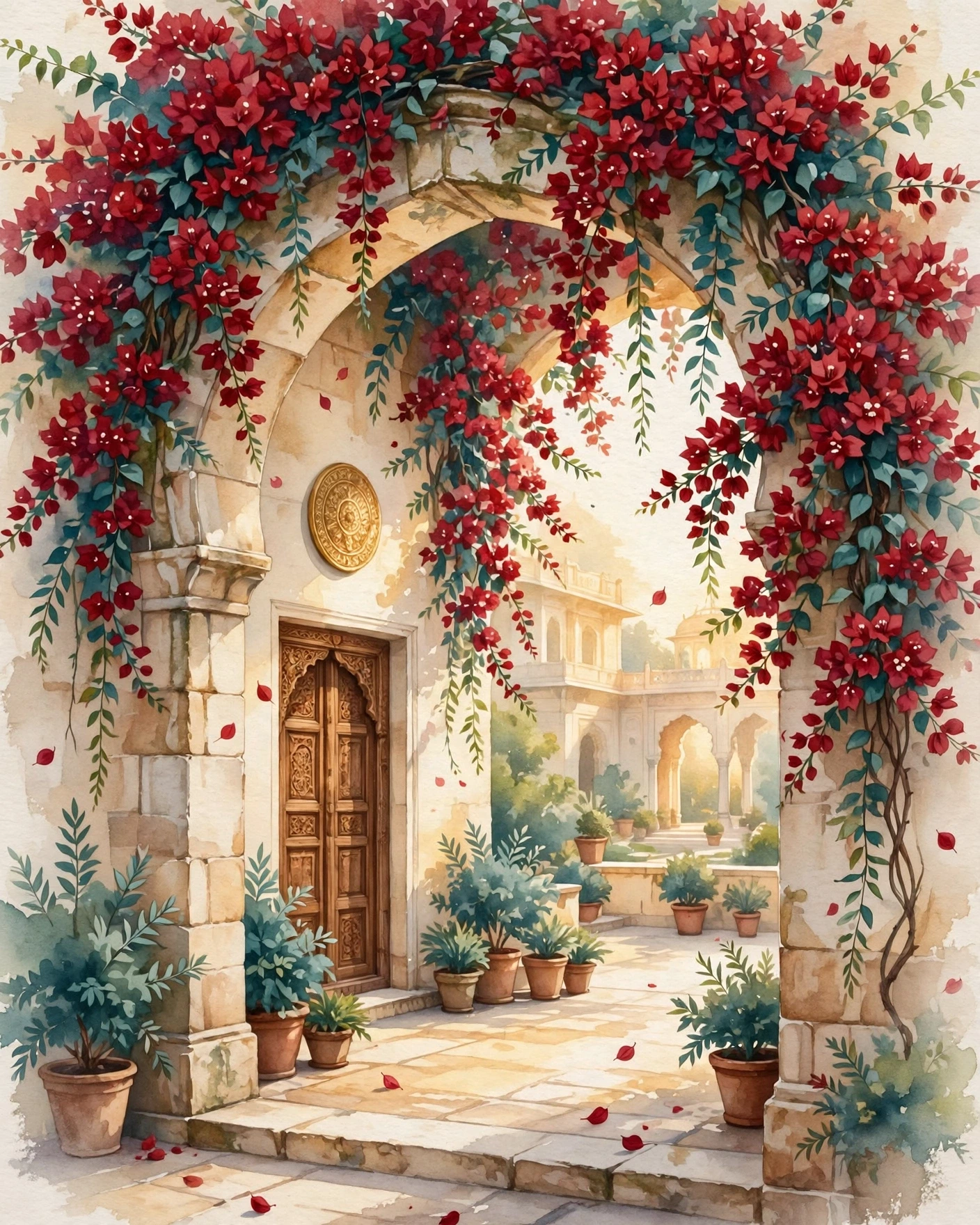
- Arched Doors: Elegant arches and warm light, made for an evening of music and prayer.
Related reading
Explore invitation designs
Choose a design and preview it free with your own names.


Found this useful? Share it with someone planning a celebration.
Share