Nalangu and Oonjal: Tamil Wedding Rituals Explained
Nalangu is the playful games after the wedding, and Oonjal is the swing ceremony that blesses the couple. Here is what both Tamil rituals mean, and how they unfold.
Nalangu and Oonjal, explained simply
A Tamil wedding has two rituals that guests remember most. The first is Oonjal, when the couple sits on a decorated swing while women sing and sprinkle turmeric water. The second is Nalangu, the playful games after the wedding, when the couple and their families laugh together and the bride and groom get to know each other. This article explains both, what they mean, when they happen, and what guests should expect.
What is Oonjal?
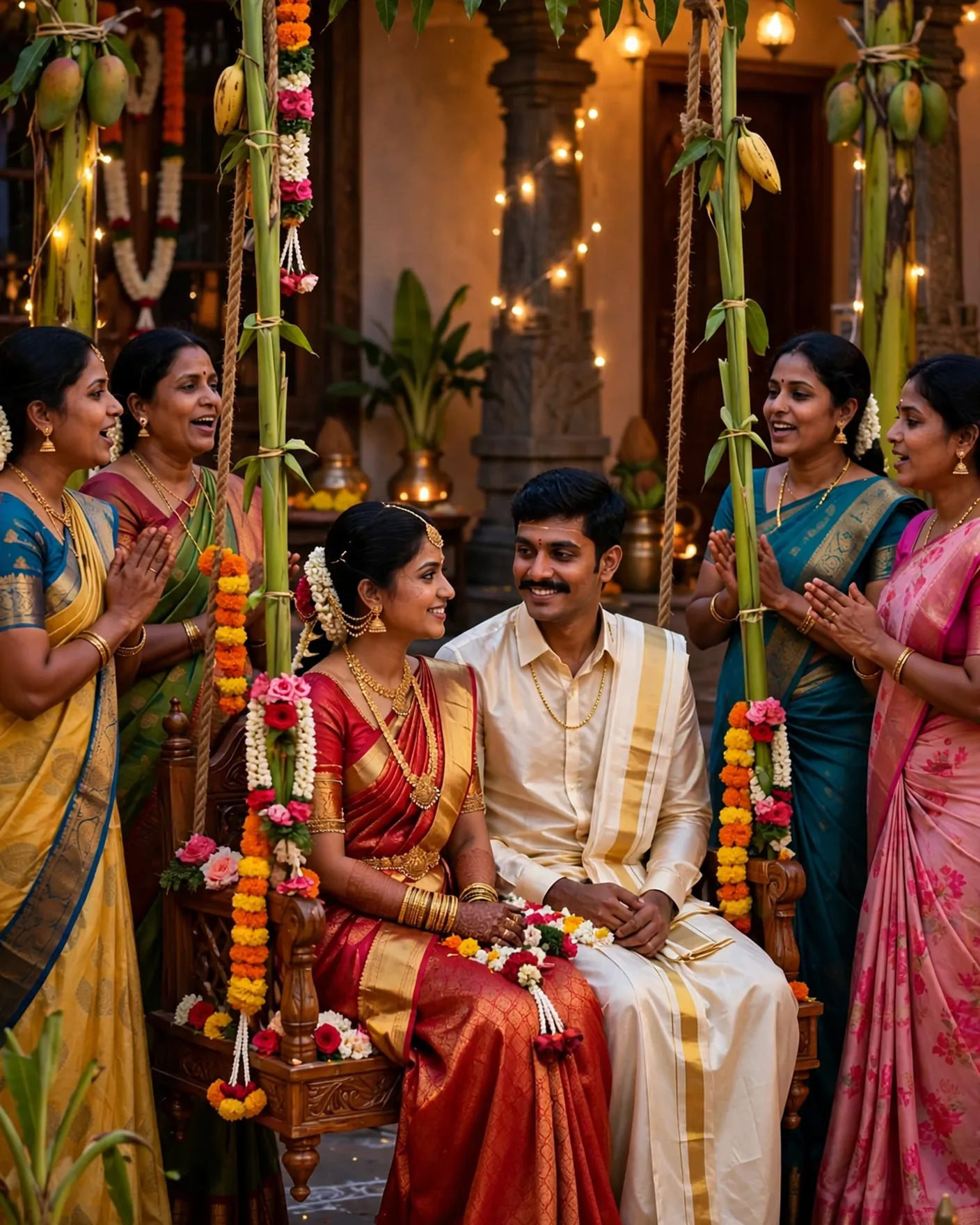
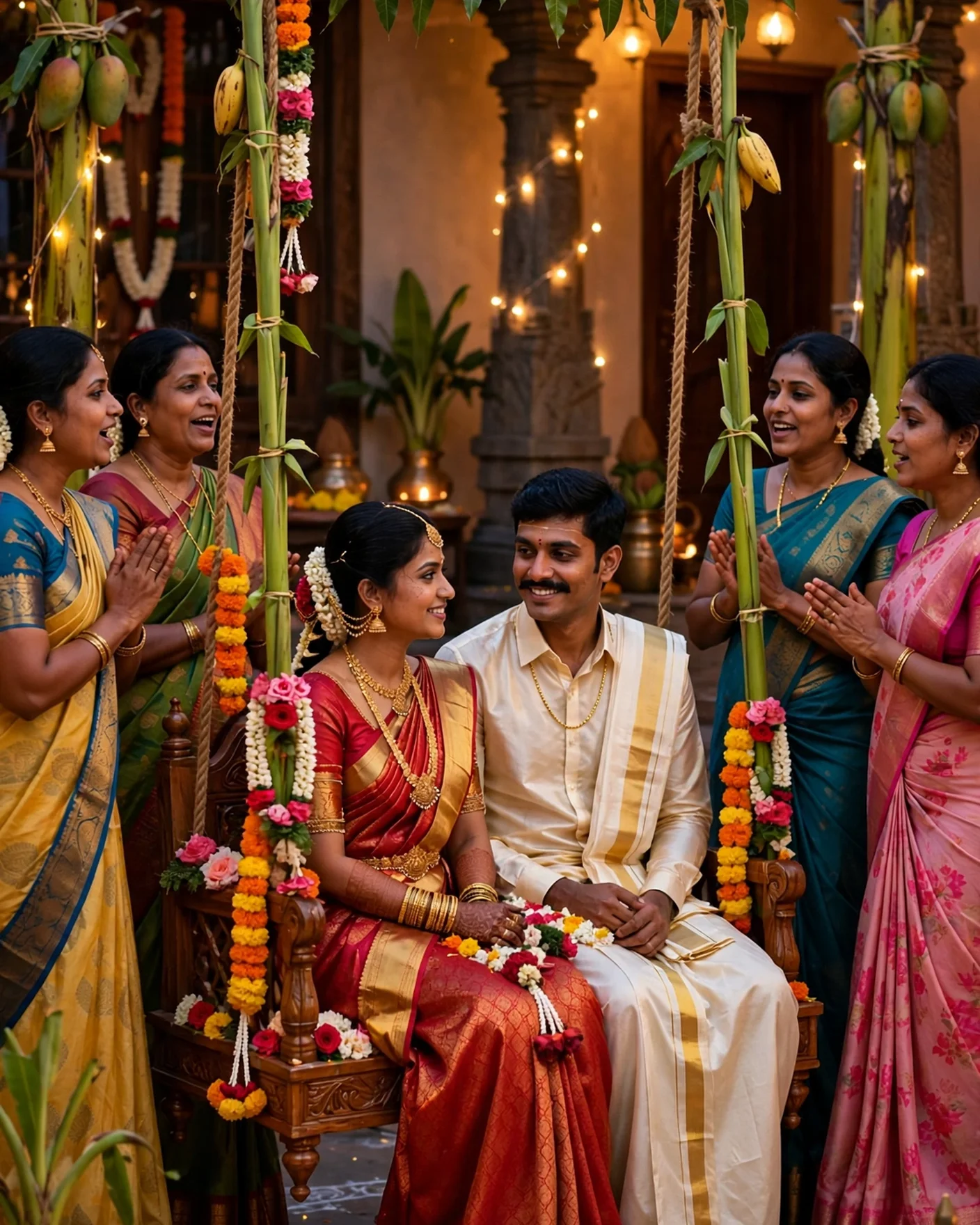
Oonjal is the swing ceremony, and it happens on the wedding morning, before the muhurtham. The couple sits on a wooden swing decorated with flowers, banana stems and mango leaves, while the women of the family sing traditional songs and sprinkle turmeric water and milk on the couple. The swing moves gently back and forth, and the songs bless the couple with a long and happy life.
The ritual is tender and joyful, and it is one of the most photographed moments of a Tamil wedding. The swing stands for the ups and downs of married life, and the songs say the couple will face them together, with the blessings of their families. The bride wears a silk saree and jasmine flowers, and the groom wears a dhoti and angavastram.
When does Oonjal happen?
Oonjal happens in the morning, before the muhurtham, and it usually takes fifteen to twenty minutes. The couple sits on the swing in the centre of the hall, while the women gather around them with small brass vessels of turmeric water and milk. The priest guides the ritual, and the families watch and sing.
Guests should arrive before Oonjal starts, because it is one of the first rituals of the morning and it sets the tone for the day. If the invitation lists a time for Oonjal, arrive ten minutes early, so you do not miss it.
What is Nalangu?
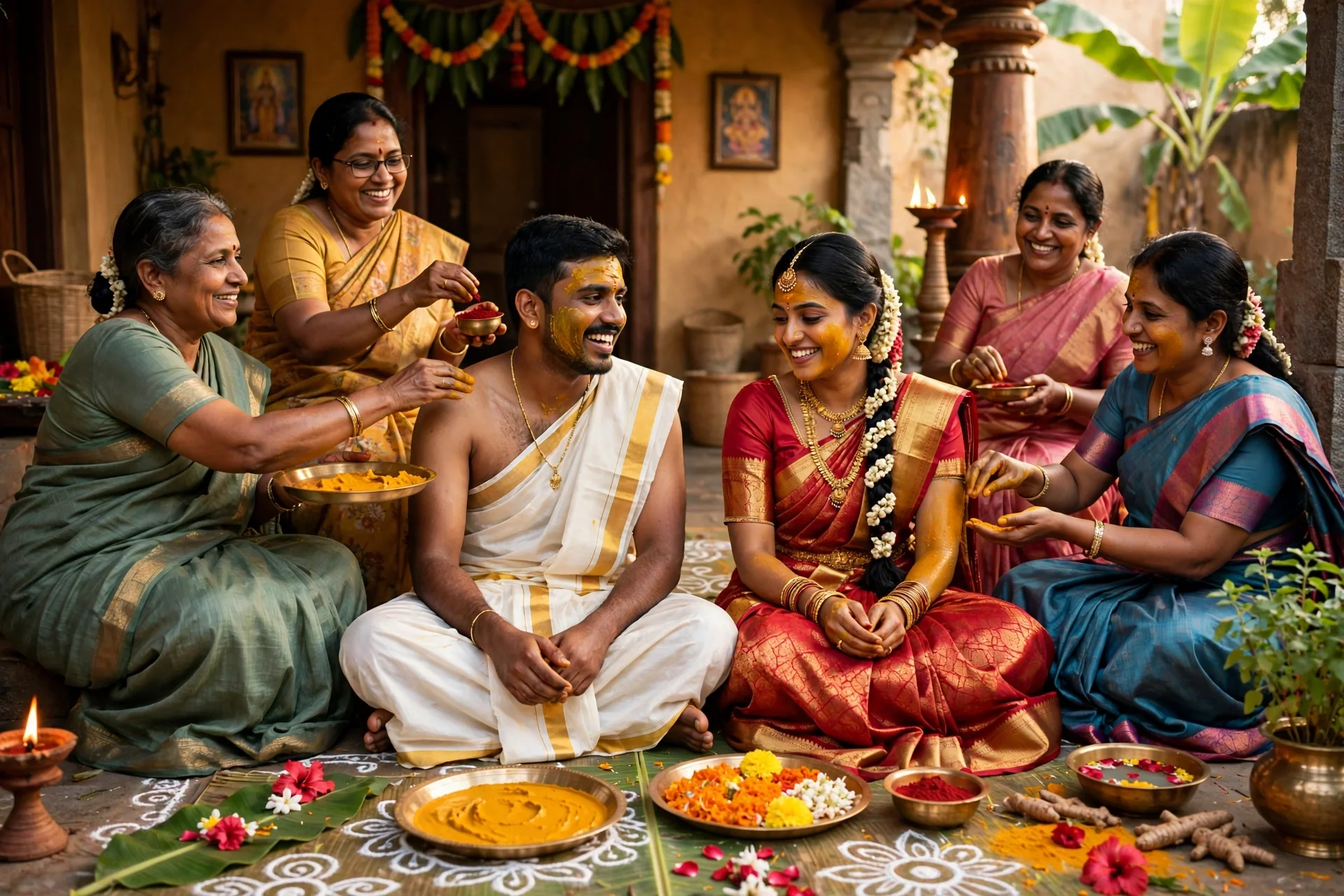
Nalangu is the playful games after the wedding, and it happens in the evening, after the muhurtham and the lunch. The couple sits on the floor facing each other, while the families gather around them with small brass vessels, betel leaves, and a plate of turmeric and kumkum. The games are simple and joyful: the couple feeds each other, they play with a coconut, and they try to find a ring hidden in a pot of turmeric water.
The ritual is light and full of laughter, and it is the moment the bride and groom truly get to know each other, in front of their families. The games are also a way for the two families to bond, because they play together and laugh together. Nalangu is one of the most beloved parts of a Tamil wedding, and it often runs for an hour or more.
The order of a Tamil wedding day
A Tamil wedding day follows a clear order, and the invitation reads better when it reflects it.
- Kashi Yatra, when the groom pretends to leave for Kashi.
- Oonjal, when the couple sits on the decorated swing.
- Kanyadaan, when the bride's father gives his daughter away.
- Muhurtham, when the groom ties the thaali at the exact auspicious minute.
- Saptapadi, the seven steps around the sacred fire.
- Nalangu, the playful games in the evening.
You do not need to explain every ritual on the card. Name the ones guests attend, with times, and let the priest and the families carry the meaning on the day. A short line about the muhurtham, and a line about lunch, covers most questions guests will ask.
What guests should know
Guests at a Tamil wedding should arrive early, because the muhurtham is fixed and the rituals run to the minute. Women often wear Kanjivaram silk sarees in bright colours, and men wear a dhoti and angavastram or a silk kurta. The groom's family and the bride's family sit on opposite sides of the mandapam, and guests are welcome to sit anywhere.
The lunch after the ceremony is a full Tamil feast, served on banana leaves, with rice, sambar, rasam, vegetables, and payasam. Stay for the feast if you can, because it is a central part of the celebration, and the families will be glad you did. If you are invited to Nalangu in the evening, come, because it is joyful and you will be welcome.
How to include these rituals on your invitation
If you are writing a Tamil wedding invitation, name Oonjal and Nalangu with their times, so guests know when to arrive. A short line is enough: "Oonjal at 9:00 AM, Muhurtham at 10:15 AM, Nalangu at 6:00 PM." Do not explain the rituals in full on the card, because the card is for details, not for a lesson.
If your guest list includes people who have never attended a Tamil wedding, add one warm line: "Join us for Oonjal and Nalangu, two beautiful rituals that bless our wedding day." That is enough, and it makes new guests feel welcome.
What it costs
On MyIndiAura, a Cinematic Invite is ₹499, an Invite App is ₹399, and an Invitation Suite is ₹99. Choose by what your invitation needs to do, not by price alone. A cinematic invite suits a wedding with a film led opening, while an invite app suits a full week of functions with RSVP and maps.
How to create your Tamil wedding invitation
- Pick a South Indian design from the designs page at myindiaura.com/designs.
- Add the Tamil and English wording, the muhurtham time, the venue, and the order of events, including Oonjal and Nalangu.
- Add photos of the couple, the venue map, and the RSVP button.
- Preview the invitation on your own phone, then share the link on WhatsApp. See myindiaura.com/create to start, and myindiaura.com/pricing for the full price list.
Details to check before you send
- The names of the bride and groom, with parents, spelt exactly as the families use them
- The muhurtham date and time, checked with the priest
- The times for Oonjal and Nalangu, checked with the priest
- The full venue address, with the area and a map link
- A dress code note, if you want guests in silk or bright colours
- An RSVP contact for guests who need directions
Frequently asked questions
What does Oonjal mean?
Oonjal means swing. The couple sits on a decorated swing while women sing and sprinkle turmeric water and milk on them. The swing stands for the ups and downs of married life, and the songs bless the couple with a long and happy life.
What happens during Nalangu?
Nalangu is a set of playful games after the wedding. The couple feeds each other, plays with a coconut, and tries to find a ring hidden in a pot of turmeric water. The families gather around, sing, and laugh together.
How long do these rituals take?
Oonjal takes about fifteen to twenty minutes. Nalangu takes about an hour, sometimes more, because the families play and sing together. Both are joyful and relaxed, and guests are welcome to watch and join in.
Do guests need to do anything during these rituals?
No. Guests watch, sing along if they know the songs, and bless the couple. The families and the priest carry the rituals, and guests simply enjoy them.
Can we include photos of these rituals on the invitation?
Yes, and it is a lovely touch. A photo of Oonjal or Nalangu from a family wedding, or a design that shows the swing and the flowers, tells guests at a glance what to expect.
MyIndiAura theme showcase
These Cinematic Invites from MyIndiAura fit this wedding. Each one is ₹499.
- Neelam Mandapam: a gopuram and temple tank at dusk, made for a Tamil ceremony.
- Deepa Tarang: a temple tank ringed with lamps under a glowing gopuram.
- Mandap Yatra: a walk through the venue, room by room, to the mandap.
Related reading
- Tamil Wedding Invitation Wording and Traditions
- Valaikappu: Tamil Bangle Ceremony Explained
- Pheras: Seven Vows Explained
Create your Tamil wedding invitation on MyIndiAura, and let Oonjal and Nalangu bless your wedding day beautifully.
Explore invitation designs
Choose a design and preview it free with your own names.
Found this useful? Share it with someone planning a celebration.
Share