Multi-Language Digital Wedding Invitations
Two families, two languages, one invitation. Here is how to lay out a multi language invite so every guest reads it with ease.
Why families need two languages
Most Indian weddings join two families who do not share one language. One side reads Tamil, the other reads Hindi. One side reads Telugu, the other reads English. The invitation has to speak to both, or half the guests will need a relative to translate it for them.
A multi language invitation solves this by carrying the same message twice, once in each language. The blessing and the welcome go in the mother tongue, and the date, time and venue go in both. Nobody is left guessing, and nobody feels like a guest at someone else's wedding.
Which language goes first
Put the couple's own language first, or the language of the elders. If the bride's family speaks Tamil and the groom's speaks Hindi, lead with Tamil, then Hindi, then English for the details. The order tells guests whose wedding this is, and it honours the elders who read the first language best.
English should always be present, even if both families share a language. Younger guests, friends, and colleagues read English fastest, and the venue and time are clearest in English. Think of it this way: the mother tongue carries the heart, and English carries the logistics.
How to lay out two languages
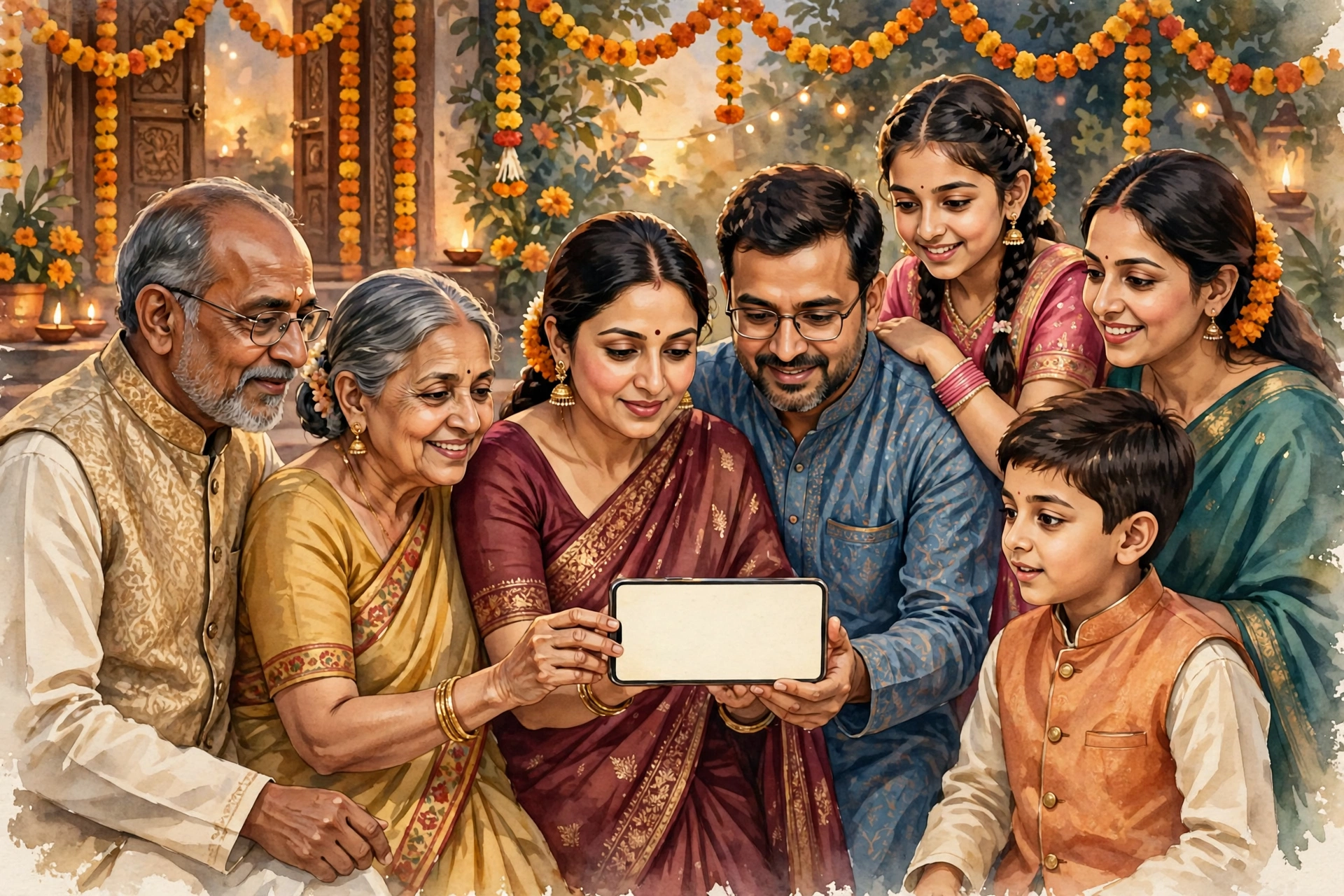
Keep each language on its own page or section, not mixed line by line. A guest reading Tamil should be able to read the whole Tamil page without jumping past English lines. On a digital invite, this is easy: one page in Tamil, one page in English, and the guest swipes between them.
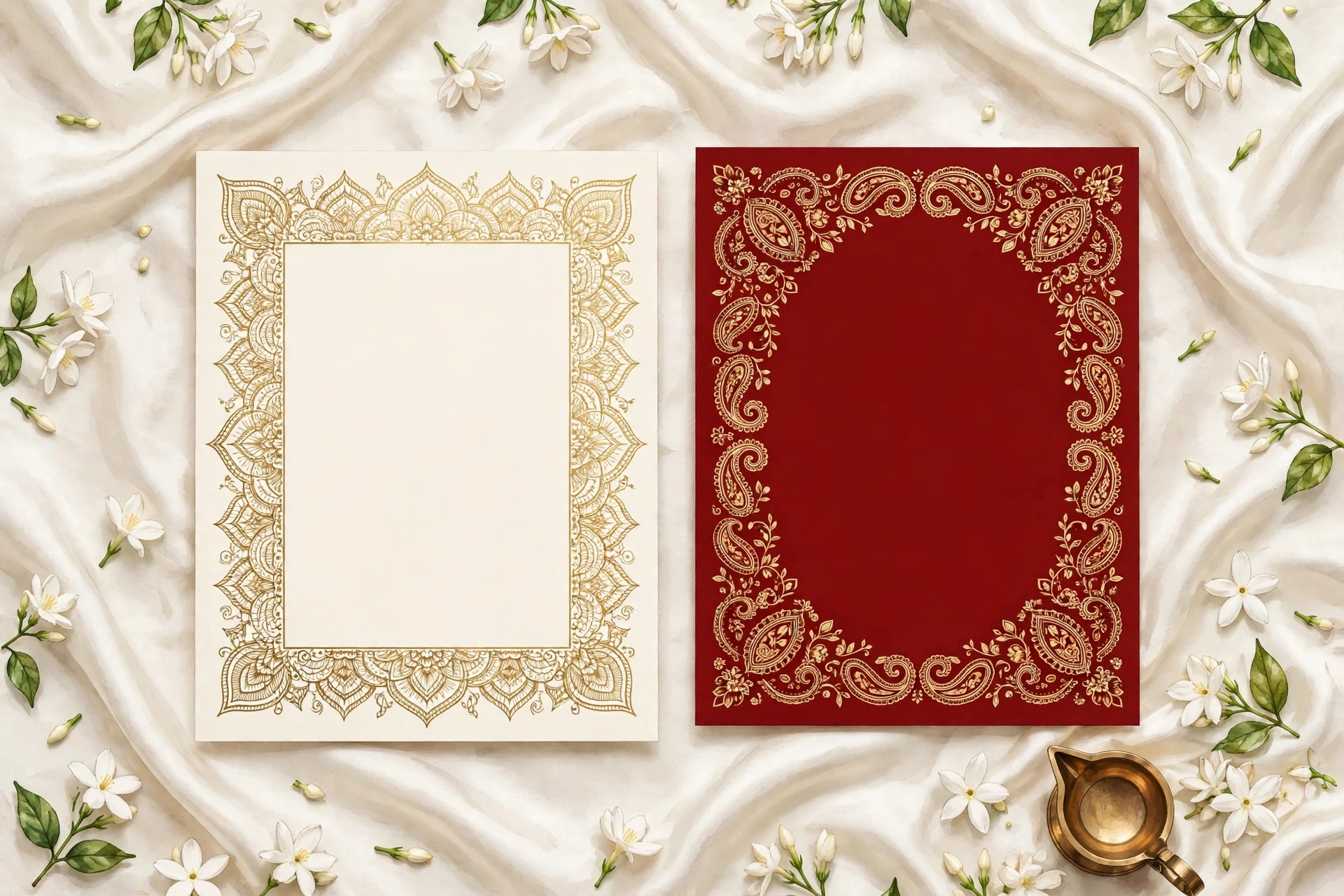
Keep the design the same across languages. Same colours, same borders, same pictures. Only the words change. That way the invitation feels like one invitation in two languages, not two invitations stuck together.
- Tamil page first, then English, for a Tamil wedding with English speaking guests.
- Hindi page first, then English, for a North Indian wedding with friends across India.
- Both parents named in both languages, spelt the same way, so no guest is confused.
- Date, time and venue in both languages, in the same format, so the details match.
- One RSVP button, shared by both pages, so replies land in one list.
Check that the details match exactly across languages. A date right in Tamil and wrong in English is worse than a single language card, because guests will follow the wrong one.
Roman script or native script
Many families use Roman script for the mother tongue: Roman Tamil, Roman Telugu, Roman Hindi. It reads easily on a phone, and young guests who speak the language but cannot read its script can still follow it. Native script looks more formal, and elders prefer it.
The best choice is often both: the welcome lines in native script, for the elders, and the details in Roman script and English, for everyone else. On a digital invite, you can offer both, with a simple choice at the top. On a printed card, pick the script the elders read, and put the details in English below.
Common mistakes
The most common mistake is translating word for word. A line that sounds warm in Tamil can sound stiff in English, and a joke in Hindi can fall flat in Telugu. Translate the meaning, not the words, and let each language sound natural on its own.
Another mistake is shrinking the font to fit two languages on one page. Guests over fifty will not read small text, in any language. Give each language room, even if the invitation gets longer. A digital invite has no page limit, so use it.
A third mistake is forgetting one side of the family. If the groom's parents are named in English but not in Tamil, the Tamil guests notice. Name both families, in both languages, in the same order, every time.
What it costs
On MyIndiAura, a Cinematic Invite is ₹499, an Invite App is ₹399, and an Invitation Suite is ₹99. A second language costs nothing extra. The invitation is digital, so adding a page in another language is part of building it, not an extra charge. The only cost is your time, checking that both versions match.
How to create a multi language invitation
- Pick a design from the designs page at myindiaura.com/designs.
- Write the wording in the first language, then in the second, then in English for the details.
- Check that names, dates and venues match exactly across all versions.
- Preview each language page on your own phone, then share the link on WhatsApp. See myindiaura.com/create to start, and myindiaura.com/pricing for the full price list.
Details to check before you send
- Both families are named, in both languages, in the same order
- The date, time and venue match exactly across languages
- Each language has its own page, with room to breathe
- The native script is checked by someone who reads it well
- The RSVP button is shared, so replies land in one list
- Elders from both sides have seen their language page and are happy
Frequently asked questions
How many languages should an invitation have?
Two, plus English for the details, covers almost every wedding. Three languages are fine when the families truly need them, but each extra language adds a page to check, and a chance for a mismatch. Keep it to what the guests actually read.
Should the invitation be in the bride's language or the groom's?
Both. Lead with one, follow with the other, and give them equal space. The invitation joins two families, and the languages should show that. Never drop one side's language to save space.
Is Roman script acceptable for a formal invitation?
Yes, for the details and for WhatsApp. For the main card, native script looks more formal, and elders prefer it. A good compromise is native script for the welcome, and Roman script with English for the details.
What if the two families speak the same language?
Then one language is enough, with English for the details. Save the extra page, and spend the effort on the wording instead. A single language done well beats two languages done carelessly.
Who should check the translation?
Someone from each family who reads that language well, and who knows the family names. A professional translator gets the words right, but a family member gets the names and the tone right. Ask both, if you can.
MyIndiAura theme showcase
These Cinematic Invites from MyIndiAura fit this wedding. Each one is ₹499.
- Atelier Seal: a wax seal and fine paper, made for formal wording.
- Cream Crest: a quiet cream design, made for clear details.
- The Wedding Post: letters and stamps, made for a classic invitation.
Related reading
Explore invitation designs
Choose a design and preview it free with your own names.

Found this useful? Share it with someone planning a celebration.
Share