Muhurat Planning Guide for Hindu Weddings
The muhurat fixes the most auspicious moment for the wedding, so here is how families choose it, plan the day around it, and tell guests clearly.
What a muhurat is, and why it leads the planning
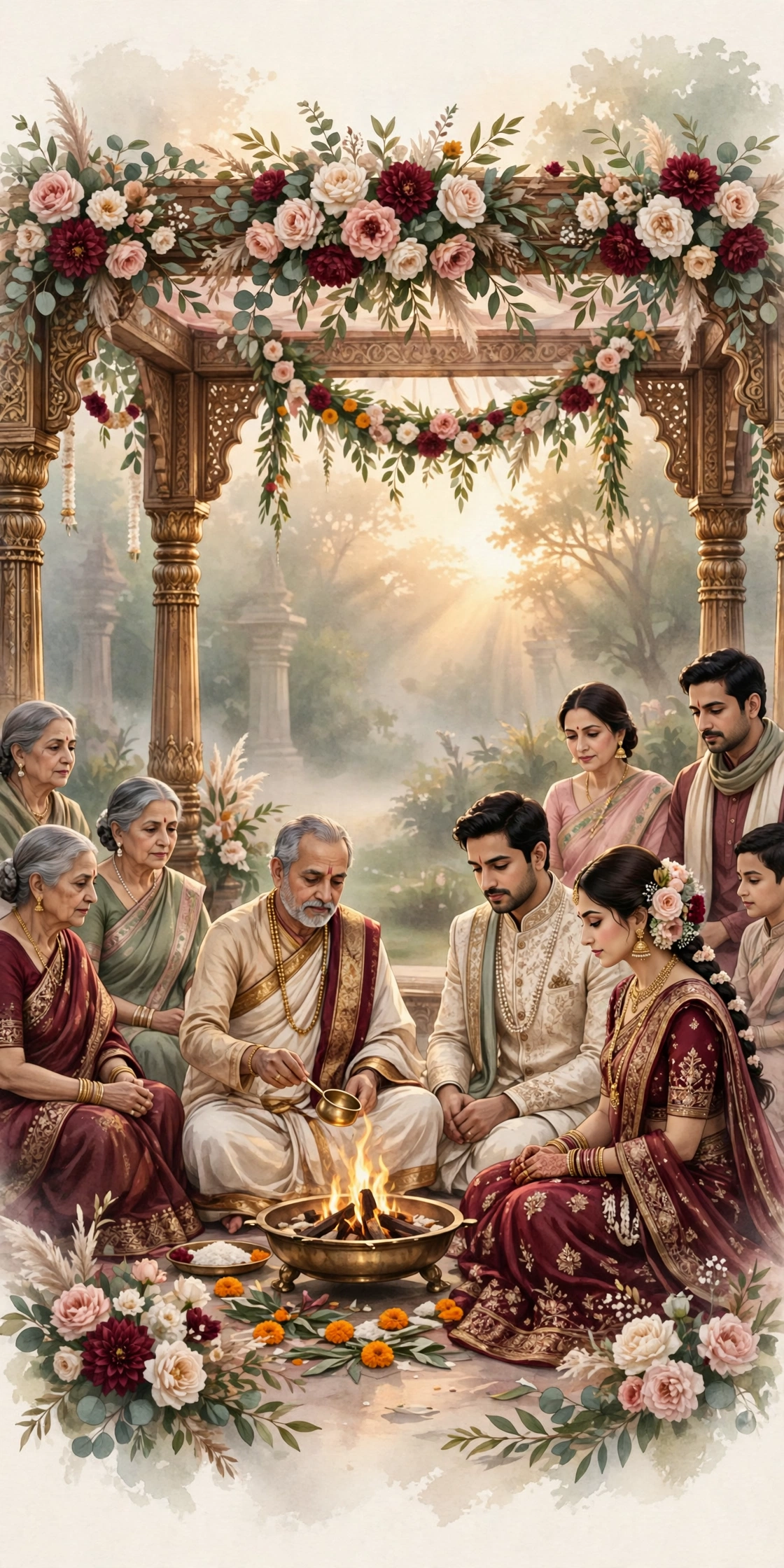
A muhurat is the auspicious moment fixed by the family priest for the wedding, chosen from the couple's horoscopes and the calendar of the season. It is not only a time. It is the heart of a Hindu wedding, and the whole day is planned around it. The pheras, the sindoor, and the mangalsutra all happen at or near that moment, and guests plan their arrival around it too.
Because the muhurat fixes the day, it should be the first date decision a family makes. Before the venue is booked, before the invitations are designed, and before the vendors are called, the family sits with the priest and finds the muhurat. A date chosen without the priest often has to move, and every booking made on that date has to move with it. That is the most expensive way to learn the value of a muhurat.
Planning the day around the muhurat
Once the muhurat is fixed, plan the day backwards from it. If the muhurat is at 7 in the morning, the baraat must arrive by 6, the makeup must start at 4, and the families must be at the venue by 5.30. If it is at 9 in the evening, the morning is free for haldi, and the afternoon can hold the sangeet or a quiet family lunch. The muhurat decides the shape of the day, and the shape decides the timings of everything else.
Give each function its own time on the invitation, with the muhurat time written largest. Guests who see only a wedding time will arrive at the start of the function, not at the muhurat, and they will miss the moment that matters. Write the muhurat plainly: Muhurtham at 7.12 AM, or Pheras at 8.30 PM. A precise time is kinder than a vague one, because it tells guests exactly when to be seated and ready.
Plan for the rituals that surround the muhurat. The Kashi Yatra, the Oonjal, the Kanyadaan, and the Saptapadi each need their own time, and the priest will tell you how long each takes. Leave a small gap between them, because rituals run long when the family is large and the blessings are many. A day planned without gaps is a day that runs late, and a late muhurat is a worry nobody needs.
Choosing the date and the season
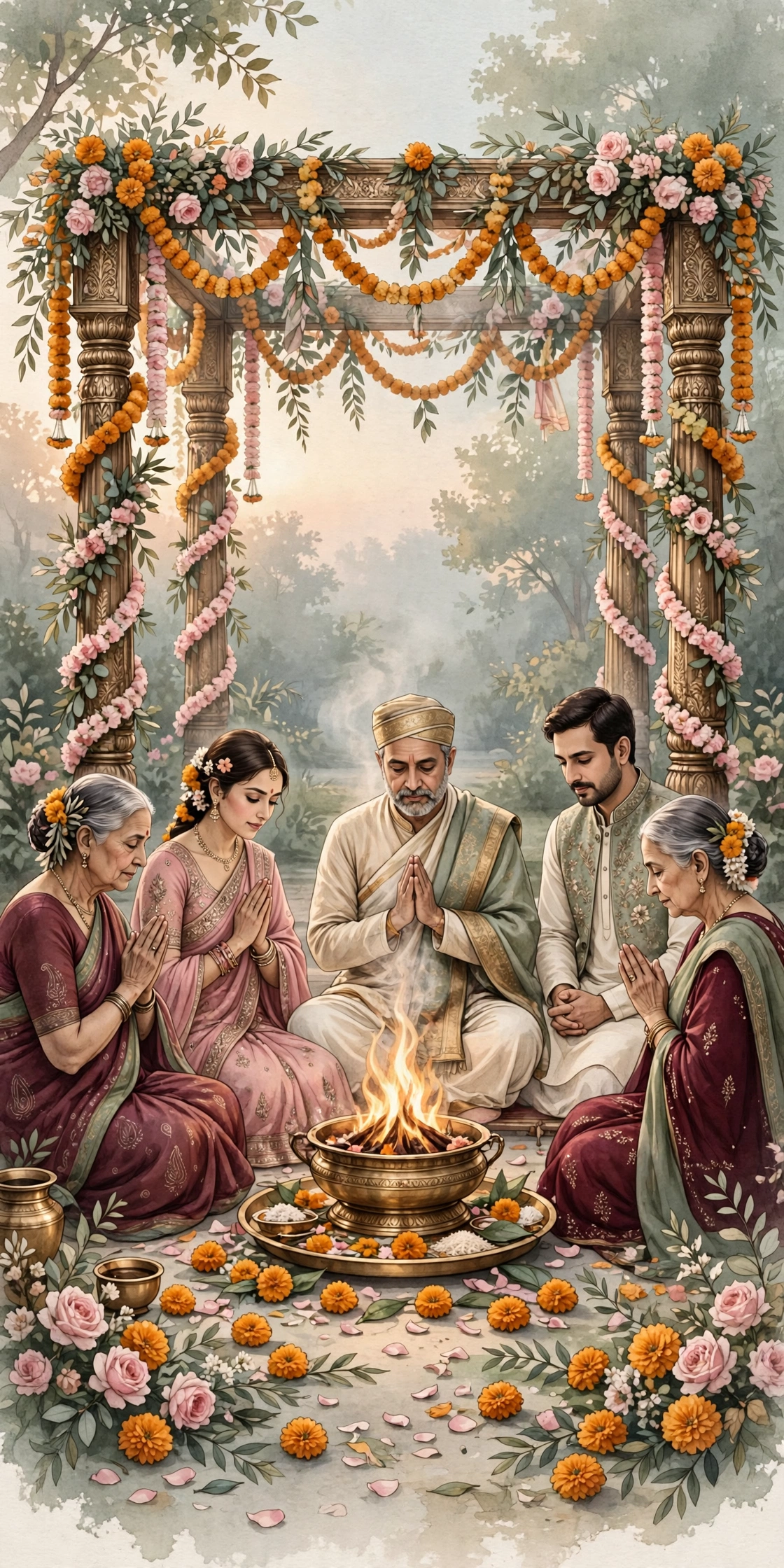
Muhurats cluster in certain months, and those months are the wedding season. The best venues and the best vendors are booked first for those dates, so the family should act as soon as the muhurat is fixed. Eight to twelve months ahead is normal for a popular date. Waiting for a better price rarely helps, because the price only rises as the date nears.
The season also decides the practical details. A morning muhurat in May needs shade, water, and cooling for the guests. An evening muhurat in December needs warmth, light, and a venue that stays comfortable after dark. A monsoon muhurat needs a covered venue, even if the family loves the open lawn. Plan the venue, the food, and the decor for the season of the muhurat, not for the season in the photograph that inspired it.
If two good muhurats fall close together, the family should choose by practicality, not by superstition alone. A Sunday is easier for guests than a Tuesday. A date with no other family wedding nearby is easier than a date shared with three cousins. The priest fixes the auspicious moment; the family chooses which auspicious moment works best for the people who must attend it.
Telling guests about the muhurat
The invitation should carry the muhurat with pride, and with clarity. Write the date with the day of the week, the time in full, and the venue with its area. If the muhurat is early in the morning, add a note about breakfast, so guests know they will be fed. If it is late in the evening, add a note about dinner, so guests do not eat before coming.
Many families also add a short line about the rituals that follow the muhurat, so guests know what to expect. Kanyadaan, Saptapadi, and the blessings take time, and guests who know that will settle in comfortably instead of wondering when it ends. A line about lunch after the ceremony tells guests to stay, and a line about the reception in the evening tells them when to return.
Send the invitation early when the muhurat is in the wedding season, because guests book their travel around it. Four to six weeks is the minimum, and outstation guests need more. A short reminder two days before, with the muhurat time repeated, is enough. Guests who know the moment will arrive for it, and that is the whole purpose of the invitation.
What it costs
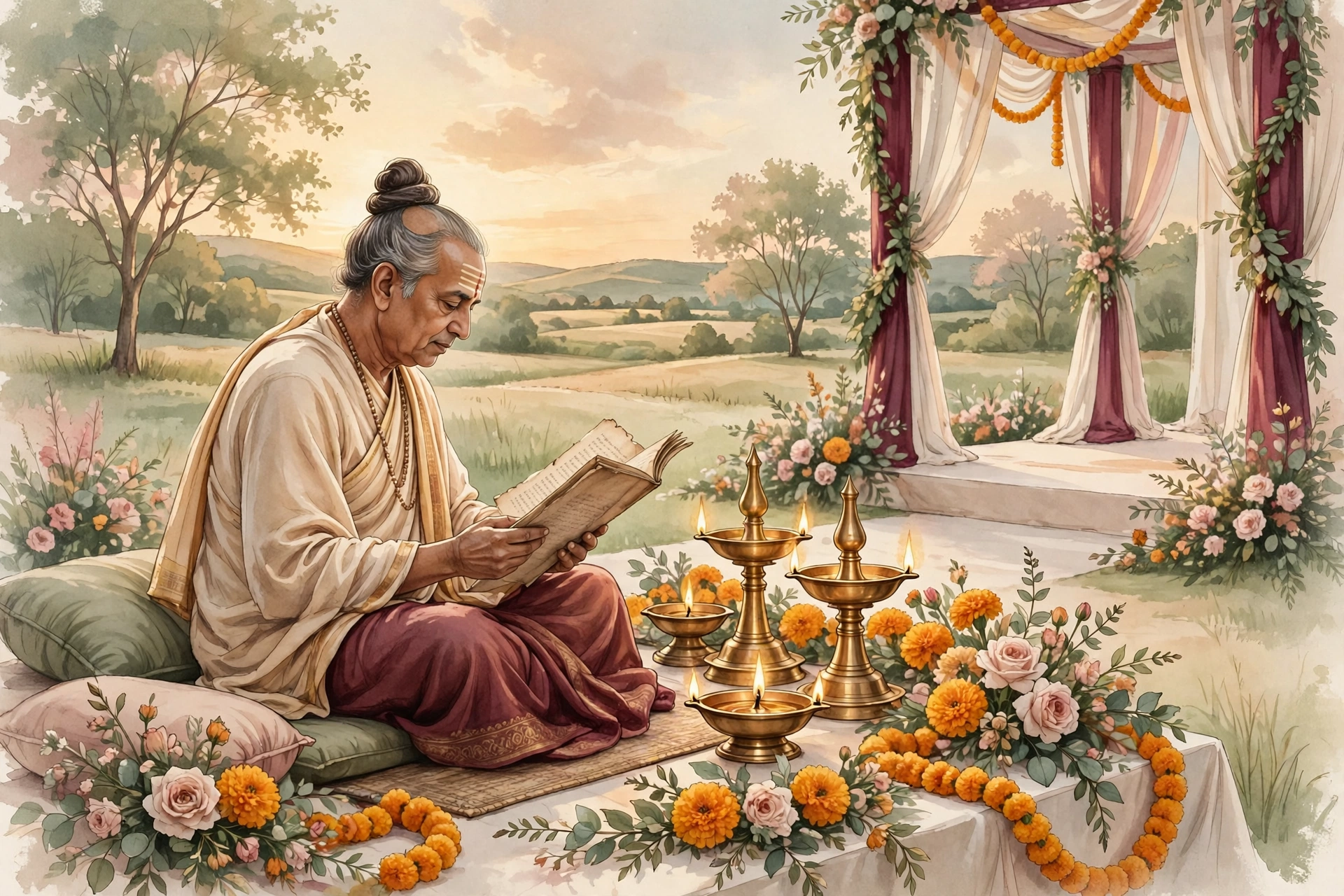
On MyIndiAura, a Cinematic Invite is ₹499, an Invite App is ₹399, and an Invitation Suite is ₹99. Choose by what your invitation needs to do, not by price alone. A cinematic invite suits a wedding with a film led opening, while an invite app suits a full week of functions with RSVP and maps.
How to create your wedding invitation
- Pick a design from the designs page at myindiaura.com/designs.
- Add the names, the muhurat date and time, the venue, and the order of events.
- Add photos of the couple, the venue map, and the RSVP button.
- Preview the invitation on your own phone, then share the link on WhatsApp. See myindiaura.com/create to start, and myindiaura.com/pricing for the full price list.
Details to check before you send
- The muhurat fixed with the priest, with the date and time in writing
- The day planned backwards from the muhurat, with gaps between rituals
- The venue booked for the season of the muhurat, with shade, warmth or cover as needed
- The muhurat time written largest on the invitation, with the day of the week
- A note about breakfast or dinner, so guests know they will be fed
- The invitation sent four to six weeks ahead, earlier for outstation guests
Frequently asked questions
What is a muhurat, in simple words?
It is the auspicious moment fixed by the priest for the wedding, chosen from the couple's horoscopes and the calendar. The pheras and the sindoor happen at that moment, and the whole day is planned around it. It is the heart of a Hindu wedding.
When should we fix the muhurat?
Before booking the venue or any vendor. The muhurat fixes the date, and every booking follows from the date. A date chosen without the priest often has to move, and moving a booked venue is the most expensive lesson in wedding planning.
What if the muhurat is very early in the morning?
Plan the day backwards: makeup starts hours before, the baraat arrives early, and the families reach the venue with time to spare. Add a breakfast note on the invitation, so guests arrive knowing they will be fed, and arrange transport the night before.
MyIndiAura theme showcase
These Cinematic Invites from MyIndiAura fit this wedding. Each one is ₹499.
- Neelam Mandapam: a gopuram and temple tank at dusk, made for a Tamil ceremony.
- Deepa Tarang: a temple tank ringed with lamps under a glowing gopuram.
- Saanjh Mandir: an evening temple setting for a sacred ceremony.
Related reading
- Hindu Wedding Invitation Wording and Traditions
- Haldi Invitation Wording in Hindi and English
- Indian Wedding Planning Timeline: From Engagement to Wedding Day
Fix the muhurat first, and the wedding will follow.
Explore invitation designs
Choose a design and preview it free with your own names.

Found this useful? Share it with someone planning a celebration.
Share