Marathi Wedding Rituals: Antarpat to Saptapadi
A Marathi wedding runs from the antarpat cloth to the saptapadi steps. Here is what each ritual means, when it happens, and how to include it on your invitation.
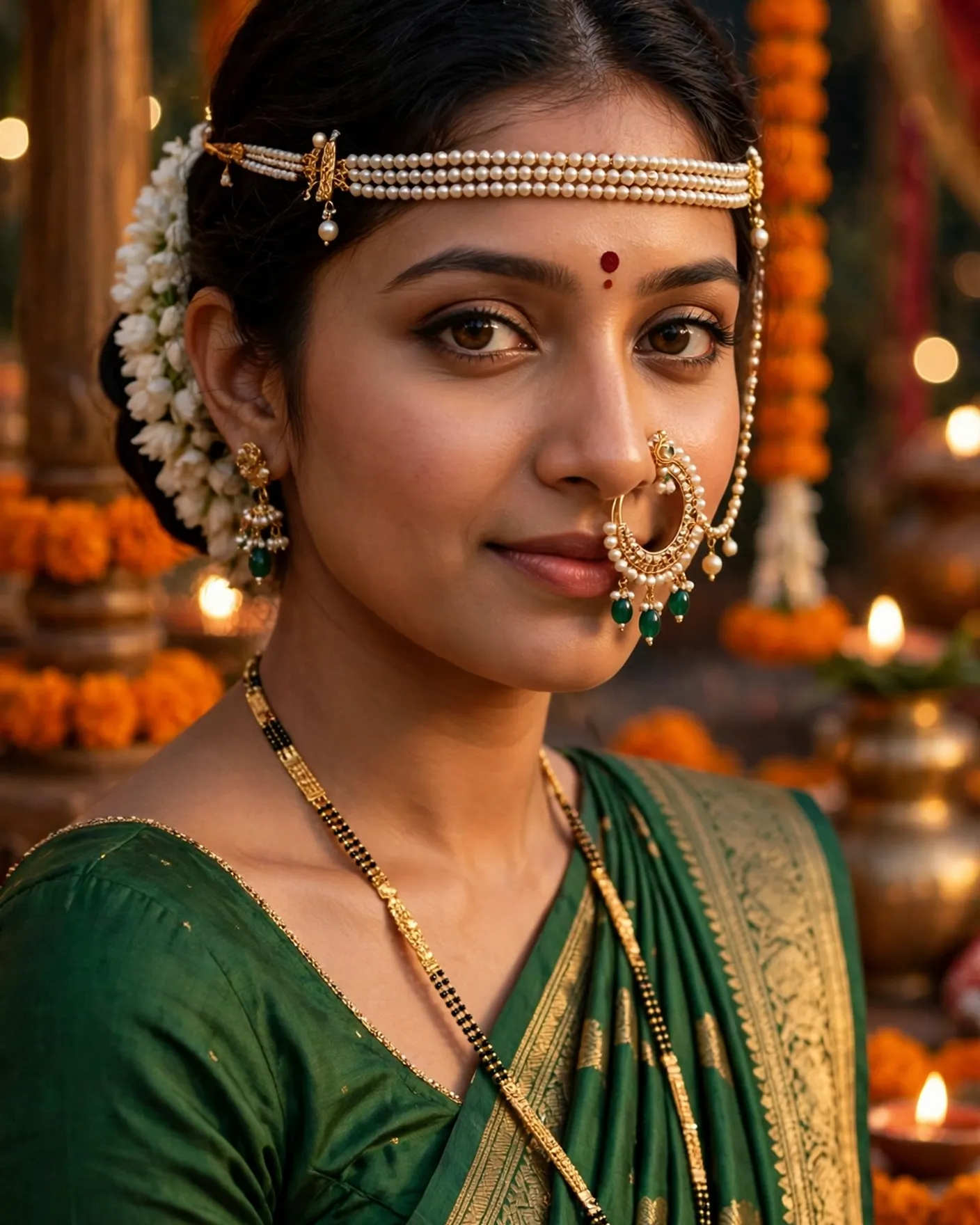
Marathi wedding rituals, from antarpat to saptapadi
A Marathi wedding is graceful, musical and full of warmth. Its rituals run from the antarpat, the cloth that hides the couple from each other, to the saptapadi, the seven steps around the sacred fire. This article explains each ritual, what it means, when it happens, and how to include it on your invitation.
Antarpat: the cloth that hides the couple
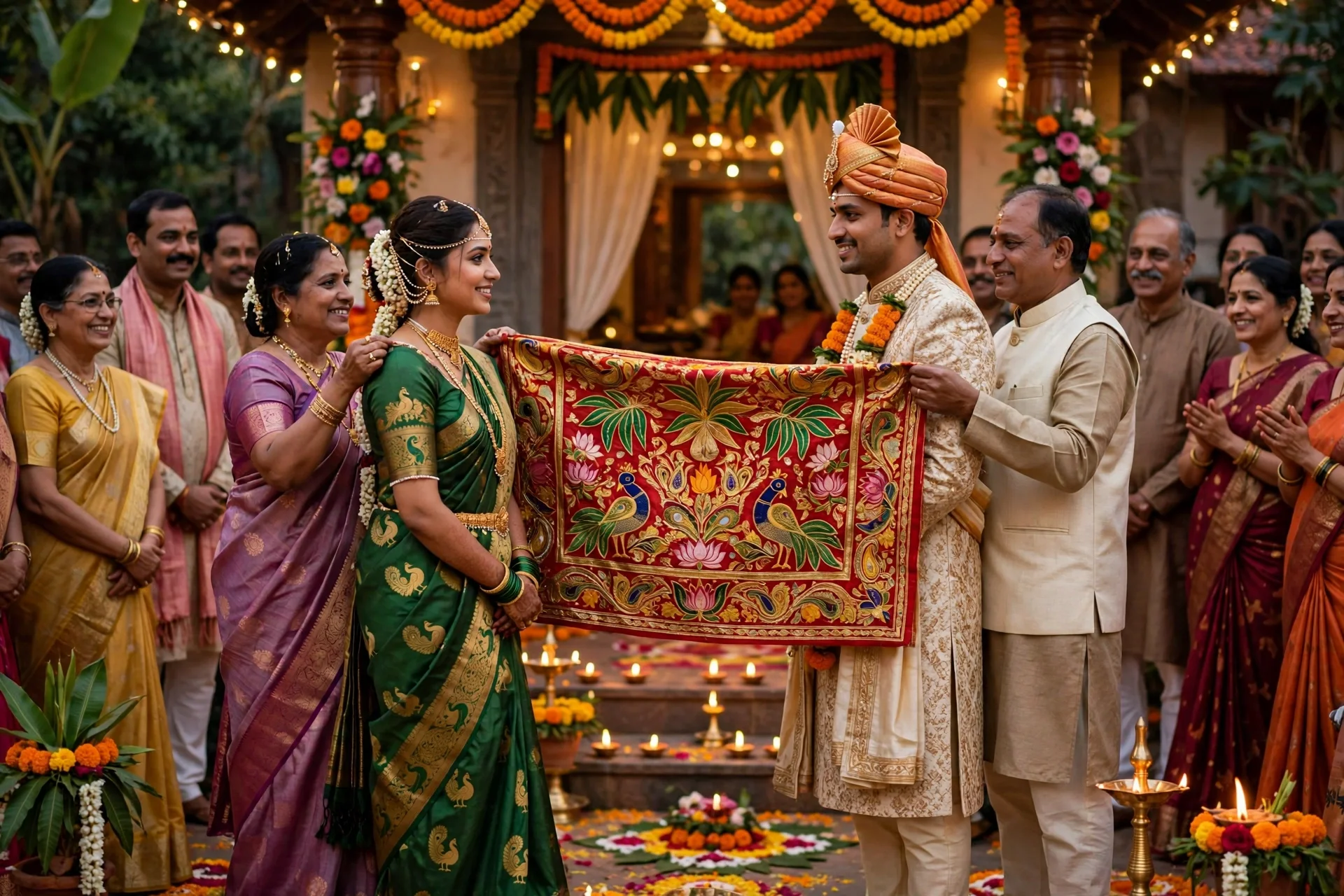
Antarpat is the ritual that opens the Marathi wedding ceremony. A cloth is held between the bride and the groom, so they cannot see each other, while the priest chants mantras. The families stand on either side, and the atmosphere is joyful and full of anticipation.
When the priest says the moment has come, the antarpat is lowered, and the couple sees each other for the first time as husband and wife. The families shower them with flowers and rice, and everyone cheers. The moment is tender and joyful, and it is one of the most photographed moments of a Marathi wedding.
Sakharpuda and the exchange of garlands
Before the antarpat, the families perform the sakharpuda, the engagement, when the bride's family gives the groom a packet of sugar and the groom's family gives the bride a saree and jewellery. The ritual is simple and joyful, and it marks the formal agreement of the marriage.
After the antarpat is lowered, the couple exchanges garlands, called varmala. The bride garlands the groom first, and then the groom garlands the bride, while the families cheer and shower them with flowers. The garlands are made of fresh flowers, often marigold and jasmine, and they are a symbol of the couple's love and commitment.
Kanyadaan: the giving of the bride
Kanyadaan follows the varmala, and it is one of the most emotional moments of a Marathi wedding. The bride's parents place their daughter's hand in the groom's hand, and ask him to care for her with love and respect for the rest of their lives. The priest chants mantras as the parents place the bride's hand in the groom's, and water is poured over their joined hands as a sign of the gift.
The ritual is emotional because it marks a turning point. The bride leaves her parents' home and begins a new life with her husband, and her parents bless her with all their love. It is also joyful, because the families come together and the wedding becomes a bond between two families, not just two people.
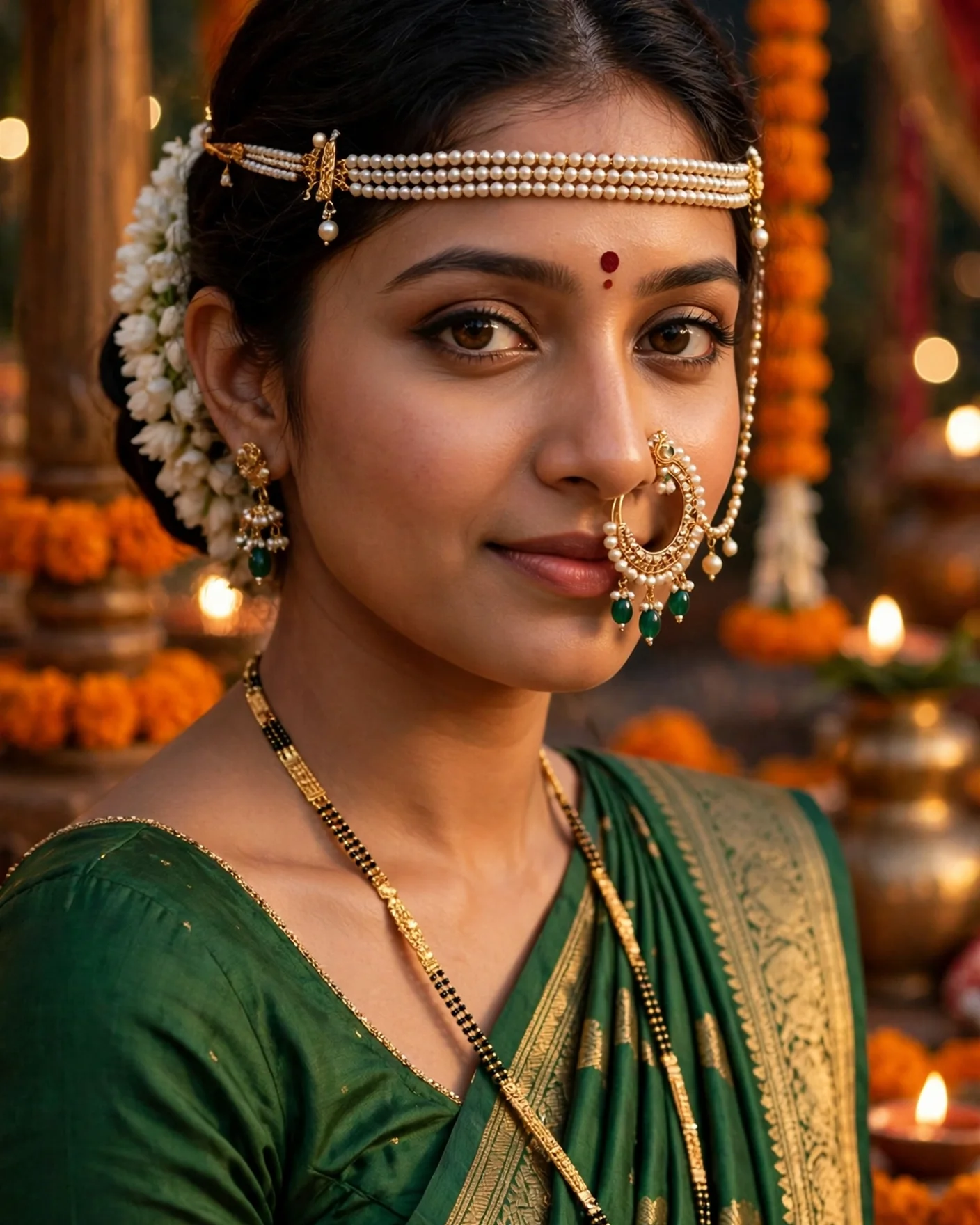
Saptapadi: the seven steps
Saptapadi is the ritual that closes the Marathi wedding ceremony. The couple takes seven steps together around the sacred fire, and each step is a vow: for food, for strength, for prosperity, for happiness, for children, for health, and for friendship. The priest chants a mantra for each step, and the couple touches seven small piles of rice with their toes as they walk.
The seven steps are the heart of a Marathi wedding, and they are the moment the couple truly becomes husband and wife. The ritual is calm and sacred, and the families watch quietly as the couple walks together. After the seventh step, the priest blesses the couple, and the families shower them with flowers.
The order of a Marathi wedding day
A Marathi wedding day follows a clear order, and the invitation reads better when it reflects it.
- Ganesh Puja, when the families invite Lord Ganesha to bless the wedding.
- Sakharpuda, the engagement, when the families exchange gifts.
- Antarpat, when the cloth hides the couple from each other.
- Varmala, the exchange of garlands.
- Kanyadaan, when the bride's parents give her hand to the groom.
- Saptapadi, the seven steps around the sacred fire.
- Vidaai, the farewell, when the bride leaves her parents' home.
You do not need to explain every ritual on the card. Name the ones guests attend, with times, and let the priest and the families carry the meaning on the day. A short line about the muhurtham, and a line about lunch, covers most questions guests will ask.
What guests should know
Guests at a Marathi wedding should arrive early, because the muhurtham is fixed and the rituals run to the minute. Women often wear a nauvari saree, the traditional nine yard saree, in bright colours, and men wear a kurta or a sherwani. The groom's family and the bride's family sit on opposite sides of the mandap, and guests are welcome to sit anywhere.
The lunch after the ceremony is a full Marathi feast, with puran poli, amti, bhaji, and shrikhand. Stay for the feast if you can, because it is a central part of the celebration, and the families will be glad you did. If you are invited to the vidaai after the ceremony, come, because it is emotional and the families will be glad you were there.
What it costs
On MyIndiAura, a Cinematic Invite is ₹499, an Invite App is ₹399, and an Invitation Suite is ₹99. Choose by what your invitation needs to do, not by price alone. A cinematic invite suits a wedding with a film led opening, while an invite app suits a full week of functions with RSVP and maps.
How to create your Marathi wedding invitation
- Pick a design from the designs page at myindiaura.com/designs.
- Add the Marathi and English wording, the muhurtham time, the venue, and the order of events, including the antarpat and saptapadi.
- Add photos of the couple, the venue map, and the RSVP button.
- Preview the invitation on your own phone, then share the link on WhatsApp. See myindiaura.com/create to start, and myindiaura.com/pricing for the full price list.
Details to check before you send
- The names of the bride and groom, with parents, spelt exactly as the families use them
- The wedding date and time, checked with the priest
- The times for the antarpat and saptapadi, checked with the priest
- The full venue address, with the area and a map link
- A dress code note, if you want guests in nauvari sarees or bright colours
- An RSVP contact for guests who need directions
Frequently asked questions
What is the antarpat?
The antarpat is a cloth held between the bride and the groom during the Marathi wedding ceremony, so they cannot see each other while the priest chants mantras. When the priest says the moment has come, the cloth is lowered, and the couple sees each other for the first time as husband and wife.
What is saptapadi?
Saptapadi is the seven steps the couple takes together around the sacred fire. Each step is a vow: for food, for strength, for prosperity, for happiness, for children, for health, and for friendship. It is the heart of a Marathi wedding.
What is sakharpuda?
Sakharpuda is the Marathi engagement ceremony, when the bride's family gives the groom a packet of sugar and the groom's family gives the bride a saree and jewellery. It marks the formal agreement of the marriage.
When should we send a Marathi wedding invitation?
Send digital invitations four to six weeks before the wedding, and earlier for outstation guests. A short WhatsApp reminder two or three days before, and again the evening before, is enough for most families.
What do guests wear to a Marathi wedding?
Women often wear a nauvari saree in bright colours, and men wear a kurta or a sherwani. Mention the dress code on the invite if you want guests to match the morning.
MyIndiAura theme showcase
These Cinematic Invites from MyIndiAura fit this wedding. Each one is ₹499.
- Mandap Yatra: a walk through the venue, room by room, to the mandap.
- Kesar Swagat: saffron and gold in a palace courtyard, with falling rose petals.
- Laal Doli: part the red zardozi curtain of the doli to a marigold mandap.
Related reading
- Pheras: Seven Vows Explained
- Kanyadaan Ritual: Meaning and Ceremony
- Hindu Wedding Invitation Wording and Traditions
Create your Marathi wedding invitation on MyIndiAura, and let the antarpat and saptapadi bless your wedding day beautifully.
Explore invitation designs
Choose a design and preview it free with your own names.
Found this useful? Share it with someone planning a celebration.
Share