Mangalsutra Designs for Modern Brides
The mangalsutra is the most personal piece of bridal jewellery. Here are modern designs, from short pendants to layered chains, that honour tradition and suit daily wear.
How to choose a mangalsutra
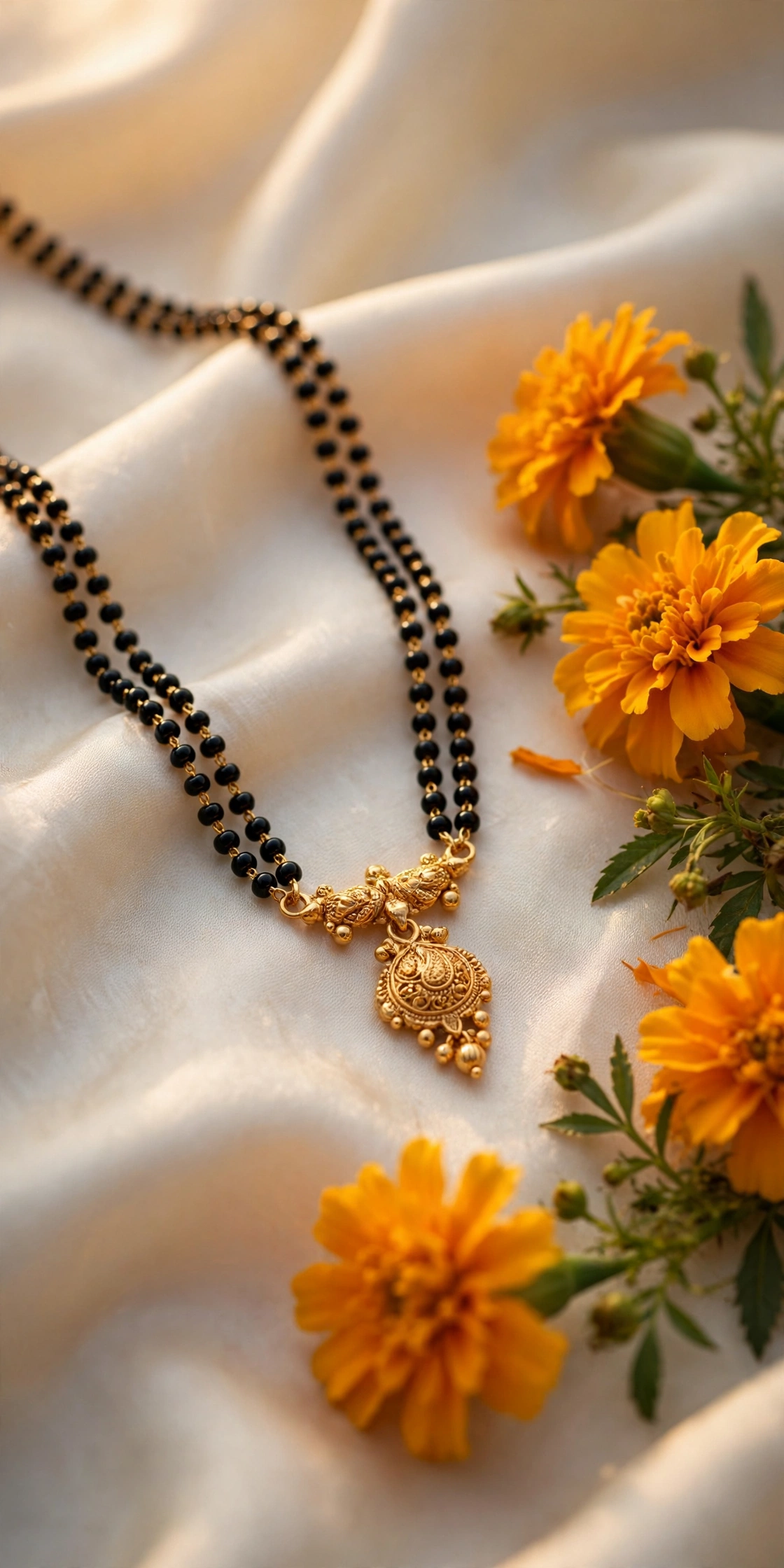
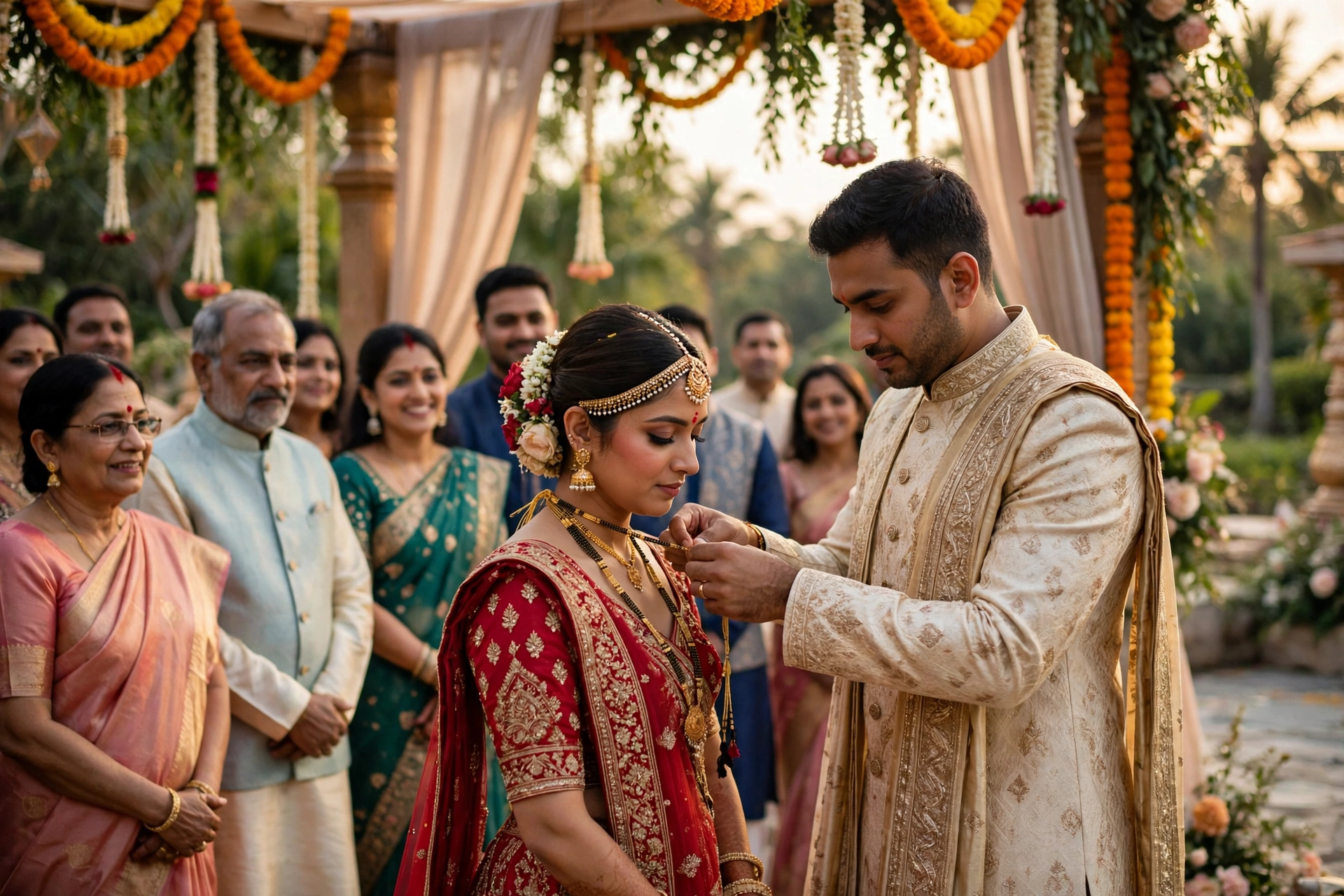
The mangalsutra is the most personal piece of bridal jewellery. It is tied by the groom during the wedding, it is worn every day after, and it carries the marriage in a way no other ornament does. A modern mangalsutra honours that tradition and still suits daily wear: it is lighter, shorter, and easier to live with than the long, heavy chains of the past. The rule is simple: pick a design you will love wearing every day, not just on the wedding day.
Short, long and layered mangalsutras
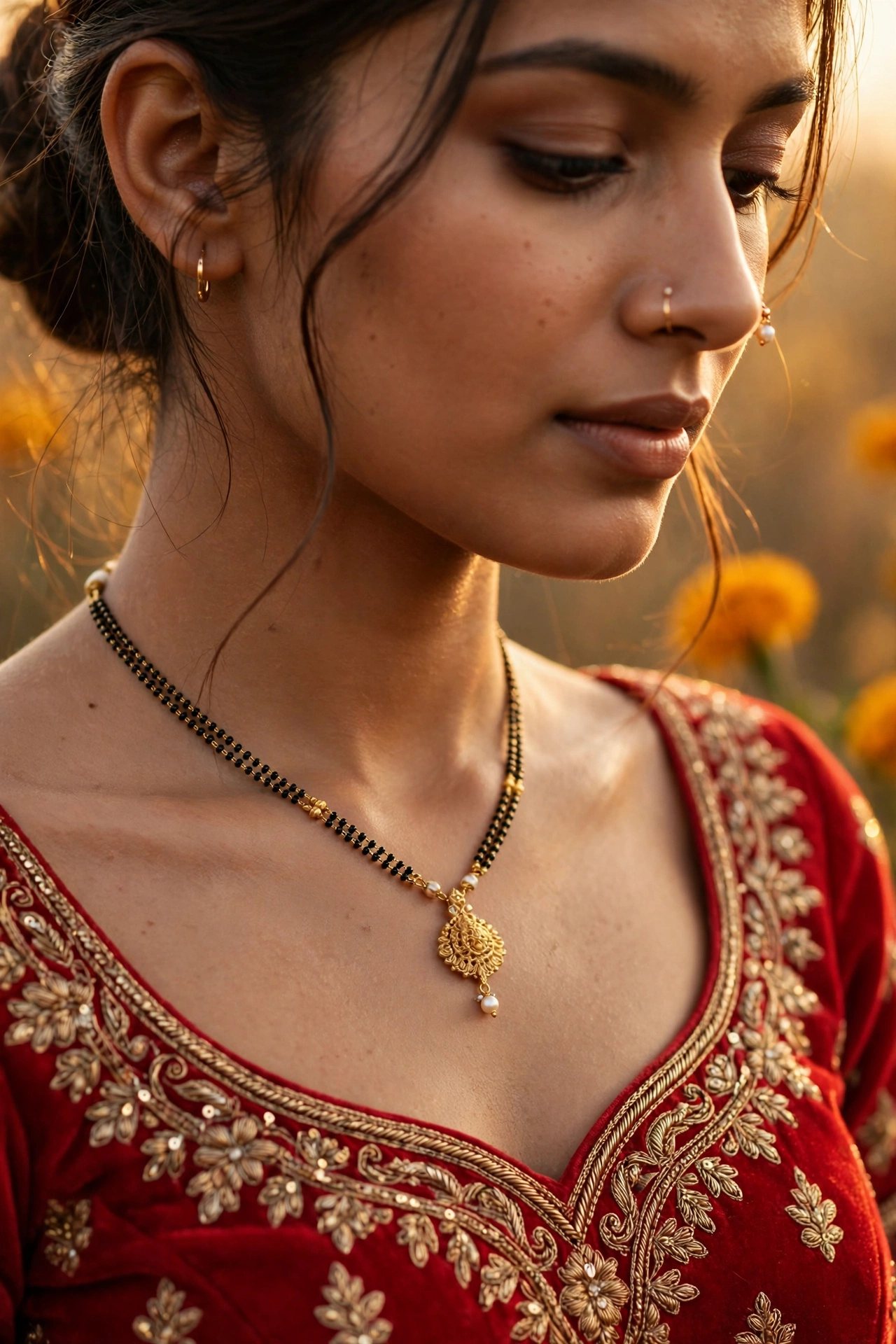
A short mangalsutra sits at the collarbone, and it is the most popular modern choice. It suits daily wear, it works with Western clothes and office wear, and it does not catch on anything. A short mangalsutra with a single diamond pendant is the classic modern design, and it suits almost every bride. A long mangalsutra falls to the chest or below, and it is the traditional choice for the wedding ceremony, worn over the bridal outfit with the full jewellery set.
Gold, diamonds and coloured stones
Gold is the traditional mangalsutra metal, and yellow gold suits the black beads best. White gold and rose gold are modern choices, and they suit brides who wear white gold jewellery daily. A two tone mangalsutra, with yellow gold for the pendant and white gold for the chain links, suits a bride who mixes metals. The gold purity matters: 22 karat gold is the traditional choice, rich and warm, while 18 karat gold is stronger and better for daily wear with a diamond setting.
Diamonds are the most popular pendant stone for a modern mangalsutra, because a single solitaire is timeless and suits every outfit. Coloured stones add personality: a ruby for a traditional bride, an emerald for a South Indian bride, a sapphire for a modern bride. A small cluster of diamonds around a coloured stone is a beautiful middle choice. Keep the pendant light, because a heavy pendant will pull the chain forward and hurt your neck by the end of the day.
Designs by region and tradition
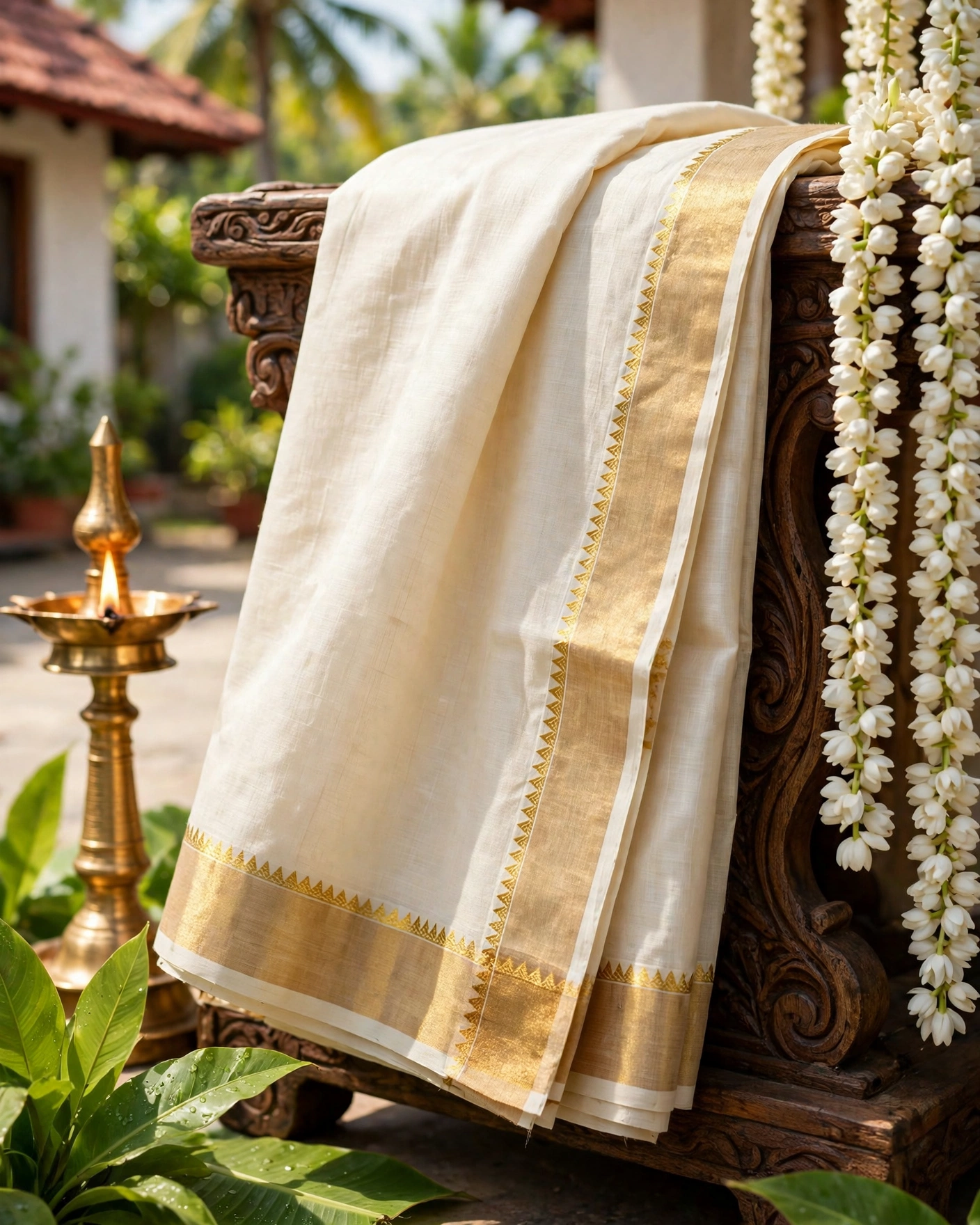
Every region has its own mangalsutra, and knowing yours helps you choose. A Maharashtrian mangalsutra has two small gold vatis, or cups, on a black bead chain, and it is a beautiful, minimal design. A South Indian mangalsutra, called a thaali or a mangalyam, is often a long gold chain with a large pendant, worn with a Kanjivaram saree. A North Indian mangalsutra is usually a black bead chain with a gold pendant, sometimes with a second chain in gold.
A Bengali mangalsutra is often a simple gold chain with a small pendant, worn with the shakha pola bangles. A Gujarati mangalsutra is similar to the North Indian one, with a gold pendant on black beads. If your families come from different traditions, you can honour both: wear one region's design for the wedding and the other's for daily wear, or choose a fusion design that carries both motifs. The jeweller can help you blend them without losing either tradition.
Matching the mangalsutra to your outfit and jewellery
The mangalsutra should work with your other jewellery, not compete with it. For the wedding, the mangalsutra is worn with the full bridal set: the choker, the long necklace, the earrings, and the maang tikka. A long mangalsutra suits this look, because it fills the space between the choker and the blouse. For the reception, a shorter mangalsutra with a diamond pendant suits a gown or a lehenga, because it does not clash with a Western neckline.
For daily wear, the mangalsutra should suit your clothes and your work. A short chain with a small pendant works with a kurta, a shirt, and a dress. If you wear a lot of Western clothes, a minimal mangalsutra in white gold with a single diamond is the easiest to live with. If you wear Indian clothes daily, a slightly longer chain with a traditional pendant suits the neckline. And keep a second, simpler mangalsutra for travel or the gym, so the wedding piece stays safe.
Buying, caring and keeping it safe
Buy the mangalsutra from a trusted jeweller, and ask for the hallmark certificate, which certifies the gold purity. Check the clasp: it should close firmly and open easily, because you will wear it every day. Check the bead stringing: the black beads should be evenly spaced and firmly strung, with no loose beads. Ask the jeweller about the making charges and the exchange policy in writing, because a mangalsutra is also an investment.
What it costs
A modern mangalsutra in gold with a small diamond pendant usually costs between ₹30,000 and ₹1,50,000, depending on the gold weight, the diamond, and the design. A simple gold mangalsutra without a diamond costs less, from about ₹15,000. A heavy traditional mangalsutra with a large pendant can cost much more. Set your budget before you shop, and remember that the mangalsutra is worn daily, so comfort and durability matter more than size.
The invitation is a fixed, small cost. On MyIndiAura, a Cinematic Invite is ₹499, an Invite App is ₹399, and an Invitation Suite is ₹99. Your mangalsutra photographs will look beautiful inside any of them. See the pricing page for the current prices.
How to create your mangalsutra invitation
- Pick a design that matches your wedding colours from the designs page at myindiaura.com/designs.
- Add your names, the ceremony dates and times, and the venue for each function.
- Add photographs of the couple, including one that shows the mangalsutra moment.
- Preview the invitation on your own phone, then share the link on WhatsApp. See myindiaura.com/create to start, and myindiaura.com/pricing for the full price list.
Details to check before you send
- The names of the bride and groom, spelt exactly as the families use them
- The date and time of each function, with the venue and the dress code
- A photograph that shows the wedding colours, so guests can plan their outfits
- The RSVP contact for guests who need directions or timings
- The mangalsutra design, the hallmark certificate, and the jeweller's bill, kept safe
- A full day trial of the mangalsutra, with the outfit you will wear
Frequently asked questions
Can I wear a short mangalsutra for the wedding?
Yes. A short mangalsutra with a diamond pendant is a beautiful wedding choice, and it suits a modern bride. You can also layer it with a long chain for the ceremony and wear the short one daily afterwards.
What is the difference between a mangalsutra and a thaali?
A thaali is the South Indian mangalsutra, usually a long gold chain with a large pendant, tied during the muhurtham. A mangalsutra is the North Indian name for the same idea, usually a black bead chain with a gold pendant. Both carry the same meaning.
How do I keep my mangalsutra safe daily?
Store it in a soft pouch, clean it gently, and check the clasp and the stringing once a year. Keep a simpler piece for travel or the gym, and insure the wedding piece if it is valuable.
MyIndiAura theme showcase
These Cinematic Invites from MyIndiAura fit this wedding. Each one is ₹499.
- Laal Doli: red bridal tones for a mangalsutra ceremony.
- Gulab Dil: roses for a romantic mangalsutra moment.
- Resham Satin: silk and gold for a traditional mangalsutra look.
Related reading
- Pheras: Seven Vows Explained
- Hindu Wedding Invitation Wording and Traditions
- Indian Wedding Planning Checklist
Create your mangalsutra invitation on MyIndiAura, and let the invitation carry the warmth of the ceremony to every guest.
Explore invitation designs
Choose a design and preview it free with your own names.
Found this useful? Share it with someone planning a celebration.
Share