Maharashtrian Wedding Food: Puran Poli to Modak
Puran poli, amti, bharli vangi and modak. The Maharashtrian wedding meal, served in order on a thali, and how to plan it for guests from every region.
The Maharashtrian wedding meal, in order
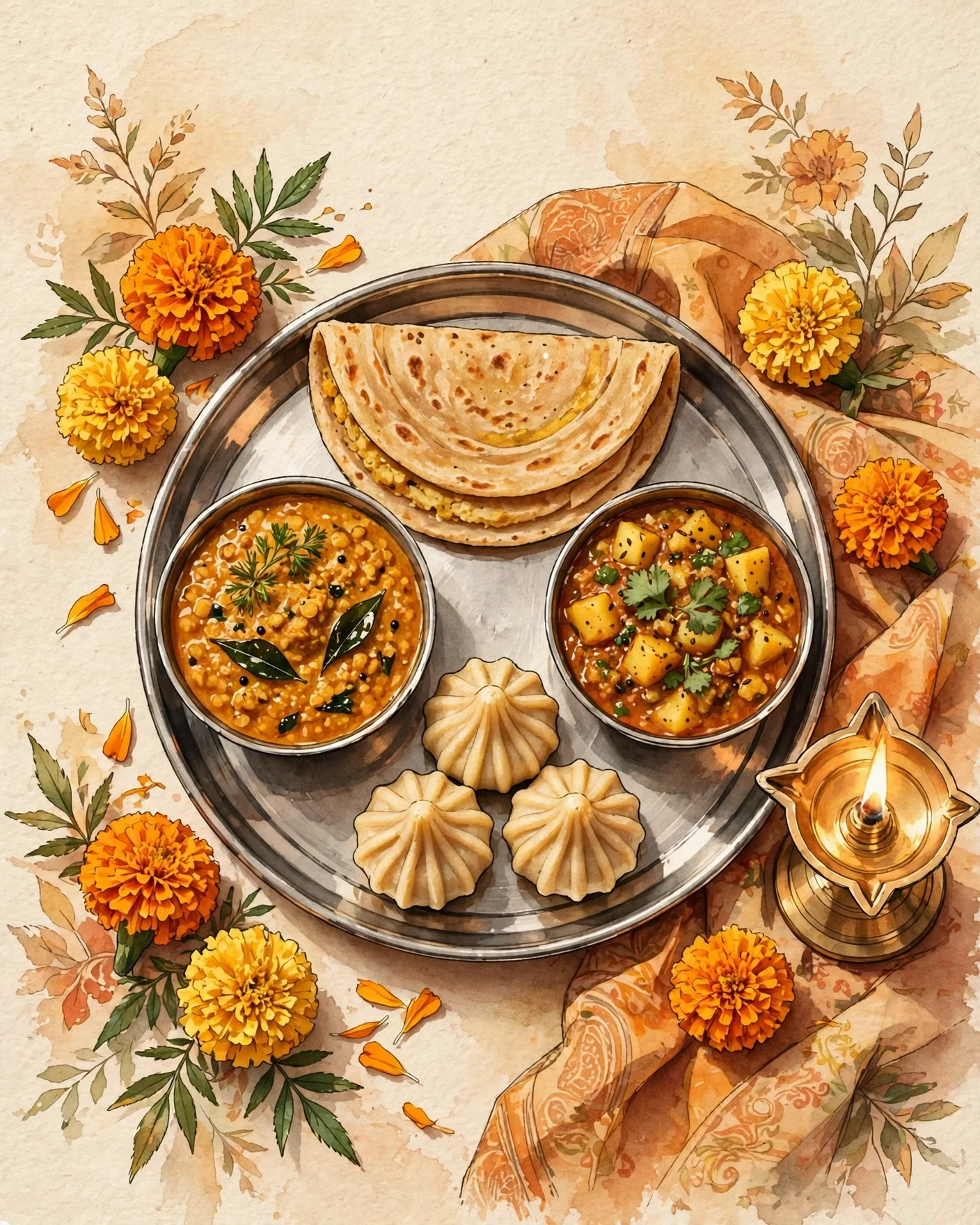
A Maharashtrian wedding meal is served on a thali, in a fixed order, and it is one of the most balanced wedding meals in India. It moves from salt to spice to sweet, with each dish in its place, and the meal ends with modak, the sweet that belongs to Ganpati and to weddings alike.
The meal is usually the lunch after the ceremony, served sitting down, with servers moving along the rows. It is vegetarian by tradition, and it suits a daytime wedding beautifully, because it is filling without being heavy, and guests can return to the ceremony refreshed.
Plan the meal as a sequence with the caterer, not as a list of dishes. The order is part of the taste, and a thali served out of order feels wrong even when every dish is good.
Puran poli and the panchamrut
The meal opens with puran poli, a soft flatbread stuffed with sweet chana dal and jaggery, served with a spoon of ghee. It is the dish guests ask about first, and the one the families judge. A good puran poli is soft, evenly stuffed and served hot, with the ghee melting into it.
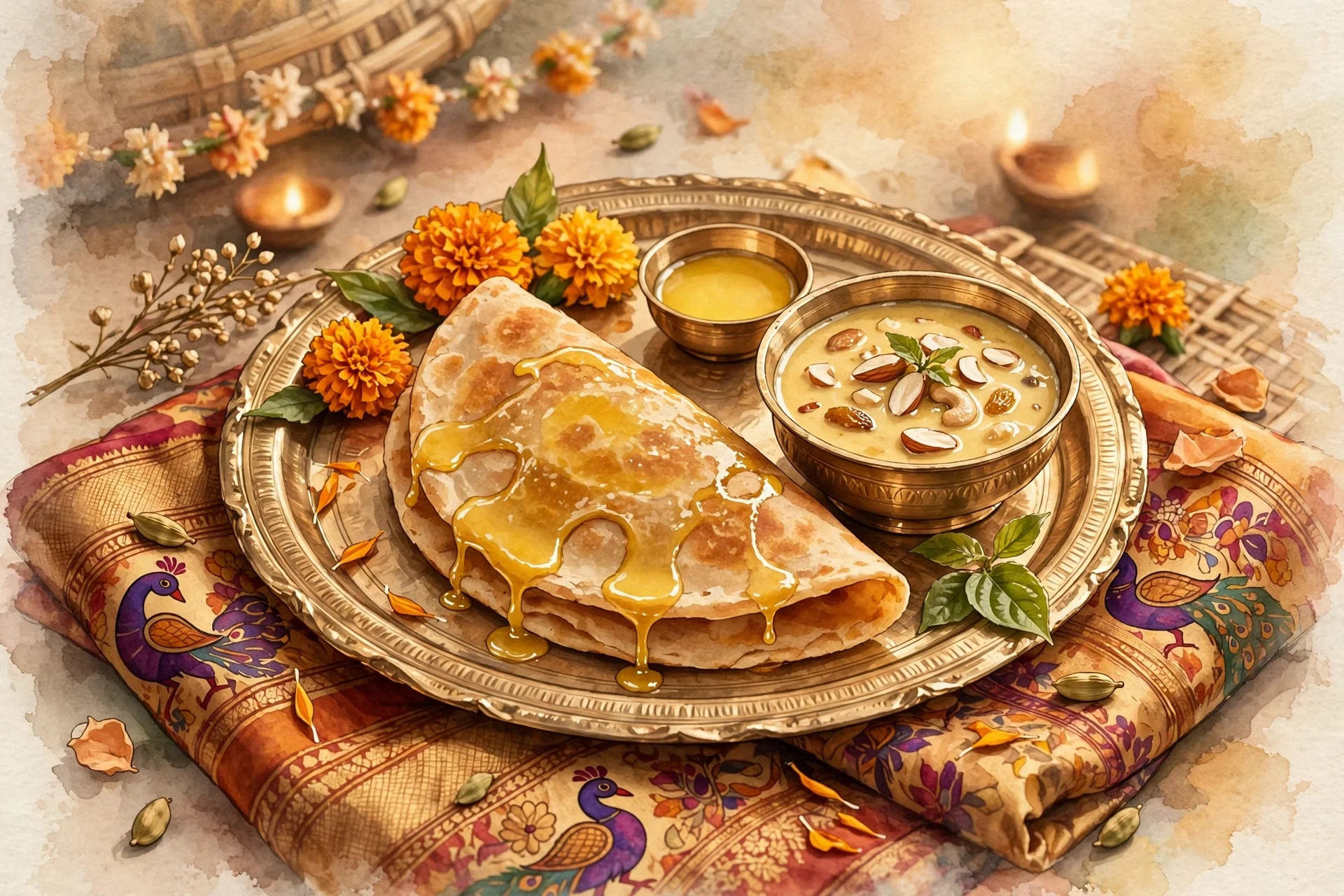
Panchamrut, a mix of milk, curd, honey, ghee and sugar, is served in a small bowl beside it, as a blessing and a taste. Keep the portion small, because it is rich, and serve it at the start, as the tradition asks.
For the wedding, ask the caterer to make the puran poli fresh through the meal, in small batches. Puran poli that sits for an hour goes dry, and no amount of ghee brings it back. A live counter, with the cook rolling and roasting each poli, is the best way to serve it.
The main dishes: bhaji, amti, bhat
After the puran poli comes the heart of the thali: a bhaji, usually bharli vangi, stuffed brinjal, or a seasonal vegetable, an amti, a tangy dal with kokum, and bhat, steamed rice. Around them sit a koshimbir, a light salad, and a papad.
The amti is the soul of the meal. It should be tangy and lightly spiced, with the kokum giving it a gentle sourness. Taste it at the tasting, because a good amti lifts the whole thali, and a poor one flattens it. The bhaji should be seasonal, because Maharashtrian cooking follows the market, and the best dish is the one made from what is fresh that week.
Serve the rice plain and plentiful, with a little ghee on top. The Maharashtrian thali is not about rich gravies, it is about clean flavours and good balance, so the rice should be a quiet base, not a star.
Modak and the sweet ending
The meal ends with modak, the sweet dumpling of rice flour stuffed with coconut and jaggery, steamed and served warm with ghee. Ukadiche modak is the classic, and it is the sweet that belongs to the wedding as much as to Ganesh Chaturthi.
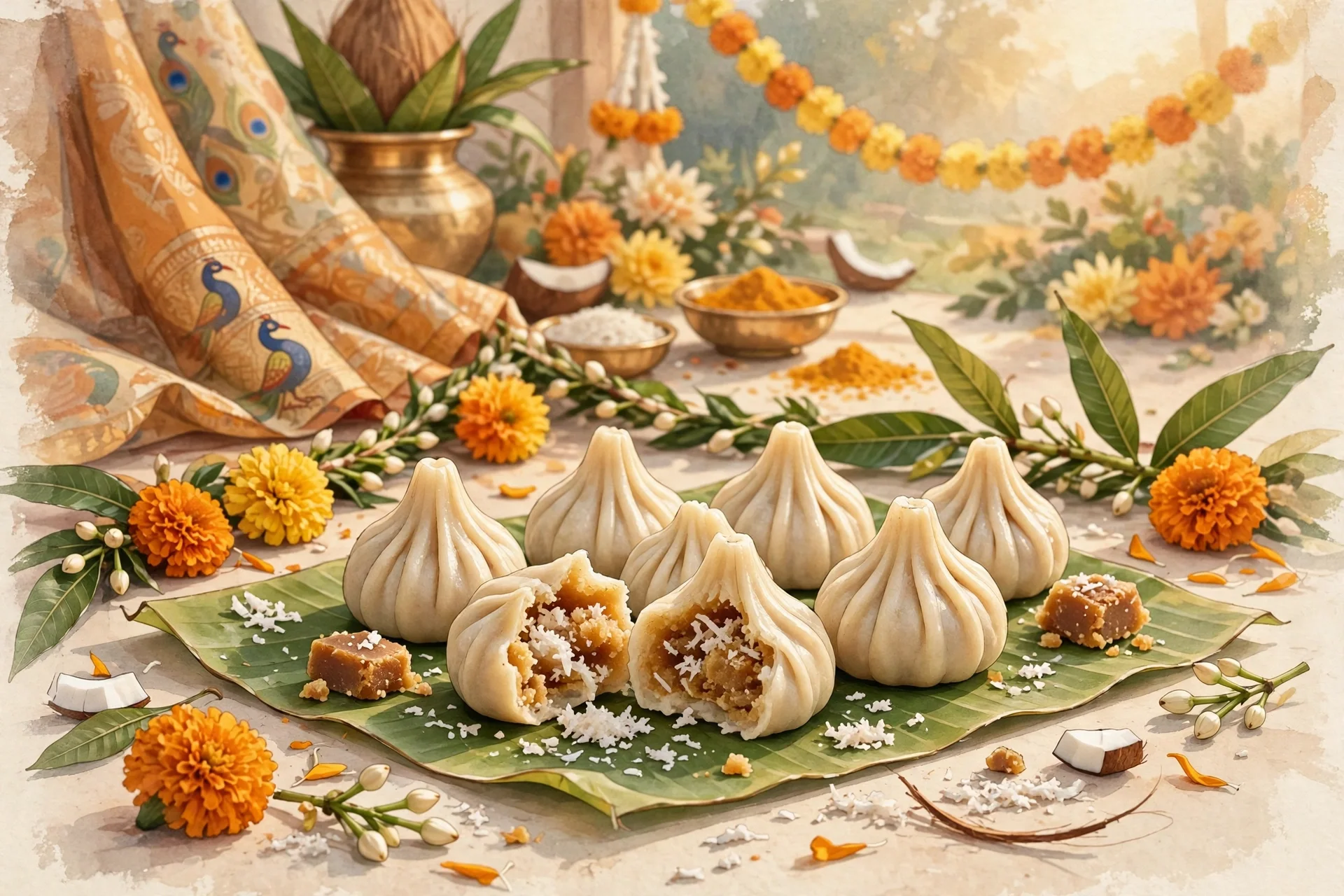
Serve the modak warm, in pairs, because one is never enough and three is too many. A live modak counter, with the cook shaping and steaming them, is a small joy, and children love watching the dumplings take shape.
Around the modak, serve a small bowl of shrikhand or a piece of amrakhand in mango season. Keep the sweets to two, so guests taste each one properly, and end with a paan for the elders.
Seating, serving and timing
A Maharashtrian wedding lunch is served in rows, on the floor or at low tables, with guests sitting together. Plan one server for every fifteen to twenty guests, and keep the serving team in rhythm: puran poli first, then the bhaji and amti, then the rice, then the modak.
Seat the elders first, then the families, then the friends, in waves of about an hour each. Each wave should finish before the next begins, so the servers stay in step and the food stays hot. Running out of modak halfway through the hall is the mistake to avoid, so order a third more than the headcount.
Tell guests about the meal on the invitation, with the highlights named: puran poli, bharli vangi, modak. Guests from other regions will be curious, and a short line about the thali builds excitement before they arrive.
What it costs
On MyIndiAura, a Cinematic Invite is ₹499, an Invite App is ₹399, and an Invitation Suite is ₹99. Choose by what your invitation needs to do, not by price alone. A cinematic invite suits a wedding with a film led opening, while an invite app suits a full week of functions with RSVP and maps.
How to create your wedding invitation
- Pick a design from the designs page at myindiaura.com/designs.
- Add the couple's names, the dates, the venue, and the order of events, with the lunch timing for each function.
- Add photos of the couple, the venue map, and the RSVP button.
- Preview the invitation on your own phone, then share the link on WhatsApp. See myindiaura.com/create to start, and myindiaura.com/pricing for the full price list.
Details to check before you send
- The names of the bride and groom, with parents, spelt exactly as the families use them
- The wedding date, time and full venue address, with a map link
- The lunch timing and seating plan for each function
- The RSVP contact for guests who need directions or food help
- The order of events, with times for each ceremony
- A dress code note, if you want guests in a particular style
Frequently asked questions
What is puran poli?
Puran poli is a soft flatbread stuffed with sweet chana dal and jaggery, served with ghee. It opens the Maharashtrian wedding meal, and it is the dish families judge first.
What is modak?
Modak is a steamed rice flour dumpling stuffed with coconut and jaggery, the sweet of Ganpati. Ukadiche modak, served warm with ghee, closes the Maharashtrian wedding meal.
Is Maharashtrian wedding food vegetarian?
Yes, by tradition. The wedding thali is fully vegetarian, with a full range of dishes from puran poli to modak, and it feeds every guest well.
Can we serve Maharashtrian food at a buffet?
Yes, but a seated thali service suits it better, because the dishes arrive in order. If you choose a buffet, keep the puran poli and modak at live counters and label every dish clearly.
How long does a Maharashtrian wedding lunch take?
About an hour per seating wave. Plan two or three waves for a full guest list, with elders first, so the servers stay in rhythm and the food stays hot.
MyIndiAura theme showcase
These Cinematic Invites from MyIndiAura fit this wedding. Each one is ₹499.
- Saanjh Mandir: an evening temple that suits a Maharashtrian ceremony.
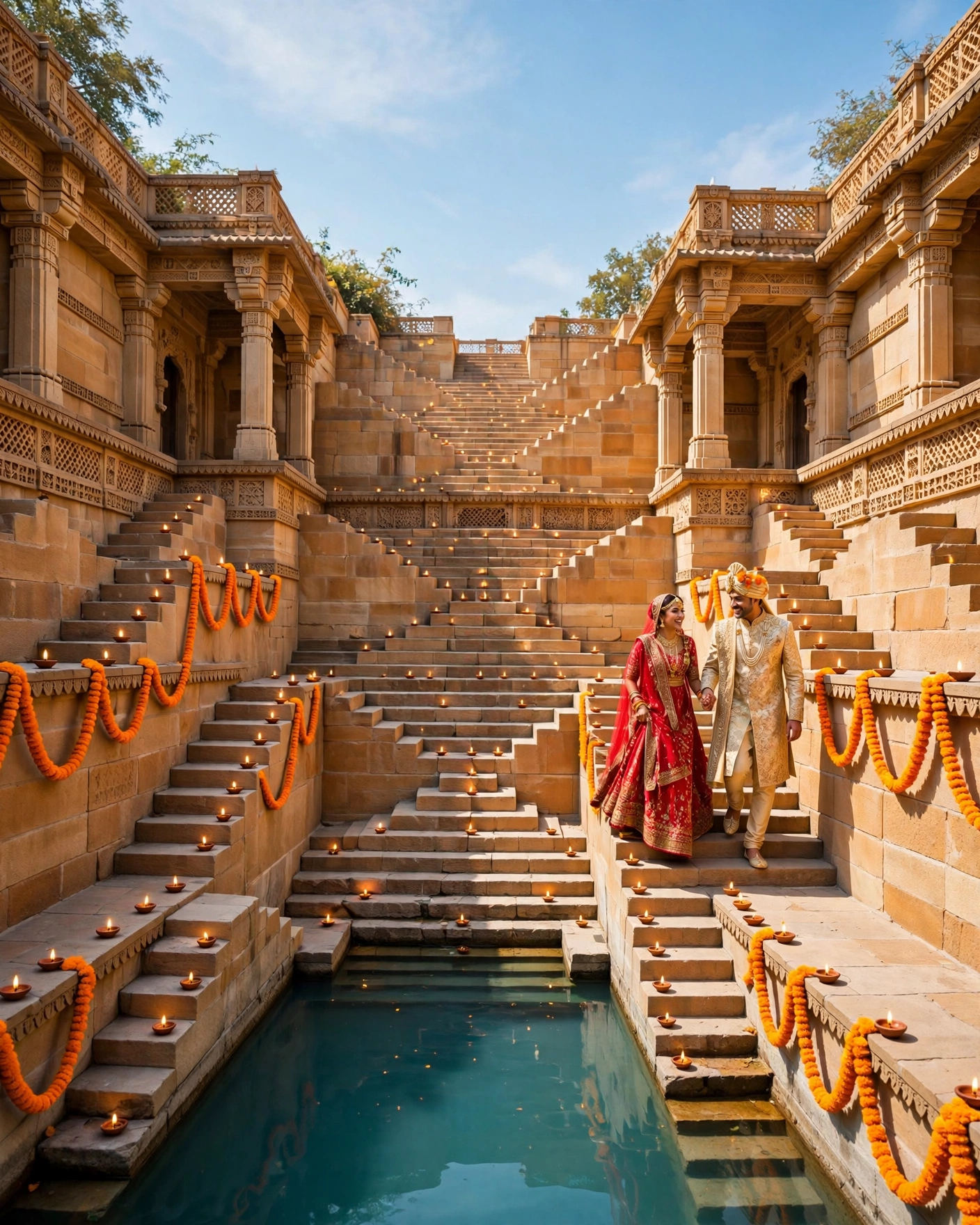
- Deepa Tarang: a temple tank ringed with lamps, warm and welcoming.
- Cream Crest: cream and gold, calm and elegant for a daytime lunch.
Related reading
- Sangeet Ceremony Invitation Ideas
- Haldi Ceremony Invitation Card Designs
- How to Plan a Memorable Wedding Reception
From puran poli to modak, the Maharashtrian thali is a meal in order, and that order is its beauty.
Explore invitation designs
Choose a design and preview it free with your own names.

Found this useful? Share it with someone planning a celebration.
Share