Kundan vs Polki vs Diamond Bridal Jewellery
Kundan, polki and diamond look similar in photographs but they are very different stones. Here is what each one is, what it costs, and which suits your wedding.
Kundan, polki and diamond: what is the difference
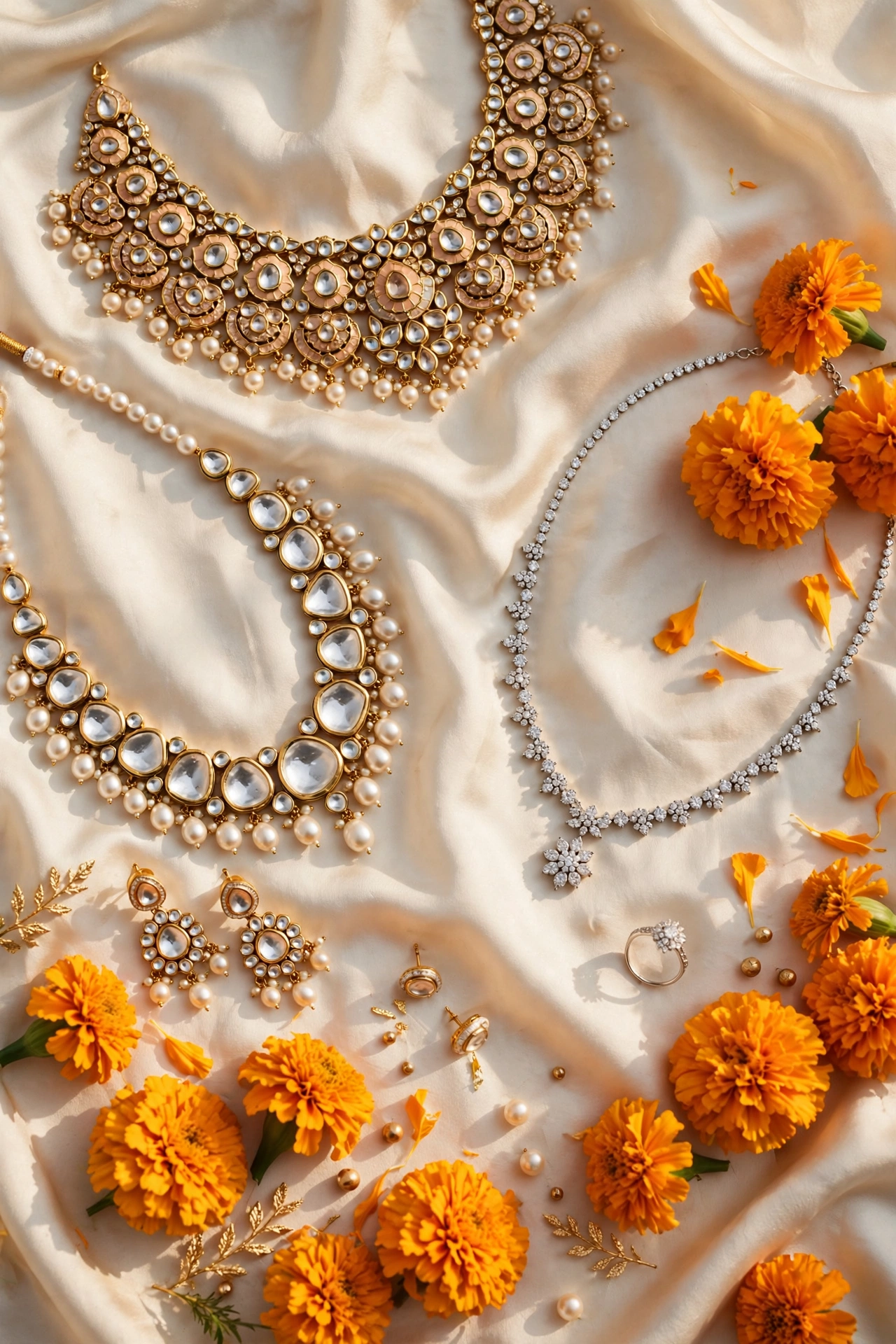
Kundan, polki and diamond look similar in photographs, but they are very different stones. A bride who knows the difference can choose with confidence, spend wisely, and avoid paying a diamond price for a glass stone. The short version is this: polki is a real uncut diamond, kundan is glass set in gold, and diamond is a cut, faceted stone. Each one has its own look, its own price, and its own moment.
Kundan: the royal glass
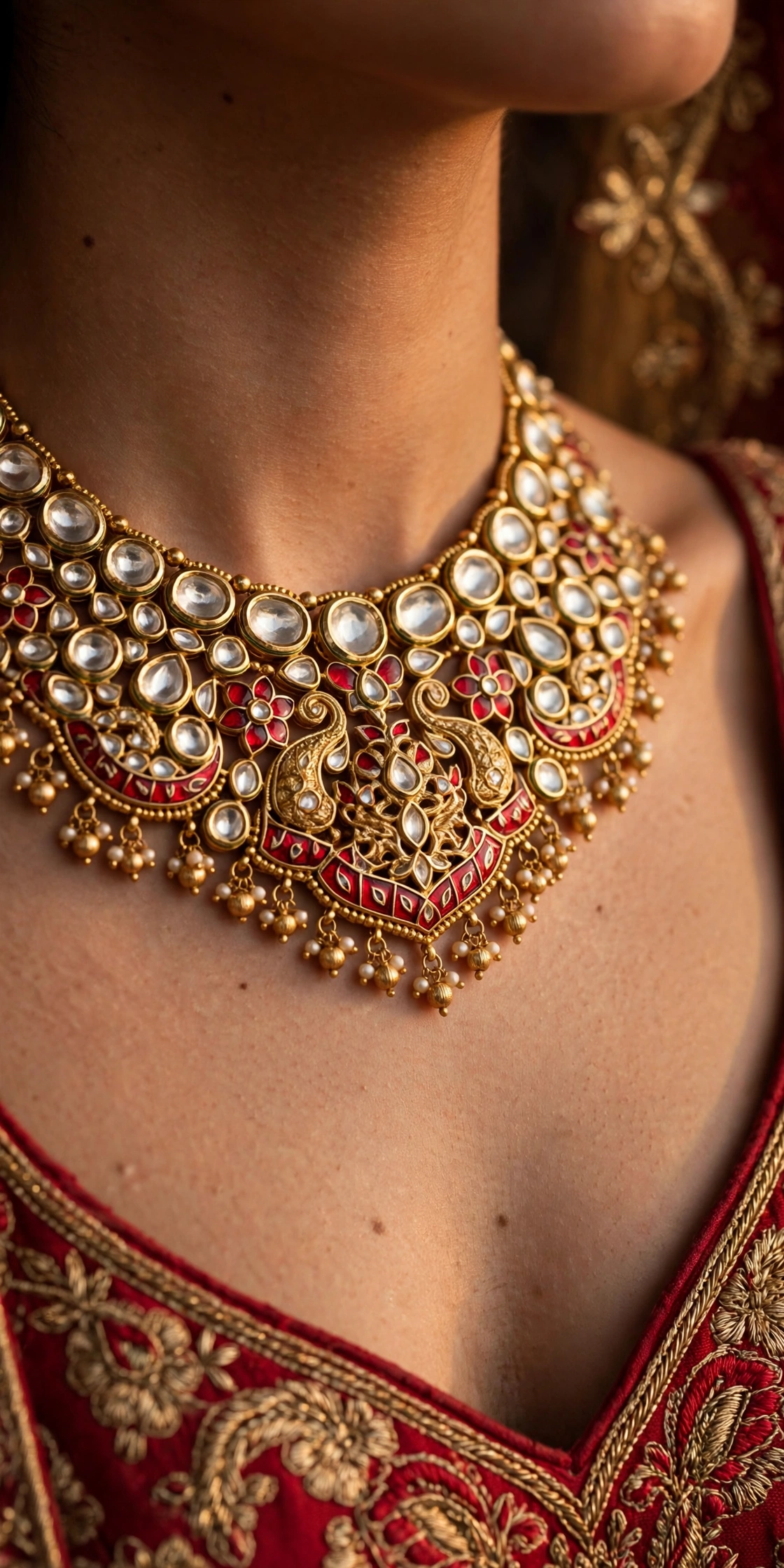
Kundan jewellery is made by setting glass stones, often with a foil backing, into gold using lac, a natural resin. The technique comes from the Mughal courts of Rajasthan, and it produces jewellery that looks rich, colourful, and royal. A kundan necklace is usually bright, with red, green, and white stones, and it suits a traditional red lehenga beautifully. Kundan is lighter than polki, because glass weighs less than diamond, and it is far more affordable.
Polki: the real uncut diamond
Polki is a real diamond, left uncut and set in gold with a closed back. It has a soft, warm shine, with natural inclusions that prove it is a real stone. Polki is the most expensive of the three, and it is also the most durable, because a diamond is the hardest stone. A polki set suits a bride who wants heritage, investment value, and a look that no glass stone can copy.
The advantage of polki is that it is real, and it holds its value. A polki set can be redesigned, exchanged, and passed down as an heirloom. The disadvantage is the price, and the weight: polki is heavier than kundan, so a full polki set needs a trial to check comfort. When you buy polki, ask for a certificate for the diamonds and the hallmark for the gold, and check that the stones are set securely. A real polki set is an investment, so buy it from a jeweller you trust.
Diamond: the cut and sparkling stone
Diamond jewellery uses cut stones, faceted to catch the light and sparkle. A diamond necklace is the most brilliant of the three, and it suits a modern bride, a reception gown, and a Western outfit. Diamonds are graded by cut, colour, clarity, and carat, and the price depends on all four. A diamond set is the most versatile, because it suits every outfit, from a lehenga to a gown, and it can be worn daily.
The advantage of diamond is the sparkle and the versatility. A diamond choker suits a reception, a diamond pendant suits daily wear, and a diamond set suits a modern wedding. The disadvantage is the price, which rises fast with size and quality, and the look: a diamond set is less traditional than kundan or polki, so it suits a modern wedding better than a traditional one. When you buy diamonds, ask for a certificate from a trusted lab, and check the setting, the clasp, and the matching of the stones.
Which one suits your wedding
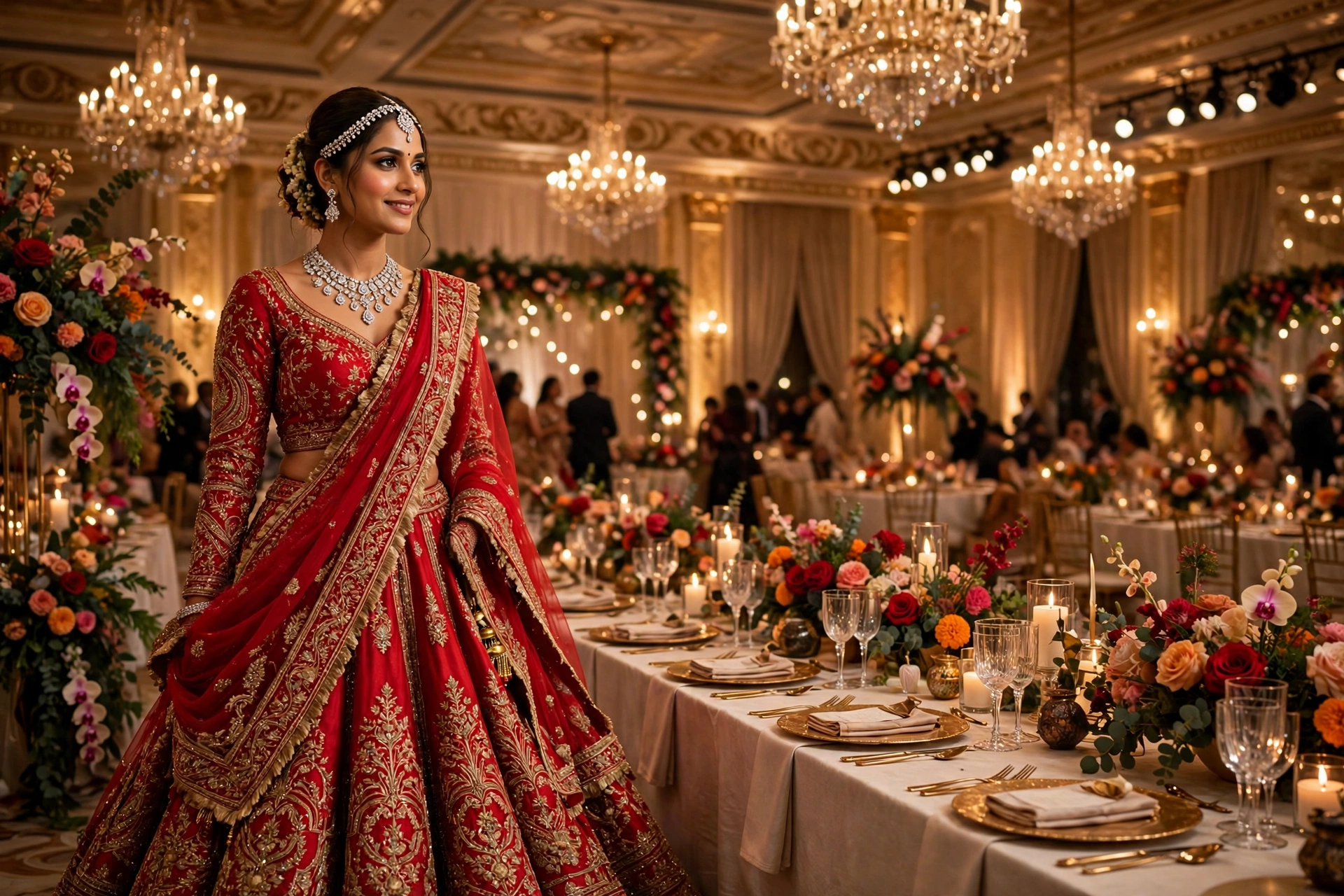
The choice depends on your ceremony, your outfit, and your budget. For a traditional wedding with a red lehenga, kundan or polki both suit, because both are heritage jewellery. Kundan is the practical choice if you want the royal look without the investment, and polki is the heirloom choice if you want the real stone. For a South Indian wedding with a Kanjivaram saree, polki with temple motifs suits best, because it matches the heritage of the saree.
For a reception with a gown, diamond suits best, because it is modern and brilliant, and it does not compete with a Western neckline. For a daytime wedding, kundan suits well, because its bright colours glow in daylight. For a multi day wedding, many brides mix: kundan for haldi and mehndi, polki for the wedding, and diamond for the reception. That gives each ceremony its own jewellery, and it spreads the budget across the week.
Buying wisely and avoiding fakes
Buy from a trusted jeweller, and ask for certificates in writing. Polki needs a diamond certificate, diamond needs a lab certificate, and kundan needs a bill that says kundan, not polki. Check the hallmark for the gold, and ask about the making charges, the buyback, and the exchange policy. A jeweller who hesitates to give a certificate is a jeweller to avoid.
What it costs
A kundan necklace set usually costs between ₹15,000 and ₹1,00,000, depending on the gold weight and the design. A polki necklace set usually costs between ₹1,00,000 and ₹5,00,000, depending on the gold weight and the stone size. A diamond necklace set usually costs between ₹75,000 and ₹5,00,000, depending on the cut, colour, clarity, and carat. These are wide ranges, because the price depends on the stones and the gold, so set your budget before you shop and ask the jeweller for the full breakdown in writing.
The invitation is a fixed, small cost. On MyIndiAura, a Cinematic Invite is ₹499, an Invite App is ₹399, and an Invitation Suite is ₹99. Your jewellery photographs will look beautiful inside any of them. See the pricing page for the current prices.
How to create your jewellery invitation
- Pick a design that matches your wedding colours from the designs page at myindiaura.com/designs.
- Add your names, the ceremony dates and times, and the venue for each function.
- Add photographs of the couple, including one that shows the jewellery.
- Preview the invitation on your own phone, then share the link on WhatsApp. See myindiaura.com/create to start, and myindiaura.com/pricing for the full price list.
Details to check before you send
- The names of the bride and groom, spelt exactly as the families use them
- The date and time of each function, with the venue and the dress code
- A photograph that shows the wedding colours, so guests can plan their outfits
- The RSVP contact for guests who need directions or timings
- The jewellery certificate, the hallmark, and the jeweller's bill, kept safe
- A full hour trial of the jewellery set, with the outfit you will wear
Frequently asked questions
Is kundan real gold jewellery?
Kundan uses real gold for the setting, but the stones are glass, not diamonds. It is real jewellery, and it looks royal, but it is not the same as polki, which uses real uncut diamonds.
Which is more expensive, polki or diamond?
It depends on the size and quality, but a polki set is often more expensive than a similar diamond set, because polki uses large uncut diamonds and heavy gold work. A small diamond set can cost less than a large polki set.
Can I wear kundan daily?
Kundan is best kept for weddings and family occasions, because the glass stones can chip and the lac setting can loosen. A small kundan pendant can be worn daily, but a heavy kundan set should be saved for special days.
MyIndiAura theme showcase
These Cinematic Invites from MyIndiAura fit this wedding. Each one is ₹499.
- Resham Satin: silk and gold for a kundan set.
- Velvet Curtain: deep tones for a diamond look.
- Gulposh Nikah: floral gold for a polki set.
Related reading
- Pheras: Seven Vows Explained
- Indian Wedding Planning Checklist
- How to Plan a Wedding on a Budget in India
Create your jewellery invitation on MyIndiAura, and let the invitation carry the sparkle of the day to every guest.
Explore invitation designs
Choose a design and preview it free with your own names.
Found this useful? Share it with someone planning a celebration.
Share