Karwa Chauth Invitation Wording and Designs
Karwa Chauth is a fast kept for the husband's long life, and an evening of henna, stories and the moonrise. Here are invitation wording examples and design ideas for a Karwa Chauth celebration with friends and family.
Karwa Chauth invitations, explained simply
Karwa Chauth is the festival when married women fast from sunrise to moonrise, praying for the long life of their husbands. It is a day of henna, new clothes, stories and songs, and it ends when the moon rises and the husband offers the first sip of water. The invitation should carry that tenderness in its words and its design. This article gives you wording you can copy, design ideas that work on a phone screen, and the practical details that make a Karwa Chauth celebration run smoothly.
A Karwa Chauth celebration is usually a gathering of women in the afternoon, for henna, sargi and stories, followed by the moonrise together in the evening. The invitation is simple: one warm line, the date and time, and the address. But the details matter, because this is a day with a rhythm of its own, from the pre dawn sargi to the moonrise at night.
The day, from sargi to moonrise
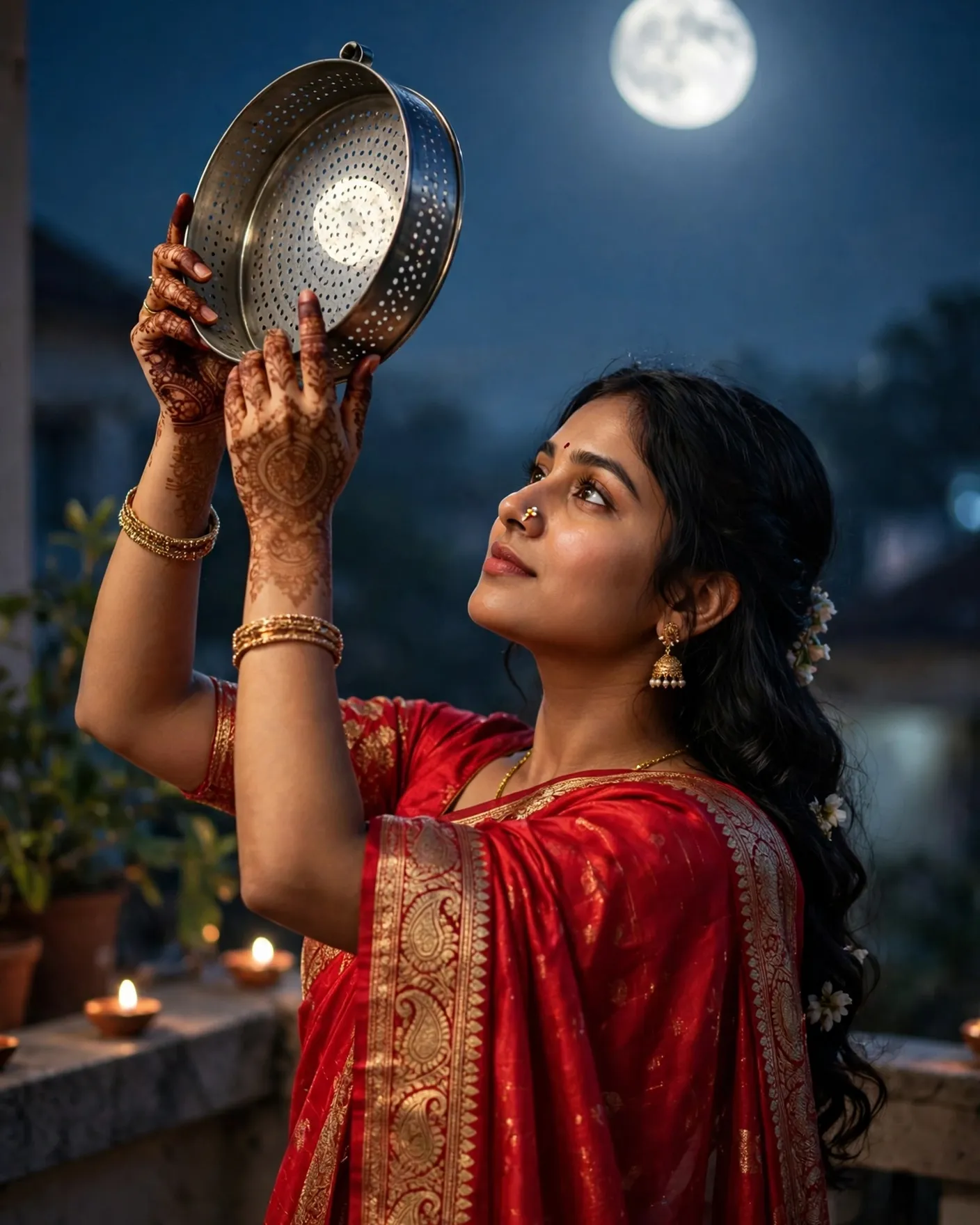
The day begins before dawn, with sargi, the meal a mother in law prepares for the fasting woman. Then comes the fast, with no food and no water, through the day. In the afternoon, women gather for henna and the Karwa Chauth katha, the story of the festival. In the evening, everyone waits for the moonrise, and when the moon appears, the women look at it through a sieve, then at their husbands, and break the fast.
If your celebration includes the afternoon gathering, mention its time in the invitation: "Henna and katha from 3 in the afternoon, moonrise together at 8 in the evening." If the celebration is only the evening moonrise, say so clearly. Guests plan their fast around the gathering, so the timing matters more than usual.
For first time fasters, a gentle line helps: "First fasters are most welcome, and we will guide you through the day." A first Karwa Chauth can feel daunting, and a warm invitation makes it easier.
Wording for a Karwa Chauth invitation
For a gathering of women, the wording is warm and sisterly. Here are lines you can use as they are, or adapt with your own names.
- Join us for Karwa Chauth, an afternoon of henna, stories and songs, as we wait for the moon together.
- Fasting for love, waiting for the moon. Come, celebrate Karwa Chauth with us.
- Our home, our henna, our moonrise. Join us for Karwa Chauth, from the afternoon katha to the evening moon.
- She fasts, he waits, and the moon blesses them both. Come, be part of our Karwa Chauth.
Keep the wording short. One warm line, then the date, time and address. If the celebration is hosted by a group of friends, name them all. If it is at a mother in law's home, name her as host. The invitation is from the women, and it should sound like them.
Wording for husbands and families
Husbands are part of Karwa Chauth too, especially at the moonrise. If husbands are invited for the evening, say so: "Husbands are welcome from 7 in the evening, for the moonrise and the feast." If the evening includes a dinner after the fast is broken, mention it: "Dinner will be served after the moonrise, for everyone who fasted and everyone who waited."
For a family celebration, the wording can include the whole family: "Join our family for Karwa Chauth, as we wait for the moon and break the fast together." Children are often part of the evening, watching the moonrise with their mothers, so mention them: "Children are most welcome for the moonrise."
Design ideas for the invitation
Karwa Chauth designs are romantic and soft. A deep maroon or plum background with a gold crescent moon reads beautifully on a phone, and a single moon and sieve motif is enough. Do not crowd the card with every motif at once. One strong image, the names, the date and the venue is all a guest needs.
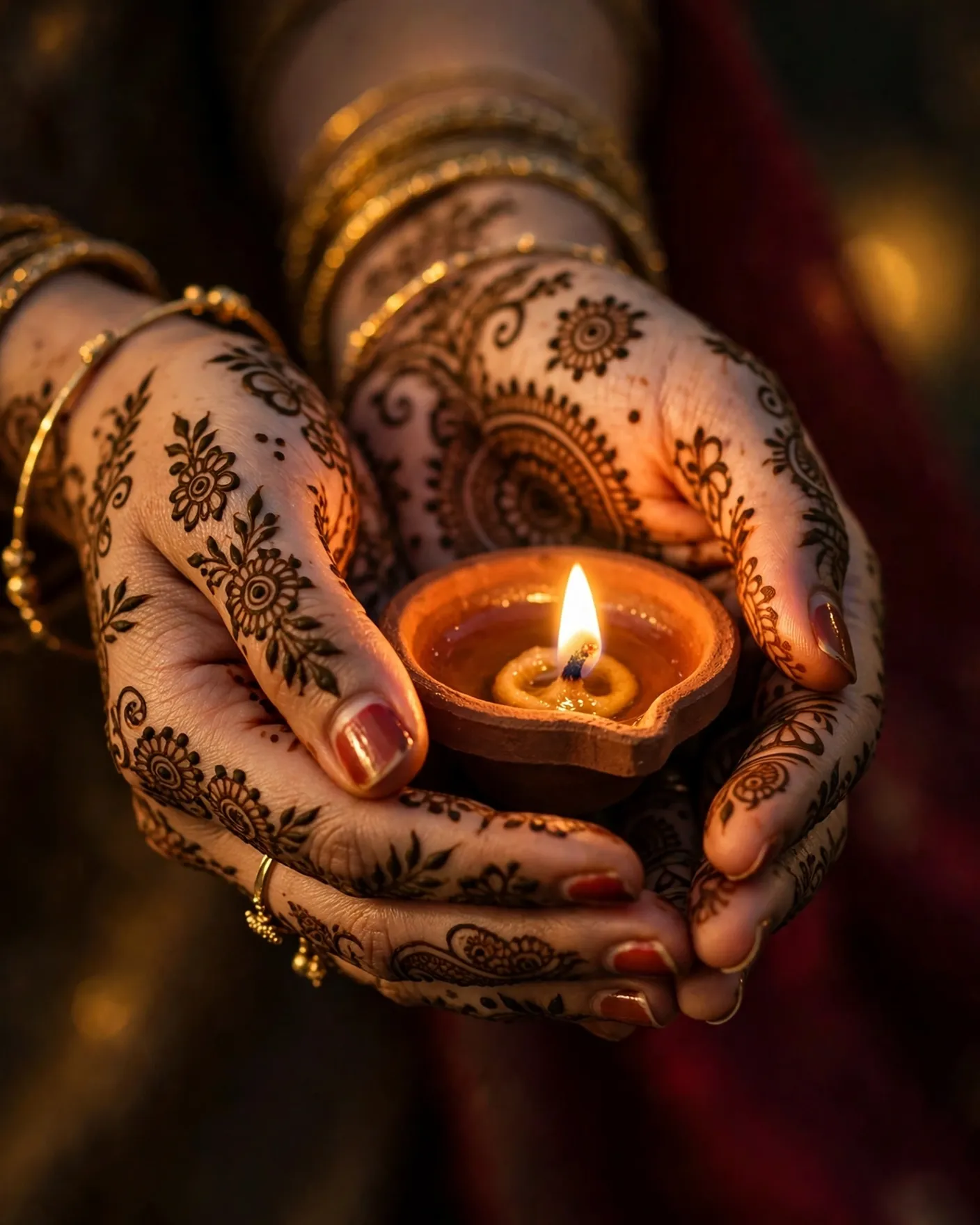
Henna is the easiest Karwa Chauth decoration, and it photographs beautifully. A border of henna paisleys around the card, with a simple gold moon in the centre, looks festive without looking busy. If the celebration is in the afternoon, use a warm cream background with maroon and gold details. If it is an evening moonrise, use a dark background so the moon glows.
For a video invitation, open on hennaed hands holding a diya, then let the camera rise to the moon, then to the invitation text. Seven seconds is enough. The film should feel tender and slow, like the wait for the moon. A Cinematic Invite does this well, because it opens with a film instead of a static card.
Henna, sargi and the katha
Henna is the heart of the afternoon. If your celebration includes a henna artist, mention it: "A henna artist will be with us from 3 to 6, please come early for your turn." If women are applying henna for each other, say so: "Bring your henna cones, we will apply them together." A line about henna tells guests what to expect, and it builds excitement.
Sargi is the pre dawn meal, and it is usually a family matter, not part of the invitation. But if your celebration includes a sargi gathering, mention it the day before, with its time. The katha, the story of Karwa Chauth, is told in the afternoon, and it is worth mentioning: "We will hear the Karwa Chauth katha together at 4." Guests who are new to the festival will appreciate knowing the story will be told.
For the moonrise, check the moonrise time for your city and mention it in the invitation. Moonrise times vary by city, and guests plan around them. A line like "Moonrise is expected at 8:12 in the evening, we will gather on the terrace from 7:30" is practical and thoughtful.
Food after the fast
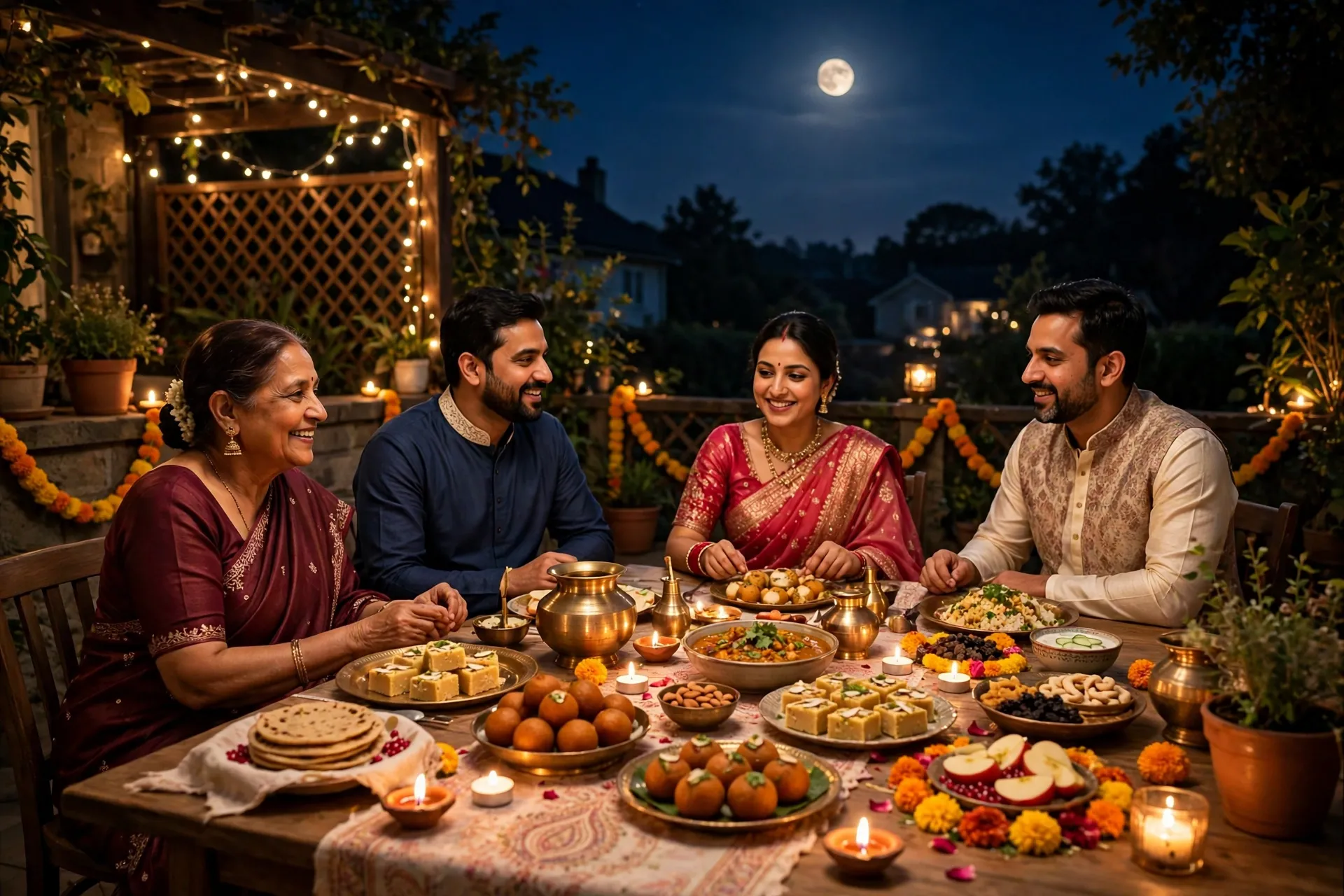
The fast is broken with water from the husband's hands, then a sweet, then a full meal. Mention the food with one line, such as "Dinner will be served after the moonrise" or "Sweets and a festive dinner for everyone". Guests who fasted will be hungry, and guests who waited will be too. A small note like "Vegetarian dinner" helps everyone relax.
For the evening, a short line builds warmth: "We will break the fast together, then eat, then talk till late." Karwa Chauth is a long day, and the invitation should show its rhythm, from the afternoon henna to the evening moon and the meal that follows.
What it costs
On MyIndiAura, a Cinematic Invite is ₹499, an Invite App is ₹399, and an Invitation Suite is ₹99. Choose by what your invitation needs to do, not by price alone. A cinematic invite suits a Karwa Chauth celebration with a film led opening, while an invite app suits a full day with RSVP, maps and a schedule of the henna, the katha and the moonrise.
How to create your invitation
- Pick a design from the designs page at myindiaura.com/designs.
- Add the wording, the date, the time, the venue, and the order of events, including the henna, the katha and the moonrise.
- Add photos of the venue, the venue map, and the RSVP button.
- Preview the invitation on your own phone, then share the link on WhatsApp. See myindiaura.com/create to start, and myindiaura.com/pricing for the full price list.
Details to check before you send
- The hosts names, spelt exactly as the family uses them
- The celebration date and time, checked with the family
- The moonrise time for your city, mentioned clearly
- The henna and katha timings, for the afternoon gathering
- The full venue address, with the area and a map link
- An RSVP contact for guests who need directions
MyIndiAura theme showcase
These Cinematic Invites from MyIndiAura fit this celebration. Each one is ₹499.
- Poonam Raat: a moonrise fast breaking greeting.
- Chandni: a moonlit night celebration.
- Gulab Dil: a burgundy envelope, a blush wax seal, and a heart of rose petals, for a day kept for love.
Frequently asked questions
When should I send a Karwa Chauth invitation?
Send it four to five days before the festival. Women plan their henna and their fast around the gathering, so give them time. Send a reminder the day before, with the moonrise time.
What should a Karwa Chauth invitation say?
It should say whose celebration it is, the date and time, the venue, and the moonrise time. Mention the henna and katha timings for the afternoon, and whether husbands are invited for the evening.
What is the moonrise time, and why does it matter?
The fast is broken only after the moon rises, so the moonrise time decides the whole evening. Check the moonrise time for your city and mention it in the invitation, so everyone gathers on time.
Can first time fasters join the celebration?
Yes, and they should be warmly welcomed. Mention in the invitation that first fasters are welcome, and that the group will guide them through the day, from the henna to the moonrise.
Should I mention food in the invitation?
Yes, one line is enough, such as "Dinner will be served after the moonrise". Guests who fasted will be hungry, and a note like "Vegetarian dinner" helps everyone relax.
Related reading
- Wedding Invitation Wording in Hindi
- Wedding Invitation Messages from Bride's Parents
- Best Wedding Favours and Return Gift Ideas
Create your Karwa Chauth invitation on MyIndiAura, and let the moon find your guests already gathered.
Explore invitation designs
Choose a design and preview it free with your own names.
Found this useful? Share it with someone planning a celebration.
Share