Jasmine and Mogra Wedding Decor Ideas
Jasmine and mogra bring a soft white fragrance to Indian weddings. Here is how to use them at the ceremony, the pheras and the evening functions.
Why jasmine and mogra belong at an Indian wedding
Jasmine, or mogra, is the quiet flower of Indian weddings. It does not shout like the marigold or show off like the rose. Its white buds open through the evening, and its fragrance fills the room before the guests notice the flowers at all. In South Indian weddings it is woven into the bride's hair, and in North Indian weddings it garlands the mandap and the couple.
Mogra suits the ceremony best, because its colour is calm and its scent is sacred. It pairs with almost every other flower, and it cools down strong colours like red and orange. A wedding that uses mogra well feels serene in the photographs, and guests remember the fragrance long after the day.
Jasmine in the bride's hair and the varmala
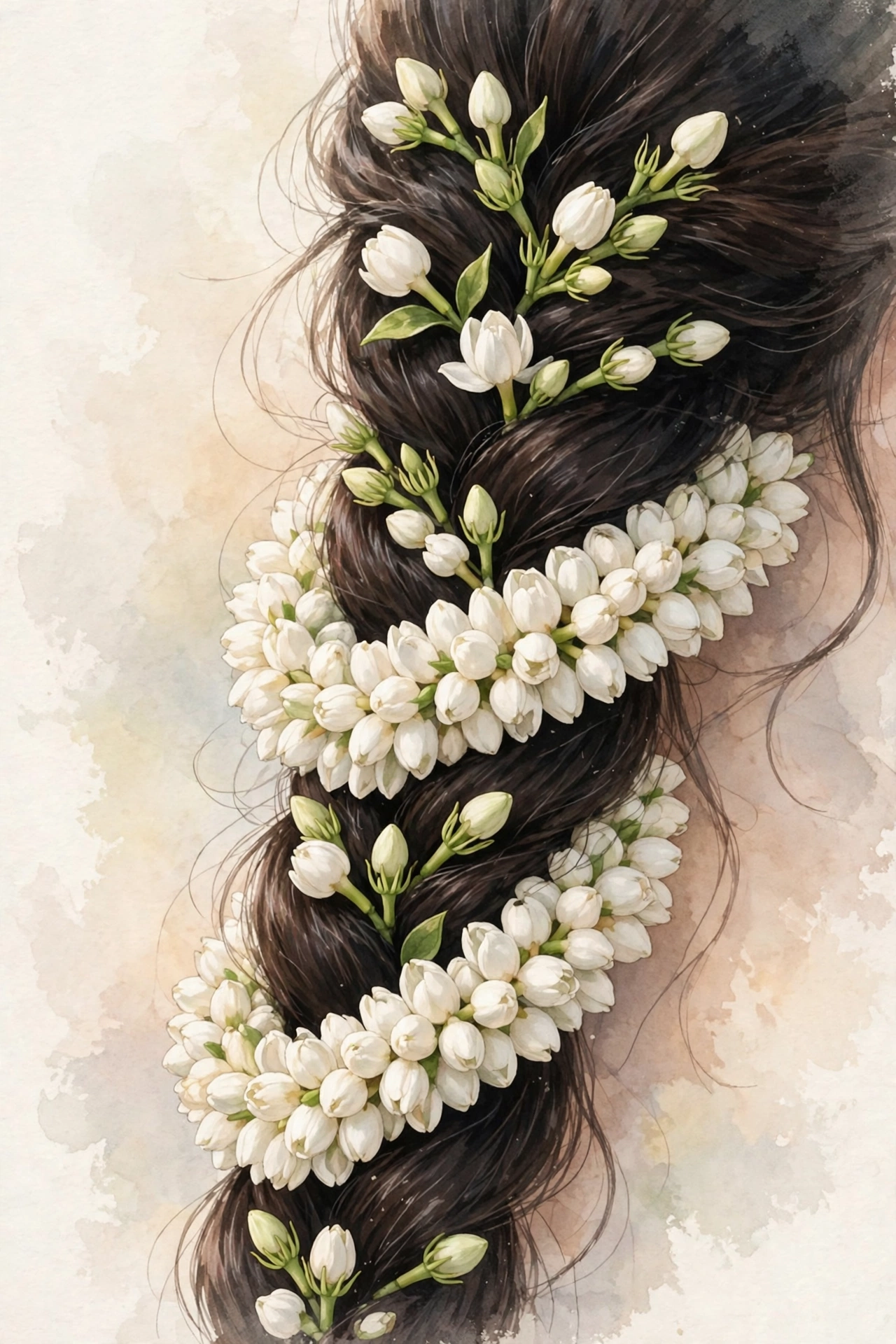
The most loved use of jasmine is the bride's hair. A gajra of fresh jasmine buds, woven through a braid or wrapped around a bun, is a look that suits every region and every outfit. Order the gajra fresh on the wedding morning, and ask the florist to use tight buds rather than open flowers, because buds last longer and look neater through a long ceremony.
For the varmala, jasmine mixed with roses or orchids makes a garland that is light, fragrant and photogenic. A full jasmine varmala is beautiful but delicate, so mix it with a sturdier flower if the ceremony is long. Keep the varmalas cool until the pheras begin, and carry a spare gajra for the bride, because hair flowers are the first thing to wilt in heat.
Jasmine decor for the mandap and the aisle
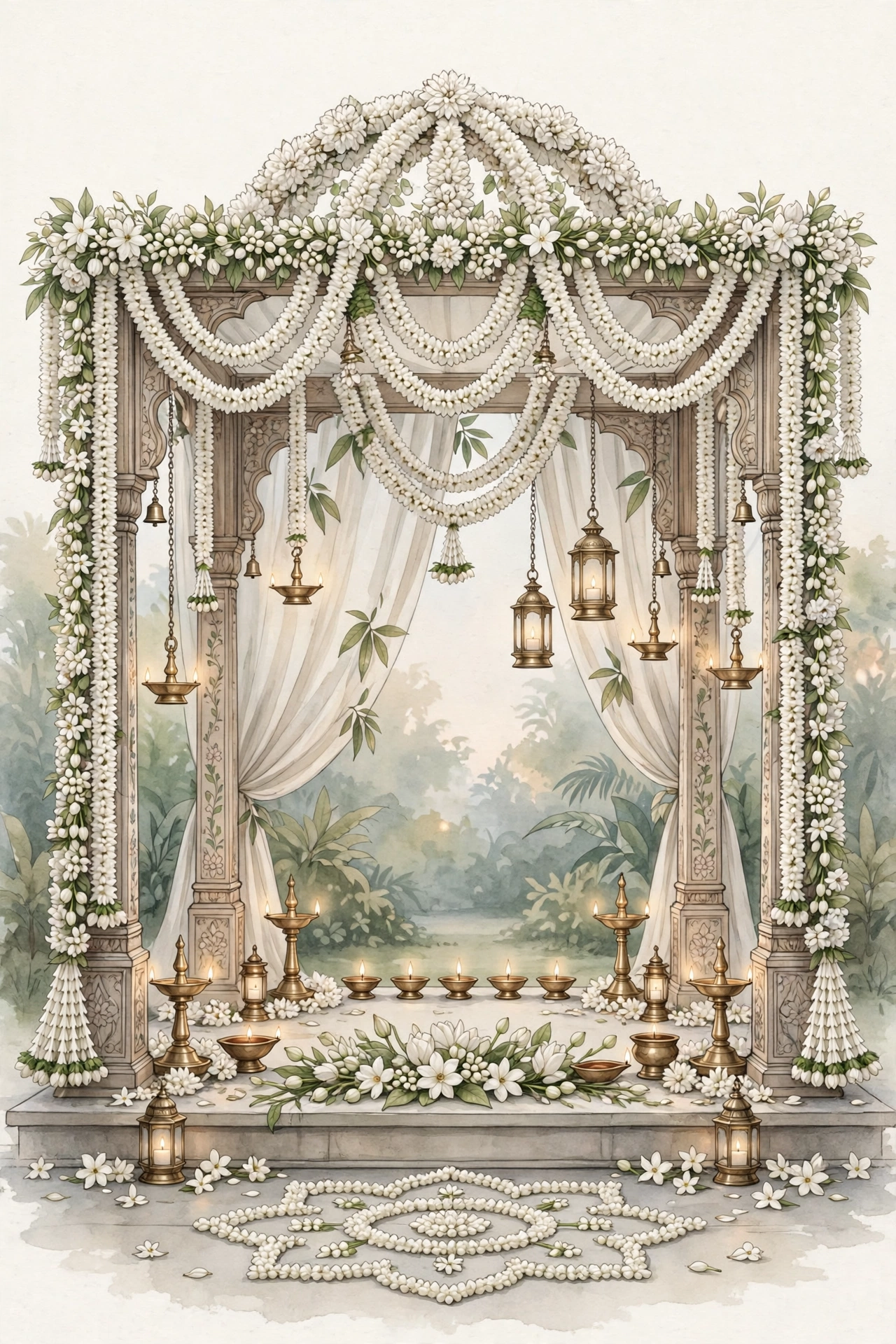
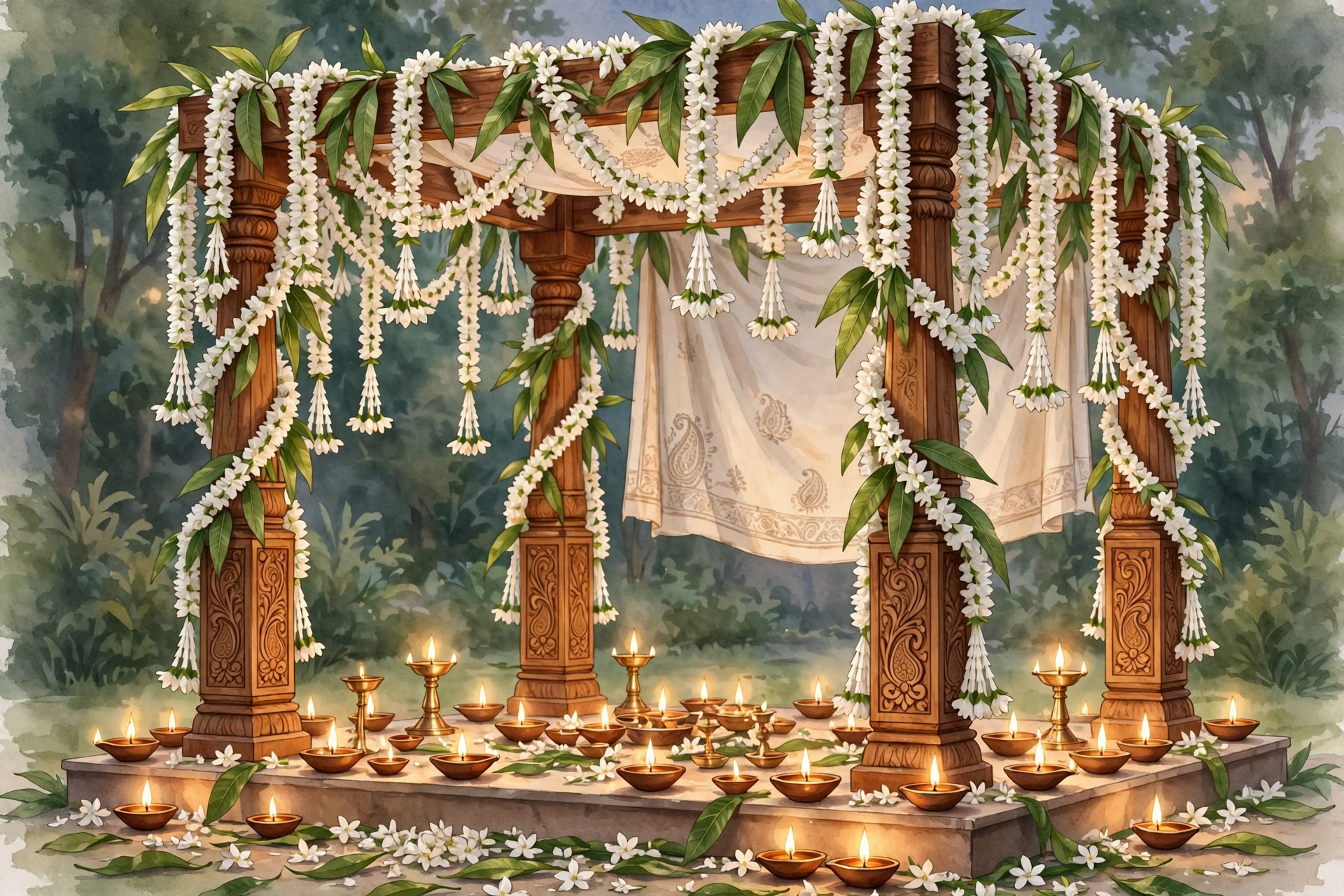
At the mandap, jasmine works as a garland and as a curtain. Strings of jasmine buds hung between the pillars make a soft white screen that glows under warm light. Twisted with mango leaves, jasmine garlands dress the pillars without the heaviness of roses or marigolds. The mandap looks light and sacred, which suits a morning ceremony.
For the aisle, small baskets of jasmine at the chair ends, or a thin line of jasmine petals down the aisle, guide the bride to the mandap without distracting from her. Jasmine petals are best scattered just before the ceremony, because they brown quickly once they leave the flower. Ask the decorator to scatter them fifteen minutes before the bride walks in, not an hour before.
- Gajra of tight jasmine buds for the bride's hair, made fresh that morning
- Jasmine strings between the mandap pillars, twisted with mango leaves
- Small jasmine baskets at the aisle chairs, with petals scattered last
- A spare gajra and spare varmala kept cool until the ceremony
Jasmine at the evening functions
Jasmine is at its best in the evening, when the buds open and the scent grows stronger. For the sangeet, float jasmine buds in shallow brass bowls on the tables, with a single tea light beside each bowl. The light catches the white buds, and the fragrance carries across the room. For the reception, jasmine garlands around the cake table and the head table add a calm white frame to the evening.
Mixing jasmine with other flowers
Jasmine is a team player. With red roses it adds softness to the ceremony. With marigolds it adds calm to the haldi. With orchids it adds fragrance to a modern reception. With tuberose it doubles the scent, which suits a small indoor ceremony but can overwhelm a closed hall, so use the pair carefully.
Keep the balance in favour of jasmine when the function is sacred, and let the partner flower lead when the function is festive. At the pheras, jasmine should be the flower guests notice first. At the sangeet, the roses or orchids can lead, with jasmine as the fragrance underneath.
Keeping jasmine fresh through the day
Jasmine is delicate, so it needs the most care of any wedding flower. Buy it the morning of the function, keep it cool and shaded, and do not string it until the decorator is ready to hang it. Strings made too early wilt before the guests arrive. Mist the garlands lightly, and keep them out of direct sun.
For the gajra, ask the florist to wrap the stems in a damp cloth and store it in a cool box. Carry it to the venue in the box, and put it in the bride's hair as late as possible. A gajra made at seven in the morning and worn at seven in the evening will not look the same, so time it to the ceremony.
- Buy jasmine the morning of the function, and keep it cool and shaded
- String garlands only when the decorator is ready to hang them
- Store the gajra wrapped in a damp cloth in a cool box
- Scatter jasmine petals fifteen minutes before the bride walks in
What it costs
On MyIndiAura, a Cinematic Invite is ₹499, an Invite App is ₹399, and an Invitation Suite is ₹99. Choose by what your invitation needs to do, not by price alone. A cinematic invite suits a wedding with a film led opening, while an invite app suits a full week of functions with RSVP and maps.
How to create your jasmine wedding invitation
- Pick a soft, floral design from the designs page at myindiaura.com/designs.
- Add the couple names, the dates, the venues, and the order of events for each function.
- Add photos of the couple, the venue map, and the RSVP button.
- Preview the invitation on your own phone, then share the link on WhatsApp. See myindiaura.com/create to start, and myindiaura.com/pricing for the full price list.
Details to check before you send
- The names of the bride and groom, spelt exactly as the families use them
- The date and time of each function, with the venue for each one
- The jasmine order, with a spare gajra and spare varmala
- The decorator's timing, so garlands are strung close to the function
- A dress code note, if you want guests in whites and pastels for the ceremony
- An RSVP contact for guests who need directions
Frequently asked questions
Is jasmine the same as mogra?
Yes. Mogra is the Indian name for the jasmine used at weddings. It is the small white bud with a strong sweet scent, and it is the flower woven into gajras and garlands across India.
How long does a jasmine gajra last?
A fresh gajra made from tight buds lasts six to eight hours if it is kept cool until it is worn. Open flowers wilt faster, so ask the florist for buds, and put the gajra in the hair as late as possible.
Can jasmine survive a summer wedding?
It can, with care. Keep it shaded and cool, mist it lightly, and string it late. Avoid placing jasmine garlands where the afternoon sun hits them directly, because the buds brown quickly in harsh light.
What flowers go well with jasmine?
Red roses for the ceremony, marigolds for the haldi, orchids for a modern reception, and tuberose for extra fragrance. Jasmine suits them all, because its white colour and soft scent sit quietly beside stronger flowers.
Should I use real jasmine or artificial strings?
Real jasmine for the gajra, the varmala and the mandap, because the fragrance is the point. Artificial strings are fine for high hangings guests never touch, where the scent does not reach.
MyIndiAura theme showcase
These Cinematic Invites from MyIndiAura fit this wedding. Each one is ₹499.
- Mero Vrindavan: jasmine and temple gardens, made for a sacred ceremony.
- Bodhi Saanjh: a calm evening story in soft light.
- Gulaabi Aangan: a pink courtyard that pairs beautifully with white jasmine.
Related reading
- Floral Wedding Invitation Designs for a Romantic Celebration
- Haldi Ceremony Invitation Card Designs
- Trending Wedding Decor Ideas for 2027
Jasmine does not demand attention. It fills the room with scent, frames the ceremony in white, and lets the couple shine. That quiet work is why it has belonged at Indian weddings for generations.
Explore invitation designs
Choose a design and preview it free with your own names.
Found this useful? Share it with someone planning a celebration.
Share