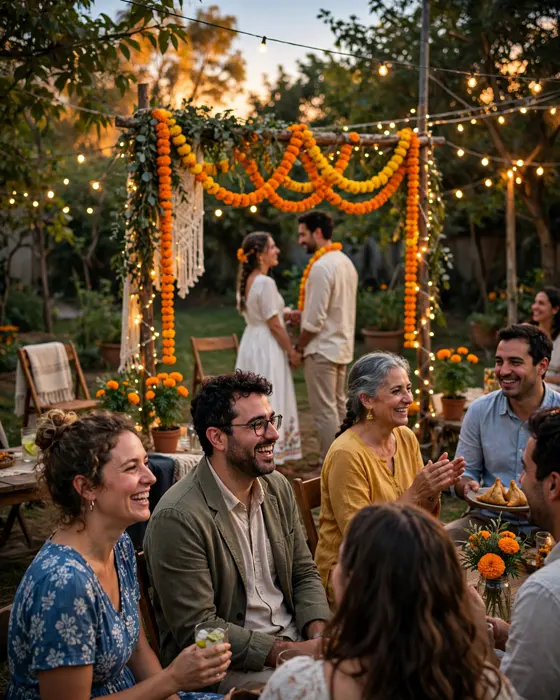
Jain Wedding Food Menu Guide
No root vegetables, no onion, no garlic, and a feast that still feels generous. The Jain wedding menu, what it means, how to build it, and how to work with your caterer.
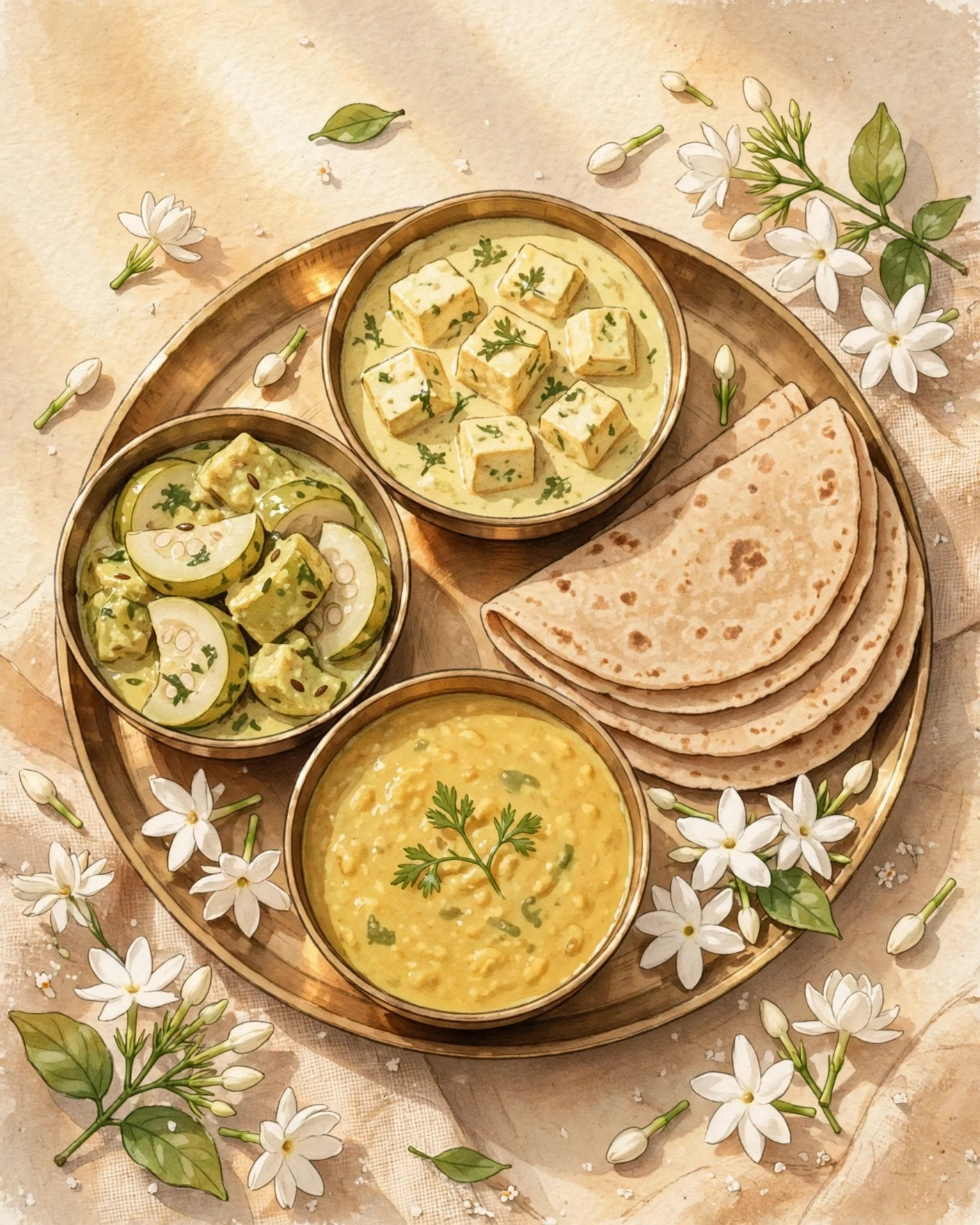
What Jain food means at a wedding
Jain food at a wedding is a promise, not a restriction. It tells guests that the meal follows the Jain way: no root vegetables, no onion, no garlic, and food cooked with care and non violence. For Jain families, this is not a preference, it is a matter of faith, and the caterer must honour it fully.
The meal is vegetarian, and it is also sattvik, which means it avoids the foods that Jain teaching says harm living beings or disturb the mind. That sounds strict, but the Jain table is still generous, with a full range of dishes, breads, rice and sweets, cooked with skill and served with pride.
The key is a caterer who knows Jain cooking, not one who simply leaves the onion out of a normal menu. Jain food has its own recipes, its own spice blends, and its own way of building flavour without onion and garlic, and it takes a cook who knows them.
The no root rule, explained simply
The no root rule is the heart of Jain food. Root vegetables like potato, onion, garlic, ginger, carrot, beetroot and radish are not served, because pulling a root from the ground ends the whole plant and the tiny life around it. The rule is simple to state and hard to follow without care.
This means the kitchen must be checked. The caterer should use separate vessels, separate oil, and a separate cooking area for the Jain food, so no onion or garlic touches it by mistake. Ask about this at the tasting, and ask to see the kitchen if you can. A good Jain caterer will welcome the question.
The rule also shapes the menu. Without potato, the kitchen leans on pumpkin, bottle gourd, raw banana, peas and paneer. Without onion and garlic, the flavour comes from asafoetida, cumin, green chilli, coriander and fresh herbs. The food tastes different, and guests who know Jain food will recognise the care in it.
Building a full Jain menu
A full Jain wedding menu has the same shape as any wedding menu, with Jain dishes in every slot. Start with a Jain soup or a light dhokla, then a Jain paneer dish, a vegetable curry, a dal, a rice, breads and sweets. Each course should feel complete, not like a normal dish with something removed.
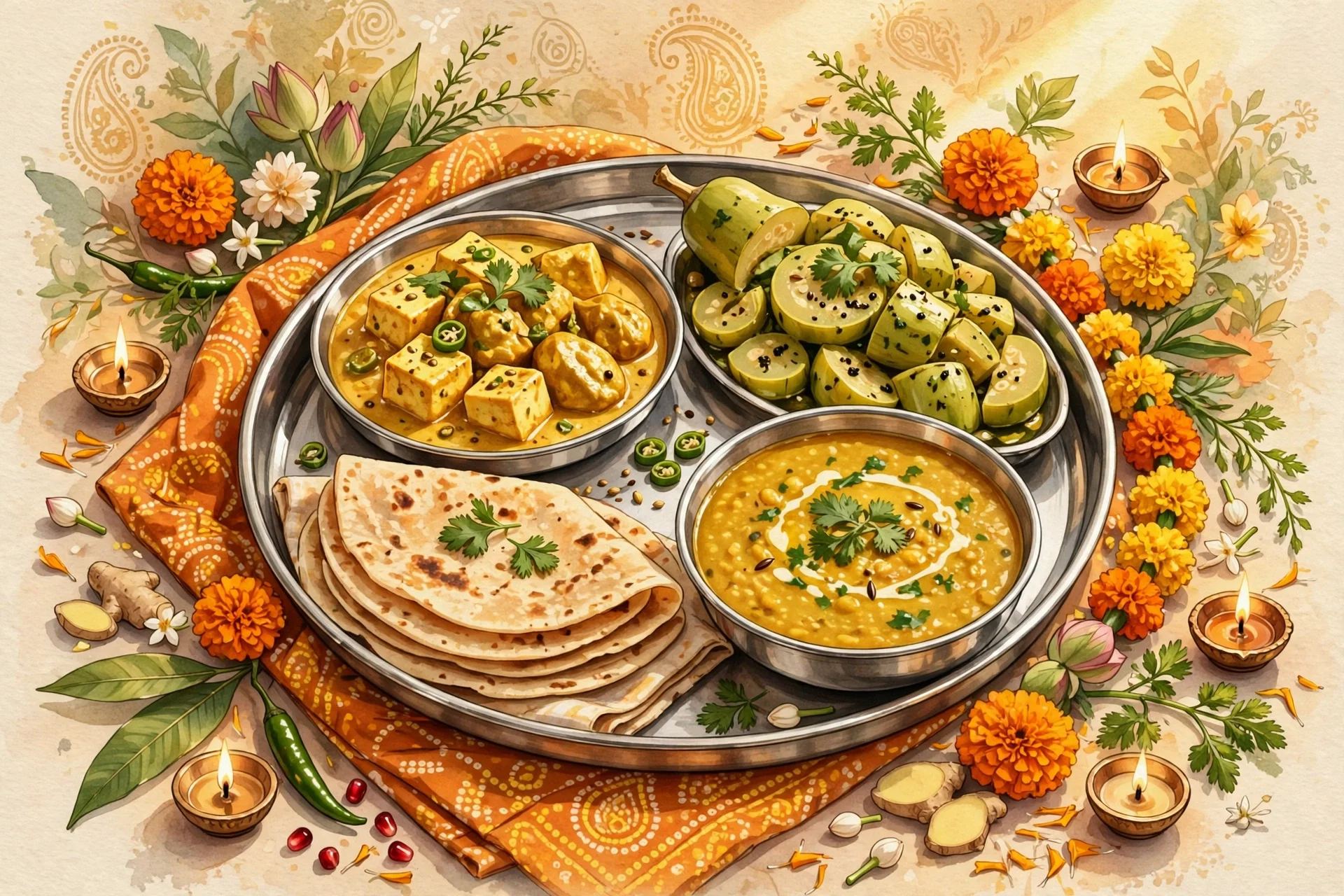
For the main dishes, ask for paneer butter masala made without onion and garlic, a bottle gourd and tomato curry, and a peas and paneer dish. For the dal, a tuvar dal with asafoetida and cumin is the classic. For the rice, a jeera rice or a vegetable pulao made with Jain vegetables suits the table.
The breads are the same as any wedding: naan, roti and poori, made fresh through the meal. The sweets are the same too: gulab jamun, rasgulla, kheer and a live jalebi counter, all made without egg. Jain sweets are generous, and the dessert table should be as full as any other wedding.
Jain sweets and the wedding feast
The Jain dessert table is one of the happiest parts of the meal, because sweets need no onion or garlic at all. Gulab jamun, rasgulla, barfi, ladoo and kheer are all naturally Jain, and a good halwai will make them fresh on the day.
A live jalebi counter, with the halwai piping batter into hot ghee, is the most loved live dessert, and it is fully Jain. A kulfi counter, with malai and kesar pista, is the second. Both give guests a small show, and both are safe for every guest at the table.
Keep the sweets small, because guests have eaten a full meal, and they will want a taste of each one. A sweet box for guests to carry home is a lovely parting gift, and it costs little.
Working with the caterer on Jain food
Choose a caterer who has cooked Jain weddings before, and ask for references from Jain families. A caterer who has done it will know the rules, the recipes and the kitchen discipline, and will not need to learn on your wedding day.
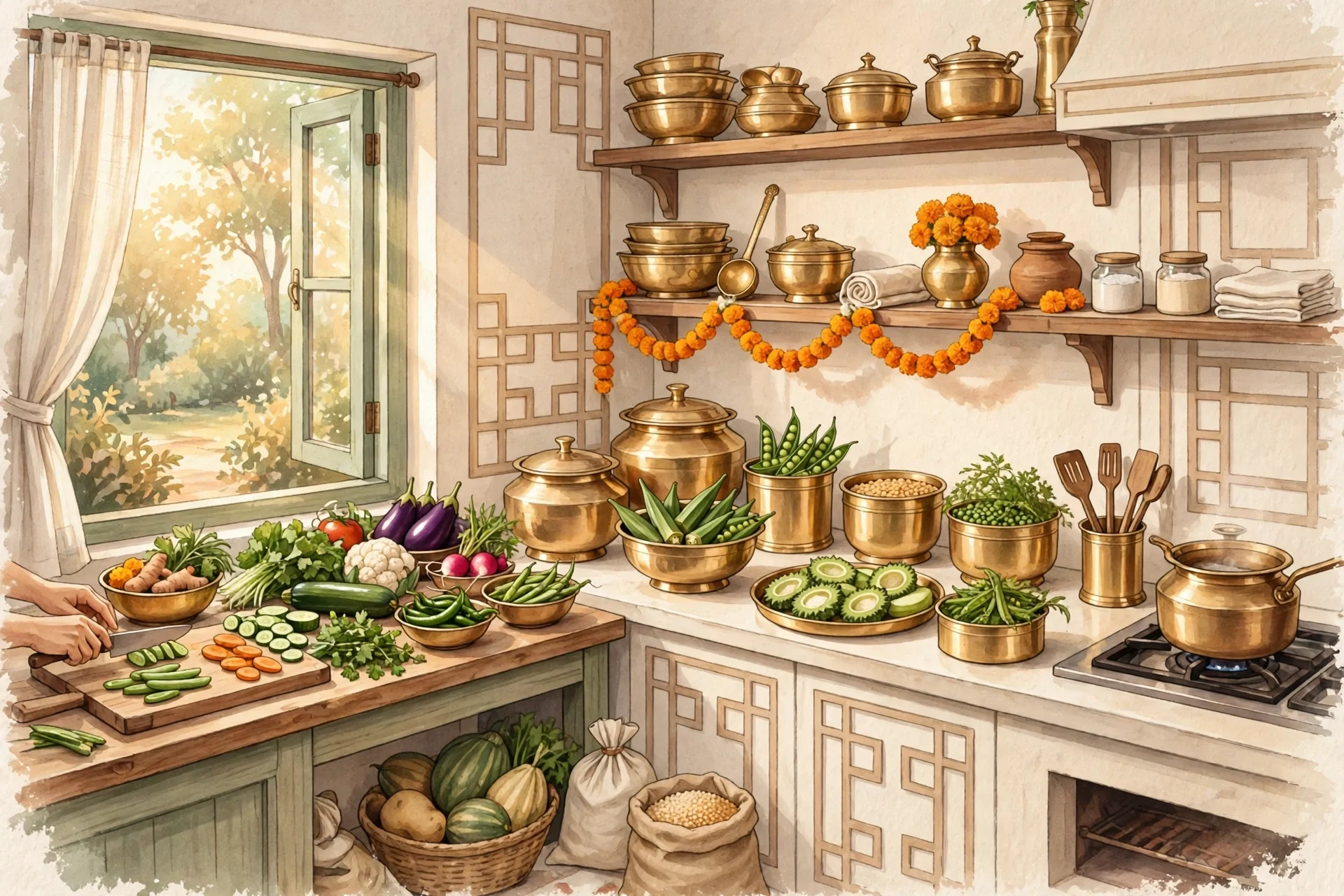
Taste the full Jain menu before you sign, in the same form guests will eat it. The paneer, the dal, the vegetables and the sweets should all be tasted, because a dish that tastes fine in a normal kitchen may taste flat without onion and garlic. The tasting is where the caterer proves they know Jain cooking.
Confirm the kitchen discipline in writing: separate vessels, separate oil, no root vegetables, no onion, no garlic, and a separate serving area for the Jain food. Tell the caterer the number of Jain guests, and ask for a dedicated Jain counter, clearly labelled, so guests can eat with confidence.
What it costs
On MyIndiAura, a Cinematic Invite is ₹499, an Invite App is ₹399, and an Invitation Suite is ₹99. Choose by what your invitation needs to do, not by price alone. A cinematic invite suits a wedding with a film led opening, while an invite app suits a full week of functions with RSVP and maps.
How to create your wedding invitation
- Pick a design from the designs page at myindiaura.com/designs.
- Add the couple's names, the dates, the venue, and the order of events, with the meal timing for each function.
- Add photos of the couple, the venue map, and the RSVP button.
- Preview the invitation on your own phone, then share the link on WhatsApp. See myindiaura.com/create to start, and myindiaura.com/pricing for the full price list.
Details to check before you send
- The names of the bride and groom, with parents, spelt exactly as the families use them
- The wedding date, time and full venue address, with a map link
- The meal timing and seating plan for each function
- The RSVP contact for guests who need directions or food help
- The order of events, with times for each ceremony
- A dress code note, if you want guests in a particular style
Frequently asked questions
What can Jain guests not eat?
No root vegetables like potato, onion, garlic, ginger, carrot, beetroot and radish, and no meat, fish or egg. The meal is vegetarian and sattvik, cooked without onion and garlic.
Why do Jains avoid root vegetables?
Pulling a root from the ground ends the whole plant and the tiny life around it, so Jain teaching avoids root vegetables as a form of non violence. It is a matter of faith, not taste.
Can a caterer cook Jain food in a normal kitchen?
Yes, but only with separate vessels, separate oil and a separate cooking area, so no onion or garlic touches the Jain food. Ask about this at the tasting, and confirm it in writing.
Is Jain food less tasty?
No, when it is cooked by someone who knows it. Jain food builds flavour from asafoetida, cumin, green chilli and fresh herbs, and a skilled Jain cook makes a meal that every guest enjoys.
Should the whole wedding be Jain food?
If both families are Jain, yes, and the whole wedding can be Jain food. If only one family is Jain, serve a full Jain menu at a dedicated counter, clearly labelled, alongside the main menu.
MyIndiAura theme showcase
These Cinematic Invites from MyIndiAura fit this wedding. Each one is ₹499.
- Bodhi Saanjh: calm and green, made for a gentle sattvik table.
- Radha Krishna: temple bells and soft light for a devotional wedding.
- Saanjh Mandir: an evening temple that suits a quiet, graceful ceremony.
Related reading
- Haldi Invitation Wording in Hindi and English
- Mehndi Invitation Messages for WhatsApp
- Indian Wedding Planning Checklist: 12 Months to the Wedding Day
Jain food is a promise kept with care, and a caterer who knows it will serve a feast that honours the faith and delights the guests.
Explore invitation designs
Choose a design and preview it free with your own names.



Found this useful? Share it with someone planning a celebration.
Share