Interfaith Wedding Guide for Indian Couples
Two faiths, one wedding. A practical guide for interfaith Indian couples, from blending ceremonies to telling both families with love.
Two faiths, one wedding
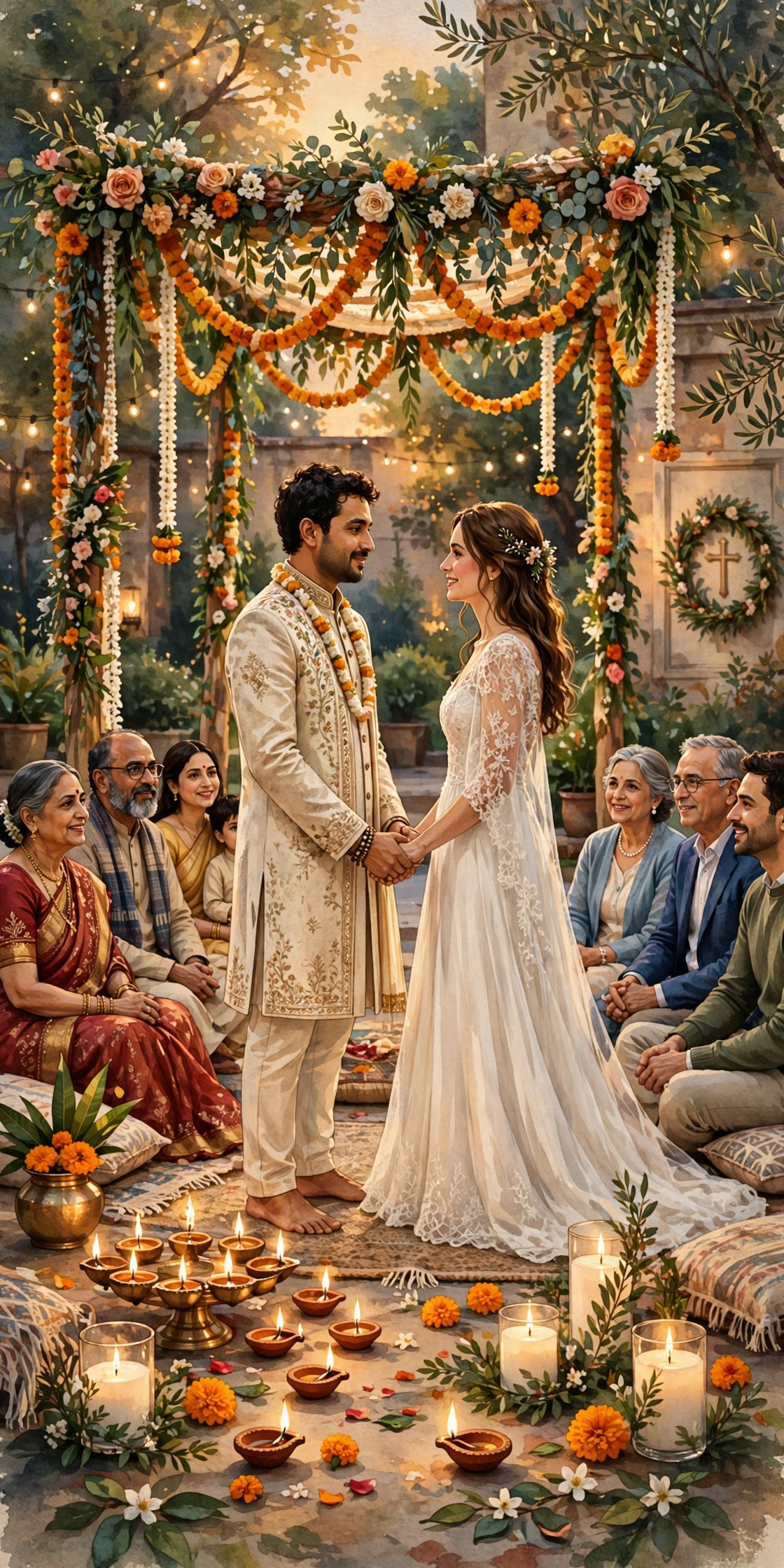
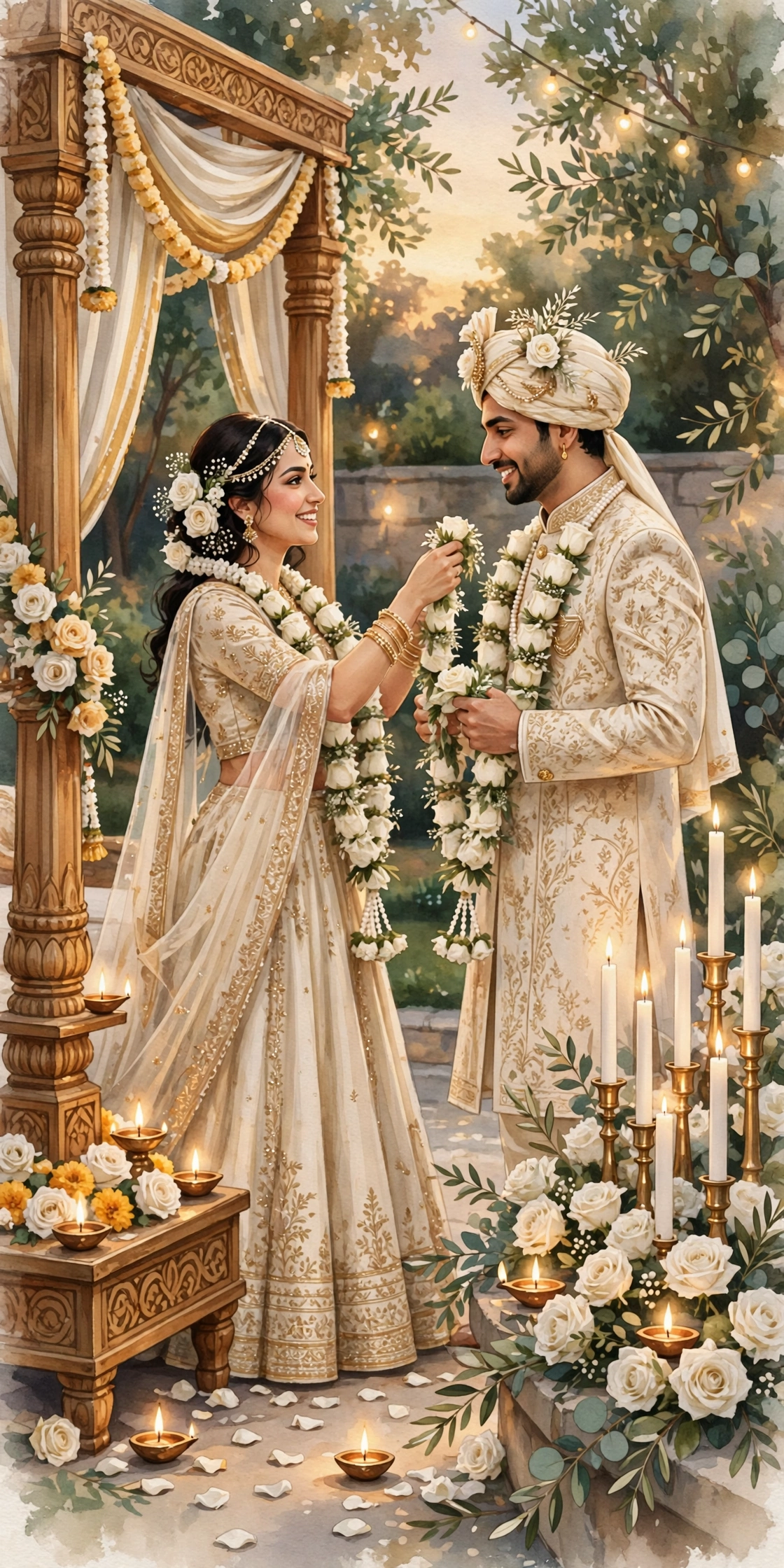
An interfaith wedding brings two traditions into one celebration, and it works best when both are honoured, not when one is hidden. Hindu and Muslim, Hindu and Christian, Sikh and Christian, Jain and Hindu: the combinations are many, and every one of them can be a beautiful wedding when the couple plans it with honesty and the families feel respected.
Start by talking together, before you talk to anyone else. Decide what each faith means to you, which rituals matter to each of you, and what you are willing to blend. The couples who do this talk early have the easiest weddings, because they know what they want before the families start asking.
Blending the ceremonies
There are three good ways to blend two faiths. Some couples hold two ceremonies, one from each tradition, on two days. Some hold one ceremony that weaves both traditions together, with a priest and an imam, or a priest and a pastor, each leading their part. Some hold a court marriage for the legal paper, and then a blessing from each tradition.
Talk to the religious leaders early, because they will tell you what is possible. Many priests, imams, and pastors have done interfaith weddings before and will guide you kindly. Choose the rituals that matter most to each side, and keep the ceremony simple enough that both families can follow it. A short explanation of each ritual in the invitation or the programme helps guests feel included.
Telling both families
Tell the parents first, together, in person, and with time to talk. Lead with love, not with logistics. Tell them you have chosen each other, that you respect both faiths, and that you want them both in the wedding. Let them ask questions, and answer honestly, even when the questions are hard.
Give the families time. Some parents accept at once, and some need weeks. Keep showing up, keep the conversation warm, and let them see that the relationship is steady. The families who struggle most at first are often the ones who enjoy the wedding most, once they see both traditions honoured on the day.
The invitation and the day
The invitation should name both traditions clearly, so guests know what to expect. Mention both ceremonies, both sets of rituals, and any dress code for each part. A digital invitation works well, because it can carry the full programme, the order of events, and a short note about each tradition.
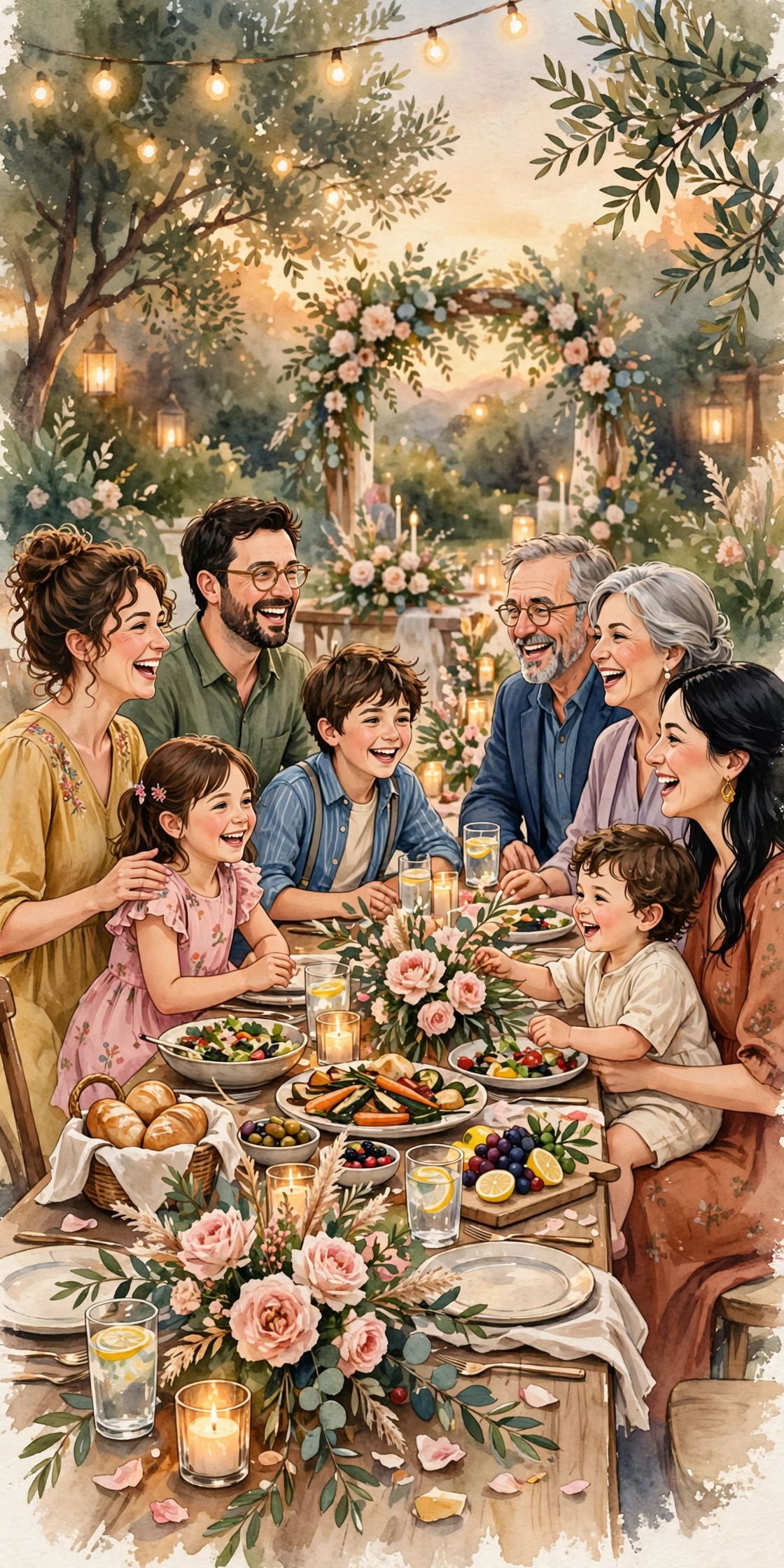
On the day, keep the food and the music welcoming to both sides. Vegetarian food suits most interfaith weddings, and music that both families know keeps everyone on the dance floor. Seat the families together, not apart, and let the children of the couple, if any, take part in both ceremonies. The wedding is a joining, and the day should feel like one.
The ceremony programme
A blended ceremony needs a clear programme, so both families can follow it. Print the order of events on a card, or put it in the digital invitation, with a one line explanation of each ritual. Start with a welcome that names both families, then the rituals from one tradition, then the rituals from the other, and close with the vows and the blessings together.
Keep the ceremony under an hour if you can, because guests follow a short ceremony better than a long one. Let each side have its moment, and let the music carry the change between them. A ceremony planned this way feels like a joining, not a compromise.
What it costs
An interfaith wedding costs what a wedding costs, with one or two ceremonies instead of one. Two ceremonies can mean two venues or two days, which adds cost, so many couples hold both in one place on one day, or one ceremony followed by a blessing. The legal part is simple: a court marriage under the Special Marriage Act covers any two adults.
Your wedding invitation is the one cost that stays fixed. On MyIndiAura, a Cinematic Invite is ₹499, an Invite App is ₹399, and an Invitation Suite is ₹99. See the full price list at myindiaura.com/pricing before you decide.
Before the wedding
- The couple has talked honestly about what each faith means
- Both sets of parents told together, in person, with time
- The ceremonies chosen: two days, one blended day, or court plus blessings
- Religious leaders spoken to early, and their guidance followed
- The invitation names both traditions and the order of events
- Food and music planned to welcome both sides
Frequently asked questions
Can we have a Hindu and a Muslim wedding together?
Yes. Many couples hold a nikah and a Hindu ceremony, on two days or in one blended celebration. A court marriage under the Special Marriage Act handles the legal part for any combination.
Which law covers an interfaith marriage?
The Special Marriage Act, 1954, covers any two adults of any religion. It is the law most interfaith couples use, and it needs a 30 day notice period.
How do we tell our parents about an interfaith wedding?
Tell them together, in person, and lead with love. Say you have chosen each other and you respect both faiths. Give them time, keep talking, and let them see the relationship is steady.
Should we have two ceremonies or one?
Both work. Two ceremonies give each tradition its full space. One blended ceremony is simpler and often feels more like a joining. Choose what fits the couple and the families.
What food should we serve at an interfaith wedding?
Vegetarian food suits most interfaith weddings, and it keeps every guest comfortable. Check with both families for any food rules, and mention them to the caterer early.
MyIndiAura theme showcase
These Cinematic Invites from MyIndiAura fit this wedding. Each one is ₹499.
- Bodhi Saanjh: calm light and two traditions meeting, made for a blended ceremony.
- Mero Vrindavan: divine love that crosses boundaries, right for a couple joining two worlds.
- Saanjh Mandir: evening prayers and shared blessings, made for a ceremony of two faiths.
Related reading
- Hindu Wedding Invitation Wording and Traditions
- Muslim Wedding Invitation Card Designs
- Christian Wedding Invitation Card Designs
An interfaith wedding works when both traditions are honoured. Talk honestly, tell the families with love, and let the day be a joining.
Explore invitation designs
Choose a design and preview it free with your own names.
Found this useful? Share it with someone planning a celebration.
Share