How to Choose Wedding Outfits for Every Ceremony
A wedding week has five or six ceremonies, and each one needs its own outfit. Here is how to plan the whole week, from haldi yellow to reception ivory, without repeating a look.
How to plan outfits for every ceremony
A wedding week has five or six ceremonies, and each one needs its own outfit. Haldi, mehndi, sangeet, wedding, and reception, each with its own colour, its own mood, and its own photographs. Planning the whole week at once is the smart way to do it, because it stops you from repeating a look, overspending on one outfit, and forgetting another. The rule is simple: give each ceremony a colour, a silhouette, and a budget, and plan the week as a set.
Haldi: yellow, light and washable
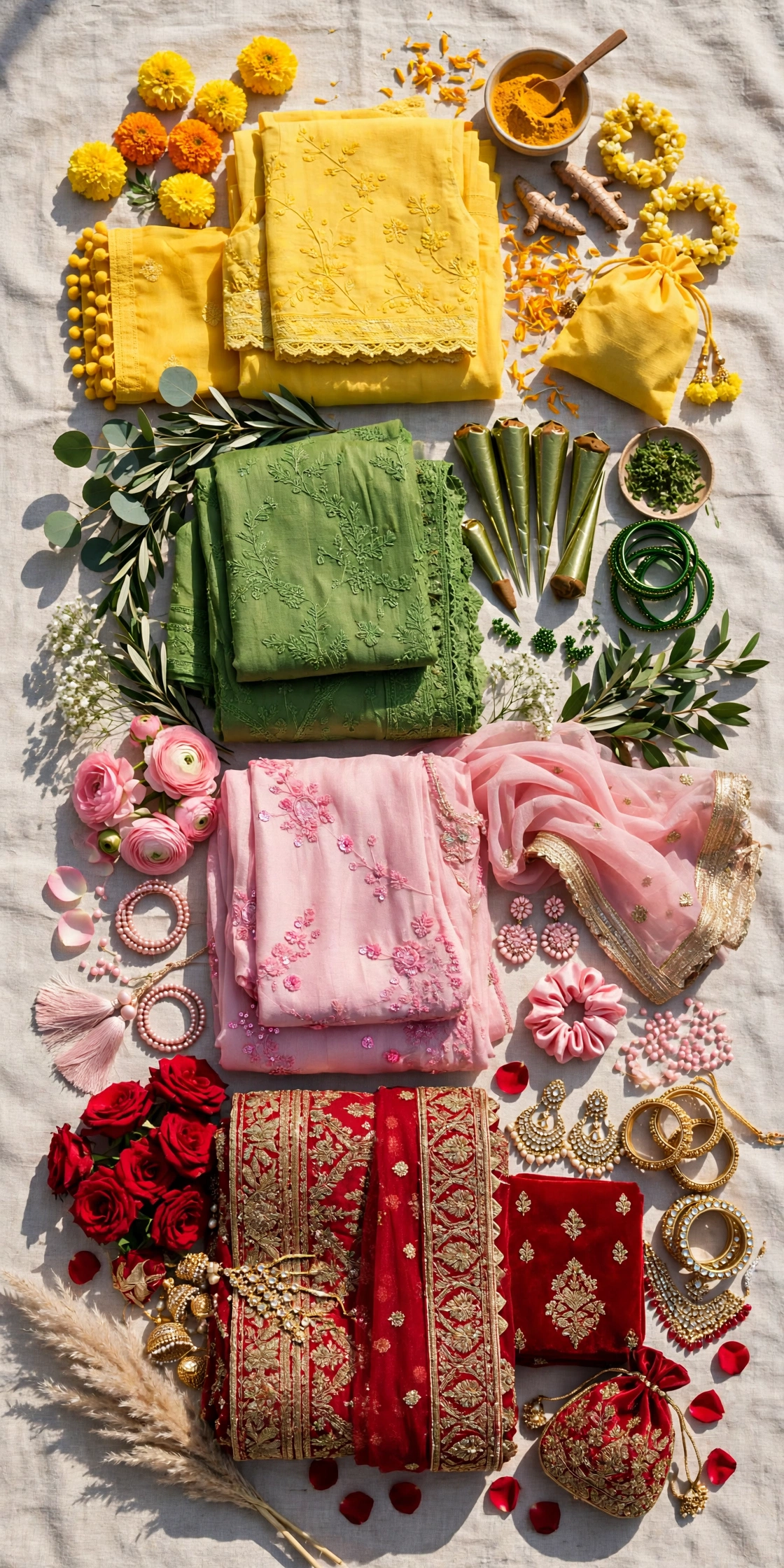
Haldi is the brightest morning of the week, and the outfit should be yellow, light, and washable. A cotton sharara, an Anarkali, or a simple lehenga in yellow, with green or pink accents, is the classic haldi look. The fabric should be cotton or georgette, because it breathes and washes well, and turmeric will mark it. Keep the work light: gota patti, mirror work, or a print, not heavy embroidery.
Mehndi: green, comfortable and festive
Mehndi is the greenest evening of the week, and the outfit should be green, comfortable, and festive. A georgette lehenga, an Anarkali, or a sharara in green, with pink or gold accents, is the classic mehndi look. The fabric should be light and breathable, because mehndi is a long ceremony, with hours of sitting while the henna dries. Keep the sleeves short or three quarter, so the artist can reach your hands and forearms easily.
The groom wears a green or cream kurta for mehndi, and the family often wears green too. Jewellery for mehndi is floral or minimal: fresh flower jewellery, or small gold jhumkas and green bangles. Hair should be a braid or a low bun, so it stays neat through hours of sitting. And shoes are flat juttis, because mehndi is a flat shoe ceremony. Mehndi is a mid range outfit, so budget for the henna artist as well as the outfit, because the art is as important as the clothes.
Sangeet: sequins, colour and movement
Sangeet is the night to dance, and the outfit should sparkle, move, and let you dance. A sequinned lehenga, a gown, or an Indo-Western outfit in hot pink, fuchsia, royal blue, or gold is the classic sangeet look. The fabric should be georgette, net, or chiffon, because it is light and flows when you spin. Keep the weight low, because a heavy outfit will slow you down by the second dance.
The groom wears a jacket or a kurta in a colour that matches the bride for sangeet, and the family often wears bright colours too. Jewellery for sangeet should sparkle and stay put: a choker, long earrings, and secure bangles. Hair should be a high bun or a braided updo, because it stays neat through dancing. And shoes should be comfortable for the performance, then changed into heels for the photographs. Sangeet is a mid range outfit, and it is worth spending on, because the stage photographs are some of the best of the week.
Wedding: the bridal outfit
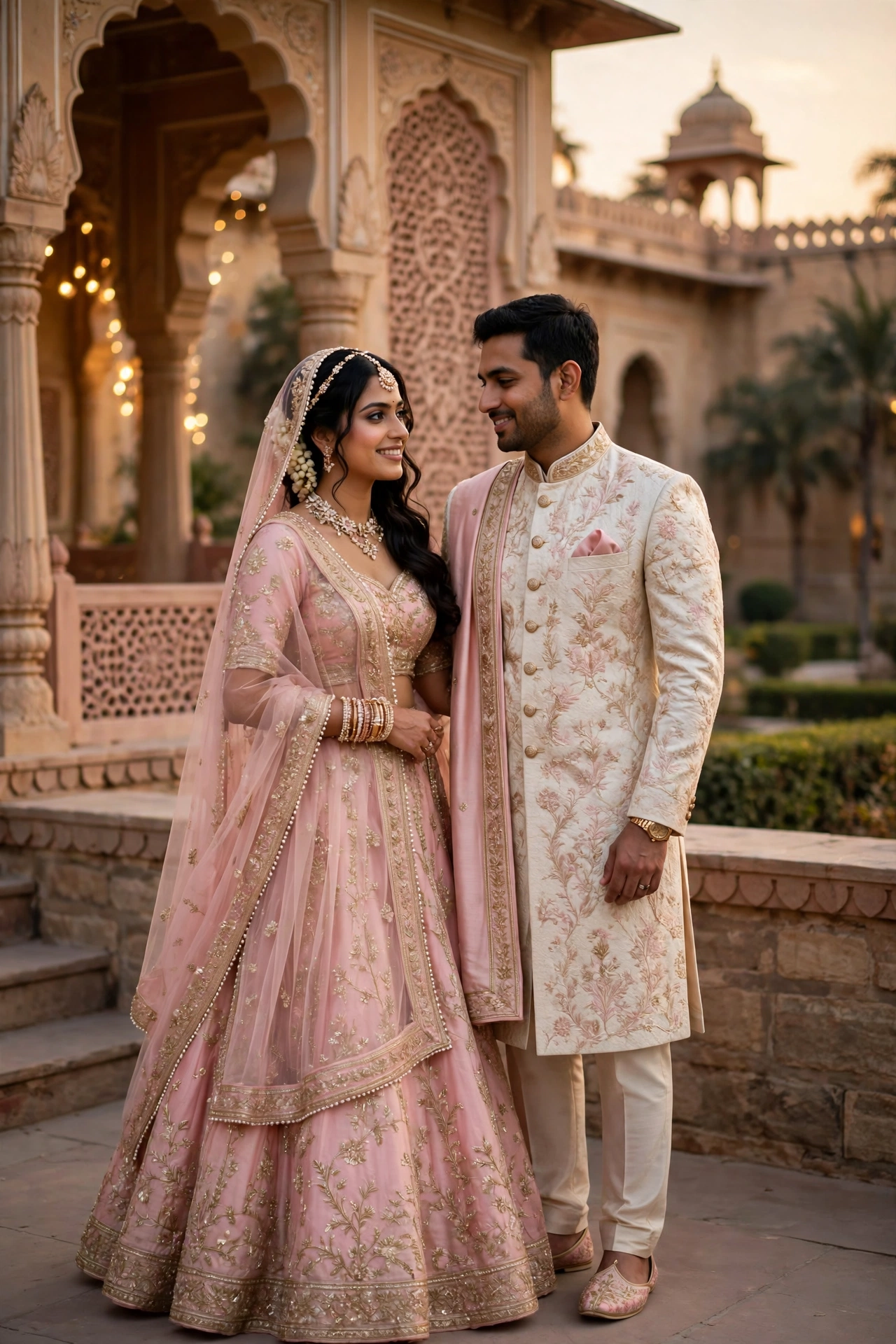
The wedding is the most important ceremony, and the outfit should be the most special. A bridal lehenga in red or maroon, with heavy work, or a Kanjivaram or Banarasi saree in red with gold zari, is the classic wedding look. The fabric should be rich: raw silk, velvet, or brocade, because it holds a structured shape and photographs beautifully. The work should be the heaviest of the week: zardozi, resham, sequins, or stone work, because the wedding photographs are the ones that last.
The groom wears a sherwani for the wedding, in ivory, maroon, or a colour that matches the bride. Jewellery for the wedding is the full set: the choker, the long necklace, the earrings, the maang tikka, and the bangles. Hair should be a juda with jasmine, or a low bun with a maang tikka, because it is regal and secure through the pheras. And shoes should be comfortable heels for the entry, then flats for the rituals, because the wedding is a long ceremony. The wedding outfit is the most expensive of the week, so budget for it first, and let the other outfits follow.
Reception: glamour and the grand entry
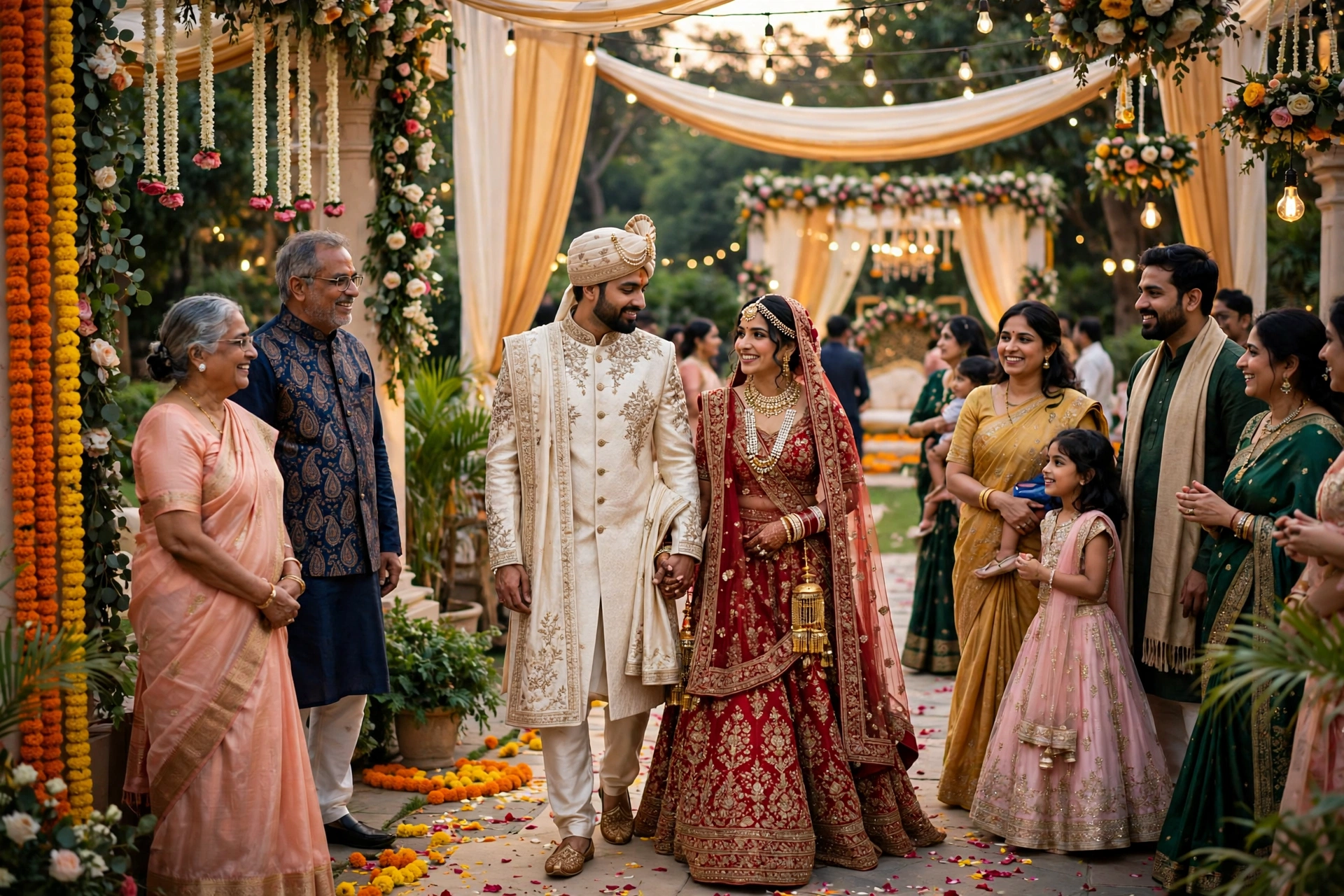
The reception is the most photographed evening, and the outfit should be glamorous. A gown, a reception lehenga, or a heavy saree in ivory, deep red, emerald, or royal blue is the classic reception look. The fabric can be heavier than day fabrics, because the evening is cooler: velvet, raw silk, or brocade all suit a reception. The work should be the most sparkling of the week: crystals, pearls, sequins, or stone work, because the evening light makes them shine.
What it costs
A full wedding week of outfits, for the bride, usually costs between ₹1,00,000 and ₹5,00,000, depending on the fabrics, the work, and the labels. The wedding lehenga is the biggest cost, from about ₹50,000 to several lakhs. The reception outfit is next, from about ₹25,000 to ₹1,50,000. Haldi, mehndi, and sangeet outfits are more affordable, from about ₹3,000 to ₹50,000 each. The groom's week costs less, usually between ₹50,000 and ₹2,00,000 for all the outfits. Set the week budget before you shop, and keep a small part aside for alterations and accessories.
The invitation is a fixed, small cost. On MyIndiAura, a Cinematic Invite is ₹499, an Invite App is ₹399, and an Invitation Suite is ₹99. Your wedding week photographs will look beautiful inside any of them. See the pricing page for the current prices.
How to create your wedding week invitation
- Pick a design that matches your wedding colours from the designs page at myindiaura.com/designs.
- Add your names, the dates and times of every function, and the venue for each one.
- Add photographs of the couple, including one from each ceremony if you have them.
- Preview the invitation on your own phone, then share the link on WhatsApp. See myindiaura.com/create to start, and myindiaura.com/pricing for the full price list.
Details to check before you send
- The names of the bride and groom, spelt exactly as the families use them
- The date and time of each function, with the venue and the dress code for each one
- A photograph that shows the wedding colours, so guests can plan their outfits
- The RSVP contact for guests who need directions or timings
- A week plan with a colour, a silhouette, and a budget for each ceremony, written down
- A trial for each outfit, with its shoes, jewellery, and hairstyle, all tried together
Frequently asked questions
How many outfits does a bride need for the wedding week?
Most brides need five: one for haldi, one for mehndi, one for sangeet, one for the wedding, and one for the reception. One outfit can serve two functions if the ceremonies are close together and the styling changes.
Can I repeat an outfit for two ceremonies?
Yes, if the ceremonies are on different days and the styling changes. A lehenga worn for mehndi with a different blouse and jewellery can look fresh for the reception. But the wedding outfit should be worn only once.
What is the best order to shop for wedding outfits?
Shop for the wedding outfit first, because it takes the longest to make and fit. Then shop for the reception, then sangeet, then mehndi and haldi. Start four to six months before the wedding.
MyIndiAura theme showcase
These Cinematic Invites from MyIndiAura fit this wedding. Each one is ₹499.
- Mandap Yatra: a walk to the mandap for every ceremony outfit.
- Kesar Swagat: warm tones for haldi and mehndi looks.
- Mero Vrindavan: festive colour for a full wedding week.
Related reading
- Indian Wedding Planning Checklist
- Complete Indian Wedding Planning Checklist
- How to Plan a Memorable Wedding Reception
Create your wedding week invitation on MyIndiAura, and let the invitation carry the colours of every ceremony to every guest.
Explore invitation designs
Choose a design and preview it free with your own names.
Found this useful? Share it with someone planning a celebration.
Share