How to Choose a Mehndi Artist
The mehndi sits on the bride's skin for days and appears in hundreds of photographs. Here is how to pick an artist whose healed work you have seen with your own eyes.
Start with the artist's own hands
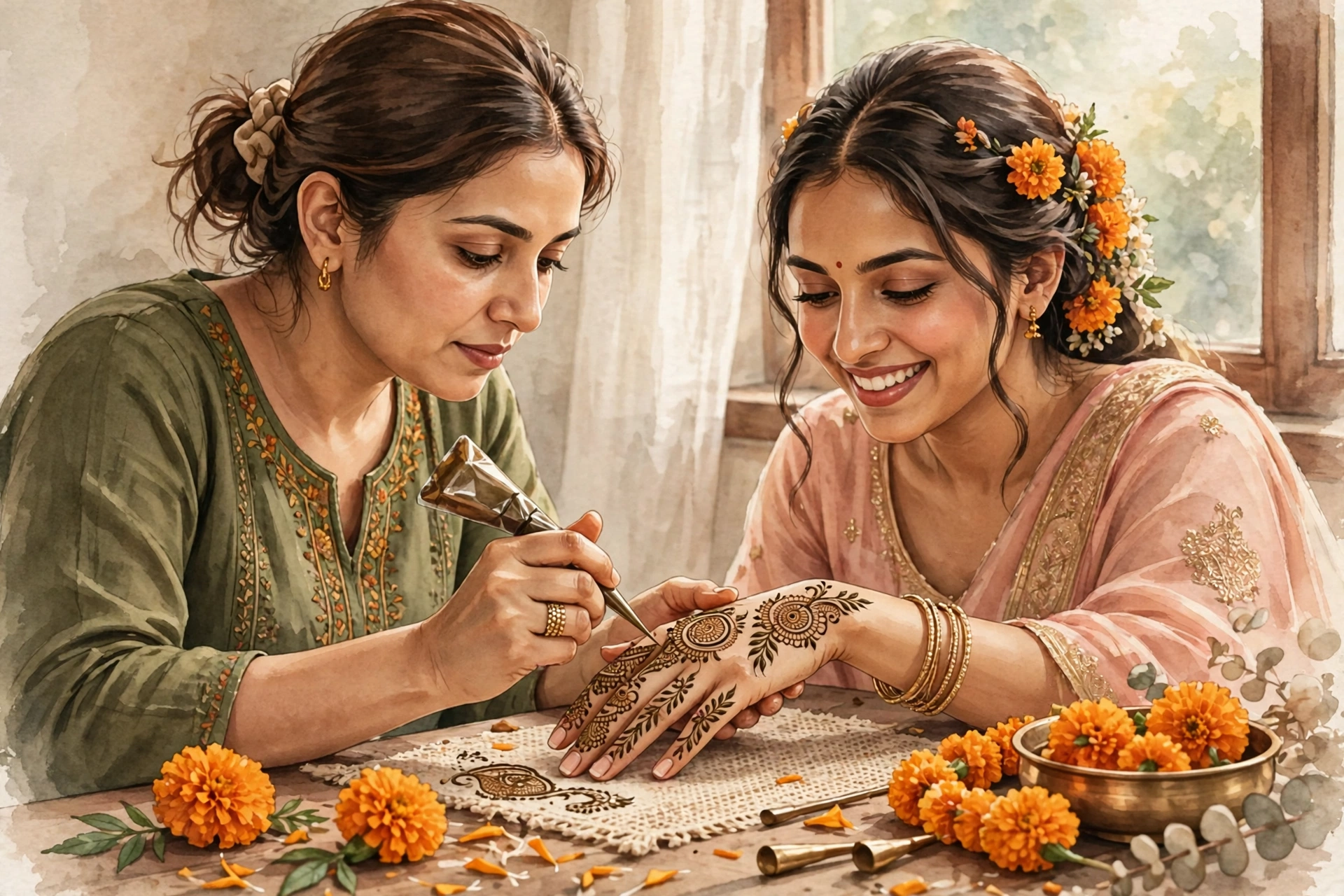
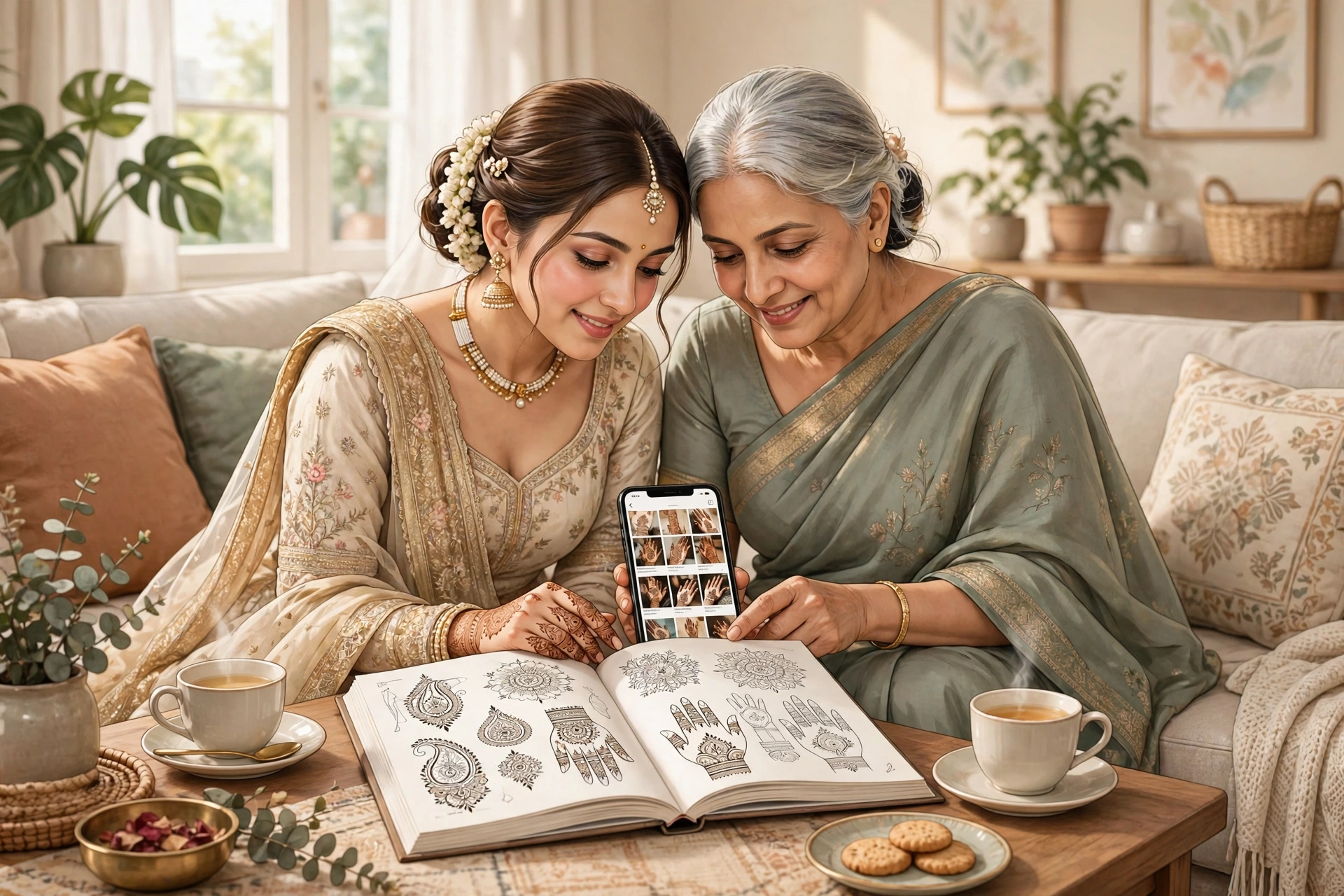
Choosing a mehndi artist is not like choosing a decorator. The work sits on the bride's skin for days, it is photographed hundreds of times, and it cannot be redone on the day. So the choice deserves more care than a quick look at a few photos. The best place to start is the artist's own recent work, not their oldest or most polished photos.
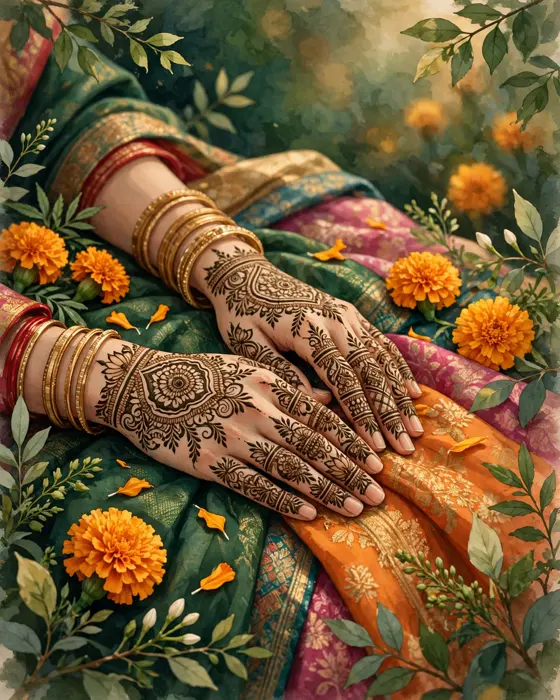
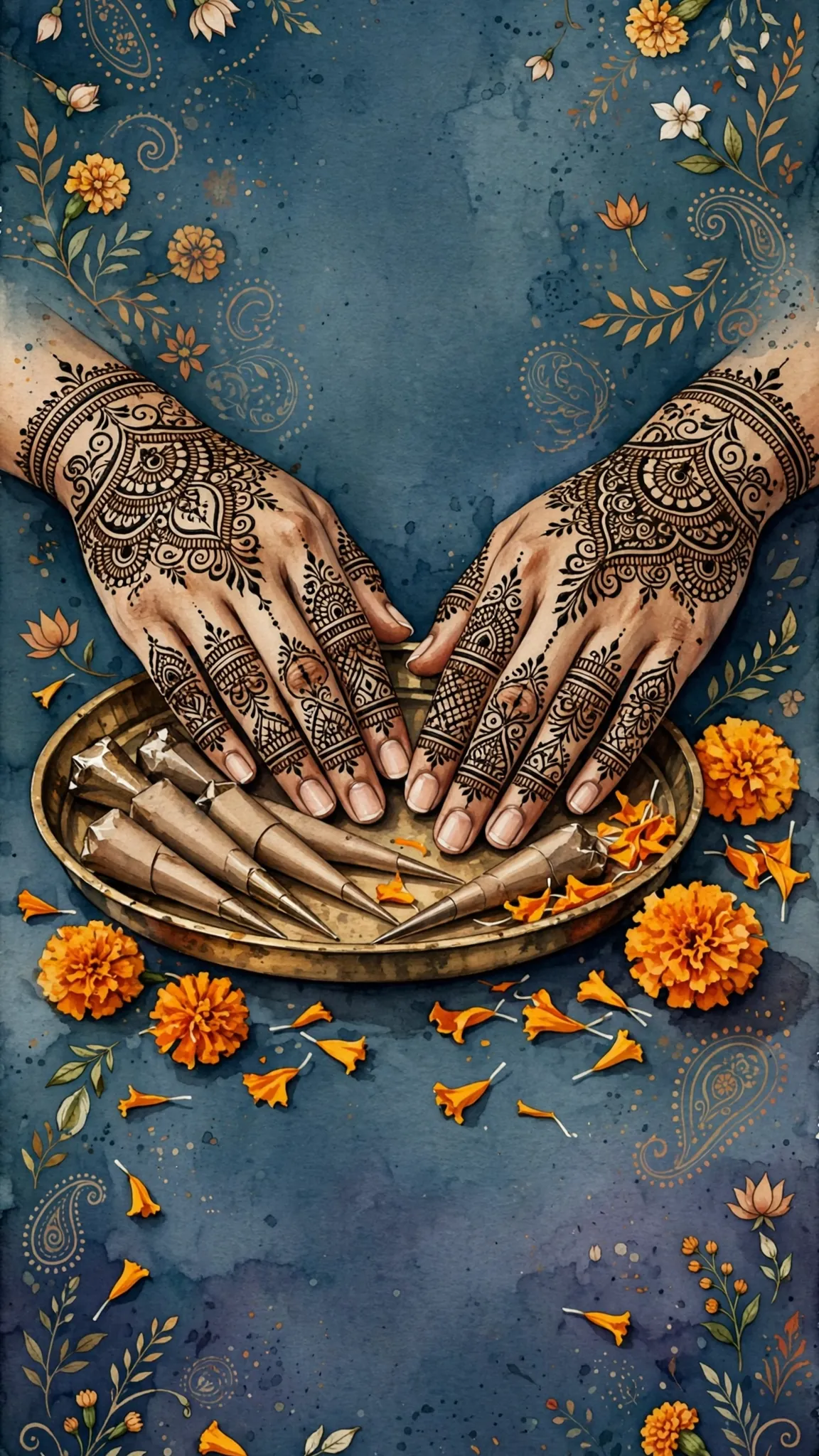
Ask to see healed photos, taken a day after application, not just fresh paste. Fresh paste always looks dark and crisp. The healed stain is what your guests will see, and it tells you whether the artist's lines stay clean or blur. Ask to see both palms and backhands, and ask to see work on hands like yours. An artist who does beautiful work on long hands may not suit short fingers, and the reverse is true too.
Check the artist's style as well. Some artists are best at dense Indian work, some at open Arabic work, some at portraits. Look at ten of their recent designs and ask yourself whether they share a style you like. If the work varies a lot, the artist may be copying whatever the client brings, which is fine, but a clear personal style is usually a sign of real skill.
The trial, and why it matters
A trial is the single best way to choose. Book a small session, one hand, a simple design, a few weeks before the wedding. The trial tells you three things: how the artist's lines look on your skin, how dark the stain gets, and how comfortable you are sitting with them for hours. It also tells you how the artist behaves. Do they listen, or do they push their own ideas? Do they work steadily, or do they rush?
Use the trial to test the practical details too. Ask how long a full bridal set will take, what time they will arrive, and whether they bring an assistant for the guests. Ask what paste they use, and whether it is natural henna. Good artists use fresh natural henna and will tell you what is in the paste. Avoid anyone who promises an instant dark stain, since that usually means chemicals that can irritate the skin.
Questions to ask before you book
Ask about the booking in plain words, and write the answers down. How many brides will the artist do on your day? A good artist takes one bride a day, or two at most, and gives the bride their full attention. Ask whether the price covers both hands to the elbow, and what the charge is for the groom or for guests. Ask what happens if the artist is unwell, and whether they have a backup.
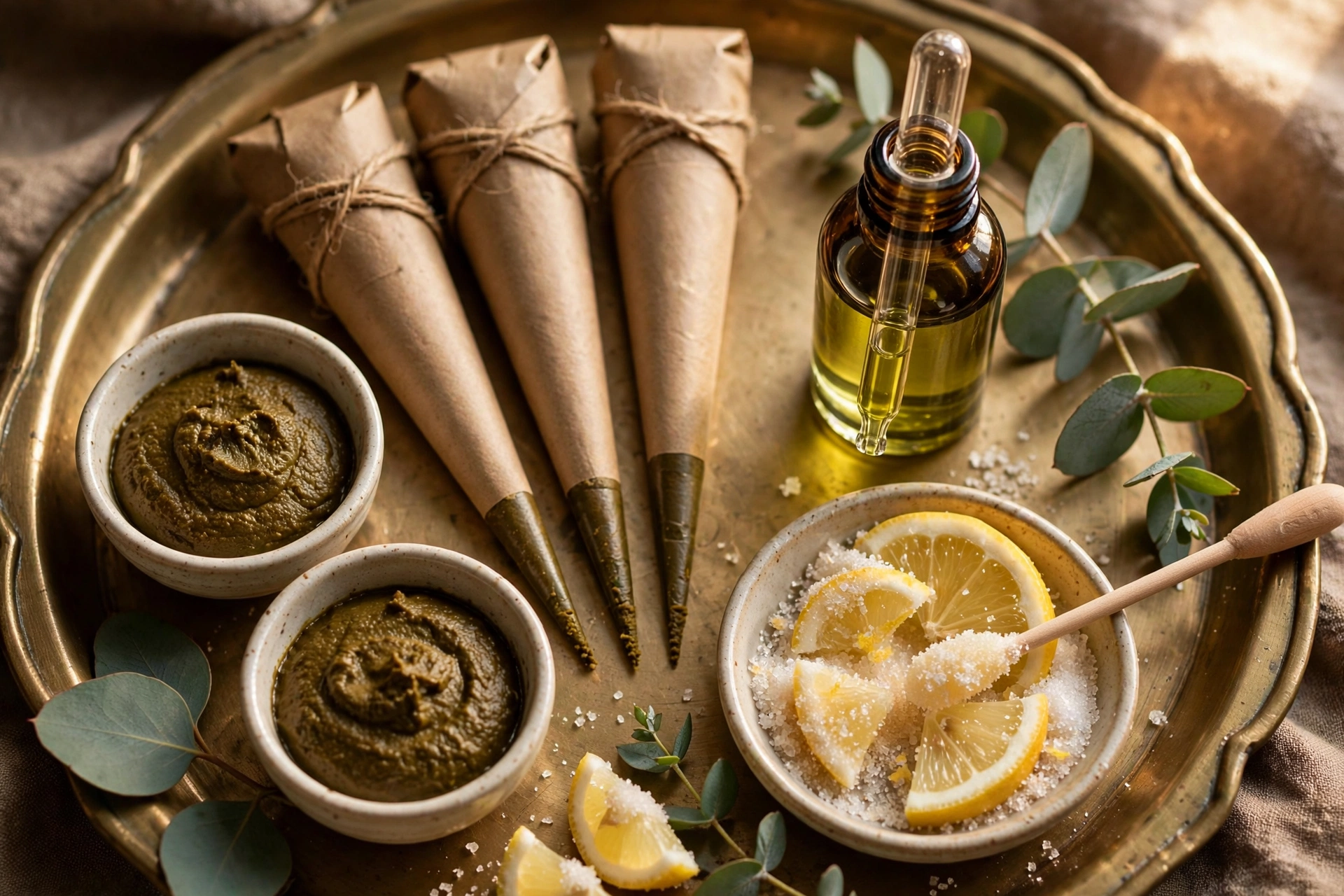
Ask about the paste and the aftercare. How long should the paste stay on? What should the bride avoid in the first day? What should she do if a line smudges? A professional artist answers all of this without hesitation. Ask about the deposit, and get the date, time, and price in writing, even if it is just a WhatsApp message. That message protects both sides.
Also ask for two references, brides from the last few months. A short chat with a past bride tells you more than a hundred photos. Ask whether the artist arrived on time, whether the design matched what was agreed, and whether the stain was dark on the wedding day.
Price, and what it should cover
Mehndi prices vary widely by city and by artist. A well known artist in a big city charges more than a local artist, and a full bridal set costs more than a simple design. What matters is what the price covers. A fair quote covers both hands, usually to the elbow, the feet if you want them, the groom's small motif, and a few hours for guests. Ask whether the price includes the artist's travel, and whether there is an extra charge if the function runs late.
Do not choose on price alone. The cheapest artist is rarely the best, and the most expensive is not always right for your style. A mid priced artist with a strong trial and good references is usually the best value. And remember that the mehndi is one of the few wedding costs that shows in every photograph, so it is worth spending a little more for the right hands.
Be careful with group bookings. Some artists offer a low price for the bride and then charge guests separately, which is fine if it is clear. Others quote one price and then rush the bride to fit in more guests. Agree the plan in advance: the bride first, then a fixed number of guests, then a clear end time.
On the day, and after
On the day, give the artist a clean, well lit place to sit, a comfortable chair for the bride, and a small table for the cones. Keep the room warm, since cold hands stain lighter. Keep food and water within reach, since the bride cannot use her hands once the paste is on. And keep the schedule empty for the hours the artist needs. Nothing spoils a design like a bride who has to leave halfway through.
After the paste comes off, the colour deepens over the next day. Keep the hands warm, avoid soap and water for as long as you can, and dab lemon and sugar if the artist suggests it. Do not scrub the stain, and do not apply creams on the first day. If a line smudged during application, tell the artist at once. A good artist carries a spare cone and will touch it up before the paste dries.
What it costs
On MyIndiAura, a Cinematic Invite is ₹499, an Invite App is ₹399, and an Invitation Suite is ₹99. Choose by what your invitation needs to do, not by price alone. A cinematic invite suits a wedding with a film led opening, while an invite app suits a full week of functions with RSVP and maps.
How to create your mehndi invitation
- Pick a design from the designs page at myindiaura.com/designs.
- Add the mehndi date and time, the venue, and the dress code for guests.
- Add photos of the couple, the venue map, and the RSVP button.
- Preview the invitation on your own phone, then share the link on WhatsApp. See myindiaura.com/create to start, and myindiaura.com/pricing for the full price list.
Details to check before you send
- The names of the bride and groom, spelt exactly as the families use them
- The mehndi date and time, checked with the artist
- The full venue address, with the area and a map link
- The dress code, if you want guests in green or yellow
- An RSVP contact for guests who need directions
- The order of events, if the sangeet follows the same evening
Frequently asked questions
How far in advance should I book a mehndi artist?
Two to three months before the wedding is a safe window, and earlier for a well known artist in wedding season. The trial should happen three to four weeks before the wedding.
Is a trial really necessary?
Yes, if the artist is new to you. A trial shows the healed colour, the line quality, and how comfortable you are with the artist. It is the cheapest way to avoid a bad surprise on the day.
What should I ask about the henna paste?
Ask whether it is natural henna, what is mixed into it, and how long it should stay on. Avoid artists who promise an instant dark stain, since that usually means chemicals that can irritate skin.
How many guests can the artist cover?
That depends on the time and whether the artist brings an assistant. Agree the number in advance: the bride first, then a fixed number of guests, then a clear end time.
MyIndiAura theme showcase
These Cinematic Invites from MyIndiAura fit this wedding. Each one is ₹499.
- Peony Bloom: soft flowers and warm light, made for a gentle bridal look.
- Gulab Dil: a rose filled invitation, made for a bride's mehndi.
- Charbagh Dastaan: a garden of four quarters, made for a mehndi afternoon.
Related reading
- Mehndi Ceremony Invitation Card Designs
- Mehendi Night Ideas: Themes, Decor and Timelines That Actually Work
- Mehndi Invitation Messages for WhatsApp
Create your mehndi invitation on MyIndiAura, and book the artist whose healed work you have seen with your own eyes.
Explore invitation designs
Choose a design and preview it free with your own names.
Found this useful? Share it with someone planning a celebration.
Share