How Families Can Plan a Wedding Together
Two families planning one wedding need clear roles, one shared list and honest talk about money, so here is how to plan together without the arguments.
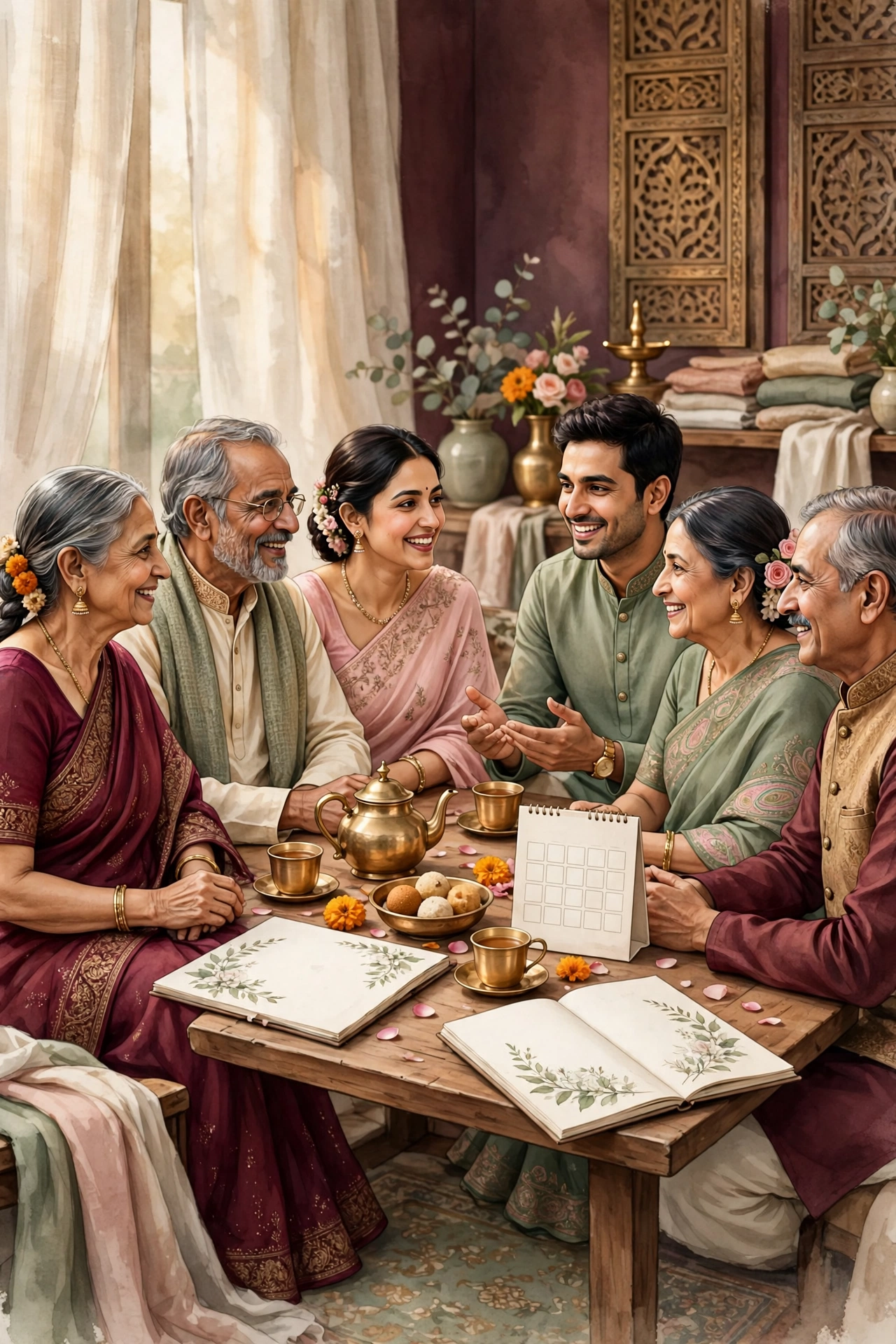
One wedding, two families, one plan
A wedding joins two families, and the planning should join them too. The most common failure is not a bad vendor or a late booking. It is two families planning separately, in different chats, with different lists, and discovering the differences a month before the wedding. One plan, shared by both families from the start, prevents most of it.
The first meeting should be about three things only: the date, the budget ceiling, and who decides what. The date comes from the muhurat and the priest. The budget ceiling needs both families to agree on a number, and on how it is split. The decisions need owners: one family handles the venue and the food, the other handles the decor and the invitations, or whatever split suits the families. Write these three down. A plan that lives only in conversation will be remembered differently by each side.
The couple should be at the centre of the planning, not between the families. When the two sides disagree, the couple should not have to carry messages back and forth. Agree that disagreements are discussed in one meeting, with both families present, and decided there. A decision made together, even if it is a compromise, is easier to live with than a decision made by one side and announced to the other.
Money: the conversation that cannot wait
Money causes more wedding arguments than any other subject, and the cure is an early, honest conversation. Both families should say what they can spend, and what they expect the other side to spend, before any vendor is booked. The split need not be equal. In many families, one side hosts the wedding and the other hosts the reception. In others, the costs are shared by function. Whatever the split, agree it before spending, not after.
Keep one shared budget sheet, visible to both families, with every booking and every payment on it. When the money is visible, the arguments shrink, because nobody has to guess what was spent. Update it every week, and share a short summary in the family group: what was booked, what was paid, and what is left. A family that sees the numbers trusts the plan. A family that hears about the spending later feels left out, and left out families argue.
Changes to the budget need both families to agree. If one side wants a grander mandap, or a longer menu, the cost should be shown first, and the decision made together. A change made by one side alone, however well meant, feels like a decision taken away from the other side. Show the cost, discuss it once, decide together, and move on.

Roles, meetings, and the weekly rhythm
Give every big job an owner, and give the owner the authority to do it. The venue and food to one side, the decor and invitations to the other, or the split that fits the families' strengths. The owner decides the details, within the agreed budget, and reports back in the weekly meeting. When two people own the same job, nobody does it. When one person owns it, it gets done.
Meet once a week, at a fixed time, on a call if the families live apart. Keep the meeting short: what was done, what is next, and what needs a decision. Decisions that need both families are made in the meeting, not in side chats. Side chats are where misunderstandings grow, because one side hears a decision and the other side hears a suggestion. One meeting, one decision, one record.
Keep the record in one place. A shared note or sheet with the decisions, the dates, and the owners. After each meeting, one person posts the summary: three lines, no more. What was decided, who owns it, and by when. That summary is the plan, and it is what the next meeting starts from. Families that keep this rhythm rarely argue, because nothing is forgotten and nothing is decided twice.
The couple, the elders, and the small kindnesses
Elders deserve a real place in the planning, not only a ceremonial one. Ask them about the rituals, the family traditions, and the guests who matter most to them. An elder who feels heard will support the plan, even when it differs from what they imagined. An elder who feels ignored will resist it, even when it is right. The cost of asking is a conversation. The cost of not asking is a wedding full of quiet resistance.
The couple's wishes should lead the style of the wedding: the colours, the music, the food, and the mood. The families' wishes should lead the traditions and the guest list. When those two overlap, the wedding feels like the couple's, and the families feel at home in it. When the families decide the style and the couple only attends, the wedding feels borrowed, and the photographs show it.
What it costs
On MyIndiAura, a Cinematic Invite is ₹499, an Invite App is ₹399, and an Invitation Suite is ₹99. Choose by what your invitation needs to do, not by price alone. A cinematic invite suits a wedding with a film led opening, while an invite app suits a full week of functions with RSVP and maps.
How to create your wedding invitation
- Pick a design from the designs page at myindiaura.com/designs.
- Add the names of both families, the venue, the order of events, and the RSVP button.
- Add photos of the couple, the venue map, and the travel guidance for outstation guests.
- Preview the invitation on your own phone, then share the link on WhatsApp. See myindiaura.com/create to start, and myindiaura.com/pricing for the full price list.
Details to check before you send
- The date, the budget ceiling, and the decision owners agreed in the first meeting
- One shared budget sheet, visible to both families and updated every week
- Every big job given one owner, with the authority to decide within the budget
- One weekly meeting at a fixed time, with a three line summary after each one
- The elders asked about rituals, traditions, and the guests who matter to them
- The invitation carrying both families equally, with names checked by each side
Frequently asked questions
How do two families split the wedding costs?
Agree the split before any vendor is booked. Common splits are one side hosting the wedding and the other the reception, or sharing by function. The split need not be equal, but it must be agreed, written down, and visible on one shared budget sheet.
What if the families disagree about the guest list?
Give each family a number, agreed at the start, and let each family spend its own number as it likes. Any addition after the list is frozen needs a removal, or a family decision that the budget and the venue can take it. A number agreed early prevents most arguments.
How often should both families meet during planning?
Once a week, at a fixed time, on a call if they live apart. Keep it short: what was done, what is next, and what needs a decision. Decisions are made in the meeting, not in side chats, and one person posts a three line summary after each meeting.
MyIndiAura theme showcase
These Cinematic Invites from MyIndiAura fit this wedding. Each one is ₹499.
- Ram Sita: a divine epic opening for a traditional ceremony.
- Radha Krishna: a devotional celebration of love and togetherness.
- Shiv Parvati: a sacred union theme for a family wedding.
Related reading
- Indian Wedding Planning Timeline: From Engagement to Wedding Day
- Engagement Ceremony Planning Checklist
- How to Create a Wedding Website for Your Guests
One plan, shared from the start, and two families become one.
Explore invitation designs
Choose a design and preview it free with your own names.



Found this useful? Share it with someone planning a celebration.
Share