Haldi Outfit Ideas for the Groom
The groom's haldi outfit must survive turmeric, breathe in the sun, and let him sit comfortably for hours. Here is how to pick the kurta, the fabric, and the fit.
Comfort first, because haldi is messy
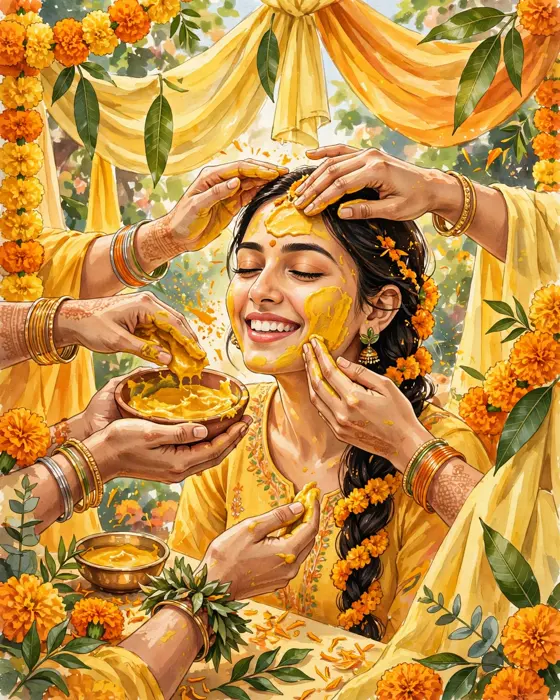
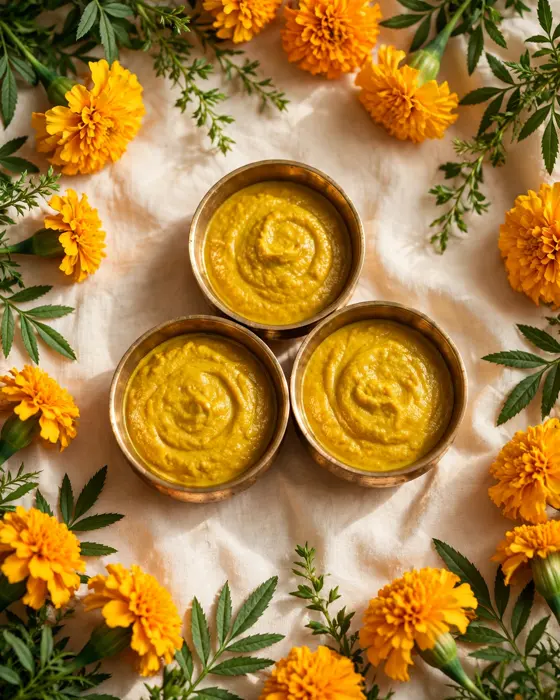
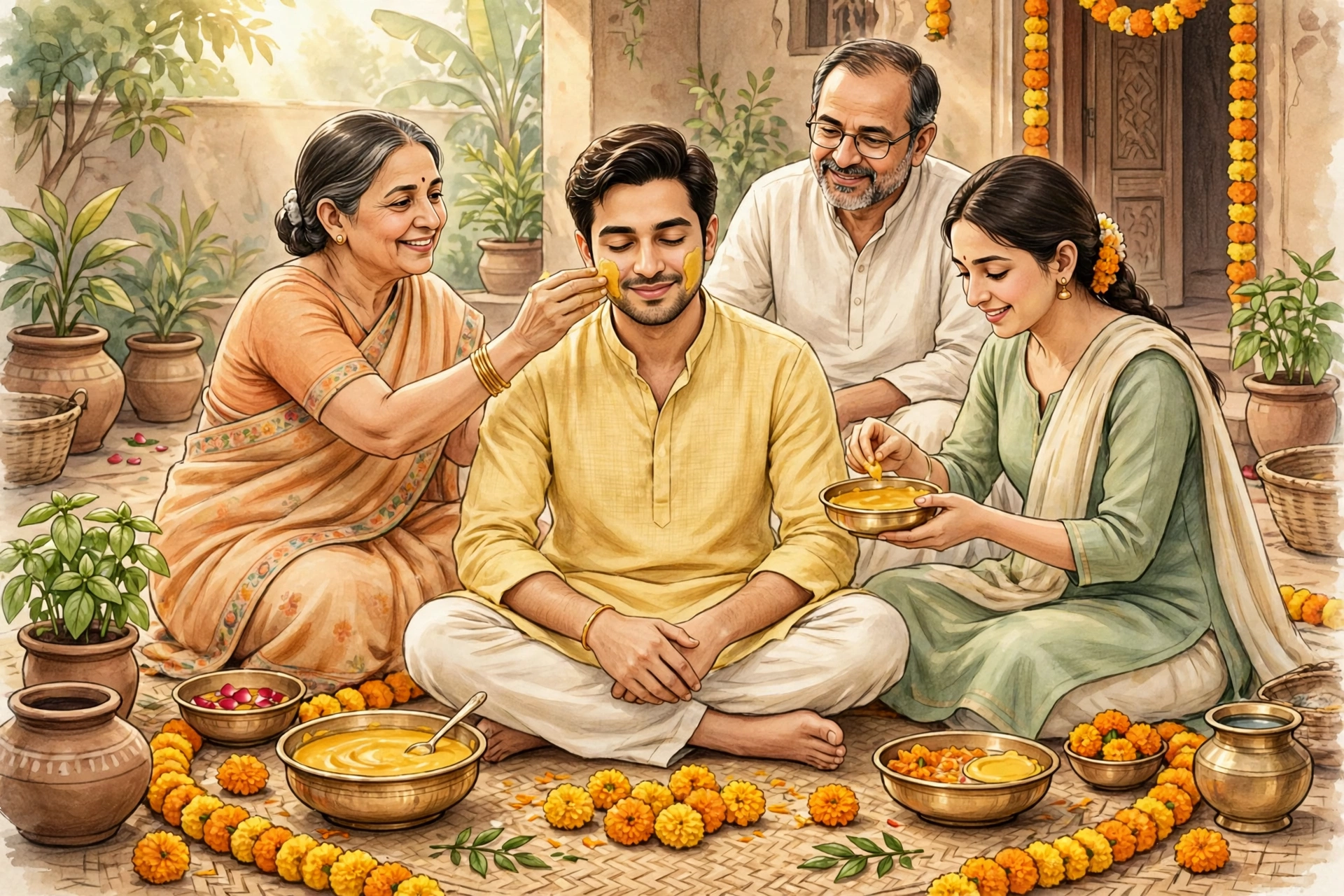
The groom's haldi outfit has one job above all others: it must survive turmeric. The paste stains everything it touches, and it does not come out of white or pale fabric easily. So the first rule is simple. Wear something you do not mind staining, or wear a colour that hides the stain. Yellow, mustard, and orange are the obvious choices, since turmeric blends into them. White looks lovely in photographs, but a white kurta after a haldi is rarely white again.
The second rule is comfort. The groom sits on the floor or on a low platform for an hour or more, often in the sun, while family applies paste to his face and arms. A heavy sherwani or a thick jacket will make him sweat, and the photographs will show it. A light cotton kurta, with a short or three quarter sleeve, is the best choice. The sleeves should roll up easily, since the paste goes on the arms. And the fabric should breathe. Cotton, linen, and light silk all work. Avoid polyester, which traps heat.
The classic yellow kurta, and its variations
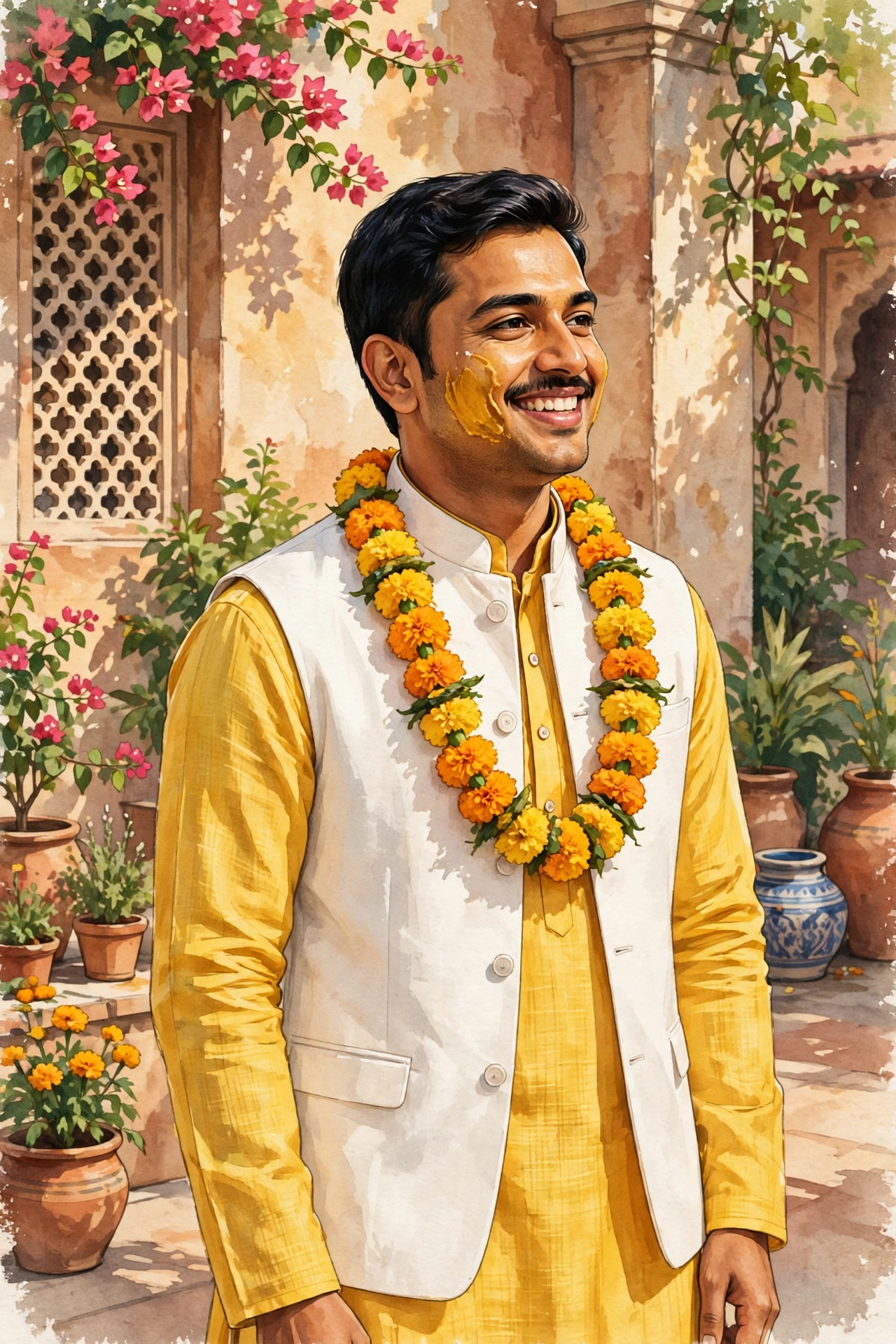
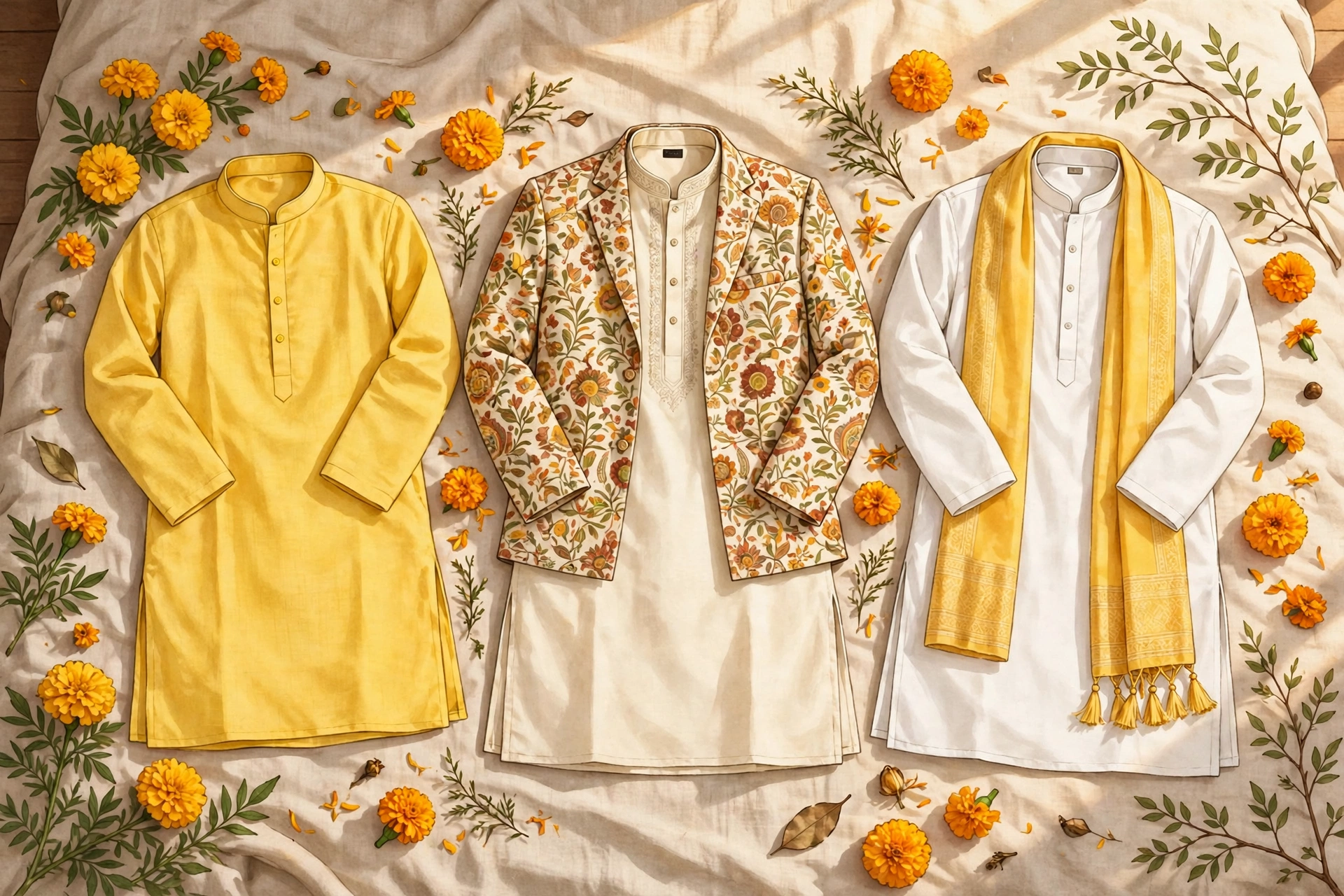
The classic groom haldi look is a plain yellow kurta with a white or cream pyjama, and a marigold garland. It photographs beautifully, it suits every skin tone, and it is easy to find. The kurta should be well fitted but not tight, with enough room to sit cross legged. A straight cut kurta in cotton, with a simple mandarin collar, is the safest choice.
If the classic feels too plain, there are easy variations. A yellow kurta with a printed Nehru jacket in white or cream adds structure without adding heat, since the jacket comes off once the paste starts. A kurta with a subtle chikankari or block print adds texture that photographs well. A mustard kurta with a white stole gives a regal touch without the weight of a sherwani. And a short kurta with a dhoti is a traditional option that suits a morning haldi at home.
Matching the bride, without matching exactly
Many couples like to coordinate their haldi outfits, and it photographs beautifully when it is done well. The key is to match in tone, not in exact colour. If the bride wears a bright yellow lehenga, the groom can wear a softer mustard kurta. If the bride wears green, the groom can wear a cream kurta with a green stole. The two outfits should sit in the same family of colours, not be identical.
A shared detail ties the looks together. A matching marigold garland, a similar fabric, or a small motif, like a block print in the same pattern, is enough. Avoid identical outfits, which can look like a uniform in photographs. And avoid matching the whole family. The couple should stand out from the guests, not blend into a sea of identical yellow kurtas.
If the bride's family has a dress code for guests, the groom should follow it loosely, not strictly. If guests are asked to wear yellow, the groom can wear a deeper yellow or a mustard, so he still stands out. The groom is the centre of the function, and his outfit should say so quietly.
Fabric, fit and the practical details
Fabric is the detail that decides whether the groom enjoys the function. Cotton is the best all rounder: it breathes, it washes well, and it is easy to find. Linen looks elegant but creases quickly, which shows in photographs after an hour of sitting. Silk looks rich but can feel warm, and turmeric stains silk badly. A cotton silk blend is a good middle ground, with the look of silk and the comfort of cotton.
Fit matters more than fashion. The kurta should be long enough to cover the knees when sitting, and loose enough to sit cross legged without pulling. The sleeves should roll to the elbow without effort. And the collar should sit flat, since a collar that stands up will annoy the groom all afternoon. Try the outfit sitting down, not just standing in front of a mirror. Sit cross legged for five minutes, raise the arms, and check that nothing pulls.
Keep a second outfit ready. A spare kurta, in the same colour family, lets the groom change after the haldi for the photographs or the next function. It also saves the day if the first kurta gets soaked with rose water or paste. And keep a towel nearby. The groom will want to wipe his hands between rounds of paste, and a clean towel is a small kindness that matters.
Where to shop, and when
A haldi kurta does not need to be expensive. A well made cotton kurta from a local market, a high street brand, or an online store is enough, and it will look as good as a designer piece in photographs. The groom should buy it two to three weeks before the wedding, so there is time for a fitting and a wash. Wash the kurta once before the function, since new fabric can feel stiff and the colour can bleed.
If the groom is buying online, order early and check the return policy. Sizes vary between brands, and a kurta that is a size too small will show in every photograph. And if the family is buying a matching set for the groom and his brothers, order them together, so the dye lots match. Two kurtas in slightly different yellows look like a mistake, not a choice.
What it costs
On MyIndiAura, a Cinematic Invite is ₹499, an Invite App is ₹399, and an Invitation Suite is ₹99. Choose by what your invitation needs to do, not by price alone. A cinematic invite suits a wedding with a film led opening, while an invite app suits a full week of functions with RSVP and maps.
How to create your haldi invitation
- Pick a design from the designs page at myindiaura.com/designs.
- Add the haldi date and time, the venue, and the dress code for guests.
- Add photos of the couple, the venue map, and the RSVP button.
- Preview the invitation on your own phone, then share the link on WhatsApp. See myindiaura.com/create to start, and myindiaura.com/pricing for the full price list.
Details to check before you send
- The names of the bride and groom, spelt exactly as the families use them
- The haldi date and time, checked with both families
- The full venue address, with the area and a map link
- The dress code, if you want guests in yellow or white
- An RSVP contact for guests who need directions
- The order of events, if the mehndi or sangeet follows
Frequently asked questions
What colour should the groom wear for haldi?
Yellow, mustard or orange, since turmeric blends into those colours. Cream with a yellow stole is a good alternative. Avoid white, which stains badly, and dark colours, which look heavy in a morning function.
Should the groom match the bride's outfit?
Match in tone, not in exact colour. If the bride wears bright yellow, the groom can wear a softer mustard. A shared detail, like a marigold garland, ties the looks together without making them identical.
What fabric is best for a haldi kurta?
Cotton is the best all rounder. It breathes, washes well, and is easy to find. A cotton silk blend is a good middle ground. Avoid polyester, which traps heat, and pure silk, which stains badly.
Can the groom wear a Nehru jacket for haldi?
Yes, for the arrival and the photographs. A light printed jacket over a yellow kurta looks smart, and it comes off once the paste starts. Keep the jacket light, since the function gets warm.
MyIndiAura theme showcase
These Cinematic Invites from MyIndiAura fit this wedding. Each one is ₹499.
- Kesar Swagat: a saffron welcome, made for a haldi morning.
- Laal Doli: a red palanquin journey, made for a groom's arrival.
- Gulab Dil: a rose filled invitation, made for a groom's haldi.
Related reading
- Haldi Ceremony Invitation Card Designs
- Haldi Invitation Wording in Hindi and English
- Pithi Ceremony Invitation Ideas
Create your haldi invitation on MyIndiAura, and let the groom wear something comfortable that he does not mind staining.
Explore invitation designs
Choose a design and preview it free with your own names.
Found this useful? Share it with someone planning a celebration.
Share