Haldi Outfit Ideas for the Bride
Haldi is the brightest morning of the wedding week. Here are yellow outfit ideas that stay comfortable through turmeric, water and dancing.
How to choose a haldi outfit
Haldi is the brightest morning of the wedding week. Turmeric paste, marigold flowers, water, laughter, and a crowd of relatives who will all want to smear your cheeks. Your haldi outfit needs to survive all of that and still look beautiful in photographs. The rule is simple: pick something yellow, light, and easy to move in, and save the heavy work for the wedding day.
Sharara, lehenga or saree for haldi
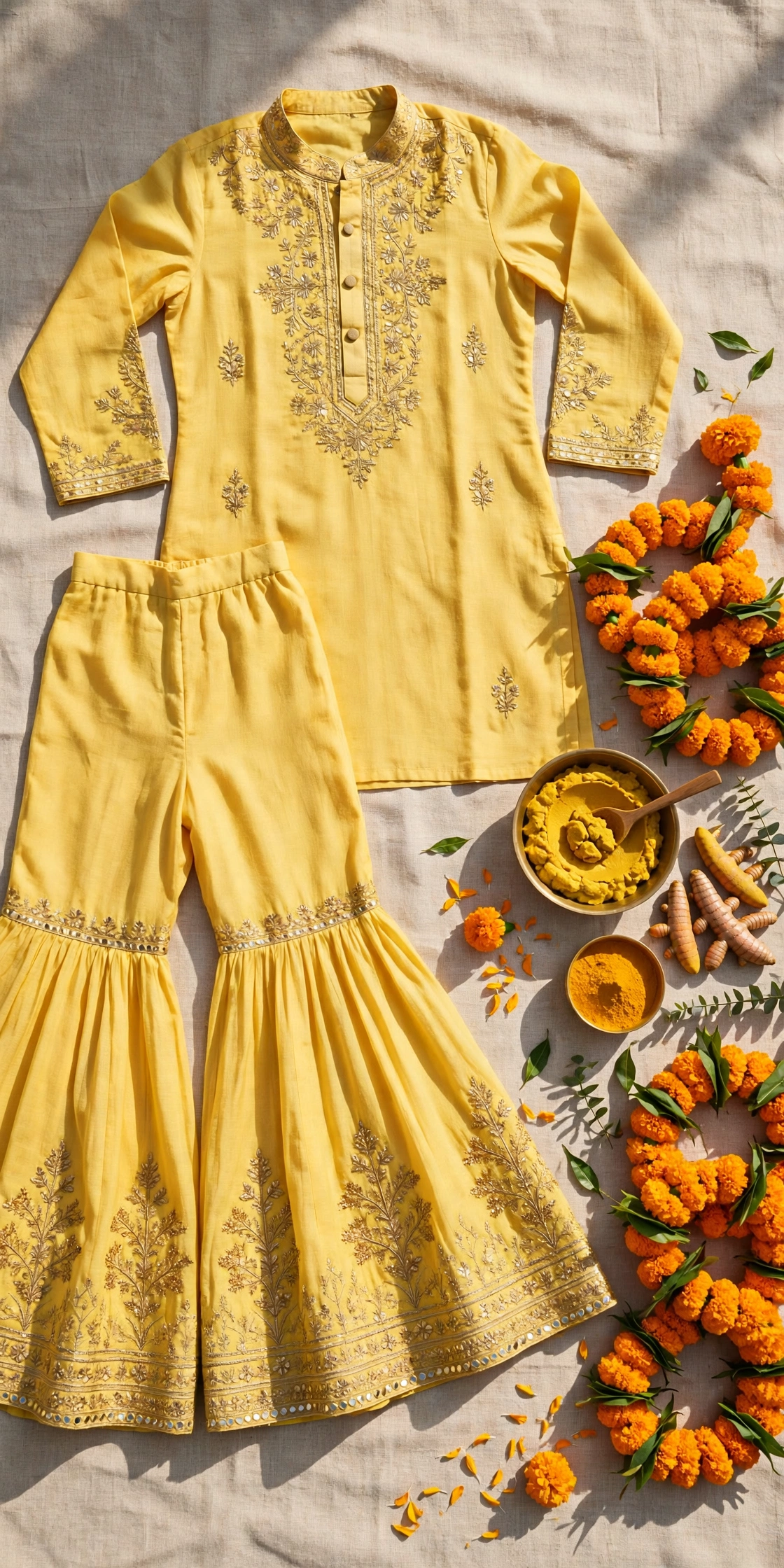
A sharara is the most popular haldi choice, and for good reason. The wide legged pants let you sit cross legged on the ground, move freely, and dance without worrying about the outfit. A short kurta with a sharara in yellow, with gota patti or light mirror work, is comfortable and festive. A lehenga also works for haldi, especially a light georgette or chiffon lehenga with a short blouse, because it moves well and looks bridal in photographs.
Fabrics that survive haldi
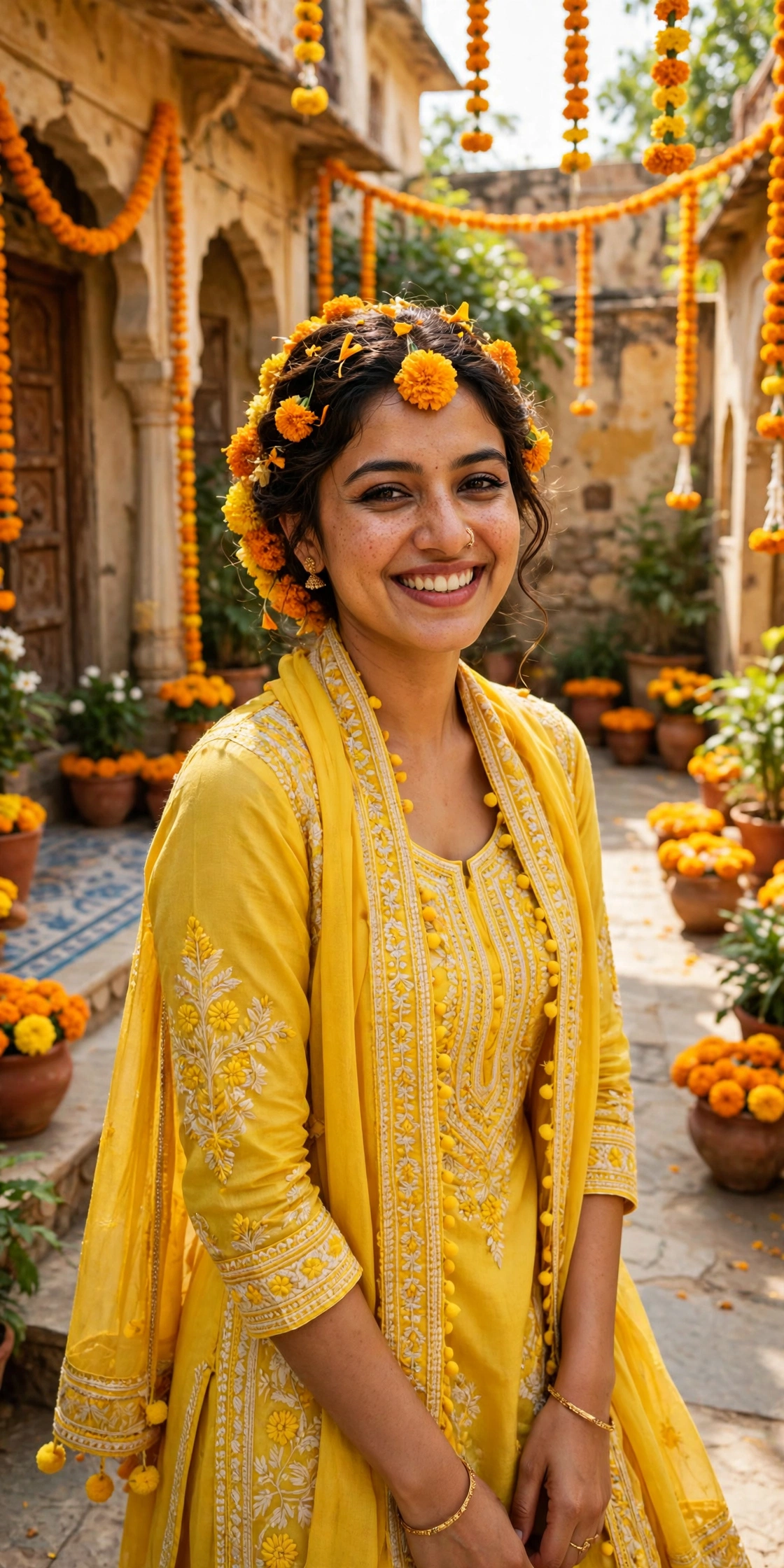
Haldi is messy, so the fabric matters more than the design. Cotton is the most practical haldi fabric: it breathes, it washes well, and turmeric stains come out more easily than from silk. A cotton sharara or Anarkali in bright yellow with a colourful dupatta is a classic haldi look. Georgette and chiffon are the next best choice, because they are light, they dry fast, and they drape beautifully in photographs.
Silk looks rich, but it is the hardest fabric to clean after haldi, and turmeric can stain it. If you love silk, choose a simple silk kurta that you do not mind cleaning professionally afterwards. Avoid velvet and heavy brocade for haldi, because they trap heat and stain badly. Whatever you pick, wear a simple cotton lining underneath if the fabric is sheer, and keep a second dupatta ready, because the first one will get turmeric on it within minutes.
Colours and prints for a haldi morning
Yellow is the base, but the accents make the outfit. Green is the classic partner for haldi yellow, in the dupatta, the bangles, or the embroidery, because it matches the mehndi and the marigold leaves. Pink and orange also work well as accents, in a tie and dye dupatta or a floral print. White with yellow is a fresh, modern choice, especially for a daytime haldi in a garden.
Prints suit haldi better than heavy embroidery. A floral print, a leheriya tie and dye, or a bandhani print in yellow and green looks festive and light, and it hides turmeric marks better than a plain fabric. Mirror work and gota patti are the right kind of embellishment for haldi: they catch the morning light, they are light to wear, and they do not mind a little water. Keep the neckline modest and the sleeves comfortable, because relatives will apply haldi to your arms and shoulders, and you will want to move freely.
Jewellery, flowers and hair for haldi
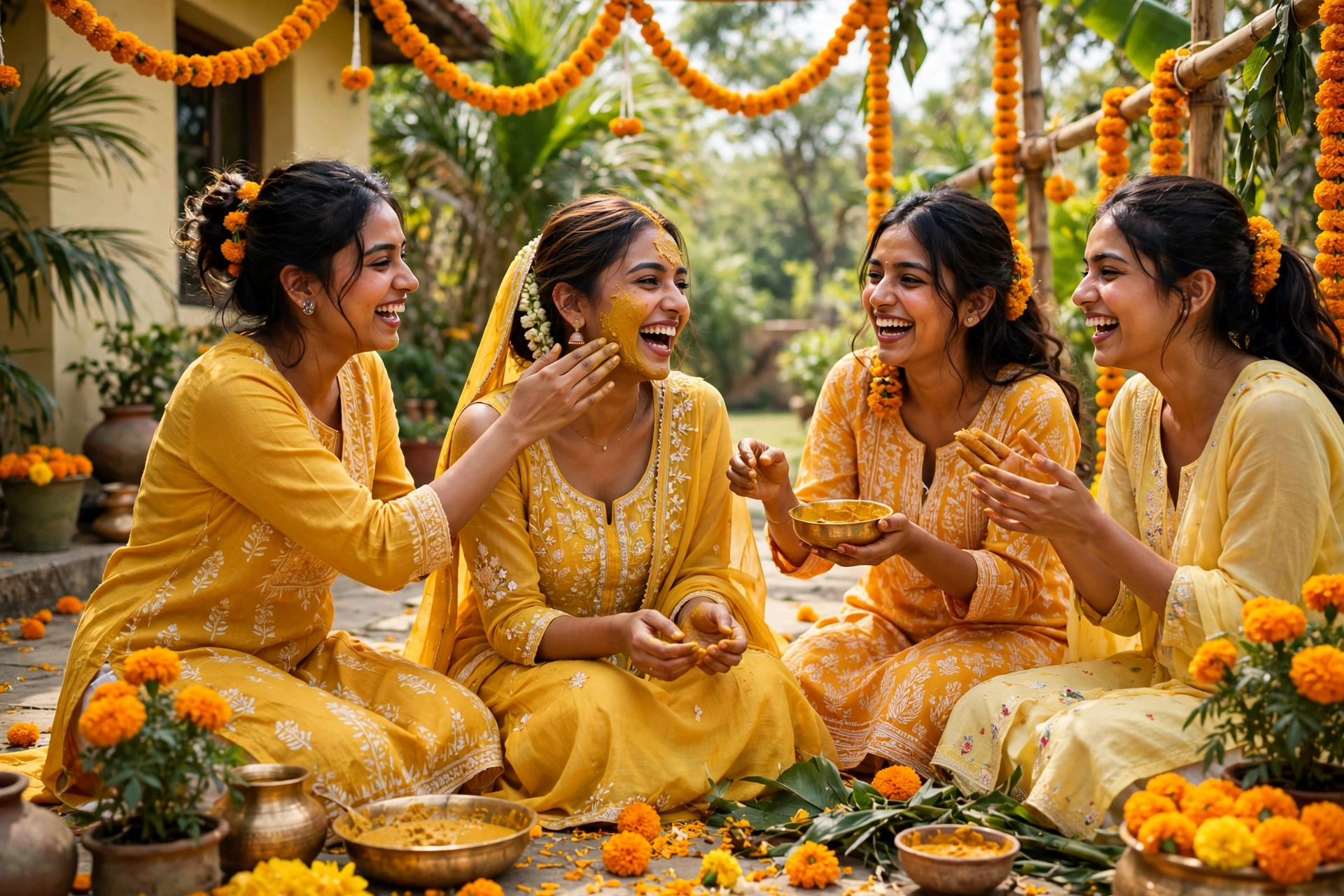
Haldi jewellery is traditionally floral, and it is one of the most charming parts of the look. Fresh flower jewellery, made from marigolds, jasmine, and roses, suits haldi perfectly: a flower maang tikka, flower earrings, flower bangles, and a flower garland for the hair. It is light, it smells lovely, and it matches the ceremony. Order it fresh on the morning of the haldi, because flowers wilt in a few hours.
If you prefer metal jewellery, keep it minimal: small gold jhumkas, a thin gold chain, and a few green glass bangles. Heavy necklaces and large earrings get in the way when relatives apply haldi. For hair, a simple braid with marigolds, a low bun with jasmine, or loose hair with a flower crown all suit haldi. Keep the makeup light and waterproof, because haldi involves water, and the turmeric itself gives your skin a glow. A good sunscreen is the most important makeup for a morning haldi outdoors.
Haldi outfits for different venues
A home haldi is intimate and relaxed, so a simple cotton sharara or a yellow Anarkali is perfect. You will sit on the floor, and comfort matters most. A garden haldi suits a flowing outfit, like a georgette lehenga or a long Anarkali, because the breeze and the greenery make the fabric move beautifully in photographs. A poolside or resort haldi needs the lightest fabrics, because the morning sun is strong and the ceremony may end with water play.
What it costs
A haldi outfit is usually the most affordable outfit of the wedding week. A good cotton or georgette sharara or Anarkali costs between ₹3,000 and ₹15,000 in most markets, and a designer haldi outfit rarely crosses ₹30,000. Fresh flower jewellery costs between ₹1,000 and ₹3,000, depending on the flowers and the city. Keep the haldi budget modest, because the outfit will need a professional clean after the turmeric, and it is the one outfit you will not wear again in the same way.
The invitation is a fixed, small cost. On MyIndiAura, a Cinematic Invite is ₹499, an Invite App is ₹399, and an Invitation Suite is ₹99. Your haldi photographs will look beautiful inside any of them. See the pricing page for the current prices.
How to create your haldi invitation
- Pick a bright, cheerful design from the designs page at myindiaura.com/designs.
- Add your names, the haldi date and time, and the venue, with a note about the yellow dress code.
- Add photographs of the couple, including one from the haldi if you have it.
- Preview the invitation on your own phone, then share the link on WhatsApp. See myindiaura.com/create to start, and myindiaura.com/pricing for the full price list.
Details to check before you send
- The names of the bride and groom, spelt exactly as the families use them
- The haldi date and time, with the venue and a note that guests should wear yellow
- A photograph that shows the haldi colours, so guests can plan their outfits
- The RSVP contact for guests who need directions or timings
- The flower jewellery order, placed for the morning of the haldi
- A second dupatta, flat shoes, and sunscreen, packed for the ceremony
Frequently asked questions
Must the bride wear yellow for haldi?
Yellow is the tradition, because it matches the turmeric and the marigolds, and most families expect it. But the shade is your choice, from lemon to mustard, and a yellow outfit with green or pink accents is just as correct as plain yellow.
Can I wear my haldi outfit again?
You can wear the sharara or Anarkali again after a professional clean, but turmeric can leave a faint stain on light fabrics, so many brides keep it as a memory rather than a regular outfit. Cotton haldi outfits wash well and can be worn again easily.
What shoes should I wear for haldi?
Flat juttis or mojari, or bare feet for a home haldi. Heels sink into lawns, slip on wet floors, and make it hard to sit cross legged, so save the heels for the wedding and the reception.
MyIndiAura theme showcase
These Cinematic Invites from MyIndiAura fit this wedding. Each one is ₹499.
- Kesar Swagat: saffron and marigold tones for a haldi morning.
- Diya Nagri: warm lamps and turmeric yellow for a bright haldi.
- Peony Bloom: soft flowers for a fresh daytime haldi look.
Related reading
- Haldi Ceremony Invitation Card Designs
- Haldi Invitation Wording in Hindi and English
- Indian Wedding Planning Checklist
Create your haldi invitation on MyIndiAura, and let the invitation carry the yellow and marigold of the morning to every guest.
Explore invitation designs
Choose a design and preview it free with your own names.
Found this useful? Share it with someone planning a celebration.
Share