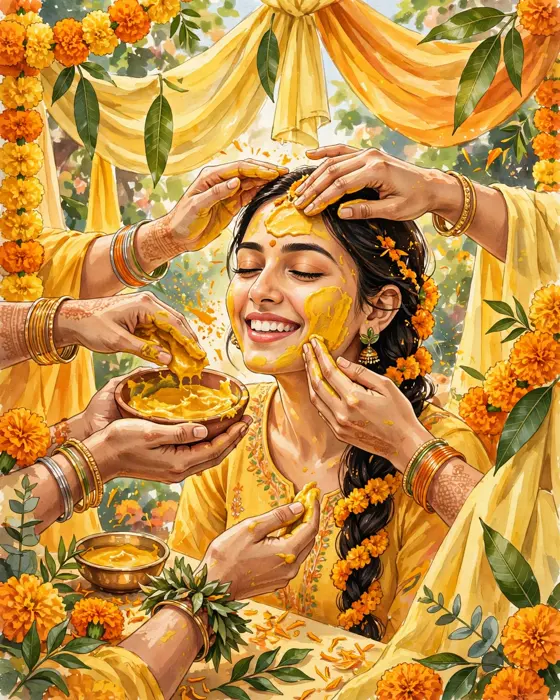
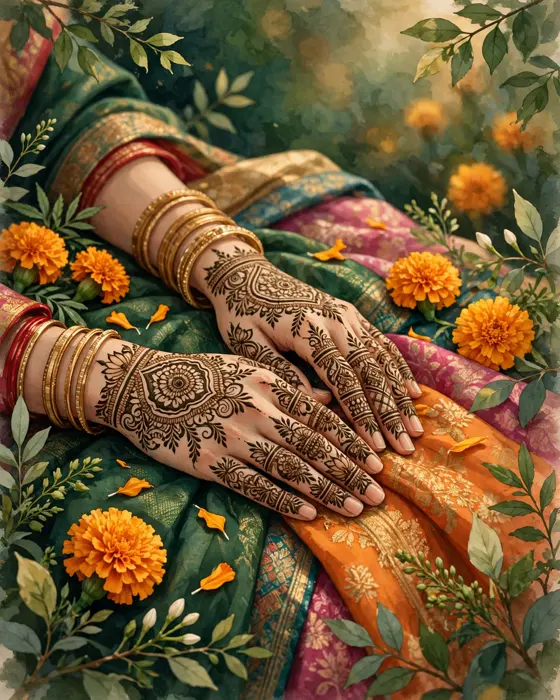
Haldi Decor Ideas: Marigold and Ubtan Themes
Marigold and ubtan are the heart of haldi decor, and they cost very little. Here is how to dress the seating, the backdrop, and the room around them.
The marigold look, and why it never fails
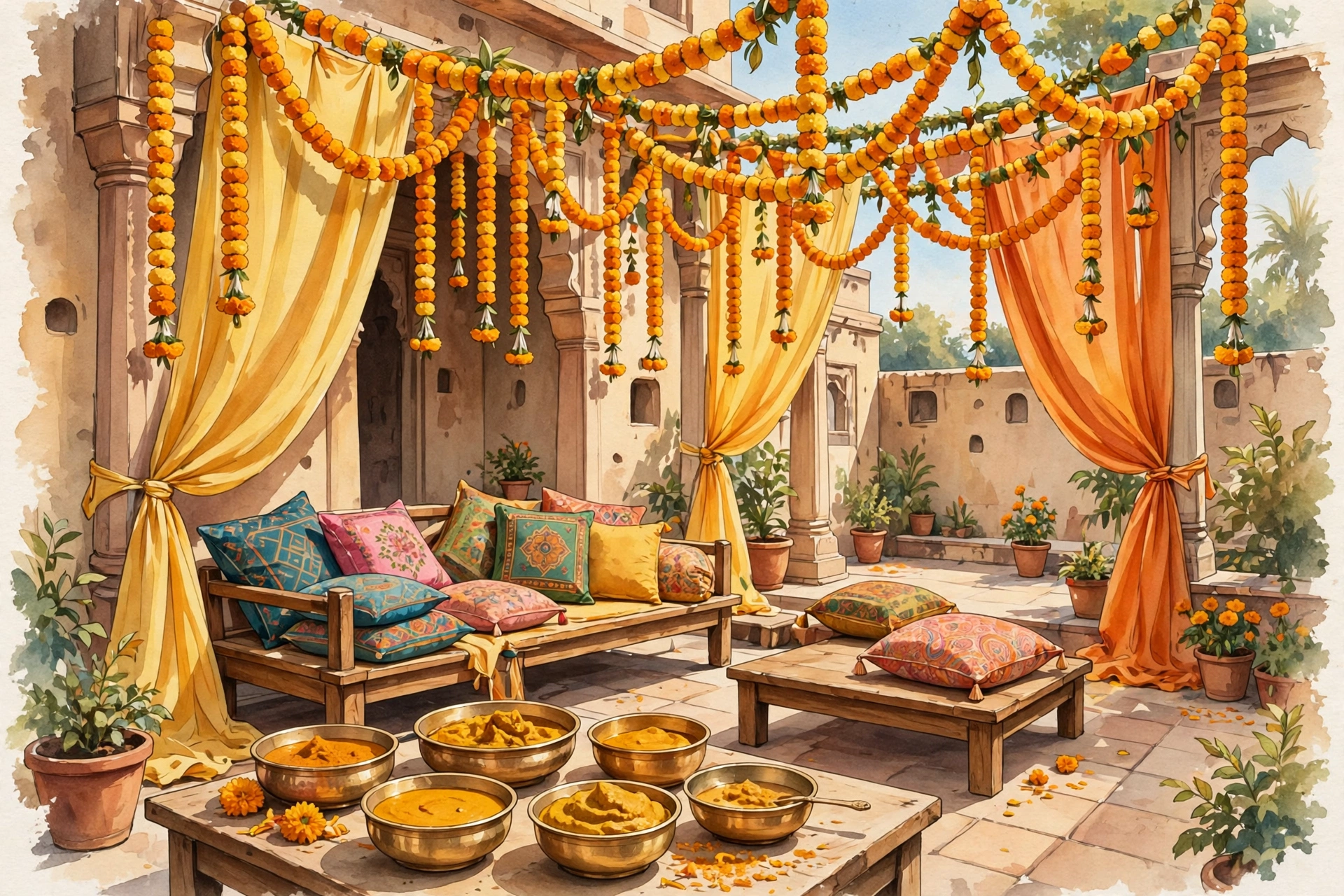
Marigold is the safest choice in haldi decor, and it is also the most loved. The flowers are cheap, they are available everywhere, and their colour is exactly the colour of haldi itself. A haldi venue dressed in marigold looks like it belongs to the ceremony, not like a decorator's idea pasted on top of it. The trick is to use the flowers with intent, not just everywhere at once.
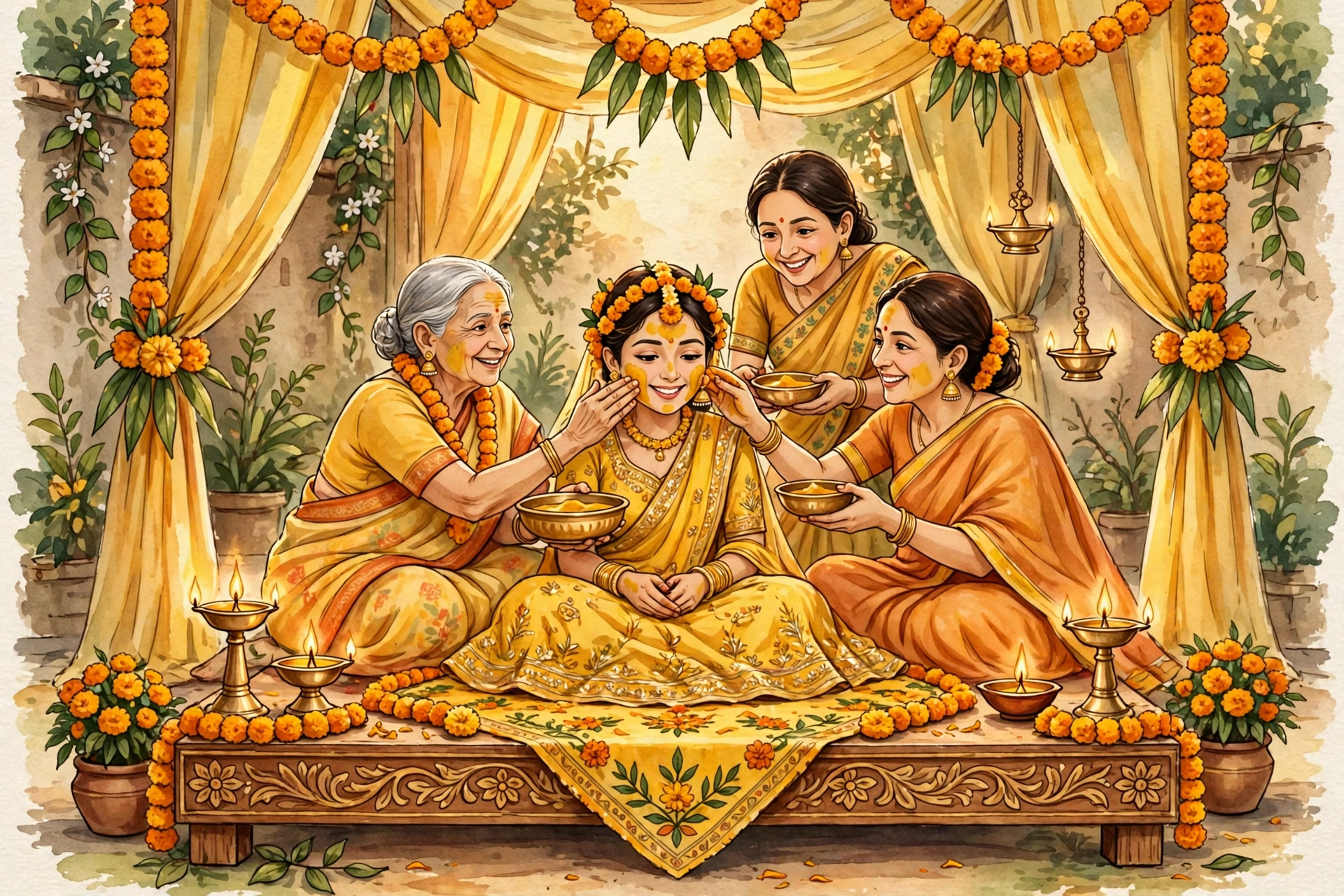
Start with the seating. A low platform for the bride or groom, dressed in yellow or white cloth, with marigold garlands hung along its front edge, is the centre of the room. Behind it, a backdrop of marigold strings in two shades, orange and yellow, gives the photographs depth. Keep the backdrop simple, one or two layers of strings, and let the person on the platform be the focus. A backdrop that is too dense fights with the face in the photograph.
The ubtan theme, and how it shapes the room
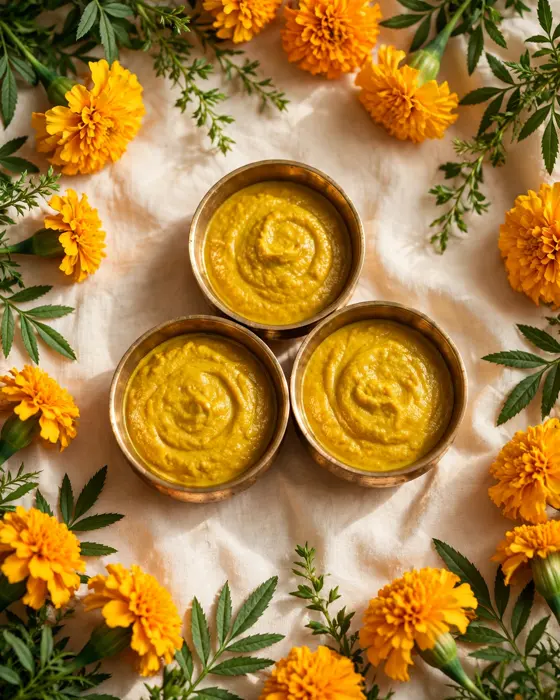
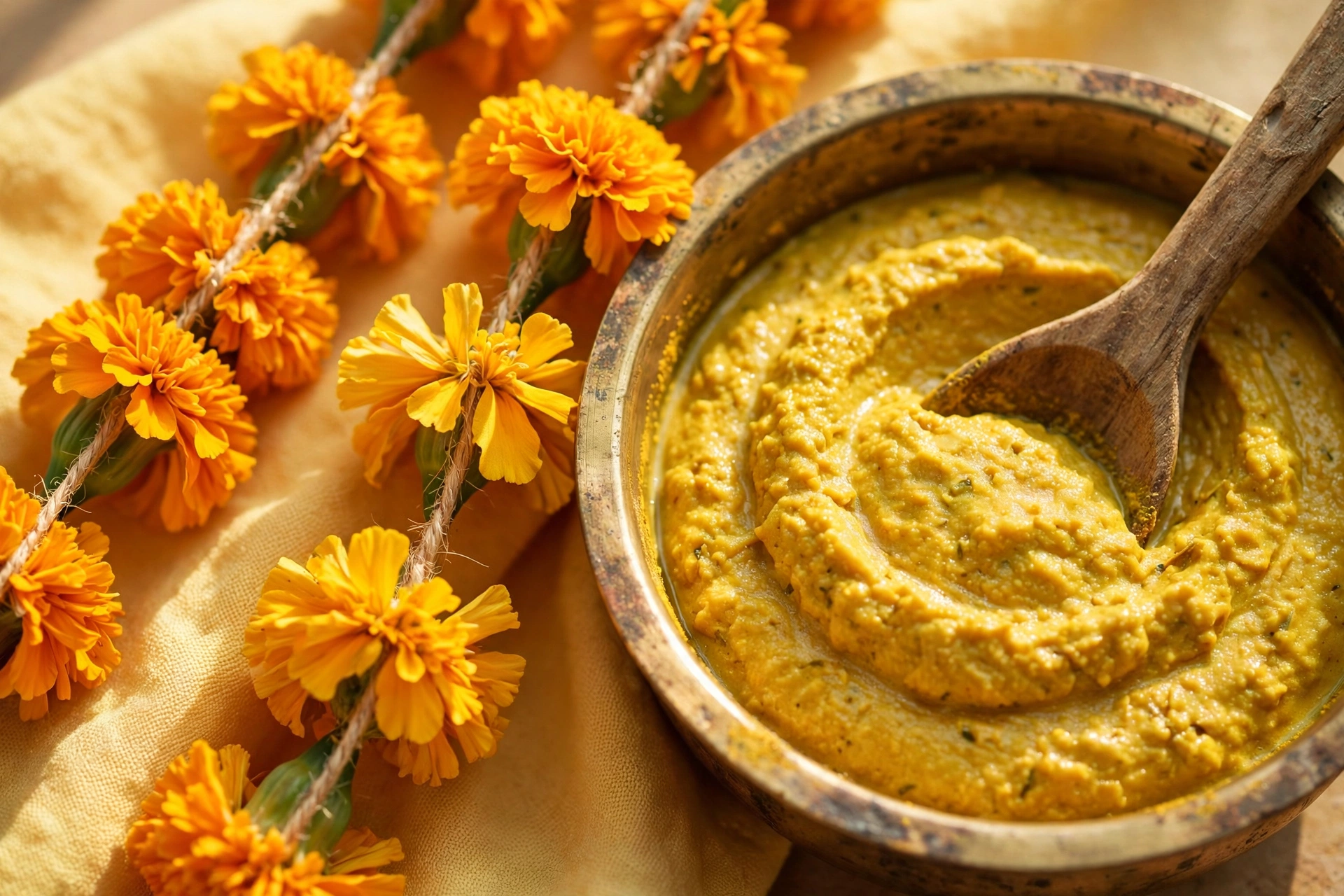
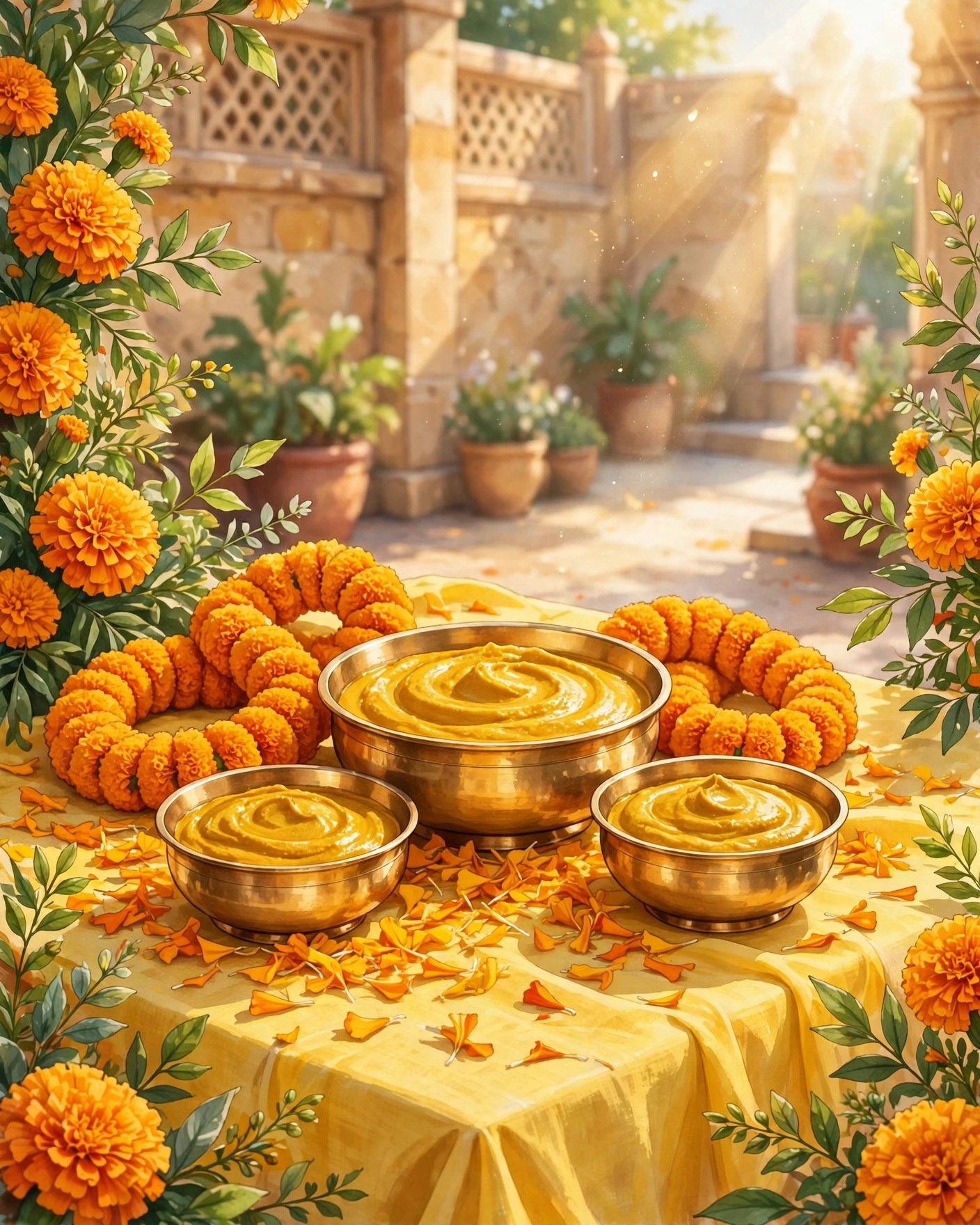
An ubtan themed haldi builds the decor around the paste itself. Brass bowls of turmeric, sandalwood powder in small mounds, rose water bottles, and turmeric roots become part of the decoration, not just the ritual. A low table beside the seating holds the bowls, and guests can see the ingredients they will soon be applying. It makes the ceremony feel honest and grounded, like a family ritual rather than a staged event.
The colours for an ubtan theme are warm and earthy: turmeric yellow, sandalwood cream, and a little deep green from leaves. Use cotton and linen cloth instead of shiny satin, and use brass and clay vessels instead of plastic. A few earthen pots with green plants soften the edges of the room. The whole look should feel like a kitchen and a garden had a celebration, not like a banquet hall.
Keep the ubtan table practical. The bowls should be within reach of the people applying the paste, and there should be small towels nearby, since haldi stains everything it touches. Put a wash basin or a bucket of water close to the seating, so nobody has to walk across the room with yellow hands.
Drapes, seating and the small details
Drapes do most of the work in haldi decor. Yellow and orange drapes on the ceiling soften harsh light and make photographs glow. White drapes behind the seating keep the focus on the person. The rule is simple: one strong colour for the ceiling, one light colour for the backdrop, and nothing else competing. Too many colours in the drapes make the photographs look busy.
Seating should be low and comfortable. Floor cushions in yellow, orange and pink, with a few bolsters, work better than chairs for a haldi. Guests sit close, they can reach the bride easily, and the photographs feel intimate. If elders need chairs, keep a few sturdy ones at the side, with cushions, so they are part of the circle rather than sitting apart.
The small details are what guests remember. A hand painted sign at the entrance, a basket of marigolds for guests to throw, small bottles of rose water as favours, and a garland for the bride's hair. None of these cost much, and together they make the function feel thought through. Avoid printed flex banners, which look cheap in photographs and clash with fresh flowers.
Indoor, outdoor and small space ideas
An outdoor haldi in a lawn or a courtyard is the easiest to decorate, because the sky and the trees do half the work. A few marigold strings, a low platform, and some floor cushions are enough. The risk outdoors is the sun. A haldi at noon in May can be brutal, so plan for shade, either a canopy or a large tree, and keep water and fans ready. Morning haldis photograph best outdoors, when the light is soft.
An indoor haldi needs more from the decor, since the room has no natural beauty to lean on. Drapes on the ceiling, a strong backdrop, and warm lights matter more. Use fairy lights behind the marigold strings for an evening haldi, and keep the room's own lights low so the decor glows. A small room can still look lovely if the decor is focused on one corner. Do not try to decorate every wall. One beautiful corner, with the seating and the backdrop, photographs better than a whole room done thinly.
For a flat or a small home, keep the function in the largest room and move the furniture out. A low platform, a backdrop on one wall, and cushions on the floor are all you need. Guests will stand and sit close, which is exactly the feeling a haldi should have.
What to avoid
Avoid plastic flowers. They look flat in photographs and guests can tell at a glance. Avoid too many colours. A haldi has one colour story, yellow and orange, and a stray pink or blue drape breaks it. Avoid glitter and shiny fabric, which reflect camera flashes and look harsh. And avoid a backdrop so tall that it hides the room. The decor should frame the people, not swallow them.
Avoid over decorating the entrance and under decorating the seating. Guests spend five seconds at the entrance and hours around the seating, so the seating deserves the best flowers and the best light. And avoid anything that stains badly near white clothes. Turmeric paste on a white sofa is a stain that will not come out, so cover good furniture or move it away before the function starts.
What it costs
On MyIndiAura, a Cinematic Invite is ₹499, an Invite App is ₹399, and an Invitation Suite is ₹99. Choose by what your invitation needs to do, not by price alone. A cinematic invite suits a wedding with a film led opening, while an invite app suits a full week of functions with RSVP and maps.
How to create your haldi invitation
- Pick a design from the designs page at myindiaura.com/designs.
- Add the haldi date and time, the venue, and the dress code for guests.
- Add photos of the couple, the venue map, and the RSVP button.
- Preview the invitation on your own phone, then share the link on WhatsApp. See myindiaura.com/create to start, and myindiaura.com/pricing for the full price list.
Details to check before you send
- The names of the bride and groom, spelt exactly as the families use them
- The haldi date and time, checked with both families
- The full venue address, with the area and a map link
- The dress code, if you want guests in yellow or white
- An RSVP contact for guests who need directions
- The order of events, if the mehndi or sangeet follows
Frequently asked questions
How many marigolds do I need for a haldi?
For a home haldi, about ten to fifteen strings for the backdrop and seating, plus a few kilos of loose flowers for the floor and the entrance. Buy them the morning of the function so they stay fresh.
What colours work best for haldi decor?
Yellow and orange, with white as a calm second colour. Those are the colours of turmeric and marigold, and they photograph warmly. Avoid adding pink, blue or green drapes, which break the colour story.
Is an outdoor haldi better than an indoor one?
Outdoors photographs beautifully in the morning, when the light is soft. Indoors gives you control over light and shade, and suits an evening haldi with fairy lights. Pick by the season and the time of day.
How do I protect furniture from haldi stains?
Cover good furniture with old sheets, or move it out of the room. Keep towels and water near the seating, and warn guests that haldi stains clothes. Turmeric on white fabric rarely comes out.
MyIndiAura theme showcase
These Cinematic Invites from MyIndiAura fit this wedding. Each one is ₹499.
- Kesar Swagat: a saffron welcome, made for a haldi morning.
- Gulaabi Aangan: a courtyard garden in bloom, made for a haldi at home.
- Peony Bloom: soft flowers and warm light, made for a gentle bridal look.
Related reading
- Haldi Ceremony Invitation Card Designs
- Haldi Invitation Wording in Hindi and English
- Trending Wedding Decor Ideas for 2027
Create your haldi invitation on MyIndiAura, and let marigold do the decorating.
Explore invitation designs
Choose a design and preview it free with your own names.

Found this useful? Share it with someone planning a celebration.
Share