Gujarati Wedding Food Menu Guide
Dhokla, khandvi, undhiyu and a thali that leans sweet. The Gujarati wedding menu, from farsan to dessert, and how to serve it so every guest leaves happy.
Sweet, light and fully vegetarian
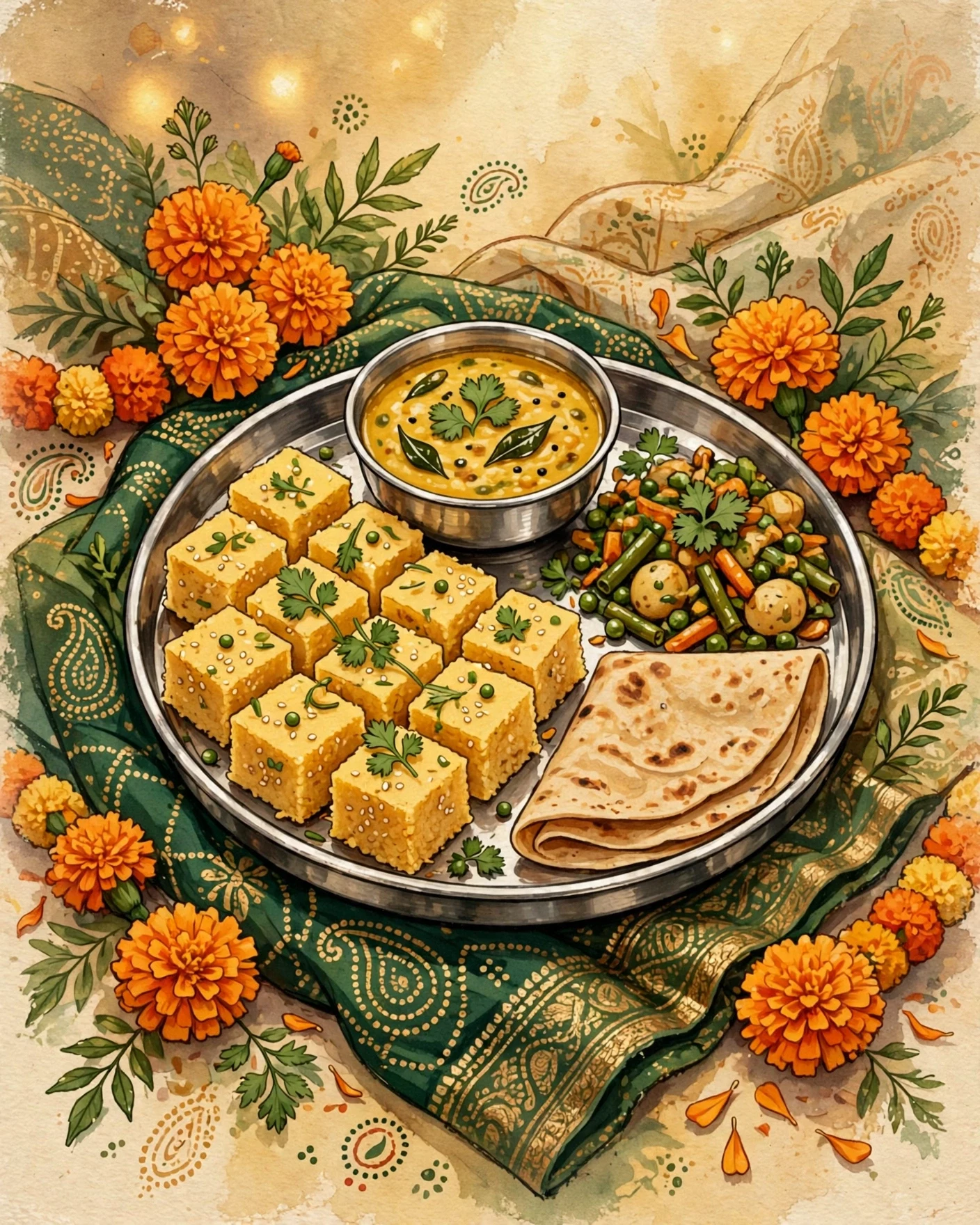
Gujarati wedding food is sweet, light and fully vegetarian, and it is loved far beyond Gujarat. The meal is built around the thali, with a little of everything on one plate: a sweet dal, a dry vegetable, a rich vegetable, farsan, bread, rice and a sweet. Guests eat it sitting down, in courses, and the meal moves gently from savoury to sweet.
The sweetness is the first thing to understand. Gujarati dal is sweet, the vegetables often carry a touch of jaggery, and the meal ends with something sweet too. Guests from other regions sometimes find this surprising, so a short note on the invitation helps: the Gujarati table leans sweet, and that is the tradition.
A Gujarati wedding meal is also light, which suits a long day of ceremonies. Guests can eat well at lunch and still dance at the sangeet in the evening, because the food is rich in flavour rather than heavy in the stomach.
The thali at the centre
The thali is the heart of the meal. A steel or silver thali holds small bowls of dal, kadhi, two vegetables, rice, roti and a sweet, with farsan on the side. Servers move down the rows, refilling each bowl, and guests eat at their own pace.
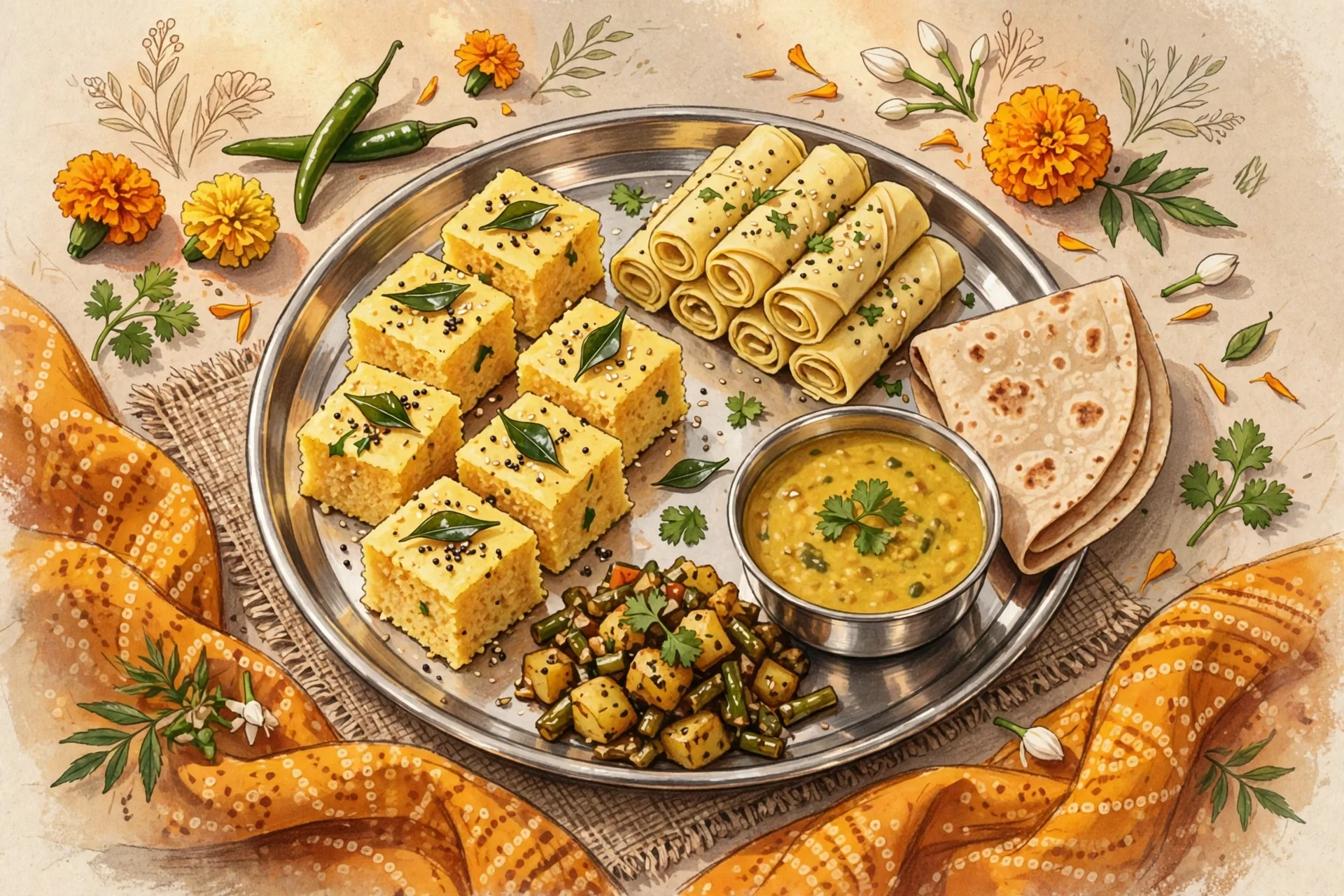
The dal is the soul of the thali. Gujarati dal is sweet and tangy, made with tuvar dal, jaggery and lemon, and it is served with plain rice. The kadhi is light and mild. Together they carry the meal, so ask the caterer to make them well, and taste them both at the tasting.
Keep the thali portions small and the refills generous. Guests should taste everything, and the server should come back often. A thali that is filled once and forgotten is a poor thali, however good the food is.
Farsan first: dhokla, khandvi, patra
Farsan, the snacks of Gujarat, open the meal and set its tone. Dhokla, soft and spongy, khandvi, thin rolls of gram flour, and patra, colocasia leaves rolled with spiced batter, are the classics. Serve them fresh and warm, because farsan that has sat for an hour loses its charm.
A live farsan counter works beautifully at a wedding. Guests watch the dhokla steam and the khandvi roll, and they eat it at its best. Keep the counter near the dining hall, with a server to portion it, so the queue stays short.
For children, farsan is often the most loved part of the meal, because it is mild and easy to eat. Keep a small plate of plain dhokla and khandvi ready for the kids table, with no green chilli on top.
Undhiyu, dal and the sweet note
Undhiyu is the winter star of the Gujarati table, a slow cooked mix of root vegetables, beans and muthiya, made in an earthen pot. It is rich and earthy, and it anchors the thali in the wedding season. If your wedding is in winter, ask for it. If it is summer, ask for a lighter seasonal vegetable instead.
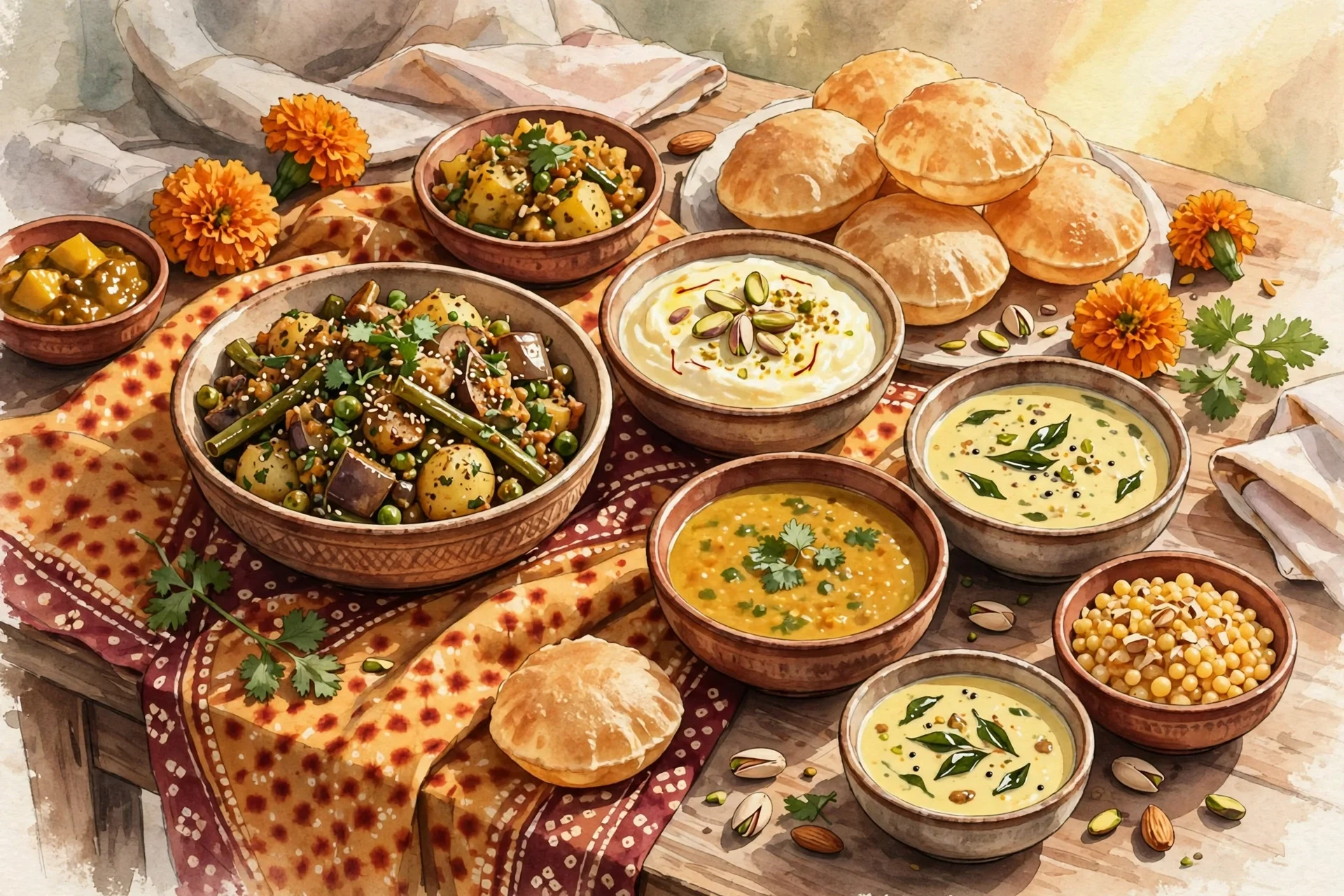
The sweet note of the meal is often shrikhand, thick strained yogurt sweetened and flavoured with saffron and cardamom, or a warm jalebi with fafda. Shrikhand suits a wedding lunch perfectly, because it is cool and light after the warm dishes. Serve it chilled, in a generous portion.
End the meal with a small sweet and a paan. The paan counter, with its colourful ingredients and the paan maker at work, is a gentle close to the meal, and elders love it. Keep it near the exit, so guests can take one as they leave.
Planning for a mixed guest list
A Gujarati wedding often hosts guests from many regions, and the menu should welcome them. Keep the Gujarati thali as the main meal, and add one familiar dish for outstation guests: a paneer curry, a dal makhani, or a simple pulao. One familiar dish is enough, because guests come to a Gujarati wedding to eat Gujarati food.
Tell guests about the menu on the invitation, with the highlights named: dhokla, undhiyu, shrikhand. Guests from other regions will be curious, and the names build excitement. Also say plainly that the food is fully vegetarian, so guests know what to expect.
Plan the quantities with the caterer by dish, not by thali. The dhokla and the shrikhand will run out first, so order a third more of those. The dal and the rice are cheap to keep coming, so never let them run short.
What it costs
On MyIndiAura, a Cinematic Invite is ₹499, an Invite App is ₹399, and an Invitation Suite is ₹99. Choose by what your invitation needs to do, not by price alone. A cinematic invite suits a wedding with a film led opening, while an invite app suits a full week of functions with RSVP and maps.
How to create your wedding invitation
- Pick a design from the designs page at myindiaura.com/designs.
- Add the couple's names, the dates, the venue, and the order of events, with the thali lunch timing for each function.
- Add photos of the couple, the venue map, and the RSVP button.
- Preview the invitation on your own phone, then share the link on WhatsApp. See myindiaura.com/create to start, and myindiaura.com/pricing for the full price list.
Details to check before you send
- The names of the bride and groom, with parents, spelt exactly as the families use them
- The wedding date, time and full venue address, with a map link
- The lunch timing and seating plan for each function
- The RSVP contact for guests who need directions or food help
- The order of events, with times for each ceremony
- A dress code note, if you want guests in a particular style
Frequently asked questions
What is farsan?
Farsan is the Gujarati word for the snacks that open a meal: dhokla, khandvi, patra, samosa and kachori. They are served fresh and warm, and they set the tone for the thali that follows.
Is Gujarati wedding food always vegetarian?
Yes, by tradition. The Gujarati wedding table is fully vegetarian, and it is one of the richest vegetarian meals in India, with a full thali, farsan and sweets.
What is undhiyu?
Undhiyu is a slow cooked winter dish of root vegetables, beans and muthiya, made in an earthen pot. It is the star of the Gujarati winter table and a favourite at winter weddings.
Why is Gujarati food sweet?
Gujarati cooking uses jaggery and a touch of sweetness in the dal and the vegetables, and it is the region's taste, shaped by history and trade. Guests should expect the sweet note, and most grow to love it.
Can we serve Gujarati food at a buffet?
Yes, but a seated thali service suits it better, because the servers refill each bowl in order. If you choose a buffet, keep the farsan at a live counter and label every dish clearly.
MyIndiAura theme showcase
These Cinematic Invites from MyIndiAura fit this wedding. Each one is ₹499.
- Kesar Swagat: a warm saffron welcome for a sweet Gujarati table.
- Gulaabi Aangan: a pink courtyard that suits a daytime thali lunch.
- Diya Nagri: a city of lamps for an evening celebration.
Related reading
- Haldi Ceremony Invitation Card Designs
- Mehndi Ceremony Invitation Card Designs
- Indian Wedding Planning Checklist: 12 Months to the Wedding Day
A Gujarati thali is a small world on a plate, sweet and light and generous, and it suits a wedding day perfectly.
Explore invitation designs
Choose a design and preview it free with your own names.
Found this useful? Share it with someone planning a celebration.
Share